The History of England: Best Books to Read, in Order
This curriculum takes you from your first encounter with English history all the way through to modern Britain, building chronological and thematic understanding at each stage. It begins with accessible narrative overviews, moves through the great turning-point eras in focused depth, and finally equips you with the analytical and interpretive tools that historians use to argue about England's past.
Foundations: The Big Picture
BeginnerGain a confident chronological spine of English history from the earliest times to the present, learning the key people, dates, and turning points before diving into any single era.
▸ Study plan for this stage
Pace: 6–8 weeks, ~40–50 pages/day. Begin with "The Story of Britain" (approximately 3–4 weeks), then move to "A History of England" (approximately 3–4 weeks). Allocate 2–3 days per week for review, timeline work, and exercises.
- Chronological spine: the major periods of English history from pre-Roman Britain through the modern era, and how they connect sequentially
- Key turning points: the Norman Conquest (1066), the English Reformation (1534), the English Civil War (1642–1651), the Industrial Revolution, and the expansion of the British Empire
- Major dynasties and monarchs: the Anglo-Saxon kingdoms, the Normans, the Plantagenets, the Tudors, the Stuarts, and the Hanoverians, and their defining characteristics
- The evolution of English institutions: Parliament, the monarchy, the Church, and the common law system from their origins to modern form
- Social and economic shifts: feudalism to capitalism, agricultural to industrial society, and the role of trade and empire
- How geography, religion, and conflict shaped English development differently from continental Europe
- The relationship between political events and cultural/intellectual movements (e.g., Renaissance, Enlightenment)
- What are the five or six most significant turning points in English history, and why did each fundamentally alter the nation's trajectory?
- How did the Norman Conquest reshape English society, government, and culture, and what traces of it remain today?
- What role did Parliament play in limiting royal power, and how did this evolution differ from continental European monarchies?
- How did the English Reformation change the relationship between the Crown, the Church, and the people?
- What were the major causes and consequences of the English Civil War, and how did it influence later English political thought?
- How did industrialization and imperial expansion transform England's economy, society, and global position between the 18th and 20th centuries?
- Create a master chronological timeline spanning pre-Roman Britain to the present, marking every major dynasty, monarch, war, and turning point mentioned in both books. Update it as you read.
- After finishing 'The Story of Britain,' write a one-page summary of each major historical period (Anglo-Saxon, Norman, Medieval, Tudor, Stuart, Georgian, Victorian, Modern) capturing its defining character and legacy.
- Build a 'dynasty map' showing the genealogical relationships and succession disputes of the major royal houses (Saxon, Norman, Plantagenet, Tudor, Stuart, Hanover). Note which transitions were peaceful and which were contested.
- For each major turning point (Conquest, Magna Carta, Reformation, Civil War, Industrial Revolution, Empire), write a two-paragraph explanation of its causes and immediate consequences using only the information from Strong and Feiling.
- Create a comparative chart tracking the evolution of three key institutions—Parliament, the Monarchy, and the Church—across five major periods, noting how their power and relationship shifted.
- Read a 10–15 page section from each book on the same historical period (e.g., the Tudor era) and write a brief note on how Strong's narrative style and emphasis differ from Feiling's approach; reflect on what each author highlights.
Next up: By establishing a secure chronological framework and understanding the major turning points, dynasties, and institutional developments, you will be prepared to dive into specialized study of individual eras—examining their social, cultural, economic, and political dimensions in greater depth.

A lavishly illustrated, highly readable single-volume narrative that sweeps from prehistoric Britain to the late 20th century — perfect for building the mental map every deeper book will assume you have.

A classic, compact single-volume history written in clear prose; reading it after Strong reinforces the chronology with slightly more political and constitutional detail, preparing you for thematic study.
The Medieval World: Anglo-Saxons to Plantagenets
BeginnerUnderstand how England was forged — the Anglo-Saxon kingdoms, the Norman Conquest of 1066, and the medieval monarchy — and why these centuries still shape English identity.
▸ Study plan for this stage
Pace: 8–10 weeks, ~40–50 pages/day. Start with Fossier (3–4 weeks), move to Howarth (2–3 weeks), finish with Mortimer (3 weeks). Build in 1–2 review days per week.
- Anglo-Saxon kingdoms and their political fragmentation before 1066 — how multiple competing kingdoms (Wessex, Mercia, Northumbria, East Anglia) shaped early English identity
- The Norman Conquest of 1066 as a watershed moment — how William the Conqueror's victory fundamentally transformed English governance, language, and culture
- The feudal system and the Norman-introduced hierarchy — how the Conquest restructured land ownership, loyalty, and social order in ways that persisted for centuries
- The Plantagenet dynasty and the development of medieval monarchy — how Henry II and his successors consolidated royal power and created lasting institutions
- The lived experience of medieval England — daily life, social structures, and material culture that help explain why these centuries remain foundational to English identity
- The role of the Church and religious authority in shaping medieval politics and society
- The concept of 'Englishness' as constructed across these centuries — how Anglo-Saxon, Norman, and medieval elements fused into a distinct national identity
- What were the major Anglo-Saxon kingdoms before 1066, and how did their competition for dominance shape early England?
- Why is 1066 considered such a pivotal year, and what specific changes did the Norman Conquest introduce to English governance, language, and social structure?
- How did the feudal system, introduced by the Normans, reorganize English society, and what long-term effects did it have?
- Who were the key Plantagenet monarchs discussed in your reading, and how did they consolidate and exercise royal power?
- What does Mortimer's 'time traveler's guide' reveal about the actual daily life, beliefs, and material conditions of medieval people that help explain the period's lasting cultural impact?
- How did the Church influence medieval English politics, and what role did religious authority play in legitimizing or challenging royal power?
- Create a timeline poster or digital map showing the Anglo-Saxon kingdoms (from Fossier) and mark the major events leading to 1066 — include key rulers and territorial shifts.
- Read Howarth's account of 1066 and write a 500-word narrative from two perspectives: a Norman knight and an Anglo-Saxon nobleman. How did each experience the Conquest differently?
- Using Mortimer's descriptions, sketch or describe the layout of a medieval village, manor house, or castle — include details about how people actually lived, worked, and worshipped.
- Create a feudal hierarchy diagram (based on Fossier and Howarth) showing the relationships between king, nobles, knights, and peasants — annotate with specific examples from the books.
- Compile a 'glossary of change' comparing Anglo-Saxon England (pre-1066) with Norman England (post-1066) — cover government, language, law, land ownership, and culture.
- Choose one Plantagenet ruler mentioned in your reading and research one major decision or conflict they faced; write a brief analysis of how it reflected the medieval political system described in the books.
Next up: This stage establishes the foundational political, social, and cultural structures of medieval England; the next stage will likely deepen your understanding of how these institutions evolved, fractured, and were tested through later medieval conflicts, reforms, and the eventual transition to the early modern world.

A vivid portrait of ordinary medieval life across Europe that gives essential social context before focusing on English political events; reading it first prevents the mistake of seeing the Middle Ages as only kings and battles.

A gripping, short narrative of the single most consequential year in English history; its clarity makes the Norman Conquest feel immediate and its consequences — language, law, land — concrete.
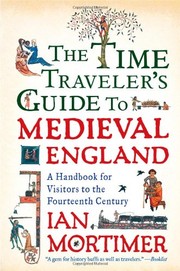
Written as a 'travel guide' to the 14th century, this book brings medieval England to life from the ground up — food, disease, class, religion — cementing the social world behind the political story.
Revolution and Empire: Tudors to Victorians
IntermediateTrace the dramatic transformation of England from a small Renaissance kingdom under the Tudors, through Civil War and Glorious Revolution, to the world's greatest industrial and imperial power.
▸ Study plan for this stage
Pace: 12–14 weeks, ~40–50 pages/day. "Wolf Hall" (~650 pages, 3–4 weeks), then "The Victorians" (~500 pages, 3–4 weeks), with 2–3 weeks for review, synthesis, and exercises throughout.
- The Tudor court under Henry VIII as a nexus of power, ambition, and religious upheaval—how Mantel portrays Thomas Cromwell navigating faction and survival
- The shift from feudal patronage to bureaucratic statecraft and the role of the individual in shaping historical events
- The English Reformation as both a religious and political revolution, reshaping the nation's identity and institutions
- The Victorian era as the apex of industrial capitalism, imperial expansion, and social anxiety—Wilson's analysis of progress and contradiction
- The long arc from Renaissance monarchy to industrial superpower: continuities in power consolidation, breaks in religious settlement, and the emergence of middle-class dominance
- How literature and historical narrative construct our understanding of the past—Mantel's fictional reconstruction versus Wilson's analytical history
- How does Mantel's portrayal of Thomas Cromwell in 'Wolf Hall' illustrate the transition from feudal patronage networks to more rational, bureaucratic forms of power under Henry VIII?
- What were the religious, political, and personal stakes of the English Reformation as depicted in 'Wolf Hall,' and how did it reshape England's relationship with Rome and its own identity?
- According to Wilson in 'The Victorians,' what were the defining characteristics of Victorian society, and how did industrialization, empire, and class anxiety shape Victorian culture and politics?
- How does Wilson trace the connection between England's religious settlement (established in the Tudor period) and the Victorian era's crisis of faith and doubt?
- What are the key differences between Mantel's novelistic approach to history in 'Wolf Hall' and Wilson's analytical, essayistic approach in 'The Victorians'—and what does each method reveal or obscure?
- How did England's transformation from a mid-sized Renaissance kingdom under the Tudors to a global industrial and imperial power by the Victorian era depend on institutional, economic, and ideological shifts traced across both books?
- Create a detailed timeline of major events from 'Wolf Hall' (Henry VIII's break with Rome, Anne Boleyn's rise and fall, Cromwell's ascent) and cross-reference it with Wilson's account of the long-term consequences of the Reformation for Victorian England.
- Write a character study of Thomas Cromwell as Mantel presents him—focusing on his methods, morality, and relationship to power—then compare it to how Wilson discusses the emergence of the professional administrator and bureaucrat in Victorian governance.
- Map the factions and power networks in 'Wolf Hall' (the Seymours, the Boleyns, the clergy, the king) and analyze how Mantel shows the shift from personal loyalty to institutional position—then identify analogues in Wilson's discussion of Victorian class and professional hierarchies.
- Read two contrasting passages: one from 'Wolf Hall' depicting a court scene, and one from Wilson analyzing a Victorian institution (Parliament, the Civil Service, a factory). Write a comparative analysis of how power is exercised and represented in each.
- Compile a list of religious, legal, and administrative innovations introduced under Henry VIII in 'Wolf Hall' (e.g., the Act of Supremacy, the dissolution of monasteries, the role of the Privy Council) and trace their institutional legacy in Wilson's Victorian England.
- Create a visual or written comparison of the role of women in power across both books—Anne Boleyn and Jane Seymour in 'Wolf Hall' versus the Victorian idealization and constraint of women discussed in Wilson—and reflect on how gender shaped political possibility in each era.
Next up: This stage establishes the institutional, religious, and ideological foundations of modern Britain—the Reformation, the rise of bureaucratic statecraft, and the industrial-imperial system—preparing you to examine how these structures fractured, adapted, and were challenged in the 20th century and beyond.
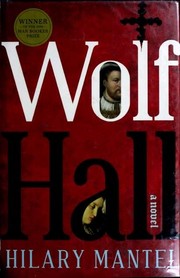
Though a novel, Mantel's Booker Prize-winning masterpiece is historically meticulous and immerses you in Tudor court politics and the English Reformation more vividly than most textbooks — read it here to make the era feel lived-in.
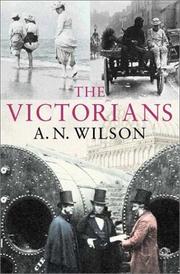
A rich, opinionated portrait of 19th-century Britain covering industrialisation, empire, class, religion, and culture; Wilson's narrative style rewards the reader who now has the earlier centuries as context.
Modern Britain: War, Decline, and Reinvention
IntermediateUnderstand how Britain navigated two world wars, the loss of empire, and the social revolutions of the 20th century to arrive at the complex, contested nation it is today.
▸ Study plan for this stage
Pace: 12–14 weeks, ~40–50 pages/day. Start with *The Worst Journey in the World* (4–5 weeks; ~350 pages), move to *The Churchill Factor* (3–4 weeks; ~400 pages), then *Austerity Britain* (4–5 weeks; ~500 pages). Allow 1 week for review and synthesis.
- Imperial heroism and its costs: how early 20th-century British expeditions (Scott's Antarctic mission) reflected imperial values and the human toll of empire-building
- Churchill's role as a transformative wartime leader: his personality, decision-making, and legacy in shaping Britain through two world wars
- The paradox of victory and decline: how Britain emerged from WWII as a moral victor but faced economic exhaustion, loss of empire, and geopolitical diminishment
- The welfare state as national reinvention: how post-war austerity and rationing were accepted as the price of building the NHS and social safety net
- Social transformation under constraint: how ordinary Britons adapted to rationing, housing shortages, and class tensions while constructing a new social order
- The psychological shift from empire to nation-state: how Britain redefined itself from imperial power to a mid-sized European nation
- What does Cherry-Garrard's account of Scott's Antarctic expedition reveal about British imperial attitudes, masculinity, and the willingness to sacrifice for national prestige in the early 20th century?
- How did Churchill's personality, strategic decisions, and political evolution shape Britain's path through both world wars, and what were the costs of his leadership?
- Why did post-1945 Britain accept severe austerity and rationing despite winning the war, and what social vision justified these hardships?
- How did the loss of empire and Britain's reduced global status after 1945 affect British national identity and domestic politics?
- What was the relationship between wartime sacrifice and the creation of the welfare state—how did one justify the other?
- How did ordinary British people experience and respond to the transition from imperial power to a welfare state during 1945–1951?
- Timeline exercise: Create a detailed chronology linking key events in *The Worst Journey* (1910–1913), *The Churchill Factor* (1900–1965), and *Austerity Britain* (1945–1951), noting how imperial confidence gave way to post-war reconstruction.
- Character analysis: Write a 2–3 page portrait of Churchill based on Johnson's account, identifying 3–4 key personality traits and how they shaped his wartime decisions and post-war influence.
- Primary source comparison: Read 2–3 excerpts from wartime speeches (Churchill) and post-war government documents (rationing, NHS plans) alongside the books; annotate how rhetoric shifted from imperial grandeur to collective welfare.
- Debate preparation: Argue both sides—'Was Churchill's wartime leadership worth the long-term cost to Britain's economy and empire?' Use specific examples from Johnson's book.
- Social history mapping: Using *Austerity Britain*, create a visual chart showing how different social classes (working class, middle class, aristocracy) experienced rationing, housing, and the welfare state differently.
- Reflection essay: Write 3–4 pages on how the three books together illustrate Britain's loss of imperial identity and construction of a new national identity around the welfare state and shared sacrifice.
Next up: This stage establishes how Britain transformed from imperial power through wartime leadership to a welfare-state nation, setting the foundation for understanding the social, cultural, and political upheavals of the 1960s–1980s (decolonization, youth culture, industrial decline, and Thatcherism) that will follow.

A celebrated first-hand account of the Scott Antarctic expedition that captures the Edwardian British character — duty, class, stoicism — on the eve of the catastrophe of 1914; it humanises the era before the wars.

A lively, accessible biography of Churchill that doubles as a study of Britain in the Second World War and the question of how much history turns on individual leadership — a useful, readable entry point to 20th-century Britain.
The first volume of Kynaston's landmark 'Tales of a New Jerusalem' series uses diaries, surveys, and newspapers to reconstruct post-war Britain from the inside; it shows how the welfare state, rationing, and social change felt to ordinary people.
Deeper Reading: Historians Argue Back
ExpertEngage with the great interpretive debates about English history — class, empire, identity, and myth — and read historians who challenge the comfortable national story.
▸ Study plan for this stage
Pace: 8–10 weeks, ~40–50 pages/day. *The Isles* (~600 pages) takes 4–5 weeks; *Ornamentalism* (~250 pages) takes 2–3 weeks. Build in 1–2 weeks for synthesis and debate engagement.
- The 'British Isles' as a contested political and cultural construct: how Davies challenges the England-centric narrative by centering Irish, Scottish, and Welsh histories as equally formative
- Long-durée perspective: understanding English/British history not as inevitable progress but as contingent outcomes of conquest, union, and conflict across centuries
- Empire as ornament vs. substance: Cannadine's argument that the British Empire was sustained less by economic logic than by social hierarchy and aesthetic display
- The myth of national identity: how both Davies and Cannadine expose the invented, selective nature of 'Englishness' and 'Britishness'
- Historiographical method: recognizing how historians construct narratives, choose evidence, and challenge predecessor interpretations
- Class, race, and imperial ideology: understanding how social hierarchy at home was projected onto and justified by imperial relationships abroad (Cannadine's thesis)
- The role of contingency and accident: Davies's emphasis on how different choices at key moments could have produced radically different political outcomes
- What is Davies's central argument about the 'Isles' as a concept, and how does he challenge the traditional England-centered narrative of British history?
- How does Davies use the examples of Ireland, Scotland, and Wales to demonstrate that English dominance was neither inevitable nor uncontested?
- What does Cannadine mean by 'ornamentalism,' and how does it differ from traditional Marxist explanations of imperialism based on economic extraction?
- According to Cannadine, how did the British social hierarchy at home shape the way the British understood and administered their empire abroad?
- How do Davies and Cannadine each use historical evidence to deconstruct myths about English/British national identity?
- What historiographical moves do these authors make to challenge the 'comfortable national story,' and what alternative frameworks do they propose?
- Map exercise: As you read *The Isles*, create a timeline showing key moments when England, Scotland, Ireland, and Wales were in conflict or union. Note which moments Davies emphasizes as contingent turning points.
- Debate preparation: Select one major interpretive claim from Davies (e.g., 'Irish history is inseparable from British history') and one from Cannadine (e.g., 'Empire was ornament, not economic necessity'). Write a 2–3 page response defending or challenging each claim with evidence from the texts.
- Historiographical analysis: Compare how Davies and Cannadine each handle the same historical period or phenomenon (e.g., 18th-century expansion). What evidence does each prioritize? What do they omit? What does this reveal about their interpretive frameworks?
- Primary source interrogation: Find 2–3 primary sources (speeches, documents, images) that Davies or Cannadine reference. Read them closely and ask: What does this source reveal about how people understood 'Britishness' or empire at the time? How might a historian use this differently than Davies or Cannadine does?
- Myth-busting exercise: Identify three 'comfortable' narratives about English history that you held before reading (e.g., 'England naturally became a unified nation,' 'The British Empire was built on trade and efficiency'). For each, write how Davies or Cannadine's evidence undermines it.
- Comparative historiography: Read two scholarly reviews or responses to *The Isles* or *Ornamentalism* (from academic journals or books). How do other historians engage with or critique Davies's and Cannadine's arguments? What alternative interpretations do they offer?
Next up: This stage equips you to recognize how historical narratives are constructed and contested, preparing you to either engage with specialized monographs on particular debates (class, gender, colonialism) or to synthesize these interpretive frameworks into your own critical perspective on English history.
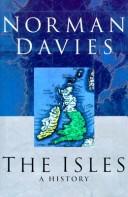
A deliberately provocative re-reading of British history that strips away nationalist myth and asks what 'England' and 'Britain' actually mean; essential for anyone who wants to think critically rather than just absorb the standard narrative.

A concise, brilliant argument that the British Empire was held together by hierarchy and class as much as by race — a revisionist thesis that reframes everything you have read about empire and forces a rethink of the Victorian and Edwardian chapters.
Discussion
Keep reading
Paths that share books, cover the same subject, or open a related topic.