The History of Spain: Best Books to Read, in Order
This curriculum takes you from a panoramic view of Spanish history all the way down to the granular drama of its most defining eras—Al-Andalus, the Reconquista, the Golden Age empire, the Civil War, and modern Spain. Each stage builds the chronological backbone and key vocabulary needed to absorb the deeper, more specialized works that follow, so no prior knowledge is assumed at the start.
Foundations: The Full Story
BeginnerGain a confident chronological overview of Spanish history from antiquity to the present, establishing the names, dates, and turning points that all later reading will reference.
▸ Study plan for this stage
Pace: 8–10 weeks, ~40–50 pages/day. Start with "The Story of Spain" (4–5 weeks, ~30 pages/day to absorb narrative flow), then move to "Spain" by Carr (4–5 weeks, ~40–50 pages/day for deeper analysis).
- The Iberian Peninsula's pre-Roman and Roman foundations, and how geography shaped settlement patterns and cultural identity
- The Islamic conquest (711 CE) and the Reconquista as the defining medieval narrative, including the rise of Christian kingdoms
- The unification of Spain under the Catholic Monarchs (Ferdinand and Isabella) and the expulsion of Muslims and Jews as pivotal moments
- The Spanish Empire's rise in the 16th–17th centuries: exploration, colonization, and the Habsburg dynasty's dominance
- The decline of Spanish power: the War of Spanish Succession, loss of colonies, and the shift from empire to regional power
- The 19th–20th century crises: Napoleonic invasion, civil war, dictatorship, and the transition to democracy
- Regional identities (Castile, Catalonia, Basque Country, Andalusia) and their persistent tension with centralized Spanish nationalism
- How Spain's position between Europe and the Mediterranean, and between Christian and Islamic worlds, created a unique historical trajectory
- What were the major phases of the Reconquista, and how did it shape Spanish religious and political identity?
- How did the unification under Ferdinand and Isabella differ from earlier Christian kingdoms, and what were its immediate consequences?
- What factors led to Spain's emergence as a global empire in the 16th century, and what caused its decline by the 18th century?
- How did the Spanish Civil War and Franco's dictatorship reshape Spanish society, and what enabled the transition to democracy?
- What are the historical roots of regional nationalism in Catalonia, the Basque Country, and other regions, and how have they challenged Spanish unity?
- How did Spain's geographic position and cultural crossroads between Europe, the Mediterranean, and the Islamic world influence its historical development?
- Create a detailed timeline from 711 CE to 1492 CE marking key Reconquista milestones, kingdom expansions, and major battles using both texts as sources.
- Map the territorial evolution of Spain from the Roman period through the unification of Ferdinand and Isabella, color-coding different kingdoms and their mergers.
- Write a 500-word comparative essay on how Williams and Carr each explain the causes of Spanish imperial decline in the 17th–18th centuries.
- Construct a genealogical chart of the major Spanish dynasties (Visigothic, Umayyad, Christian kingdoms, Trastámara, Habsburg, Bourbon) and note how succession shaped political events.
- Create a regional profile document for three regions (Castile, Catalonia, Basque Country) noting their distinct histories, languages, and relationship to central Spanish authority as presented in both texts.
- Develop a visual infographic or annotated outline comparing Spain's status in 1500, 1650, 1800, and 1975, showing the shift from empire to modern nation-state.
Next up: This foundation in chronological landmarks and major turning points equips you to engage with thematic and analytical works that examine specific periods, institutions, or cultural movements in depth—you now have the scaffolding to understand how individual chapters of Spanish history fit into the larger narrative.
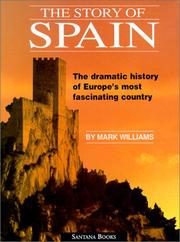
A highly readable, single-volume narrative written for general audiences that sweeps from prehistoric Iberia to the late 20th century—the perfect orientation before tackling any specialist work.
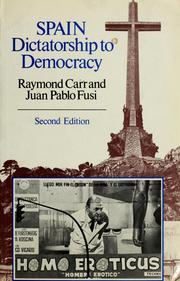
Edited by one of the foremost British Hispanists and written by a team of leading scholars, this accessible collection gives thematic and chronological depth to the overview, preparing you for the era-specific books ahead.
Al-Andalus and the Reconquista
BeginnerUnderstand the seven centuries of Muslim rule in Iberia, the convivencia of three faiths, and the long Christian reconquest that shaped Spain's identity and propelled it toward empire.
▸ Study plan for this stage
Pace: 8–10 weeks, ~25–30 pages/day (approximately 2 weeks per book with time for reflection and exercises)
- The cultural and intellectual flourishing of Al-Andalus during the 8th–11th centuries, particularly under the Umayyad Caliphate and Taifa kingdoms
- Convivencia: the coexistence and collaboration of Muslims, Christians, and Jews in medieval Iberia, and how this shaped intellectual exchange
- The role of translation movements (especially the Toledo School) in transmitting Islamic and classical knowledge to Christian Europe
- The fragmentation of Al-Andalus into Taifa kingdoms and its vulnerability to Christian military pressure
- The Reconquista as a centuries-long process (not a single event) driven by Christian kingdoms in the north, culminating in 1492
- The cultural, religious, and political consequences of Christian reconquest, including the expulsion of Muslims and Jews
- How Al-Andalus became foundational to Spanish identity and the mythology surrounding the 'Golden Age' of Islamic Spain
- What made Al-Andalus a center of intellectual and cultural achievement, and what role did the Umayyad Caliphate play in this?
- How did Muslims, Christians, and Jews coexist and collaborate in medieval Iberia, and what does 'convivencia' actually mean?
- What was the Toledo School of Translators, and how did it facilitate the transmission of knowledge from the Islamic world to Christian Europe?
- Why did Al-Andalus fragment into Taifa kingdoms, and how did this political division affect its ability to resist Christian reconquest?
- How did the Reconquista unfold over seven centuries, and what were the major turning points (e.g., the fall of Granada in 1492)?
- What were the long-term consequences of the Christian reconquest for Muslims, Jews, and the emerging Spanish state?
- How has the historical memory of Al-Andalus been used and mythologized in Spanish and Islamic identity?
- Create a timeline of Al-Andalus from 711 to 1492, marking major political shifts, cultural peaks, and military turning points mentioned in both books
- Map the territorial changes of Christian and Muslim kingdoms across three centuries (roughly 1000, 1200, 1400), using information from Lane-Poole's narrative
- Write a 500-word essay comparing Menocal's portrayal of convivencia with Lane-Poole's account of Muslim-Christian relations—where do they agree or differ?
- Research and write short profiles (200 words each) of 3–4 key figures mentioned in the books (e.g., Abd al-Rahman III, El Cid, the Almohads), noting their impact on Al-Andalus or the Reconquista
- Create an annotated list of intellectual and cultural achievements of Al-Andalus (literature, mathematics, architecture, philosophy) with specific examples from Menocal
- Debate or discuss: Was convivencia a genuine reality or a romanticized myth? Use specific evidence from both books to support your position
- Design a visual comparison chart showing the three faiths' legal status, cultural contributions, and experiences during different periods of Al-Andalus (Umayyad, Taifa, Almohad, late period)
Next up: This stage establishes the deep historical and cultural roots of Spain—its Islamic heritage, multicultural past, and the religious and political conflicts that defined medieval Iberia—preparing you to understand how the unified Spanish monarchy that emerged from the Reconquista would project power globally and build an empire.
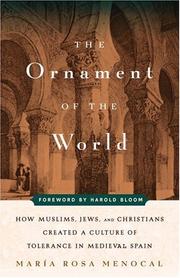
A beautifully written, widely praised account of the cultural flowering of Muslim, Jewish, and Christian coexistence in medieval Iberia—the essential starting point for understanding Al-Andalus.
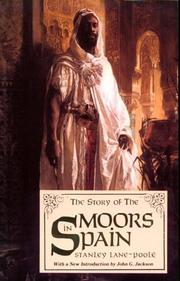
A classic, concise narrative of the Moorish presence in Spain from the conquest of 711 to the fall of Granada in 1492, providing the political spine to complement Menocal's cultural portrait.
The Golden Age: Empire and Inquisition
IntermediateGrasp how Ferdinand and Isabella's unified Spain launched a global empire, how the Inquisition shaped society, and why the world's most powerful 16th-century state eventually declined.
▸ Study plan for this stage
Pace: 8–10 weeks, ~40–50 pages/day (approximately 3–4 hours of focused reading). Allocate 3–4 weeks to "Isabella of Castile," 2–3 weeks to "Empires of the Monsoon," and 2–3 weeks to "The Spanish Inquisition," with 1 week for review and synthesis.
- Isabella and Ferdinand's political marriage and unification of Spain (1469–1479): how dynastic strategy created the foundation for empire
- The Reconquista's completion and its ideological legacy: religious conquest as justification for global expansion
- The mechanisms and scope of the Spanish Inquisition: institutional structure, targets (Jews, Muslims, conversos), and social control
- Spain's maritime empire in the 16th century: exploration, conquest, and trade networks across the Atlantic and Indian Ocean
- The relationship between religious orthodoxy and imperial ambition: how the Inquisition enforced ideological unity to sustain empire
- Economic and social consequences of the Inquisition: expulsion of Jews and Muslims, disruption of commerce, and long-term demographic decline
- The paradox of Spanish decline: why the world's richest and most powerful 16th-century state weakened by the 17th century
- How did Isabella and Ferdinand's marriage and political strategies unify Spain, and what role did the Reconquista play in shaping their vision of empire?
- What were the institutional structures of the Spanish Inquisition, and who were its primary targets? How did it function as a tool of state power?
- How did Spain's maritime expansion in the Atlantic and Indian Ocean relate to the religious ideology developed during the Reconquista and enforced by the Inquisition?
- What were the economic and social consequences of the expulsion of Jews and Muslims from Spain, and how did these policies weaken Spain's long-term prosperity?
- Why did Spain, despite being the world's most powerful empire in the 16th century, experience relative decline by the early 17th century?
- How did the Inquisition's enforcement of religious orthodoxy both enable and ultimately constrain Spain's imperial ambitions?
- Create a timeline of key events from 1469–1600 (Isabella's marriage, Granada's fall, major Inquisition decrees, major colonial expeditions) and annotate how each event reflects the stage's central themes.
- Write a comparative character sketch of Isabella and Ferdinand based on Tremlett's portrayal: what were their individual ambitions, and how did their partnership create something neither could achieve alone?
- Map Spain's imperial territories and trade routes circa 1550 using evidence from 'Empires of the Monsoon,' then identify which regions were most economically vital and why.
- Analyze 3–4 primary source excerpts (Inquisition edicts, royal decrees, or merchant accounts) provided in Kamen's work: identify the stated justifications for policies and the actual economic/social effects.
- Write a 1,500–2,000 word analytical essay: 'How did religious ideology and imperial ambition reinforce each other in 16th-century Spain, and why did this combination ultimately prove unsustainable?'
- Create a visual diagram or infographic showing the causal chain: Reconquista ideology → Inquisition enforcement → expulsion of Jews/Muslims → economic disruption → imperial decline. Use specific examples from all three books.
Next up: This stage establishes how Spain's unified identity, religious orthodoxy, and early imperial success set the stage for understanding the subsequent challenges of sustaining empire—religious conflict, economic strain, and competition from rival powers—that will be explored in the next stage.

A rigorous and gripping biography of the monarch whose reign launched the Reconquista's end, the expulsion of the Jews, Columbus's voyage, and the Inquisition—the ideal entry into the Golden Age.
Situates Spain's imperial expansion within the broader context of early modern global trade and conquest, giving the learner a world-historical perspective on Spanish power.
The definitive modern scholarly reassessment of the Inquisition by the leading authority on the subject, correcting myths and showing how it shaped Spanish culture, religion, and decline.
Civil War and Franco's Spain
IntermediateUnderstand the catastrophic fractures of the 1930s Civil War, the nature of the Franco dictatorship, and how that trauma defined 20th-century Spanish politics and memory.
▸ Study plan for this stage
Pace: 12–14 weeks, ~40–50 pages/day. Allocate 3–4 weeks to Orwell (200 pp), 6–7 weeks to Beevor (600+ pp), and 3–4 weeks to Payne (400+ pp), with 1–2 weeks for review and synthesis.
- The ideological fractures of 1930s Spain: regional nationalism, class conflict, church-state tensions, and the collapse of the Second Republic
- The Spanish Civil War as a proxy conflict: international brigades, Soviet support, Nazi/Fascist intervention, and the failure of democratic nations to respond
- Orwell's eyewitness account of revolutionary Barcelona and the suppression of the POUM—how the Left consumed itself during the war
- Franco's military strategy, nationalist ideology, and the mechanics of his victory (1936–1939)
- The Franco regime's consolidation of power: repression, the National Catholicism synthesis, economic autarky, and the role of the military and church
- Memory, trauma, and silence: how Franco's Spain suppressed historical memory and how this shaped post-1975 Spanish politics and the 'Pact of Forgetting'
- Regional resistance and continuity: Catalonia and the Basque Country under Franco, and their role in destabilizing the regime
- The long shadow of the Civil War on Spanish identity, literature, and politics into the late 20th century
- What were the main political and social divisions in Spain before the Civil War, and how did they contribute to the Republic's collapse?
- How does Orwell's account of Barcelona in 1937 illustrate the internal conflicts within the Republican left, and what does he reveal about the suppression of the POUM?
- What role did foreign intervention (Soviet, Nazi, Fascist, and the absence of Western support) play in determining the outcome of the Civil War?
- How did Franco consolidate his dictatorship after 1939, and what were the key pillars of his regime (military, church, ideology)?
- What was National Catholicism, and how did it serve Franco's political and social consolidation?
- How did Franco's regime attempt to suppress historical memory and silence dissent, and what were the long-term psychological and political consequences?
- Why did regional nationalism (especially in Catalonia and the Basque Country) persist as a threat to Franco's Spain, and how did the regime respond?
- Timeline exercise: Create a detailed chronology of key events from 1931–1939 using Beevor, marking turning points in the war and noting how Orwell's Barcelona experience fits into the broader military and political narrative.
- Close reading of Orwell: Select 3–4 passages from Homage to Catalonia that reveal his political disillusionment, and write a 2–3 page analysis of how his observations challenge conventional narratives of the Republican side.
- Comparative ideology map: Using Payne's analysis, chart the ideological positions of Franco's regime (National Catholicism, Falangism, militarism, traditionalism) and explain how they reinforced each other.
- Foreign intervention analysis: Using Beevor's account, create a table comparing Soviet, Nazi, Fascist, and Western responses to the war, and assess how each power's interests shaped the conflict.
- Memory and silence exercise: Research one aspect of Franco-era repression (e.g., the Valley of the Fallen, the 'Pact of Forgetting,' or the suppression of regional languages) using Payne, then write a 3–4 page essay on how this silence affected Spanish society post-1975.
- Primary source comparison: Read excerpts from Franco-era propaganda (available in Payne or supplementary sources) alongside Orwell's eyewitness account, and analyze how official narratives distorted the war's reality.
Next up: This stage equips you with a deep understanding of Spain's traumatic 20th-century fracture and the regime that tried to erase it, preparing you to explore how Spanish democracy navigated reconciliation, regional autonomy, and historical memory in the transition after 1975.
Orwell's first-person account of fighting in the Civil War is the most vivid and emotionally immediate introduction to the conflict—read first to feel the war before analyzing it.

The best single-volume military and political history of the war, comprehensive yet accessible, providing the factual framework that Orwell's memoir alone cannot supply.
The authoritative English-language study of Francoism from 1936 to 1975, essential for understanding how the dictatorship worked and why Spain emerged from it the way it did.
Modern Spain: Transition and Identity
ExpertAnalyze Spain's remarkable democratic transition after Franco, the tensions of regional identity (Catalonia, the Basque Country), and the country's place in contemporary Europe.
▸ Study plan for this stage
Pace: 4–5 weeks, ~40–50 pages/day (approximately 300 pages total)
- Spain's transition from Franco's dictatorship to democracy (1975–1982) and the role of key figures like King Juan Carlos and Adolfo Suárez
- The 1978 Constitution as the foundational framework for modern Spanish identity and governance
- Regional nationalism and identity tensions: Catalonia and the Basque Country's historical grievances, language politics, and autonomy movements
- The Spanish character and cultural identity in the post-Franco era—how Spaniards redefined themselves as Europeans
- Economic modernization and Spain's integration into the European Community (now EU)
- The role of civil society, generational change, and social transformation in shaping contemporary Spain
- What were the key stages and actors in Spain's democratic transition, and why is it considered a model for peaceful regime change?
- How did the 1978 Constitution attempt to balance national unity with regional autonomy, and what tensions does it reflect?
- What are the historical roots of Catalan and Basque nationalism, and how do they challenge Spanish national identity?
- How did Spain's relationship with Europe—particularly EU membership—reshape Spanish society and identity?
- What generational and cultural shifts occurred in Spain after Franco, and how did Spaniards redefine their national character?
- What are the ongoing tensions between regional identity and national cohesion in modern Spain, as Hooper describes them?
- Create a timeline of Spain's transition from 1975–1982, marking key political events, constitutional moments, and the roles of Juan Carlos, Suárez, and other figures; annotate how each event shaped democratic institutions
- Map Spain's autonomous communities, focusing on Catalonia and the Basque Country; research and document their historical grievances, language policies, and current autonomy arrangements as discussed in Hooper
- Analyze the 1978 Constitution: identify 3–4 key articles addressing regional autonomy, language rights, and national identity; write a brief essay on how it attempts to resolve the unity-diversity tension
- Compare Spanish and another European national identity (e.g., French, German, Italian); use Hooper's observations to explain how Spain's transition and regional diversity make it distinctive
- Interview or survey 2–3 Spanish speakers (or Spanish expats) about their sense of regional vs. national identity; document their responses and connect them to themes in Hooper
- Write a 1,500–2,000 word analytical essay: 'How did Spain's democratic transition reshape Spanish identity in Europe?' using specific examples and evidence from Hooper
Next up: This stage establishes the political, constitutional, and cultural foundations of modern Spain, preparing you to explore how these tensions and identities play out in contemporary policy debates, regional conflicts, and Spain's role in the European Union in subsequent stages.
A landmark portrait of post-Franco Spanish society, culture, and politics written by a longtime Guardian correspondent—the best single book on how modern Spain became what it is.
Discussion
Keep reading
Paths that share books, cover the same subject, or open a related topic.