Scottish History: The Best Books to Read, in Order
This curriculum takes you from a vivid, story-driven introduction to Scottish history all the way through rigorous scholarly analysis of modern Scotland, covering clans, Bannockburn, the Union, the Enlightenment, and beyond. Each stage builds the chronological backbone and vocabulary needed to absorb the deeper, more specialised works that follow. By the end you will have both a confident narrative grasp and genuine analytical depth.
Foundations: The Big Picture
BeginnerGain a confident, chronological overview of Scottish history from ancient times to the present, establishing the key events, figures, and themes that all later books assume you know.
▸ Study plan for this stage
Pace: 6–8 weeks, ~40–50 pages/day (alternating between both books to maintain narrative momentum)
- The Pictish, Celtic, and Norse foundations of Scotland and how they shaped regional identity
- The role of the Auld Alliance with France and its impact on Scottish independence
- The Wars of Independence (1296–1357) and the figures of William Wallace and Robert the Bruce
- The Stewart dynasty's rise and its consolidation of power across the Highlands and Lowlands
- The Reformation and religious upheaval in 16th-century Scotland
- The Union of the Crowns (1603) and the Union of Parliaments (1707) and their consequences
- Scotland's economic and cultural development from medieval times through the Industrial Revolution
- The persistence of Highland–Lowland cultural and political tensions throughout Scottish history
- What were the main ethnic and cultural groups that shaped early Scotland, and how did they interact?
- Why was the Auld Alliance with France so important to Scottish independence, and when did it effectively end?
- Who were William Wallace and Robert the Bruce, and what made their military campaigns pivotal?
- How did the Stewart dynasty consolidate power and what challenges did they face from the Highlands?
- What role did the Reformation play in Scottish identity and politics in the 16th century?
- How did the Union of the Crowns (1603) and Union of Parliaments (1707) change Scotland's political status, and what were the immediate consequences?
- Create a visual timeline (poster or digital) marking the major events from Magnusson and Tranter, color-coding by era (Pictish/Celtic, Medieval, Reformation, Union, Industrial)
- Write a one-page summary of the Wars of Independence as if explaining it to someone unfamiliar with Scottish history, using only details from the books
- Map the regions of Scotland (Highlands, Lowlands, Borders, Islands) and annotate with key historical events and figures associated with each area from your reading
- Compare and contrast how Magnusson and Tranter each portray a major figure (e.g., Robert the Bruce, Mary Queen of Scots) in a short essay
- Create a family tree of the Stewart dynasty showing succession and key conflicts, noting which events Magnusson and Tranter emphasize
- Write journal entries from the perspective of a Scottish merchant or noble during two different periods (e.g., 1300s and 1600s), grounding details in the books
Next up: This stage equips you with the chronological scaffolding and major turning points needed to dive deeper into specialized topics—whether regional histories, biographical studies, or thematic explorations—that assume familiarity with Scotland's overarching narrative arc.
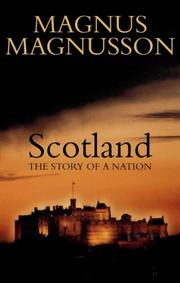
A highly readable, authoritative single-volume narrative written for general readers — the ideal first book to build a solid chronological spine before diving into any specific era.
Tranter's lifelong mastery of Scottish history shines in this accessible overview; reading it second reinforces the timeline and introduces the cultural and romantic dimensions of Scottish identity that recur throughout the curriculum.
Clans, Wars & Medieval Scotland
BeginnerUnderstand the clan system, the Wars of Independence (including Bannockburn), and the turbulent medieval kingdom that shaped Scotland's distinct identity.
▸ Study plan for this stage
Pace: 4–5 weeks, ~40–50 pages/day (approximately 300 pages total)
- Robert the Bruce's path to kingship: from rival claimant to legitimate monarch through military victory and papal recognition
- The Wars of Scottish Independence (1296–1357): causes, key battles, and how Scotland secured sovereignty from England
- The Battle of Bannockburn (1314) as a turning point: its military tactics, strategic significance, and symbolic importance to Scottish identity
- The clan system and feudal structures in medieval Scotland: how regional power, kinship, and loyalty shaped the kingdom
- The role of the Church and international diplomacy (particularly the Declaration of Arbroath) in legitimizing Scottish independence
- The personal character and political decisions of Robert the Bruce: ambition, pragmatism, and the costs of civil war within Scotland
- The transition from medieval warfare to statecraft: how Bruce consolidated power after military victory
- What were the main obstacles Robert the Bruce faced in claiming the Scottish throne, and how did he overcome them?
- Describe the significance of the Battle of Bannockburn. What made it a decisive victory, and how did it change the course of the Wars of Independence?
- How did the Declaration of Arbroath strengthen Scotland's claim to independence, and what role did the Church play in supporting Bruce's kingship?
- What was the clan system in medieval Scotland, and how did regional loyalties and kinship networks influence Bruce's ability to unite the kingdom?
- How did Robert the Bruce's early political alliances and conflicts with other Scottish nobles (such as the Comyns) shape the civil conflict during the Wars of Independence?
- What were the long-term consequences of the Wars of Independence for Scotland's political structure and national identity?
- Create a timeline of Robert the Bruce's life (1274–1329) marking key events: his early claims, the Comyn murder, Bannockburn, and the Declaration of Arbroath. Annotate each with its political significance.
- Map the major battles of the Wars of Independence mentioned in the book (Stirling Bridge, Bannockburn, etc.). Research and note the geographic and strategic reasons these locations were critical.
- Write a character sketch of Robert the Bruce based on McNair Scott's portrayal: identify 3–4 defining personality traits and provide textual evidence for each.
- Compare Bruce's relationship with two rival Scottish nobles (e.g., the Comyns, the Balliols, or John of Lorn). How did these rivalries reflect broader clan tensions?
- Analyze the Declaration of Arbroath: read the actual document (available online) and explain how it justified Scottish independence using medieval political theory and religious authority.
- Create a visual diagram showing the feudal hierarchy and clan structure of medieval Scotland as depicted in the book—identify key families, their territories, and their allegiances to Bruce.
Next up: This stage establishes the military and political foundations of Scottish independence under Bruce, providing the essential context for understanding how subsequent medieval Scottish kings navigated the fragile new kingdom and developed the institutions that would define Scotland's later history.
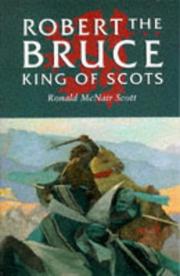
The definitive popular biography of Bruce; it places Bannockburn in full political and military context and is written accessibly enough for readers fresh from the overview stage.
Union, Jacobites & the Making of Modern Britain
IntermediateAnalyse the 1707 Acts of Union, the Jacobite risings, and the complex ways Scotland negotiated — and contested — its place within Great Britain.
▸ Study plan for this stage
Pace: 4–5 weeks, ~40–50 pages/day (approximately 280 pages total; allows time for note-taking and reflection on dense historical narrative)
- The Jacobite cause as a dynastic, religious, and political struggle rooted in the 1688 Glorious Revolution and the deposition of James VII/II
- How the 1707 Acts of Union created structural tensions that Jacobitism both exploited and embodied
- The role of Highland clan culture, kinship networks, and feudal loyalty in sustaining Jacobite military organization
- The 1745 Rising as the culmination of Jacobite ambitions and the final test of Stuart restoration
- Culloden (April 1746) as a military, cultural, and political watershed that destroyed Highland society and ended Jacobitism as a viable force
- The aftermath of Culloden: repression, cultural suppression, and the transformation of Scotland's relationship to Britain
- How Prebble uses primary sources, eyewitness accounts, and material evidence to reconstruct the battle and its human dimensions
- What were the principal grievances and motivations of the Jacobite movement, and how did they relate to the 1707 Union?
- How did Highland clan structure and loyalty systems enable the Jacobite risings, and why were these systems vulnerable to defeat?
- What was the strategic significance of the 1745 Rising, and why did it ultimately fail despite initial success?
- How does Prebble use primary sources and eyewitness testimony to convey the experience of Culloden, and what does this reveal about the battle's human cost?
- What were the immediate and long-term consequences of Culloden for Highland society, Scottish identity, and the Union?
- How did the suppression of Jacobitism reshape Scotland's place within Britain, and what cultural shifts followed the defeat?
- Create a timeline of Jacobite risings (1688–1746) with key dates, leaders, and outcomes; annotate with how each relates to the Union and British politics
- Map the geography of the 1745 Rising: trace the route from Glenfinnan to Culloden, marking clan territories, supply lines, and battle positions; analyze how terrain shaped military strategy
- Compile a character dossier of 3–4 key figures (e.g., Charles Edward Stuart, the Duke of Cumberland, a clan chief) using Prebble's accounts; note their motivations, decisions, and fates
- Close-read 2–3 eyewitness accounts from Culloden in Prebble's text; annotate for sensory detail, emotional register, and reliability; compare how different witnesses describe the same events
- Write a 500-word analytical piece: 'Why did Culloden succeed militarily for the British but fail politically for the Jacobites?' Use specific evidence from the text
- Create a visual comparison chart: Highland clan society before and after Culloden (social structure, land ownership, cultural practices, legal status); identify which changes were direct consequences of the battle
Next up: This stage establishes the military, political, and cultural collapse of Jacobitism and the violent consolidation of the Union, preparing you to examine how Scotland subsequently adapted to and reshaped British identity in the 18th and 19th centuries.
Prebble's gripping account of the 1746 battle and its brutal aftermath is the essential companion to understanding how the Jacobite cause ended and why the clan system was subsequently dismantled.
The Scottish Enlightenment & the Highland Clearances
IntermediateExplore Scotland's extraordinary 18th-century intellectual flowering and the devastating social upheaval of the Clearances — two defining and contrasting legacies of the same era.
▸ Study plan for this stage
Pace: 8–10 weeks, ~40–50 pages/day (approximately 3–4 hours of focused reading). Week 1–3: "How the Scots Invented the Modern World" (~400 pages); Week 4–5: transition and review (~1 week); Week 6–10: "The Highland Clearances" (~300 pages).
- The Scottish Enlightenment as a radical intellectual movement: how Scottish thinkers (Hume, Smith, Ferguson, Reid) challenged European philosophy and shaped modern thought on economics, human nature, and society
- Adam Smith's 'The Wealth of Nations' and the birth of modern capitalism: the division of labor, free markets, and the invisible hand as revolutionary economic concepts
- The paradox of Scottish progress: how the same era that produced Enlightenment brilliance also enabled the systematic destruction of Highland society and culture
- The Highland Clearances as deliberate social engineering: landlords' transformation of communal clan lands into commercial sheep farms, driven by profit motives and 'improvement' ideology
- The human cost of the Clearances: mass displacement, emigration, cultural erasure, and the destruction of Gaelic society and traditional Highland life
- The role of Enlightenment ideology in justifying the Clearances: how 'rational improvement' and economic efficiency became tools of dispossession
- Scotland's dual legacy: intellectual innovation and cultural trauma as simultaneous products of the 18th century
- How did Scottish Enlightenment thinkers like David Hume, Adam Smith, and Francis Hutcheson challenge prevailing European intellectual traditions, and what made their ideas so influential?
- What were the core principles of Adam Smith's economic theory, and how did they differ from mercantilist thinking of the time?
- What were the primary causes and mechanisms of the Highland Clearances, and who were the main actors driving them?
- How did Enlightenment ideology of 'improvement' and 'rational progress' become a justification for the displacement and cultural destruction of Highland communities?
- What were the demographic, cultural, and social consequences of the Clearances for Highland Scots, and where did displaced populations emigrate?
- How can you reconcile Scotland's role as an intellectual powerhouse of the 18th century with its simultaneous role in perpetrating one of Britain's most devastating internal displacements?
- Create a timeline mapping key Enlightenment figures and their major works (from Herman's book) alongside major Clearance events (from Prebble's book) to visualize the paradox of the era
- Read and annotate a primary source excerpt from Adam Smith's 'The Wealth of Nations' (excerpted in Herman) and explain in your own words how his economic principles could be used to justify 'improvement' and land consolidation
- Write a comparative character sketch of 2–3 Highland landlords featured in Prebble's account: what were their motivations, and how did they justify their actions?
- Trace the emigration patterns described in Prebble: map where Highland Scots were forced to emigrate (North America, Australia, etc.) and research the long-term cultural impact on those diaspora communities
- Debate exercise: argue both sides—how a contemporary 'improver' landlord might have justified the Clearances using Enlightenment logic, and how a Highland community leader might have countered those arguments
- Create a visual infographic or chart showing the economic transformation of the Highlands: communal clan system → commercial sheep farming, with data on land values, population, and emigration figures from Prebble
Next up: This stage establishes Scotland's contradictory 18th-century legacy—intellectual brilliance paired with social catastrophe—preparing you to examine how Scotland navigated the 19th and 20th centuries as it grappled with industrialization, cultural recovery, and the long shadow of the Clearances on Scottish identity and politics.
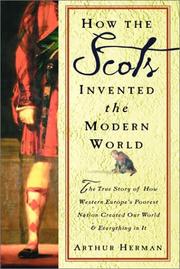
Herman's celebrated popular history makes the Enlightenment vivid and accessible, showing how Hume, Smith, Watt, and others shaped global modernity — essential reading before tackling more specialist works.
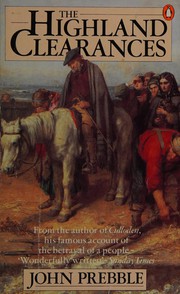
Prebble's landmark account of the forced evictions of Highland communities is the counterweight to Enlightenment optimism, and reading it after Herman reveals the full, contradictory complexity of 18th–19th century Scotland.
Industrial Scotland to the Present Day
ExpertUnderstand Scotland's industrial revolution, its role in Empire, the rise of Scottish nationalism, devolution, and the debates shaping Scotland today.
▸ Study plan for this stage
Pace: 8–10 weeks, ~40–50 pages/day. Start with Devine's comprehensive narrative (weeks 1–6, ~350 pages), then move to Goring's primary-source anthology (weeks 7–10, ~200 pages). Build in 1–2 review days per week.
- Scotland's industrial transformation (1700–1850): coal, iron, shipbuilding, and textile industries as drivers of economic power and urban growth
- The Scottish Enlightenment and industrial capitalism: how intellectual innovation fueled economic expansion and shaped Scottish identity
- Empire and exploitation: Scotland's role in British imperialism, colonial trade, and the moral contradictions of Scottish participation in slavery and imperial ventures
- Urbanization and social change: the rise of Glasgow and Edinburgh as industrial centers, working-class formation, and the emergence of labor movements
- Scottish nationalism and political identity: the growth of Home Rule movements, the 1979 and 1997 devolution referendums, and the Scottish National Party's rise
- Deindustrialization and economic crisis (1970s–1990s): the decline of traditional industries, unemployment, and Scotland's search for new economic models
- Devolution and modern governance: the establishment of the Scottish Parliament (1999), powers and limitations, and contemporary debates over independence
- Scottish identity in the modern era: how literature, culture, and historical memory shape contemporary Scottish nationalism and civic nationalism
- What were the key industries driving Scotland's industrial revolution, and how did Scotland's geography and existing trade networks enable rapid industrialization?
- How did Scotland's role in the British Empire both enrich the Scottish economy and create moral contradictions within Scottish society?
- What were the main causes and consequences of deindustrialization in Scotland from the 1970s onward, and how did this reshape Scottish politics?
- Trace the evolution of Scottish nationalism from the 19th century through the devolution referendums of 1979 and 1997—what changed and why?
- What powers does the Scottish Parliament have under devolution, and what major policy differences have emerged between Scotland and Westminster since 1999?
- How do primary sources in Goring's anthology reveal the lived experience of ordinary Scots during industrialization, empire, and deindustrialization?
- Create a timeline mapping Scotland's industrial sectors (coal, iron, shipbuilding, textiles) from 1700–2000, noting peak periods and decline. Annotate with major political events (Home Rule bills, devolution votes).
- Read 3–4 key chapters from Devine on empire and slavery, then identify and analyze 2–3 corresponding primary sources in Goring that illustrate Scottish participation in or resistance to imperial ventures.
- Write a 1,500-word essay: 'Why did Scottish nationalism surge in the 1970s–1990s?' Use Devine's analysis of deindustrialization and political alienation, supported by primary sources from Goring.
- Compare two Scottish cities (e.g., Glasgow and Edinburgh) using Devine's account of urbanization. Chart their industrial growth, population change, and political movements. How did geography shape their trajectories differently?
- Select 5–6 primary documents from Goring spanning 1700–2000 (e.g., speeches, letters, manifestos, journalism). Annotate each with: context, author's perspective, and what it reveals about Scottish identity at that moment.
- Debate exercise: Prepare arguments for and against Scottish independence using evidence from both books. What do Devine's historical patterns and Goring's primary sources suggest about Scotland's economic and political viability?
Next up: This stage establishes the deep historical roots and contemporary political structures shaping Scotland, preparing you to examine Scotland's cultural identity, literature, and regional distinctiveness in the next stage.

Devine is the pre-eminent historian of modern Scotland; this magisterial work synthesises industrialisation, emigration, Empire, and nationalism into a single authoritative narrative — the capstone scholarly text of the curriculum.

A brilliant anthology of eyewitness accounts spanning 2,000 years, best read last as a way to hear Scottish history in the voices of those who lived it, consolidating everything learned across the curriculum.
Discussion
Keep reading
Paths that share books, cover the same subject, or open a related topic.