Writing Historical Fiction: The Best Books to Learn, in Order
This curriculum is built for an intermediate writer who already understands basic craft and wants to master the specific demands of historical fiction — from rigorous research and period authenticity to vivid character and narrative immersion. The four stages move from foundational craft principles, through the mechanics of research and detail, into the deeper art of character and voice, and finally to advanced techniques for making the past feel urgently alive on the page.
Foundations of Historical Fiction Craft
IntermediateUnderstand the unique contract between historical fiction writer and reader — balancing fact and imagination — and establish a working framework for the genre's core demands.
▸ Study plan for this stage
Pace: 4–5 weeks, ~40–50 pages/day. Allocate 2 weeks to Brayfield's "Writing Historical Fiction" (approximately 250–300 pages), then 2–3 weeks to Gardner's "The Art of Fiction" (approximately 400–450 pages), with 3–4 days for review and integration.
- The historical fiction contract: how readers expect factual accuracy in setting, events, and historical detail while accepting invented characters, dialogue, and emotional truth
- Research as foundation: the necessity of deep historical knowledge to write convincingly and make intentional choices about what to invent versus what to preserve
- Balancing fact and imagination: techniques for weaving real historical events with fictional narratives without sacrificing either authenticity or compelling storytelling
- Point of view and perspective: how a character's historical moment shapes their worldview, language, and what they can plausibly know or believe
- The architecture of fiction: Gardner's principles of scene, dialogue, characterization, and narrative structure applied specifically to historical settings
- Avoiding anachronism and false notes: recognizing how language, customs, technology, and social attitudes must align with the historical period
- Creating emotional resonance within historical constraints: making invented characters and conflicts feel urgent and meaningful despite the reader knowing the historical outcome
- What is the implicit contract between a historical fiction writer and reader, and how does it differ from the contract in contemporary or fantasy fiction?
- How does Brayfield argue that historical research should inform your creative choices, and what does she identify as the consequences of insufficient research?
- According to Gardner, how do the fundamental principles of fiction craft (scene, dialogue, character development) apply differently—or similarly—when writing in a historical setting?
- What are the key differences between historical accuracy and historical authenticity, and why does Brayfield suggest that authenticity sometimes matters more than literal fact?
- How can a writer use point of view to navigate the tension between modern reader expectations and historical period constraints?
- What specific techniques does Gardner recommend for creating vivid, convincing scenes and dialogue, and how would you adapt these for a historical context?
- Read Brayfield's opening chapters on the historical fiction contract, then write a 500-word reflection on a historical novel you've read: identify one moment where the author clearly invented something, and explain how that invention served the story without breaking your trust in the historical setting.
- Conduct focused research on a single historical event or period (2–3 hours), then write two versions of a 300-word scene: one that prioritizes historical detail, one that prioritizes emotional immediacy. Annotate where you made choices about what to include or omit.
- Using Gardner's principles of scene construction, analyze a scene from a historical novel in your reading list: identify the sensory details, dialogue patterns, and character revelations Gardner would emphasize, and note what historical constraints the author navigated.
- Write a 400-word scene set in a specific historical period (not your own time), focusing on Gardner's advice about authentic dialogue and period-appropriate language. Then revise it once, removing any anachronistic word choices or references.
- Create a one-page character dossier for a fictional character you plan to place in a real historical moment: include what they would know/not know, their likely beliefs about major events, their language register, and one invented conflict that intersects with a real historical event.
- Read a passage from Brayfield about research methodology, then outline the research you would need to conduct before writing a 2,000-word historical fiction piece in your chosen period. Identify at least three 'fact vs. invention' decisions you'd need to make.
Next up: This stage establishes the foundational principles and constraints of historical fiction craft, preparing you to move into the next stage where you'll apply these principles to longer narrative projects, develop complex historical plots, and navigate the specific challenges of sustaining authenticity and tension across a full manuscript.

A practical, genre-specific guide that maps the full terrain of historical fiction writing — research, authenticity, and storytelling — giving you the conceptual vocabulary for everything that follows.
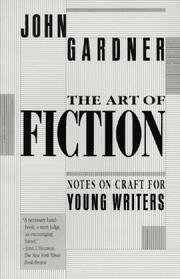
Gardner's foundational text on fictional dream and 'vivid and continuous' narrative is essential grounding; his principles of rendering scene and detail apply with special force to historical worlds that must be conjured from scratch.
Research, Period Detail, and Authenticity
IntermediateBuild a disciplined, efficient research practice and learn how to deploy period detail selectively so it enriches rather than overwhelms the story.
▸ Study plan for this stage
Pace: 6–7 weeks, ~40–50 pages/day (Lukács: 2–3 weeks, ~25 pages/day; Atwood: 3–4 weeks, ~50 pages/day with close re-reading)
- The historical novel as a form that mediates between historical truth and aesthetic necessity—Lukács's argument that the novel captures the 'totality' of a historical period through typical characters and situations rather than documented facts alone
- Period detail as a tool for psychological and social authenticity, not mere decoration—how Atwood uses material culture, medical history, and legal language to deepen character credibility and thematic resonance
- The distinction between research depth (what you know) and research visibility (what you show)—learning when to foreground research and when to let it recede into the texture of prose
- Narrative unreliability and historical uncertainty as compositional strategies—how Atwood's fragmented structure and Grace's contested testimony model how to handle gaps and contradictions in historical records
- The research process as iterative and selective: identifying which historical details matter to your story's emotional and thematic core, then building outward
- How period-specific language, social constraints, and material conditions shape character psychology and motivation in ways that feel inevitable rather than imposed
- According to Lukács, what is the relationship between historical accuracy and artistic truth in the historical novel? Why does he argue that 'typical' characters and situations matter more than documented facts?
- How does Atwood use period detail (medical knowledge, legal procedures, textile work, spiritualism) in *Alias Grace* to build Grace's credibility as a narrator and to complicate the reader's judgment of her reliability?
- What is the difference between research that serves the story and research that overwhelms it? How do you decide which historical details to include and which to cut?
- How does *Alias Grace* use narrative fragmentation and multiple perspectives (Grace's voice, Dr. Jordan's observations, historical documents) to reflect historical uncertainty and the impossibility of a single 'true' account?
- What specific research choices did Atwood make in *Alias Grace* (e.g., the real crime, the historical context of 1840s Canada, spiritualism, medical theories) and how do these choices serve the novel's themes about memory, agency, and gender?
- How can you use period-specific constraints—legal, social, material, psychological—as generative forces in your own writing rather than as obstacles to overcome?
- Read Lukács's *The Historical Novel* with annotated margins: mark passages where he defines the relationship between history and fiction, and write one-sentence summaries of his key arguments in the margins. Then write a 500-word reflection on whether you agree with his theory and how it applies to *Alias Grace*.
- Create a 'research map' for *Alias Grace*: list the major historical elements Atwood researched (the 1843 murders, spiritualism, medical practice, Canadian geography, class dynamics, etc.), then trace how each appears in the novel and what narrative or thematic work it does. Note which details are foregrounded and which are backgrounded.
- Choose one scene from *Alias Grace* (e.g., Grace's description of her needlework, Dr. Jordan's medical examination, the séance, or a memory of the murders) and analyze how period detail functions in it. Write a 300-word analysis of whether the detail enriches the scene or distracts from it, and why.
- Conduct a 'detail audit' of your own historical fiction work-in-progress or a short passage you've written: identify every historical detail you've included, mark whether it's visible to the reader or backgrounded, and assess whether each one earns its place. Revise one scene by either deepening a detail's thematic resonance or removing it entirely.
- Interview yourself as a researcher: write out 10–15 questions you would need to answer about your historical setting to write authentically (e.g., 'What would a woman of this class have worn?' 'What would she have known about medicine?' 'What legal rights did she have?'). Then research 3–5 of these questions in depth and write 1–2 pages on how the answers change your understanding of your characte
- Rewrite a scene from *Alias Grace* (or your own work) twice: once with minimal period detail, once with rich period detail. Compare the two versions and write a 250-word reflection on how detail affects pacing, credibility, and emotional impact.
Next up: This stage equips you with both a theoretical framework (Lukács) and a practical model (Atwood) for integrating research into narrative, preparing you to move forward into the craft of balancing historical constraint with imaginative freedom and learning how to sustain complex historical narratives over longer forms.

Lukács's classic analysis of what separates great historical fiction from costume drama — his argument that period detail must serve human truth, not spectacle — reframes how you think about every research decision.
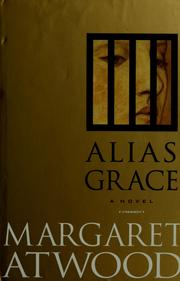
Read as a masterclass: Atwood's author's note and the novel itself show how a writer weaves documented fact, archival gaps, and invented interiority into seamless, credible narrative — the research is invisible but load-bearing.
Character, Voice, and Psychology Across Time
IntermediateLearn to create characters who are authentically of their era in thought, language, and worldview, while remaining emotionally accessible to modern readers.
▸ Study plan for this stage
Pace: 6–8 weeks, ~40–50 pages/day (alternating between Wolf Hall and Burroway; Wolf Hall ~650 pages, Writing Fiction ~350 pages)
- Immersion in historical consciousness: how Mantel renders 16th-century thought patterns, assumptions, and language to make the past feel lived-in rather than explained
- Free indirect discourse and perspective: the narrative technique that allows readers to inhabit a character's mind while maintaining historical distance
- Authenticity through specificity: using concrete period details (objects, customs, speech rhythms) rather than exposition to establish era and character voice
- The psychology of power and ambition: understanding how historical figures' internal motivations and emotional lives drive narrative, making them human across centuries
- Balancing accessibility with strangeness: creating characters whose emotional core (fear, desire, loyalty) is universal while their worldview remains distinctly of their time
- Voice as historical artifact: how word choice, syntax, and tone convey both character personality and period sensibility
- Unreliable and limited perspective: using what a character cannot know or understand about their own era to create dramatic irony and authenticity
- How does Mantel use free indirect discourse in Wolf Hall to make readers experience Thomas Cromwell's consciousness? What effect does this technique have on your sense of his historical authenticity?
- Identify three specific details (objects, customs, speech patterns) from Wolf Hall that ground the narrative in the 1520s–1530s without relying on exposition. How do these details shape your understanding of character?
- What does Burroway teach about creating character voice, and how do you see those principles applied in Mantel's portrayal of Cromwell versus Henry VIII versus Anne Boleyn?
- How does Mantel reveal Cromwell's emotional life and psychology while keeping him a figure of the Renaissance? What makes him both alien and sympathetic?
- What does Cromwell not understand about his own world, and how does Mantel use that limitation to create historical authenticity and dramatic tension?
- How would you describe the 'voice' of Wolf Hall itself—the narrative voice—and what does it teach you about how to write historical fiction that feels present-tense and immediate?
- Close-read 3–4 passages from Wolf Hall (e.g., Cromwell's memories of his father, his observations of court politics, his interior monologues) and annotate: Where is the character's voice? Where is the historical period's voice? How are they woven together?
- Write a 500-word scene set in a historical period of your choice, using free indirect discourse to render your character's consciousness. Focus on making their thoughts feel authentically of their era (not modern psychology imposed backward) while remaining emotionally legible.
- Create a character profile for a historical figure (real or invented) using Burroway's framework for character development. Then rewrite one scene from that character's POV, paying attention to how their voice, assumptions, and what they don't know shape the narrative.
- Identify five period-specific details (objects, customs, social rituals, speech patterns) from Wolf Hall that reveal character without explanation. Then write a scene of your own using similar specificity to establish both era and personality.
- Rewrite a scene from Wolf Hall in a different narrative voice (e.g., third-person omniscient, first-person, or from another character's POV). What is lost and gained? What does this teach you about Mantel's choices?
- Write a character's interior monologue that reveals their ambition, fear, or desire while using language, concerns, and worldview assumptions specific to a historical period. Avoid modern psychology; ground it in what that character would actually think about.
Next up: This stage equips you with the craft of rendering historical consciousness and character voice authentically, preparing you to move forward into deeper work on plot, structure, and how historical events shape and constrain character agency across longer narratives.

Read immediately after studying Mantel's theory: the novel is the practice — her use of present tense, close third person, and period-saturated interiority is the most instructive single example of historical character voice in contemporary fiction.
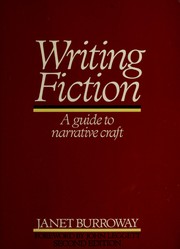
Burroway's chapters on character, dialogue, and point of view provide the technical toolkit to analyze what Mantel is doing and apply those techniques to your own historical characters.
Bringing the Past to Life on the Page
ExpertMaster the advanced techniques of scene-building, sensory immersion, narrative tension, and thematic resonance that transform competent historical fiction into literature that makes the past feel urgent and alive.
▸ Study plan for this stage
Pace: 8–10 weeks, ~40–50 pages/day (King: 2–3 weeks; Follett: 5–7 weeks). Alternate between reading King's craft instruction and applying it to Follett's scenes in real-time.
- Sensory specificity and the 'telling detail': how King's emphasis on concrete imagery and Follett's richly textured medieval world create immersion without purple prose
- Scene architecture and pacing: structuring scenes with clear purpose, tension, and emotional beats—King's 'scene and sequel' framework applied to Follett's cathedral-building sequences
- Character interiority in historical context: balancing authentic period voice with modern psychological depth, as demonstrated in Follett's complex protagonists navigating medieval constraints
- Narrative tension across multiple timelines and subplots: how Follett weaves dozens of character arcs and historical events into a cohesive, page-turning narrative without losing thematic focus
- Thematic resonance through historical detail: using period-specific conflicts (faith vs. reason, power vs. morality) to deepen universal human themes rather than merely decorating a plot
- Dialogue that reveals character and era: King's principles on authentic voice applied to Follett's medieval speech patterns and social hierarchies
- Sustaining reader investment across 900+ pages: techniques for maintaining momentum, varying scene intensity, and deepening stakes in sprawling historical narratives
- How does King's concept of 'the truth of the thing' manifest in Follett's approach to historical detail, and what distinguishes authentic period immersion from historical info-dumping?
- Analyze a scene from The Pillars of the Earth: identify the sensory details King would call 'necessary' versus 'ornamental,' and explain how Follett uses specificity to anchor emotional stakes.
- How does Follett manage narrative tension across multiple character arcs and timelines? What structural principles from King's writing advice help explain his success?
- What is the thematic core of The Pillars of the Earth, and how do specific historical conflicts (the succession crisis, cathedral construction, religious power) serve that theme rather than merely providing plot?
- How does Follett balance authentic medieval dialogue and social constraints with making characters psychologically legible to modern readers? What does King say about this tension?
- Identify a moment where Follett's historical setting becomes inseparable from character motivation or emotional truth. Why does this work, and how would it fail if the period were changed?
- Close-read a 3–5 page scene from The Pillars of the Earth (e.g., the cathedral collapse, a political negotiation, a moment of intimate conflict). Annotate every sensory detail, dialogue tag, and action beat. Rewrite one paragraph using only King's principle of 'write what you know'—strip it to essentials, then restore only details that reveal character or raise stakes.
- Write a 500-word scene set in a historical period you're researching, using Follett's technique of embedding period-specific conflict into a character moment. Include at least one sensory detail unique to that era, one piece of dialogue that reveals both character and historical constraint, and one action that couldn't happen in any other time.
- Map the narrative structure of The Pillars of the Earth: identify the major subplots, character arcs, and how they intersect. Create a one-page diagram showing how Follett maintains tension across 973 pages. Then identify which King principles (escalating stakes, clear scene purpose, emotional honesty) explain the book's page-turning quality.
- Rewrite a scene from Follett using King's 'first draft' approach: write it quickly, focusing on character and dialogue, with minimal historical detail. Then revise it Follett-style, layering in sensory immersion, period-specific obstacles, and thematic resonance. Compare the two drafts.
- Conduct a dialogue audit: select 10 lines of dialogue from The Pillars of the Earth across different characters and social classes. Analyze how Follett differentiates voice through word choice, syntax, and formality. Then write 5 original lines of dialogue for a historical character that reveals both personality and period without feeling anachronistic.
- Write a 1000-word analytical essay: 'How Historical Setting Becomes Character in The Pillars of the Earth.' Argue how the medieval world (feudalism, cathedral-building, religious authority) shapes protagonist choices in ways that feel inevitable rather than imposed. Use King's concept of character-driven narrative to support your analysis.
Next up: This stage equips you with both the craft principles (King) and the advanced model (Follett) to execute complex, immersive historical narratives; the next stage will focus on developing your unique voice and navigating the publishing/revision process for historical fiction at this level.
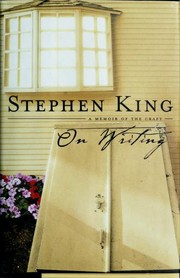
King's memoir-as-craft-manual is the best available guide to storytelling momentum and scene-level tension — skills that historical fiction writers often sacrifice to research; reading it here rebalances the equation.
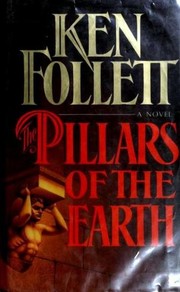
Study this as a structural masterclass: Follett sustains narrative drive across centuries of medieval detail, demonstrating how plot architecture and character stakes keep readers turning pages through dense historical worlds.
Discussion
Keep reading
Paths that share books, cover the same subject, or open a related topic.