The philosophy of science asks deceptively simple questions. What makes a theory scientific? Does science discover truth or just useful models? How does knowledge actually change? The answers turn out to be contested, and the twentieth century staged a series of famous debates. Reading them in order lets you watch the argument develop instead of arriving at the conclusions cold.
The path moves from the classic accounts of method through the great disruption of Kuhn to the modern questions of realism and rationality.
The classic accounts
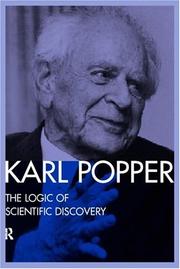
Start with The Logic of Scientific Discovery, where Karl Popper argues that science advances by bold conjectures that experiments try to falsify, the most influential single idea in the field. Philosophy of natural science by Carl Hempel is a clear, compact introduction to explanation, confirmation, and theory, an ideal orientation to the classic questions before the field is upended.
The revolution and its aftermath
Then comes the earthquake. The Structure of Scientific Revolutions by Thomas Kuhn introduced paradigms and paradigm shifts and argued that science changes through revolutions, not steady accumulation; it reshaped every later discussion. The responses followed fast: The Methodology of Scientific Research Programmes by Imre Lakatos tried to rescue rationality between Popper and Kuhn, and Against Method by Paul Feyerabend pushed the other way, provocatively arguing that no single method defines science. Reading these three together is the heart of the subject.
Realism, reason, and structure
The final arc turns to the deep questions. The advancement of science by Philip Kitcher defends a chastened realism about scientific progress, while Scientific reasoning by Colin Howson examines the logic of evidence and probability. The scientific image by Bas van Fraassen makes the leading case for antirealism, arguing we need not believe theories are true to use them, and Scientific realism and the plasticity of mind by Paul Churchland connects the debate to how we think. The structure of science by Ernest Nagel closes the path with a comprehensive classic account of explanation across the sciences.
Read in this order and the philosophy of science becomes a living argument you can join. Follow the full path to trace it from Popper to the present.
Follow the full reading path →
Ready to learn something deeply?
Build a reading path — free