Endurance reading: the great polar expeditions
This curriculum traces the golden age of polar exploration from its most gripping human stories to its deepest historical and psychological dimensions. It begins with accessible, narrative-driven accounts to build vivid intuition for the ice, then moves through the great rival expeditions of Scott, Amundsen, and Shackleton, before finishing with reflective works that explain why these stories of endurance and ambition still haunt us today.
First Steps onto the Ice
BeginnerBuild a vivid, accessible feel for polar conditions, the culture of exploration, and the basic cast of characters — enough to read any deeper account with confidence.
▸ Study plan for this stage
Pace: 6–8 weeks total. Week 1–3: Read "Endurance" by Alfred Lansing (~30 pages/day, ~300 pages). Week 4–8: Read "The Worst Journey in the World" by Apsley Cherry-Garrard (~25 pages/day, ~600 pages). Allow extra days at the end of each book for reflection and exercises.
- Survival under extreme polar conditions: Both books immerse the reader in the brutal realities of cold, darkness, ice, and isolation — establishing a visceral baseline for what polar exploration actually demanded of human bodies and minds.
- Leadership and group dynamics under pressure: Shackleton's management of morale and decision-making aboard the Endurance, and Scott's command culture on the Terra Nova expedition, offer contrasting models of how leaders shaped (and sometimes broke) their teams.
- The role of ships and sea ice: 'Endurance' makes the ship itself a central character — understanding how pack ice traps, crushes, and ultimately destroys a vessel is foundational to all polar literature.
- Man-hauling and the mechanics of polar travel: Cherry-Garrard's winter journey to Cape Crozier introduces the reader to the grinding physical logic of sledging — caloric needs, clothing layers, tent discipline, and the pace of travel across ice and snow.
- The Antarctic environment as an active antagonist: Both books personify the polar environment — blizzards, pressure ridges, crevasses, and darkness are not mere backdrop but driving forces of the narrative.
- Expedition culture and the Heroic Age: Both accounts are products of the 'Heroic Age of Antarctic Exploration' (roughly 1897–1922). Understanding the era's ethos — duty, stoicism, scientific purpose, and imperial ambition — unlocks the motivations of every explorer in this stage.
- The psychology of hope and despair: Lansing's account of the Endurance crew's mental endurance across nearly two years, and Cherry-Garrard's survivor's guilt over Scott's death, introduce the emotional and psychological interior of polar exploration.
- Primary vs. secondary sources in polar history: 'Endurance' is a masterfully researched narrative reconstruction; 'The Worst Journey in the World' is a firsthand memoir. Recognizing this distinction trains the reader to evaluate voice, bias, and reliability in polar accounts.
- After reading 'Endurance,' can you trace the full arc of the expedition — from the ship's departure to the rescue of every crew member — and explain the key decisions Shackleton made at each crisis point?
- What specific leadership techniques did Shackleton use to maintain morale during the months the crew lived on the ice after the Endurance sank, and how do these contrast with the command culture Cherry-Garrard describes under Scott?
- Cherry-Garrard calls the winter journey to Cape Crozier 'the worst journey in the world.' What were the party's scientific objectives, what conditions did they face, and do you agree with his assessment based on the evidence he provides?
- How do both books portray the relationship between the men and their environment — is the polar landscape depicted as indifferent, malevolent, or something else? Use specific scenes from each book to support your answer.
- What does 'The Worst Journey in the World' reveal about the organizational and logistical failures of the Terra Nova expedition, and how does Cherry-Garrard's personal guilt shape the way he tells that story?
- Having read both books, how would you define the 'Heroic Age' ethos to someone who has read neither? What values, assumptions, and blind spots did explorers of this era share?
- Map the journeys: Draw or print a blank map of Antarctica and the Southern Ocean. Plot the Endurance's route, the drift of the ice floe, the open-boat journey to South Georgia, and the Cape Crozier winter journey from 'The Worst Journey in the World.' Annotating geography makes abstract distances concrete.
- Keep a parallel expedition log: As you read each book, maintain a simple journal entry for every major event, written as if you are a crew member. Note the date (use the books' own timelines), the weather, your physical state, and your morale. This builds empathy and reinforces chronology.
- Character roster: After finishing each book, write a one-paragraph profile of five key individuals (e.g., Shackleton, Worsley, Wild from 'Endurance'; Scott, Wilson, Bowers, Cherry-Garrard himself from 'The Worst Journey'). Include their role, one decision that defined them, and one moment of vulnerability.
- Gear and calorie audit: Using details from both books, list the clothing layers, food rations, and equipment each expedition relied on. Then research one modern polar expedition and compare. What has changed? What is surprisingly similar? This grounds the reader in the material culture of exploration.
- Write a 500-word comparative reflection: Both expeditions ended very differently — Shackleton lost no men; Scott's polar party perished. Using only evidence from these two books, argue whether the outcomes were primarily due to leadership, luck, logistics, or environment. Avoid hindsight not available to the authors.
- Host or simulate a 'campfire debrief': After finishing both books, discuss (with a reading partner, book club, or in a written self-dialogue) this question: 'Which journey would you rather have been on, and why?' Force yourself to use specific passages from Lansing and Cherry-Garrard to justify your answer.
Next up: By finishing these two books, the reader has internalized the sensory reality of polar conditions and the human stakes of the Heroic Age, providing the emotional and contextual foundation needed to engage with more analytically demanding or historically specialized accounts in the next stage.
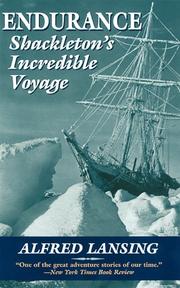
The perfect entry point: a propulsive, journalist-written narrative of Shackleton's 1914–16 Imperial Trans-Antarctic Expedition that reads like a thriller. It introduces polar vocabulary, ship life, and survival stakes without demanding prior knowledge.
Written by a survivor of Scott's Terra Nova expedition, this is widely considered the greatest polar memoir ever written. Reading it after Lansing means you already understand the ice, so Cherry-Garrard's lyrical grief and dark humour land with full force.
The Race for the Poles
IntermediateUnderstand the rival expeditions of Scott and Amundsen in full historical detail, compare their leadership and methods, and grasp the geopolitical and nationalistic forces driving the race.
▸ Study plan for this stage
Pace: 8–10 weeks total. Weeks 1–6: Read "The Last Place on Earth" (~600 pages) at roughly 20–25 pages/day, pausing at natural chapter breaks to take notes. Weeks 7–10: Read "The South Pole" (~400 pages across 2 volumes) at 15–20 pages/day, treating it as a primary-source companion to Huntford's analysis —
- The contrasting leadership philosophies of Amundsen (meritocratic, pragmatic, dog-centred) vs. Scott (hierarchical, class-bound, pony-and-motor-sledge reliant), as dissected by Huntford
- Nationalism and geopolitical prestige as primary drivers: Norway's newly independent identity (1905) vs. Britain's imperial self-image, and how each shaped public and private funding, media framing, and crew selection
- Amundsen's deliberate secrecy and strategic deception — the Madeira telegram to Scott — and its ethical and competitive implications
- The role of indigenous and local knowledge: Amundsen's systematic adoption of Inuit techniques (skis, furs, dog-driving) versus Scott's institutional resistance to 'foreign' methods
- Logistical planning as destiny: depot-laying strategies, caloric calculations, route selection over the Axel Heiberg Glacier, and how Amundsen's margins of safety contrast with Scott's fatal under-provisioning
- Huntford's historiographical argument — his rehabilitation of Amundsen and revisionist critique of the Scott myth — and the evidence he marshals from diaries, letters, and expedition records
- Amundsen's own narrative voice in 'The South Pole': how a participant account differs from a historian's reconstruction, what Amundsen emphasises, omits, or frames heroically
- The human cost of polar ambition: crew dynamics, psychological pressure, the deaths of Scott's party, and the long shadow these events cast on polar historiography
- According to Huntford, what specific failures of leadership and planning — drawn from expedition diaries and records — does he hold most responsible for the deaths of Scott and his polar party, and how does Amundsen's 'The South Pole' implicitly or explicitly contrast with those failures?
- How did Norwegian national identity, freshly forged after independence from Sweden in 1905, shape Amundsen's motivations, his public persona, and the way he narrates the expedition in 'The South Pole'?
- In what concrete ways did Amundsen incorporate Inuit and indigenous polar knowledge into his expedition design, and why does Huntford treat this as a decisive competitive advantage rather than merely a tactical preference?
- Where do Huntford's account and Amundsen's own narrative agree, and where do they diverge most significantly — and what does that divergence reveal about the difference between historical analysis and first-person memoir?
- How did the class structure of Edwardian Britain, as argued by Huntford, constrain Scott's decision-making on personnel, equipment, and method, and can you find passages in either book that support or complicate that argument?
- What does the logistical comparison of the two expeditions' depot-laying, food calculations, and return-journey planning reveal about the relationship between meticulous preparation and survival in extreme environments?
- Dual-timeline map exercise: Using the route descriptions in both books, draw a single map of the Antarctic continent marking both expeditions' outward and return routes, key depots, and dates of critical events. Annotate it with one-sentence summaries of what each party was doing simultaneously — this makes the 'race' viscerally concrete.
- Comparative leadership table: Create a two-column table (Amundsen / Scott) with rows for: crew selection criteria, transport method rationale, indigenous knowledge use, communication with crew, contingency planning, and public narrative management. Populate each cell with direct evidence (quotes or paraphrased incidents) from Huntford and from 'The South Pole'.
- Source-criticism journal: Each time Huntford cites a diary, letter, or expedition record, note it. Then, when reading 'The South Pole', flag moments where Amundsen's first-person account either corroborates or quietly contradicts Huntford's interpretation. Write a 300-word reflection on what this exercise reveals about historical methodology.
- Nationalism essay (500–700 words): Argue, using both books as evidence, whether the Scott–Amundsen race was primarily a story of individual character or of national forces larger than either man. Take a clear position and defend it with at least four specific textual references.
- Re-read the Madeira telegram episode in Huntford, then write a one-page response from Scott's perspective — grounded in what Huntford tells us about Scott's character and institutional pressures — exploring how Scott might have genuinely processed that moment.
- Logistics stress-test: Using the caloric and distance data Amundsen provides in 'The South Pole' (daily rations, distances marched, dog numbers), build a simple spreadsheet or hand-written table modelling the return journey. Then apply Scott's known ration levels (from Huntford) to the same distances. Observe where Scott's model breaks down and write two sentences explaining the systemic cause.
Next up: Mastering the Scott–Amundsen rivalry in granular historical and logistical detail gives the reader the analytical vocabulary — leadership under extremity, indigenous knowledge, nationalistic motivation, and the gap between myth and record — needed to critically evaluate broader polar exploration narratives and the later Arctic expeditions that follow in the curriculum.
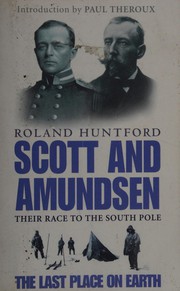
A landmark dual biography of Scott and Amundsen that rigorously compares their contrasting approaches. Reading Cherry-Garrard first gives you the emotional ground; Huntford now supplies the critical, revisionist history that reframes everything.

Amundsen's own account of his successful 1911 expedition — precise, modest, and revealing. After Huntford's analysis, reading Amundsen in his own words lets you test and deepen your interpretation of his character and methods.
Shackleton in Full
IntermediateMove beyond the Endurance story to understand Shackleton's whole career, his leadership philosophy, and the full arc of the heroic age of Antarctic exploration.
▸ Study plan for this stage
Pace: 10–13 weeks total. Week 1–8: Huntford's "Shackleton" (~700 pages) at roughly 25–30 pages/day, pausing at natural chapter breaks to take notes. Week 9–11: Shackleton's own "South" (~300 pages) at 20–25 pages/day, reading it as a direct counterpoint to Huntford. Week 12–13: review, comparison, and exe
- Shackleton's full career arc — from his early Merchant Navy years and Discovery expedition under Scott, through Nimrod, Endurance, and the final Quest voyage — as reconstructed by Huntford across the whole biography
- Huntford's critical biographical lens: his deliberately revisionist, often harsh portrait of Shackleton's character flaws (financial recklessness, self-mythologizing, rivalry with Scott) versus his undeniable operational genius
- The Scott–Shackleton rivalry and how it shaped both men's decisions, public reputations, and the politics of polar funding and recognition in Edwardian Britain
- Shackleton's leadership philosophy in practice: his crew-selection instincts, morale management, willingness to abandon objectives to save lives, and the 'optimism as strategy' approach
- The Nimrod expedition (1907–09) as a turning point — the Furthest South record, the first ascent of Erebus, and why Shackleton turned back 97 miles from the Pole, a decision Huntford analyzes in depth
- Primary-source voice and narrative construction: reading 'South' as Shackleton's own carefully crafted public account, identifying what he emphasizes, omits, or frames heroically compared with Huntford's sourced biography
- The heroic age of Antarctic exploration as a cultural and imperial phenomenon — Edwardian masculinity, national prestige, press and sponsorship dynamics, and how explorers performed their adventures for a home audience
- Endurance in dual perspective: comparing Huntford's analytical reconstruction of the 1914–17 expedition with Shackleton's first-person 'South', noting where the two accounts diverge in tone, detail, and self-assessment
- According to Huntford, what recurring personal and financial patterns defined Shackleton's life on land, and how did those patterns both enable and undermine his expeditions?
- Why did Shackleton turn back on the Nimrod expedition in January 1909, and how does Huntford interpret that decision differently from the heroic narrative Shackleton himself promoted?
- In 'South', how does Shackleton construct his own authority and leadership identity through prose style, scene selection, and the treatment of his crew — and where does that self-portrait feel incomplete when read alongside Huntford?
- How did the Scott–Shackleton rivalry influence the planning, funding, and public reception of their respective expeditions, and who does Huntford ultimately hold more responsible for the tensions between them?
- What does the James Caird open-boat journey and the crossing of South Georgia, as described in 'South', reveal about Shackleton's decision-making under extreme uncertainty — and what does Huntford add that Shackleton leaves out?
- How does reading Shackleton's career as a whole (rather than only the Endurance story) change your assessment of him as a leader and as a historical figure?
- Dual-account journal: Keep a running two-column log as you read — one column for Huntford's interpretation of a key event, one for how Shackleton describes or implies the same event in 'South'. At the end, write a 400-word synthesis: whose account do you find more persuasive and why?
- Character timeline: Build a visual timeline of Shackleton's life using Huntford as your primary source, marking not just expeditions but financial crises, personal relationships, and public-image moments. Annotate where 'South' begins and ends to see how small a slice of his life the Endurance story covers.
- Nimrod decision analysis: Write a 300-word memo as if you were advising Shackleton on 9 January 1909, 97 miles from the Pole. Using Huntford's account of the conditions, supplies, and team state, argue either for pushing on or turning back — then reflect on what his actual choice reveals about his values.
- Rhetoric close-read: Select any two consecutive pages from 'South' describing a moment of crisis (e.g., the ship being crushed, the boat launch, or the South Georgia crossing). Annotate every rhetorical choice — word selection, what is omitted, passive vs. active voice, treatment of other crew members — and write a paragraph on what Shackleton wants the reader to feel.
- Heroic-age context essay: Using only what you have learned from these two books, write a 500-word essay answering: 'Was the heroic age of Antarctic exploration more about science, empire, or individual ambition?' Cite specific episodes from both Huntford and 'South' to support your argument.
- Leadership philosophy card: Distill Shackleton's leadership approach into exactly 6 principles, each stated in one sentence, drawn from concrete episodes in both books. For each principle, note one moment where it succeeded and one moment (from Huntford) where it failed or was complicated.
Next up: By mastering Shackleton's full career through both a critical biography and his own primary-source voice, the reader is now equipped to zoom out and place him within the broader sweep of polar history — comparing methods, motivations, and legacies across multiple explorers and eras, which is the natural focus of a more advanced stage.

Huntford's comprehensive biography places Shackleton's famous resilience in the context of his earlier Nimrod expedition and his complex personal life — essential for seeing him as a full human being rather than a legend.
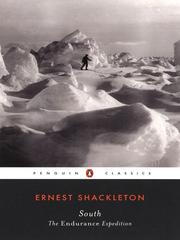
Shackleton's own narrative of the Endurance voyage. Reading this after Huntford's biography creates a productive tension between the man's self-presentation and the historian's scrutiny, sharpening your critical reading skills.
The Arctic Dimension
IntermediateBroaden the picture to the North Pole and the Arctic, understanding that the heroic age spanned both ends of the Earth and had its own cast of obsessive, doomed, and triumphant explorers.
▸ Study plan for this stage
Pace: 6–7 weeks total: Weeks 1–3 cover "In the Kingdom of Ice" (~30 pages/day, ~320 pages); Weeks 4–6 cover "Ninety Degrees North" (~25 pages/day, ~390 pages); Week 7 is reserved for review, cross-book comparison, and completing exercises.
- The Northwest Passage vs. the North Pole as competing obsessions — understanding how Arctic ambition shifted from finding a trade route to planting a flag at 90° N
- The USS Jeannette expedition as a case study in catastrophic institutional overconfidence — how naval hierarchy, faulty technology (steam power in pack ice), and geographic ignorance combined to doom De Long's crew
- The psychology of Arctic obsession — how figures like Elisha Kent Kane, Charles Francis Hall, and the officers of the Jeannette were driven by fame, nationalism, and a quasi-religious sense of destiny rather than purely scientific goals
- Open Polar Sea theory — the widely believed but entirely wrong 19th-century hypothesis that a warm, navigable ocean existed around the North Pole, and how it shaped (and distorted) expedition planning across multiple decades
- Ice as an active antagonist — understanding pack ice, pressure ridges, leads, and the drift of the polar sea as dynamic forces that defeated or redirected nearly every Arctic attempt covered in both books
- The role of nationalism and imperial rivalry — how Britain, the United States, Norway, and other nations used Arctic exploration as a theater for geopolitical prestige, especially in Fleming's panoramic account
- Indigenous knowledge and its systematic undervaluation — how Inuit survival techniques, routes, and warnings were repeatedly ignored by Western expeditions, often with fatal consequences
- Nansen's paradigm shift — how Fridtjof Nansen's deliberate use of the polar drift aboard the Fram, embracing the ice rather than fighting it, represented a revolutionary change in Arctic methodology that Fleming traces as a turning point
- In 'In the Kingdom of Ice,' what specific sequence of decisions and environmental factors led to the loss of the USS Jeannette, and what does Sides argue about the role of James Gordon Bennett Jr.'s media ambitions in shaping the expedition's fatal overconfidence?
- How does the Open Polar Sea theory, as illustrated across both books, demonstrate the danger of allowing a compelling but untested idea to override empirical evidence gathered by earlier expeditions?
- Fleming's 'Ninety Degrees North' covers a vast cast of explorers across more than a century — which expeditions does he present as genuine turning points in Arctic methodology, and what made each one a departure from what came before?
- Both books feature men who died or nearly died in the Arctic yet whose accounts inspired the next generation to try again. What does this pattern reveal about how the heroic age constructed and transmitted the idea of 'noble failure'?
- How did Nansen's Fram expedition, as described by Fleming, challenge the core assumptions that had governed Arctic exploration since the Franklin disaster, and why was it controversial among the British naval establishment?
- Comparing the two books: Sides focuses on a single expedition in deep narrative detail, while Fleming takes a panoramic historical view. What are the trade-offs of each approach for understanding the Arctic heroic age, and which gaps does each book leave that the other fills?
- Map the expeditions: As you read each book, maintain a hand-drawn or digital map of the Arctic, plotting each major expedition's route, furthest point north, and fate. Annotate with dates and key turning points — this makes Fleming's otherwise dense cast of characters spatially legible.
- Failure autopsy for the Jeannette: After finishing 'In the Kingdom of Ice,' write a one-page structured post-mortem identifying the top five decisions or assumptions that doomed the expedition, ranking them by whether the cause was human error, institutional failure, or simple bad luck.
- Debunk the Open Polar Sea: Using only evidence from the two books, write a short (300–400 word) argument that a 19th-century expedition planner could have used to challenge the Open Polar Sea theory before it was definitively disproved. Cite specific expeditions Fleming describes that provided contrary evidence.
- Character comparison matrix: Create a table with columns for Explorer, Nationality, Era, Method, Outcome, and 'What they got wrong.' Populate it with at least eight figures drawn from both books. Look for patterns — do certain nationalities cluster around certain methods or failure modes?
- Nansen vs. De Long thought experiment: Write a 200-word journal entry imagining you are Fridtjof Nansen reading the published account of the Jeannette disaster. What lessons would he draw? Ground your response in the specific methodological choices Fleming attributes to Nansen's Fram planning.
- Cross-book thematic essay: After completing both books, write a 500-word essay arguing either FOR or AGAINST the following claim: 'The heroic age of Arctic exploration was driven more by ego and nationalism than by genuine scientific curiosity.' Use at least one specific example from each book as evidence.
Next up: By establishing the Arctic as a parallel theater of obsession, rivalry, and evolving methodology, this stage equips the reader to compare both polar regions side by side — setting up a richer, more analytical engagement with whatever Antarctic or synthesis-focused material comes next.
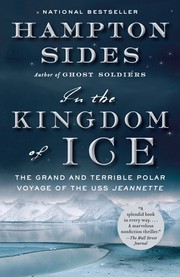
A gripping narrative of the doomed 1879 USS Jeannette Arctic expedition — beautifully written and immediately accessible. It shows that the same era produced equally dramatic stories in the north, expanding your sense of the whole heroic age.

A sweeping, witty history of the quest for the North Pole from the earliest attempts through Peary and Cook. It ties together the Arctic thread and gives you the panoramic view needed before the final reflective stage.
Why It Still Grips Us
ExpertReflect on the psychology of extreme endurance, the mythology of heroic failure, and the cultural legacy of polar exploration — understanding not just what happened, but why we keep returning to these stories.
▸ Study plan for this stage
Pace: 6–8 weeks total: Weeks 1–3 on "Terra Incognita" (~25–30 pages/day, including journaling pauses); Weeks 4–7 on "I May Be Some Time" (~20–25 pages/day — denser cultural history requiring slower absorption); Week 8 reserved for synthesis, comparative reflection, and completing exercises.
- The Antarctica-as-mirror effect: how Wheeler uses her own wintering-over experience in 'Terra Incognita' to show that the continent reflects the inner life of whoever travels to it, making polar exploration inherently autobiographical and psychological.
- Heroic failure as cultural mythology: Spufford's central argument in 'I May Be Some Time' that Scott's doomed Terra Nova expedition was not merely a tragedy but a story the Edwardian imagination was already primed — even hungry — to produce and consume.
- The Romantic inheritance: Spufford traces how 18th- and 19th-century Romantic literature (sublime landscape, the noble sufferer, the icy wilderness) pre-shaped what explorers expected to feel and how they narrated their experiences, blurring the line between lived event and literary script.
- Gender, access, and the polar imaginary: Wheeler's frank account of being a woman in a male-dominated Antarctic science community interrogates who has historically been allowed to participate in — and mythologize — polar exploration.
- Ice as a literary and psychological object: both books treat ice not merely as terrain but as a symbol — of purity, death, timelessness, and the sublime — examining how this symbolism has driven real human decisions and sacrifices.
- The feedback loop between narrative and action: Spufford demonstrates how the stories explorers read (Coleridge, Dickens, Arctic voyage accounts) shaped the stories they then lived, creating a recursive cultural loop that persists into the present.
- Endurance, suffering, and meaning-making: Wheeler's interviews with contemporary scientists and her own physical hardship raise the question Spufford answers historically — why do people voluntarily seek extreme suffering, and what cultural frameworks make that suffering feel meaningful or even beau
- The persistence of polar mythology in modern culture: both books ask why, long after the Heroic Age ended, audiences continue to be gripped by these stories — pointing to unresolved anxieties about mortality, masculinity, national identity, and humanity's relationship with wilderness.
- According to Wheeler in 'Terra Incognita,' in what ways does Antarctica function as a psychological and spiritual mirror for the people who travel there, and how does her own experience illustrate this claim?
- What does Spufford mean when he argues in 'I May Be Some Time' that the Edwardian culture 'dreamed' Scott's disaster before it happened — and what literary and cultural evidence does he marshal to support this?
- How do Wheeler and Spufford differently approach the question of why polar exploration retains its grip on the modern imagination — what does each author's methodology (memoir/travelogue vs. cultural history) reveal that the other cannot?
- Spufford argues that Romantic-era representations of ice and the sublime created a template that real explorers then tried to inhabit. What are the dangers of this feedback loop, and can you find a specific example from 'I May Be Some Time' that illustrates it?
- How does Wheeler's position as a woman and an outsider in the Antarctic scientific community complicate or enrich the traditional heroic narrative that Spufford dissects?
- After reading both books, how would you answer the stage's central question: why do we keep returning to stories of polar exploration, and what does that compulsion reveal about us?
- Parallel passage journaling: Each week, find one passage in your current book that resonates emotionally and write a 300-word response — not a summary, but a personal reaction. At the end of Stage, compare all entries to identify your own 'Antarctica-as-mirror' moment, as Wheeler would frame it.
- Map the Romantic lineage: After finishing 'I May Be Some Time,' create a visual diagram or annotated list tracing the specific literary works Spufford cites (poems, novels, voyage narratives) and draw arrows showing how each influenced a specific explorer's behavior or self-narration. This makes his abstract argument concrete.
- Write a 'cultural autopsy' of one famous polar moment: Choose a single episode — Scott's last diary entries, Shackleton's open-boat journey, or another — and write a 1–2 page analysis using Spufford's framework: what cultural scripts were the participants following, and how did those scripts shape the outcome?
- Conduct a comparative close reading: Select one passage from 'Terra Incognita' where Wheeler describes the Antarctic landscape and one from 'I May Be Some Time' where Spufford describes how Victorians imagined Arctic ice. Write a structured comparison (500 words) examining how the symbolic language of ice operates in each — what is similar, what has changed across 150 years?
- Interview yourself as Wheeler: Re-read Wheeler's most introspective chapter in 'Terra Incognita' and then write a 1-page first-person response as if you had wintered over in Antarctica. What would you discover about yourself? This exercise forces engagement with her central psychological argument rather than passive reading.
- Design a 'Why It Still Grips Us' essay outline: Drawing on both books, draft a detailed outline (thesis, 4–5 body sections with evidence from each text, conclusion) for an essay answering the stage's core question. You need not write the full essay, but the outline should be specific enough that you could — this is your synthesis artifact for the entire stage.
Next up: By internalizing why polar stories endure — their psychological depth, cultural mythology, and literary construction — the reader is now equipped to approach any future stage of the curriculum with a critical lens, asking not just what happened on the ice, but what human needs and cultural forces made those events feel inevitable, heroic, or worth remembering.
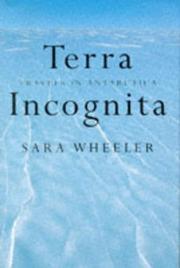
A literary travel memoir of Wheeler's own season in Antarctica, interwoven with the history of exploration. It bridges past and present, asking what the ice means to us now and why the heroic age casts such a long shadow.

A brilliant cultural history examining why the British imagination was so captivated by polar exploration — its myths of sacrifice, masculinity, and noble failure. The ideal final book: it gives you the intellectual framework to understand your entire reading journey.
Discussion
Keep reading
Paths that share books, cover the same subject, or open a related topic.