Medieval Europe: knights, plagues & cathedrals
This curriculum dismantles the "Dark Ages" myth by building knowledge in four stages: first establishing a vivid, accessible feel for medieval life; then examining the three pillars of medieval society (Church, feudal order, and commerce); then confronting the catastrophes and transformations that reshaped the era; and finally engaging with the cutting-edge scholarship that reveals how dynamic, connected, and consequential the Middle Ages truly were. Each stage assumes the vocabulary and mental models built in the one before it.
Foundations: Life on the Ground
BeginnerBuild an intuitive, human-scale picture of what it actually felt like to live in medieval Europe — dispelling the 'Dark Ages' caricature before any deeper analysis begins.
▸ Study plan for this stage
Pace: 6–7 weeks total. Week 1–4: Ian Mortimer's "The Time Traveler's Guide to Medieval England" (~25–30 pages/day, reading thematically chapter by chapter). Week 5–7: William Manchester's "A World Lit Only by Fire" (~20–25 pages/day, pausing after each of the three parts to reflect and journal). Allow buf
- The medieval sensory world: how sights, smells, sounds, and textures shaped daily experience (Mortimer's 'time traveler' framing)
- Social stratification in practice: how a villein, a merchant, a knight, and a clergyman each experienced an entirely different medieval England (Mortimer)
- The rhythms of medieval time: the liturgical calendar, feast days, and seasons as the true clock of daily life (Mortimer)
- Material culture and survival: food, clothing, shelter, medicine, and the ever-present reality of disease and death (Mortimer)
- The Church as total institution: how it governed birth, marriage, death, law, learning, and the imagination of every medieval person (Manchester)
- Manchester's 'medieval mind' thesis: the argument that medieval people inhabited a fundamentally different mental and cosmological universe than moderns
- The tension between Mortimer's nuanced, evidence-based portrait and Manchester's more polemical 'Dark Ages' narrative — learning to read sources critically even at the beginner stage
- Continuity and change: recognizing that 'medieval Europe' spans ~1,000 years and enormous geographic diversity, not a single frozen moment
- According to Mortimer, what would strike a modern time traveler most immediately and viscerally upon arriving in 14th-century England — and why does he use this device rather than a conventional historical narrative?
- How did your social rank in medieval England determine not just your wealth but your legal rights, your diet, your clothing, and even your expected lifespan, as Mortimer describes?
- Manchester argues that the medieval Church created a 'closed' mental world that suppressed curiosity and change. What specific examples does he use, and do Mortimer's ground-level details support, complicate, or contradict this claim?
- How did medieval people mark and experience time differently from modern people, and what does this reveal about the values and priorities of the era?
- Where do Mortimer and Manchester most sharply disagree in tone, emphasis, or interpretation? What might explain those differences, and what does that tell you about how history is written?
- After reading both books, how would you define the 'Dark Ages' caricature, and what is the strongest evidence from either book for why that label is misleading?
- Sensory diary entry: After finishing Mortimer's chapters on daily life, write a 500-word first-person diary entry as a specific medieval person of your choosing (a blacksmith's wife, a parish priest, a traveling merchant). Draw only on details Mortimer provides — sights, smells, food, fears, and routines.
- Fact-vs-framing log: As you read Manchester, keep a two-column notebook. Left column: specific factual claims he makes. Right column: note whether Mortimer's book confirms, contradicts, or simply doesn't address that claim. Review the log when you finish both books.
- Social ladder mapping: Draw a simple diagram of medieval social hierarchy as Mortimer describes it. For each level, annotate 3–4 concrete daily-life details (what they ate, where they slept, what they wore, what laws applied to them). Pin it up as a reference for the rest of the curriculum.
- Timeline of a medieval year: Using Mortimer's descriptions of the liturgical calendar and seasonal rhythms, construct a 12-month calendar marking major feast days, agricultural events, and legal/market days. Reflect on how different this 'clock' is from a modern calendar.
- Critical reading response (1 page): Manchester's subtitle and tone suggest medieval people were trapped in ignorance. Write a one-page response using at least three specific passages from Mortimer that either support or challenge Manchester's framing. Practice making a evidence-based argument.
- Vocabulary and concept glossary: Build a running glossary of 20+ terms encountered in both books (e.g., villein, tithe, guild, simony, interdict, demesne, chivalry). Write each definition in your own words and note which book introduced it and in what context.
Next up: By grounding you in the lived texture of medieval life and alerting you to the dangers of caricature, this stage equips you to engage more analytically with the political, religious, and intellectual structures of medieval Europe — moving from "what did it feel like?" to "how and why was it organized this way?"
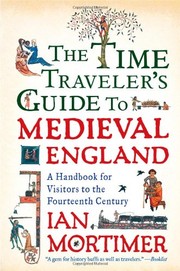
Written as a vivid 'travel guide' to 14th-century England, this is the single best entry point: it makes daily life — food, clothing, law, disease, social rank — immediately concrete and engaging for a complete beginner.
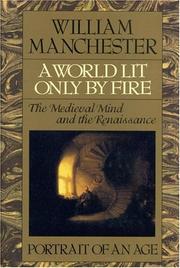
A lively, opinionated narrative of the medieval mind and its eventual crack-up; read second to absorb the broad cultural atmosphere, while keeping in mind that later books will complicate its more dramatic claims.
The Three Pillars: Church, Lords, and Peasants
BeginnerUnderstand how medieval society was actually organized — the feudal hierarchy, the overwhelming power of the Church, and the lives of the majority who worked the land.
▸ Study plan for this stage
Pace: 10–12 weeks total. Week 1–5: "The Pillars of the Earth" (~45 pages/day — it's long but gripping; treat it as immersive world-building). Week 6–8: "Medieval Europe" by Wickham (~25 pages/day — denser academic prose; take notes chapter by chapter). Week 9–11: "The Ties That Bound" by Hanawalt (~20 pag
- The Feudal Hierarchy: how the chain of obligation — king, barons, knights, serfs — structured land, loyalty, and labor across medieval Europe, as dramatized through the lords and builders of Follett's Kingsbridge and analyzed structurally by Wickham
- The Power of the Church: the Church as a political, economic, and spiritual superpower — its role in legitimizing rulers, controlling land, extracting tithes, and shaping daily life, seen vividly through Prior Philip's struggles in Pillars of the Earth and contextualized by Wickham's institutional a
- Serfdom and Villeinage: the legal and economic bondage of the majority, their obligations to lords (labor services, tallage, heriot), and the narrow margins of their autonomy, brought to life by Hanawalt's granular evidence from coroners' rolls and manor records
- Peasant Daily Life and Community: the rhythms of agricultural labor, the village as the primary social unit, seasonal cycles, gender roles, and the texture of ordinary existence — Hanawalt's central contribution and a corrective to the top-down view in Wickham
- The Manor as Economic Engine: how the manorial system organized agricultural production, surplus extraction, and local justice, threading through all three books at different levels of abstraction
- The Church as Social Safety Net and Moral Framework: parish life, saints' cults, confession, and the Church's role in birth, marriage, and death rituals — explored through Hanawalt's peasant communities and dramatized in Follett's cathedral-building narrative
- Conflict and Negotiation Between Classes: how peasants resisted, negotiated, and occasionally revolted against lords and Church; how lords competed with each other and with ecclesiastical authority — a tension central to Pillars of the Earth's plot and to Wickham's political analysis
- The Role of Women in Medieval Society: from noblewomen to peasant wives and widows, their legal status, economic contributions, and social agency — most rigorously examined by Hanawalt, with narrative counterparts in Follett's female characters
- After reading all three books, can you describe a single day in the life of a 13th-century English peasant — their labor obligations, their relationship to the parish church, and the lord's claims on their time and property? Draw on Hanawalt's evidence.
- How does Prior Philip in 'The Pillars of the Earth' embody both the spiritual and worldly power of the medieval Church? What real institutional dynamics does Follett's portrayal reflect, as explained by Wickham?
- According to Wickham's 'Medieval Europe,' how did the feudal system differ across regions (e.g., England vs. France vs. Italy)? Why does he resist treating 'feudalism' as a single uniform system?
- What does Hanawalt's use of coroners' rolls and manor court records reveal about peasant life that chronicles written by monks or nobles could never show? What are the limits of this evidence?
- How did the building of a cathedral, as depicted in 'The Pillars of the Earth,' reflect the intersection of Church authority, aristocratic patronage, craft labor, and local politics? Which of these forces does Wickham's framework help explain?
- In what ways did peasant women, as documented by Hanawalt, exercise agency within a system that legally subordinated them? How does this complicate a simple 'oppressor vs. oppressed' reading of feudal society?
- Timeline & Map Exercise: After finishing Wickham, draw a rough map of medieval Europe and annotate it with the regional variations in feudal organization he describes. Then place the settings of Pillars of the Earth and Hanawalt's English villages on the map — note what is and isn't representative.
- Character Sociology: Choose three characters from 'The Pillars of the Earth' (one from each social tier — e.g., a lord, a churchman, a craftsman or peasant). Write a one-page 'sociological profile' for each using Wickham's and Hanawalt's frameworks: What are their legal obligations? Their economic position? Their relationship to the Church?
- Primary Source Simulation: Hanawalt reconstructs lives from coroners' rolls. Find a freely available translated excerpt of a medieval English coroners' roll or manor court record online (e.g., via the Internet Medieval Sourcebook) and try to reconstruct a brief narrative of one entry, as Hanawalt does — then reflect on what you can and cannot know.
- Concept Comparison Table: Create a three-column table with the headers 'The Pillars of the Earth,' 'Medieval Europe (Wickham),' and 'The Ties That Bound (Hanawalt).' For each key concept (Church power, feudal hierarchy, peasant life, gender, conflict), fill in how each book addresses it. Identify one thing each book shows that the others miss.
- Debate Prompt — Written Response: Wickham is skeptical of the word 'feudalism' as a catch-all term. After reading all three books, write a 400-word response: Do you think 'feudalism' is still a useful concept, or does it obscure more than it reveals? Use specific evidence from all three books.
- Reflective Reading Journal: Keep a running journal throughout the stage. Each week, write one paragraph on a moment — from Follett's narrative, Wickham's analysis, or Hanawalt's reconstruction — that surprised you or changed your mental image of medieval life. At the end, review your entries and write a short synthesis of how your understanding evolved.
Next up: By grounding the reader in how medieval society was structured from the ground up — its hierarchies, institutions, and everyday realities — this stage builds the essential social scaffolding needed to understand the larger forces of change (plague, war, heresy, trade) that will destabilize and ultimately transform that world in the stages ahead.
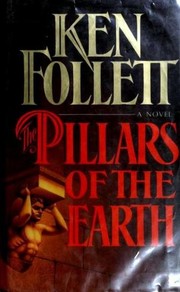
This historical novel set around the building of a cathedral is the most immersive way to internalize feudal politics, Church authority, and peasant life simultaneously — fiction grounded in meticulous research, ideal before tackling non-fiction structure.
A concise, authoritative survey by one of the world's leading medievalists; after Follett's narrative, Wickham supplies the factual skeleton — political structures, economic systems, and the Church's institutional role — across the whole continent.

Focuses specifically on English peasant families using court records, giving a ground-level view of the people who made up 90% of medieval society — a necessary corrective to histories that focus only on kings and bishops.
Crisis and Transformation: War, Plague, and Heresy
IntermediateAnalyze the great shocks of the later Middle Ages — the Black Death, the Hundred Years' War, and religious dissent — and understand how catastrophe reshaped European civilization.
▸ Study plan for this stage
Pace: 10–12 weeks total: Weeks 1–7 for "A Distant Mirror" (~30 pages/day, ~5 days/week), then Weeks 8–12 for "The Black Death" (~20 pages/day, ~4 days/week). Allow buffer days each week for note-taking and reflection.
- The calamitous 14th century as a systemic crisis, not a series of isolated events — Tuchman's central thesis that war, plague, famine, and schism were mutually reinforcing catastrophes
- Chivalric ideology vs. battlefield reality: how the Hundred Years' War exposed the gap between the knightly ideal and the brutal, economically driven warfare depicted through Enguerrand de Coucy's life in A Distant Mirror
- Demographic collapse and its economic consequences: Ziegler's quantitative analysis of mortality rates (30–60% in affected regions) and how depopulation restructured labor markets, land tenure, and the feudal contract
- The psychology of plague: Ziegler's examination of flagellant movements, Jewish persecution, and apocalyptic religiosity as responses to mass death that medieval people could not rationally explain
- Social and institutional resilience vs. breakdown: how the Church, monarchy, and nobility either adapted or lost legitimacy in the eyes of survivors, as traced across both books
- Religious dissent as a symptom of institutional failure: the Avignon papacy, the Great Schism, and the groundwork laid for Wycliffe and Lollard challenges to Church authority, surfaced in Tuchman's narrative
- The role of the individual in history: Tuchman's biographical method — using Coucy as a lens — versus Ziegler's regional, epidemiological approach, and what each method reveals or obscures
- Long-term transformation: how the crises of the 14th century dismantled the high medieval order and set preconditions for Renaissance humanism, early capitalism, and the Reformation
- According to Tuchman, in what ways did the chivalric code both inspire and catastrophically fail the French and English nobility during the Hundred Years' War? Use at least two specific episodes from A Distant Mirror to support your answer.
- How does Ziegler account for the wildly varying mortality rates across different regions and communities in The Black Death? What factors — geographic, social, institutional — does he identify as protective or aggravating?
- Both Tuchman and Ziegler describe the persecution of Jewish communities during the plague years. How do their explanations of this phenomenon differ in emphasis, and what does each author's framing reveal about their broader argument?
- Tuchman argues that the 14th century was a mirror for the 20th. Do you find this analogy persuasive after reading both books? Where does it illuminate, and where does it distort?
- How did the Black Death alter the balance of power between peasants and landowners, and how does Ziegler's evidence connect to the broader social tensions Tuchman describes in the decades before and after the plague?
- What is the relationship between institutional religious crisis (the Avignon papacy, the Great Schism) and popular religious movements (flagellants, heresy) as presented across both books? Did catastrophe deepen faith, destroy it, or transform it into something new?
- Dual-timeline journal: Keep a running two-column log as you read — one column for events/facts from the book, one column for your own analysis of cause and effect. At the end of each book, write a one-page synthesis connecting the two columns.
- Biographical vs. structural comparison essay (500–700 words): After finishing both books, write a short essay comparing Tuchman's biographical method (following Coucy) with Ziegler's regional/epidemiological method. Which approach gave you a deeper understanding of the period, and why? What would each author's method miss without the other?
- Mortality map exercise: Using Ziegler's regional data, sketch a rough map of Europe and annotate it with approximate plague mortality rates, spread routes, and dates of arrival. Then add arrows showing where Tuchman's major military campaigns occurred. What patterns or overlaps do you notice?
- Primary source pairing: Select one event covered by Tuchman (e.g., the Battle of Crécy, the Jacquerie uprising, or the flagellant processions) and find a short primary source account of it online (a chronicle excerpt, a papal bull, etc.). Write a paragraph on what Tuchman includes, what she omits, and how the primary source changes your reading.
- Catastrophe-to-transformation matrix: Create a table with three rows (Black Death, Hundred Years' War, Religious Dissent) and four columns (Immediate human cost, Institutional damage, Social/economic shift, Long-term legacy). Fill it in using evidence from both books, then identify which cell you find most surprising or underexplored.
- Socratic discussion or written debate prompt: 'The catastrophes of the 14th century were ultimately more creative than destructive for European civilization.' Argue both sides using specific evidence from A Distant Mirror and The Black Death, then state and defend your own position.
Next up: By understanding how the medieval order fractured under plague, war, and religious crisis, the reader is now primed to explore how European thinkers, artists, and reformers consciously rebuilt — and reimagined — civilization in the Renaissance and Reformation that followed.
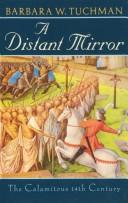
The classic narrative of the calamitous 14th century, following a French knight through plague, war, and social upheaval; it synthesizes everything from the previous stages into a single dramatic arc and is the most celebrated popular history of the period.
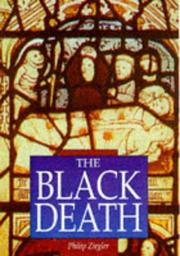
The definitive single-volume study of the plague's arrival, spread, and aftermath; read after Tuchman to go deeper on the epidemic that killed a third of Europe and permanently altered its social and economic order.
The Revisionist View: A Dynamic, Connected World
ExpertEngage with modern scholarship that overturns remaining myths — revealing medieval Europe as intellectually vibrant, commercially sophisticated, and deeply entangled with the Islamic world, Byzantium, and beyond.
▸ Study plan for this stage
Pace: 14–16 weeks total, divided across three books: Wickham's "The Inheritance of Rome" (~500 pages of dense synthesis) deserves 5–6 weeks at ~25 pages/day; Tyerman's "God's War" (~1,000 pages) requires 6 weeks at ~30 pages/day; Huizinga's "The Autumn of the Middle Ages" (~400 pages of rich cultural anal
- Post-Roman continuity vs. rupture: Wickham's argument that the fall of Rome produced not a 'Dark Age' but a mosaic of successor societies with genuine political and economic vitality
- Regional divergence within medieval Europe: Wickham's comparative framework showing that Carolingian Francia, Anglo-Saxon England, Byzantium, and the Islamic Mediterranean followed distinct but interconnected trajectories
- The peasant economy and aristocratic power: how surplus extraction, land tenure, and local lordship — not just kings and popes — drove medieval social change (Wickham)
- The Crusades as a multi-causal, long-duration phenomenon: Tyerman's insistence that crusading was not a single event but an evolving ideology embedded in papal politics, popular piety, and Mediterranean geopolitics
- Cross-cultural entanglement: Tyerman's evidence that crusader states required sustained economic and diplomatic interaction with Muslim, Byzantine, and Jewish neighbors, undermining any simple 'clash of civilizations' narrative
- Crusading as institution-building: how the military orders, indulgence theology, and crusade taxation permanently reshaped the Latin Church's administrative and financial apparatus (Tyerman)
- The 'Autumn' as cultural florescence, not decline: Huizinga's reading of 15th-century Burgundian culture — chivalric ritual, devotional intensity, visual splendor — as a sophisticated response to anxiety rather than mere decadence
- The tension between revisionism and romanticism: critically evaluating Huizinga's own nostalgia alongside Wickham's and Tyerman's more structuralist approaches, and what each methodology reveals or conceals
- According to Wickham, in what specific ways did post-Roman successor kingdoms preserve, transform, or discard Roman administrative and economic structures — and how does his evidence challenge the traditional 'decline and fall' narrative?
- How does Tyerman characterize the relationship between crusading ideology and material interest? Can the Crusades be explained primarily by religious motivation, or does 'God's War' demand a more complex accounting?
- What does the existence and longevity of the crusader states reveal about medieval Europe's capacity for cross-cultural negotiation, commercial exchange, and political pragmatism with the Islamic world?
- In what sense does Huizinga's 'Autumn of the Middle Ages' function as both a historical argument and a work of cultural mourning — and how should a critical reader weigh his interpretive framework against more recent scholarship?
- Taken together, how do Wickham, Tyerman, and Huizinga collectively dismantle the myth of a static, isolated, intellectually dormant medieval Europe? Where do their revisionist arguments most powerfully converge?
- How does each author handle the relationship between elite culture and broader social forces — and whose voices are most absent from these three accounts?
- Comparative timeline: As you read Wickham, build a side-by-side timeline of at least four regions (e.g., Frankish Gaul, Anglo-Saxon England, Byzantium, the Abbasid Caliphate) tracking political structure, trade patterns, and church organization decade by decade — use it to test Wickham's claim of divergence within a connected world.
- Argument mapping for Tyerman: After every 150 pages of 'God's War,' write a one-page précis identifying (a) the primary cause Tyerman foregrounds in that section, (b) the evidence he marshals, and (c) one counterargument he acknowledges or ignores. At the end, synthesize these into a single-page causal hierarchy of why the Crusades happened.
- Close-reading exercise on Huizinga: Select any two consecutive chapters of 'The Autumn of the Middle Ages' and annotate every passage where Huizinga's own 19th/20th-century cultural assumptions seem to color his interpretation of medieval evidence. Write a 500-word reflection on how his methodology differs from Wickham's and Tyerman's.
- Cross-book synthesis essay (800–1,000 words): Write an essay answering the question 'Was medieval Europe a closed or open civilization?' drawing specific evidence from all three books — at least two citations per book. Force yourself to let the authors disagree with each other.
- Primary source pairing: For each book, locate one primary source mentioned or implied in the text (e.g., a Carolingian capitulary for Wickham, a crusade chronicle such as Fulcher of Chartres for Tyerman, a Burgundian court record or devotional text for Huizinga) and read a short excerpt. Write a paragraph on how the primary source complicates or confirms the author's argument.
- Socratic seminar self-test: Record yourself (audio or video) for 10 minutes answering the question 'Which of these three authors makes the strongest case for medieval Europe's dynamism, and which has the most significant blind spots?' Replay and critique your own argument for logical gaps and unsupported claims.
Next up: By dismantling the myth of medieval stasis through Wickham's structural history, Tyerman's geopolitical sweep, and Huizinga's cultural phenomenology, the reader is now equipped to pursue more specialized or thematic advanced study — whether in medieval economic history, religious thought, or the long transition to the Renaissance and early modernity — with a sophisticated, critical, and genuinely

Wickham's magisterial account of how Roman civilization transformed (rather than collapsed) into the medieval world, covering 400–1000 CE; this reframes everything learned so far by showing the early Middle Ages as a period of adaptation, not darkness.
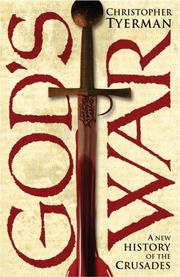
The definitive modern history of the Crusades, showing how medieval Europe projected power outward and was transformed by contact with other civilizations — essential for understanding the era's global entanglements.

A landmark of cultural history examining the richness and melancholy of late medieval thought, art, and ritual in Burgundy and France; this capstone book rewards readers who now have the full context to appreciate its depth.
Discussion
Keep reading
Paths that share books, cover the same subject, or open a related topic.