Fairy Tales and Folklore: Best Books to Read in Order
This curriculum takes you from the most beloved fairy tale collections through the deep mythological roots of world folklore, and finally into the scholarly and psychological frameworks that reveal what these ancient stories truly mean. Each stage builds on the last: first you absorb the stories themselves, then you broaden into world myth, then you learn to read them as a scholar or storyteller would.
The Stories Themselves
BeginnerRead the canonical fairy tale and folklore collections in their most authentic, unvarnished forms — building a rich library of stories in your mind before any analysis begins.
▸ Study plan for this stage
Pace: 8–10 weeks, ~40–50 pages/day. Grimms' Fairy Tales (3–4 weeks, ~30 pages/day), followed by The Complete Fairy Tales of Hans Christian Andersen (5–6 weeks, ~40–50 pages/day).
- The archetypal story patterns in Grimms' Fairy Tales—quests, transformations, moral trials, and the triumph of virtue over vice—as foundational narrative structures
- The distinct voice and sensibility of Hans Christian Andersen: psychological depth, melancholy, and the blending of fairy tale with personal reflection
- Cultural and historical context: how Grimms collected and refined German folk traditions, while Andersen created literary fairy tales rooted in Danish life and imagination
- Recurring motifs across both collections—enchantment, poverty and riches, true love, sacrifice, and redemption—and how they function thematically
- The unvarnished, sometimes dark or unsentimental tone of these original texts compared to later adaptations and sanitized versions
- Character archetypes (the youngest child, the clever peasant, the virtuous maiden, the cruel stepmother) and their symbolic roles in driving plot
- The role of magic, fate, and agency: how characters navigate worlds where the impossible is real and choices carry weight
- What are the major recurring plot structures in Grimms' Fairy Tales, and how do they differ from the narrative patterns in Andersen's stories?
- How does Hans Christian Andersen's authorial voice—his commentary, emotional tone, and perspective—distinguish his tales from the more impersonal, collected tales of the Grimms?
- Identify and explain three archetypal characters or character types that appear across multiple stories in both collections, and what they represent symbolically.
- What role does magic or the supernatural play in driving the plot and resolving conflicts in these stories, and how does it differ between Grimms and Andersen?
- Choose three stories from each collection and explain how they address themes of poverty, virtue, sacrifice, or transformation.
- How do the original, unvarnished versions of these tales differ in tone and content from the Disney or modern adaptations you may know, and what is lost or gained in those adaptations?
- Create a story map or chart for 5–6 tales from Grimms' Fairy Tales, identifying the protagonist's goal, obstacles, helpers, and resolution; note recurring patterns.
- Write a one-page character study of three archetypal characters from the Grimms collection (e.g., the youngest child, the clever peasant, the wicked stepmother), citing specific tales.
- Read 10–12 Hans Christian Andersen stories and write brief reflections (100–150 words each) on his narrative voice, tone, and emotional register in each.
- Create a comparative table of 4–5 similar tale types from both collections (e.g., tales of transformation, tales of virtue rewarded), noting plot similarities and differences.
- Annotate 3–4 stories from each collection, marking moments of magic, moral choice, and transformation; write a short analysis of how these elements function together.
- Write a 2–3 page essay comparing the treatment of a universal theme (e.g., love, sacrifice, poverty) across one Grimms tale and one Andersen tale, using textual evidence.
Next up: By internalizing the canonical stories and their archetypal patterns, you'll be equipped to analyze how fairy tales function symbolically, historically, and psychologically—moving from immersion in the tales themselves to critical examination of their meanings and cultural significance.

The essential starting point: the most influential fairy tale collection in Western culture. Reading it first gives you the raw, often dark source material that all later study references.

Andersen's literary fairy tales complement Grimm by showing how a single author shaped folklore into art — introducing themes of sacrifice, longing, and transformation that recur throughout the tradition.
Expands your story-world beyond Europe into the Middle Eastern tradition, and introduces the frame-narrative structure that reveals how folklore was always about storytelling itself.
Myth and the Deeper Roots
BeginnerDiscover the mythological layer beneath fairy tales — the gods, heroes, and cosmologies from which folklore grew — across multiple world cultures.
▸ Study plan for this stage
Pace: 8–10 weeks, ~40–50 pages/day. Start with "Mythology" (4–5 weeks, ~400 pages total), then move to "The Norse Myths" (4–5 weeks, ~280 pages total). Allocate 1 week for synthesis and review.
- Mythological archetypes: the hero's journey, the trickster, the divine family, and creation myths as universal narrative patterns across cultures
- Cultural cosmologies: how different civilizations (Greek, Roman, Norse, Egyptian, Mesopotamian) structured their understanding of gods, the universe, and humanity's place within it
- The function of myth in ancient societies: how mythology served as explanation for natural phenomena, moral instruction, and cultural identity
- Comparative mythology: recognizing shared themes, symbols, and character types across geographically distant cultures (e.g., flood myths, underworld journeys, divine conflicts)
- The relationship between gods and humans in different mythological systems: from Olympian detachment to Norse interdependence to Egyptian cyclical renewal
- Narrative layers in folklore: how fairy tales preserve and transform older mythological material into accessible stories
- The role of fate, destiny, and prophecy in shaping mythological narratives and human agency
- Sacred geography and cosmological structure: the significance of places like Mount Olympus, Asgard, and the underworld in organizing mythological worlds
- What are the major creation myths presented in 'Mythology,' and how do they differ in their explanations of divine origin and cosmic order?
- How does the Norse cosmology in 'The Norse Myths' differ fundamentally from the Greek and Roman systems Hamilton describes, particularly regarding the fate of the gods?
- Identify three archetypal characters or situations (e.g., the hero, the trickster, the underworld journey) that appear across multiple cultures in these two books. What functions do they serve?
- How do the mythologies presented reflect the values and concerns of their source cultures? Give specific examples from both books.
- What is the relationship between the gods and fate in Norse mythology as presented by Crossley-Holland, and how does this compare to the Greek gods' relationship with destiny in Hamilton's account?
- How do the myths in these books explain natural phenomena, moral lessons, or cultural practices? Provide examples from both texts.
- Create a comparative mythology chart: list 5–6 major gods/heroes from Greek, Roman, Norse, and Egyptian mythologies (from both books), noting their domains, key stories, and personality traits. Identify patterns and differences.
- Map the cosmologies: draw or describe the structure of the universe in Greek mythology (from Hamilton) and Norse mythology (from Crossley-Holland). Label key locations (Olympus, Asgard, underworld, etc.) and explain how each culture organized sacred space.
- Trace a single archetype across cultures: follow the 'hero's journey' or 'trickster' figure through at least three different mythological traditions covered in the books. Write a 2–3 page analysis of how the archetype shifts and what remains constant.
- Identify a modern fairy tale or children's story you know well, then trace its mythological roots using concepts and characters from 'Mythology' and 'The Norse Myths.' Write a 1–2 page essay explaining the hidden mythological layer.
- Create a 'mythology family tree': for one culture (Greek, Norse, or Egyptian), map the genealogies of the gods as presented in Hamilton or Crossley-Holland. Note conflicts, alliances, and generational shifts in power.
- Comparative prophecy analysis: examine how prophecy and fate function in Greek mythology (Hamilton's account of the Fates, Oedipus, etc.) versus Norse mythology (Crossley-Holland's Ragnarök and Norns). Write a reflection on how each culture's view of destiny shaped their myths.
Next up: This stage establishes the mythological foundations and archetypal patterns that underlie fairy tales, preparing you to recognize how folklore transforms and preserves these ancient narratives in more compact, accessible forms in the next stage.
The most accessible and widely-read introduction to Greek, Roman, and Norse myth. Reading it here connects the fairy tale archetypes you've absorbed to their ancient divine origins.
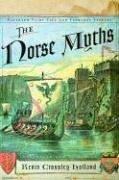
A beautifully retold collection of Norse mythology that deepens your sense of the Northern European tradition behind many Grimm tales, told with scholarly care and narrative power.
Pattern and Structure
IntermediateLearn the analytical tools scholars use to understand fairy tales — recognizing recurring structures, character types, and narrative patterns across all world folklore.
▸ Study plan for this stage
Pace: 6–8 weeks, ~25–30 pages/day. Propp (first 3 weeks) requires slower, more analytical reading; Bettelheim (weeks 4–8) can be read at a steadier pace with periodic reflection.
- Propp's functions: the 31 narrative units that recur across Russian folktales, forming the structural backbone of fairy tale plots
- Character archetypes (hero, villain, donor, helper, princess, dispatcher): how fixed roles repeat across tales regardless of surface details
- The morphological method: analyzing stories by breaking them into constituent parts rather than thematic or symbolic content
- Bettelheim's psychoanalytic lens: how fairy tales address unconscious anxieties, support ego development, and guide children through psychological challenges
- Symbolic vs. structural analysis: understanding how Propp's mechanics differ from Bettelheim's interpretation of meaning and psychological function
- Universal patterns across cultures: recognizing how Propp's functions and Bettelheim's psychological insights apply beyond Russian tales to world folklore
- The relationship between narrative structure and emotional resolution: how tale mechanics serve psychological needs
- What are Propp's 31 functions, and how do they create the underlying skeleton of a fairy tale plot?
- How do character archetypes (hero, villain, donor, helper, princess) remain consistent across different tales, and what role does each play in the narrative structure?
- What is the difference between analyzing a fairy tale structurally (Propp) and psychoanalytically (Bettelheim), and when is each approach most useful?
- According to Bettelheim, how do fairy tales help children work through unconscious conflicts and support psychological development?
- Can you identify Propp's functions and character archetypes in a fairy tale you haven't studied, and explain how they organize the plot?
- How do the symbolic meanings Bettelheim identifies in fairy tales relate to the structural patterns Propp describes?
- Create a detailed function chart for a classic fairy tale (e.g., 'Cinderella' or 'Little Red Riding Hood'), mapping each of Propp's 31 functions to specific plot points; note which functions are present and which are absent.
- Identify and label all character archetypes in two different fairy tales, then write a short analysis of how the same archetype (e.g., the helper) serves different narrative purposes in each tale.
- Rewrite a familiar fairy tale by removing or reordering three of Propp's functions; explain how this changes the plot structure and emotional impact.
- Select one fairy tale and write two separate analyses: one using Propp's structural method (breaking it into functions and archetypes) and one using Bettelheim's psychoanalytic approach (focusing on unconscious conflicts and symbolic meaning); compare what each method reveals.
- Collect three fairy tales from different cultures and create a comparative chart showing which of Propp's functions appear in all three, which appear in some, and which are unique; write a paragraph on what this reveals about universal narrative patterns.
- Analyze a modern children's story or film (not a traditional fairy tale) using Propp's functions and character archetypes; assess how closely it follows the classical pattern and what structural deviations it makes.
Next up: This stage equips you with both the structural grammar of fairy tales (Propp) and the psychological vocabulary to interpret them (Bettelheim), preparing you to move forward into deeper thematic analysis, cultural variations, and the role of folklore in specific societies and historical contexts.

The foundational academic text on how fairy tales are built. Propp's identification of 31 narrative functions gives you a precise vocabulary for analyzing any story you've read so far.
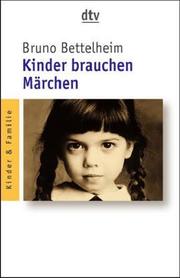
Bettelheim's landmark psychological reading of fairy tales reveals why these stories speak so powerfully to children and adults alike — the perfect bridge between structure and meaning.
The Meaning Behind the Stories
IntermediateSynthesize everything into a rich understanding of what myths and fairy tales reveal about the human psyche, culture, and the universal quest for meaning.
▸ Study plan for this stage
Pace: 8–10 weeks, ~40–50 pages/day (with reflection time). Campbell first (4–5 weeks), then Estés (4–5 weeks). Both books reward slower, meditative reading.
- The monomyth (hero's journey) as a universal narrative structure across cultures and its psychological significance
- The role of the shadow, the mentor, and the threshold guardian as archetypal forces within the psyche and storytelling
- Myth as a technology for spiritual transformation and the reconciliation of opposites (transcendence of duality)
- The Wild Woman archetype and the instinctual feminine psyche as sources of creativity, intuition, and authentic power
- How fairy tales and myths encode cultural wisdom about initiation, loss, and the reclamation of wholeness
- The relationship between personal psychology and collective mythology: how individual stories reflect universal human patterns
- Storytelling as a healing practice and a means of reconnecting fragmented selves to their instinctual nature
- What is the monomyth, and how does Campbell argue it appears across different cultures and time periods? What psychological function does it serve?
- How do the concepts of the mentor, the shadow, and the threshold guardian operate in both mythological narratives and in individual psychological development?
- What does Estés mean by the 'Wild Woman' archetype, and how does she argue that reconnecting with this instinctual self is essential for women's wholeness and creativity?
- How do Campbell and Estés each use fairy tales and myths to explain the process of psychological initiation and transformation?
- What is the relationship between cultural mythology and personal identity? How do the stories we inherit shape who we become?
- How do both authors argue that storytelling and myth-engagement function as healing practices?
- Map your own hero's journey: Identify a significant challenge or transformation in your life and trace it through Campbell's monomyth stages (call to adventure, crossing the threshold, trials, revelation, return). Reflect on which stages were most difficult and why.
- Archetypal inventory: Choose 3–4 fairy tales or myths you know well. For each, identify the mentor, shadow, threshold guardian, and trickster figures. Discuss what psychological work each archetype performs in the narrative.
- Wild Woman reflection journal: As you read Estés, keep a journal responding to her stories and questions. Write about moments when you've felt most alive, creative, or 'wild'—and moments when you've felt domesticated or silenced. Identify patterns.
- Comparative myth analysis: Select one fairy tale (e.g., Cinderella, Little Red Riding Hood, Beauty and the Beast) and analyze it through both Campbell's monomyth lens and Estés's understanding of feminine initiation. How do the two frameworks illuminate different aspects?
- Personal mythology creation: Write or visually map your own origin myth—a story that explains who you are, where you come from, and what you're meant to do. Use archetypal language and imagery from the books.
- Storytelling practice: Choose a myth or fairy tale from the books and retell it aloud or in writing, deliberately shifting perspective (e.g., tell the hero's journey from the mentor's point of view, or reframe a traditional tale through a Wild Woman lens). Reflect on what changes when the narrative perspective shifts.
Next up: Having internalized how myths and fairy tales encode universal patterns of transformation and reveal the architecture of the psyche, you are now ready to explore how these archetypal stories function in contemporary culture, literature, and personal practice—moving from understanding the patterns to actively using them as tools for meaning-making and creative expression.

Campbell's masterwork unifies world mythology into the 'monomyth' — the hero's journey — showing how every culture's stories share a single deep grammar of transformation.
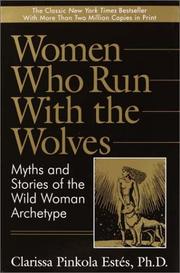
A powerful feminist and Jungian reading of fairy tales and myths that reveals the feminine archetypes often suppressed in canonical retellings, completing the picture of what folklore holds.
The Living Tradition
ExpertUnderstand how scholars, writers, and cultures have actively reshaped and contested fairy tales — and how the tradition continues to evolve and carry meaning today.
▸ Study plan for this stage
Pace: 6–7 weeks, ~40–50 pages/day, with 1–2 days per week for reflection and exercises
- The Grimms' deliberate editorial choices and their ideological agenda in reshaping folk narratives for publication
- How historical context (German nationalism, industrialization, social anxieties) shaped the collection and interpretation of fairy tales
- The concept of folklore as a contested, living tradition rather than a static or 'authentic' archive
- The role of scholars and collectors in constructing narratives about 'the folk' and 'primitive' cultures
- How Victorian and later writers used fairy tales to encode anxieties about modernity, race, gender, and social change
- The relationship between scholarly authority and cultural mythology—how academic framing shapes public understanding of folklore
- Strategies of resistance and reinterpretation: how marginalized communities and contemporary writers reclaim and transform fairy-tale traditions
- What specific editorial decisions did the Grimms make across editions of their collection, and what ideological purposes did these serve?
- How did 19th-century nationalism and industrialization influence the way folklore was collected, interpreted, and valued?
- What does it mean to treat fairy tales as a 'living tradition' rather than a fixed historical artifact, and what are the implications for how we read and teach these stories?
- How did Victorian and later writers use folklore and fairy-tale imagery to express anxieties about modernity, race, and social hierarchy?
- What is the relationship between scholarly authority and myth-making? How do academic interpretations shape popular understanding of folklore?
- How have marginalized communities and contemporary writers contested dominant interpretations of fairy tales, and what strategies do they use to reclaim these narratives?
- Create a detailed timeline mapping the Grimms' editorial changes across editions of their collection (1812–1857), noting which tales were added, removed, or substantially altered, and hypothesize about the ideological reasons behind each change
- Conduct a close reading comparison: select one fairy tale (e.g., 'Little Red Riding Hood' or 'Hansel and Gretel') and trace how its meaning shifts across the Grimms' editions, then compare to a modern retelling—analyze what each version reveals about its historical moment
- Write a critical analysis essay (1500–2000 words) examining how Tatar uses textual evidence to argue that the Grimms were not passive collectors but active ideological shapers of their material
- Research and present on one Victorian or early 20th-century writer's use of folklore imagery (e.g., W.B. Yeats, Christina Rossetti, or Rudyard Kipling) and analyze how their engagement with 'primitive' or folk traditions encoded anxieties about modernity and empire, as discussed in Silver
- Create a comparative chart analyzing how Silver discusses the construction of 'the folk' and 'strange peoples' across different cultural contexts—note patterns in how scholars and writers projected their own anxieties onto folklore
- Develop a 'reinterpretation project': select a traditional fairy tale and create your own version that deliberately contests or subverts the dominant interpretation discussed in Tatar or Silver, then write a 500-word reflection explaining your choices and what they reveal about contemporary concerns
Next up: This stage equips you to recognize fairy tales not as timeless truths but as contested cultural texts shaped by power, ideology, and historical moment—preparing you to engage with how specific communities and contemporary creators actively resist, reclaim, and reimagine these narratives in the next stage.
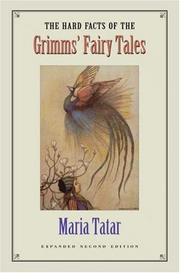
Tatar's rigorous scholarly examination of how the Brothers Grimm collected, edited, and sanitized their tales is essential for understanding the gap between folklore as lived and as published.
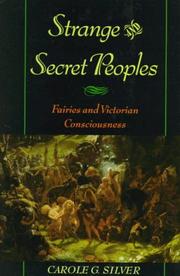
Traces how fairy lore was reimagined in the Victorian era, showing that folklore is never static — each age remakes the old stories in its own image, a fitting final lesson for the curriculum.
Discussion
Keep reading
Paths that share books, cover the same subject, or open a related topic.