The Vikings, beyond the myths
This four-stage curriculum takes a complete beginner from vivid narrative introductions all the way to primary sources, specialist scholarship, and the Viking world's literary and mythological heart. Each stage builds the vocabulary, geography, and cultural context needed to get the most out of the next, so that by the end the reader can engage with the Vikings on their own terms — not as cartoon raiders, but as a complex, far-reaching civilization.
First Landfall — Foundations
BeginnerGain a vivid, accurate big-picture of who the Vikings were, where they went, and why the clichés are wrong — building the chronological and geographical scaffolding for everything that follows.
▸ Study plan for this stage
Pace: 8–10 weeks total: Weeks 1–4 cover Winroth's "The Age of the Vikings" (~25–30 pages/day, 4–5 days/week); Weeks 5–9 cover Ferguson's "The Vikings" (~20–25 pages/day, 4–5 days/week); Week 10 is a consolidation week for review, map work, and reflection exercises.
- The Viking Age timeline (~793–1100 CE): Winroth establishes the chronological brackets — from the Lindisfarne raid to the Norman consolidation — giving the reader a precise historical frame rather than a vague 'medieval' blur.
- Debunking the horned-helmet myth and other clichés: Both Winroth and Ferguson systematically dismantle pop-culture distortions (berserker savagery as the whole story, exclusively male raiders, etc.) and replace them with a more complex, trade-and-settlement-oriented picture.
- Scandinavia as a starting point — geography and society: Winroth grounds Viking expansion in the ecology, social pressures, and political fragmentation of Norway, Denmark, and Sweden, explaining why people left and in which directions each region tended to expand.
- The three 'faces' of the Vikings — raiders, traders, and settlers: Ferguson's narrative arc makes clear that the same people who raided Lindisfarne also founded Dublin, traded furs in Baghdad, and colonised Iceland, demanding a multi-role understanding of Viking identity.
- Longship technology as an enabler: Winroth's treatment of shipbuilding shows how clinker construction and shallow drafts made both oceanic crossings and river penetration possible — the ship is the master key to Viking geography.
- The reach of the diaspora — from Vinland to Byzantium: Ferguson's broad geographical sweep (British Isles, Frankia, Rus, the North Atlantic, the Mediterranean) builds the mental map that underpins all later detailed study.
- Norse religion and cosmology as cultural context: Both authors introduce Odin, Thor, the concept of Valhalla, and the role of fate (wyrd/örlög) not as fantasy backdrop but as a value system that shaped warrior ethics, kingship, and poetry.
- Primary sources and their limits — sagas, chronicles, and archaeology: Winroth in particular flags the bias of monastic chroniclers and the retrospective nature of the sagas, teaching the reader to think critically about evidence from the very first stage.
- According to Winroth, what combination of push factors (internal Scandinavian conditions) and pull factors (external opportunities) best explains the sudden explosion of Viking activity around 793 CE?
- How do Ferguson and Winroth together reframe the Viking identity beyond 'raiders'? What economic and diplomatic roles do they document, and which specific examples (trading routes, settlements, political alliances) do they use as evidence?
- What geographical logic governed which Scandinavian region expanded in which direction — and how does the longship's design make that geography possible, according to Winroth?
- After reading Ferguson's broad narrative, can you sketch from memory a rough map showing at least six major zones of Viking activity, the approximate dates of first contact, and whether each zone was primarily raided, traded with, or settled?
- What are the main source types available to historians of the Viking Age, and what specific biases or gaps does Winroth identify in monastic chronicles versus the later Icelandic sagas?
- How did Norse religious belief — particularly concepts of fate, honour, and the afterlife — shape the behaviour and self-image of Viking warriors and chieftains as described in both books?
- Build a master timeline: As you read Winroth, create a running chronological table (paper or digital) with columns for Date, Event, Region, and Source Type. Add Ferguson's events as you read him. By the end of Stage 1 you should have 40–60 entries that form your personal reference spine for the entire curriculum.
- Draw your own Viking world map: After finishing Ferguson, sketch a blank outline map of Europe, the North Atlantic, and western Asia from memory, then add: Scandinavian homelands, major raid targets, trade routes (including the Volga/Dnieper river systems to Byzantium and Baghdad), and settlement zones (Iceland, Greenland, Vinland, Normandy, Dublin). Annotate each zone with approximate dates and t
- Myth-busting T-chart: Make a two-column chart — 'Common Cliché' vs. 'What Winroth/Ferguson Actually Show'. Aim for at least eight rows (e.g., horned helmets, mindless savagery, exclusively male crews, purely Scandinavian identity). Cite the specific page or chapter that corrects each myth.
- Source-criticism exercise: Choose one event described in both books (e.g., the Lindisfarne raid or the settlement of Iceland). Write a one-page comparison of how each author handles the available sources — what they trust, what they doubt, and why. This trains the critical-reading habit Winroth explicitly models.
- Vocabulary and concept glossary: Maintain a running glossary of key Norse/Old English/Old Norse terms introduced by both authors (e.g., jarl, þing, skald, longphort, Varangian, Danelaw). Write a one-sentence definition in your own words and note the page where you first encountered it. Target 30+ entries by the end of the stage.
- End-of-stage synthesis essay (500–700 words): Without re-opening the books, answer the question: 'Who were the Vikings, where did they go, and why does it matter that we move beyond the clichés?' Then re-read relevant sections and annotate your draft with corrections and additions — this gap between what you remembered and what the books actually say is your most honest learning diagnostic.
Next up: The big-picture chronological and geographical scaffolding built here — the timeline, the mental map, the multi-role Viking identity, and the habit of source criticism — provides the essential framework onto which the next stage can hang deeper, more specialised knowledge about specific regions, campaigns, or cultural themes without the reader getting lost.

A concise, authoritative, and highly readable modern overview by a leading scholar that immediately dismantles myths while covering raids, trade, settlement, and society. The perfect first book because it maps the entire Viking world without overwhelming a beginner.

A narrative-driven history that reads almost like a story, fleshing out the people and events introduced by Winroth. Reading it second lets the reader enjoy the drama now that the basic framework is in place.
Gods, Myths, and the Norse Mind
BeginnerUnderstand Norse mythology and cosmology — the belief system that shaped Viking values, poetry, and worldview — so that later encounters with sagas and primary sources make cultural sense.
▸ Study plan for this stage
Pace: 6–8 weeks total: Weeks 1–3 on "Norse Mythology" by Neil Gaiman (~20–25 pages/day, reading it as flowing narrative fiction to absorb the stories emotionally before analyzing them); Weeks 4–7 on "The Norse Myths" by Kevin Crossley-Holland (~15–20 pages/day, reading more slowly to engage with Crossley-
- The Norse cosmological structure: the Nine Worlds, Yggdrasil the World Tree, and how realms like Asgard, Midgard, Jotunheim, and Hel relate to one another — introduced accessibly in Gaiman and mapped more precisely in Crossley-Holland.
- The major deities and their functions: Odin as the seeker of wisdom and lord of war and death; Thor as protector and embodiment of strength; Loki as the shape-shifting trickster whose role shifts from comic mischief to genuine malice across both books.
- The Norse concept of fate and the Norns: the idea that even the gods are subject to wyrd (fate), and that Ragnarök — the doom of the gods — is foreknown and unavoidable, a theme Gaiman dramatizes and Crossley-Holland contextualizes with source variants.
- Ragnarök as a cyclical, not purely apocalyptic, worldview: the world ends but is reborn, reflecting a Norse acceptance of destruction as part of a larger cosmic rhythm.
- The role of giants (Jotnar) not simply as villains but as primordial forces, ancestors of the gods, and embodiments of chaos — a nuance Crossley-Holland's notes especially illuminate.
- Skaldic and Eddic tradition as the source layer: Crossley-Holland's introductions and notes show that both books ultimately derive from the Prose Edda (Snorri Sturluson) and the Poetic Edda, teaching the reader to think about mythological transmission and retelling.
- Viking values encoded in myth: courage in the face of certain defeat (Odin at Ragnarök), the pursuit of wisdom at great personal cost (Odin's self-sacrifice on Yggdrasil, his eye at Mimir's well), loyalty, and the heroic acceptance of mortality.
- The function of myth in culture: how these stories were not mere entertainment but explained natural phenomena, justified social hierarchies, prepared warriors psychologically for death, and gave poets (skalds) their raw material.
- After reading both books, can you trace the journey of Loki from helpful trickster in early Gaiman stories (e.g., the building of Asgard's wall, the theft of Thor's hammer) to the architect of Baldr's death and a bound enemy of the gods — and explain what this arc suggests about the Norse view of chaos?
- What does Odin's self-hanging on Yggdrasil and his sacrifice of an eye at Mimir's well reveal about the Norse conception of wisdom, and how does Gaiman's narrative treatment compare with the more source-grounded version in Crossley-Holland?
- How does Crossley-Holland's use of endnotes and source variants change your understanding of a myth you first read in Gaiman — pick one specific myth and explain what the notes added or complicated.
- What is Ragnarök, which gods survive or perish, and why does the Norse tradition frame it as inevitable rather than preventable? What does this fatalism suggest about Viking psychology and values?
- How do the Nine Worlds and Yggdrasil function as a cosmological map — what kinds of beings inhabit each realm, and why does the geography matter for understanding individual myths in either book?
- In what ways do both Gaiman and Crossley-Holland act as 'retellers' rather than translators, and what are the implications of reading modern retellings rather than the Eddas themselves at this stage of study?
- Draw (by hand or digitally) a labeled diagram of Yggdrasil and the Nine Worlds using only details gathered from both books. Note where Gaiman and Crossley-Holland agree or differ — this forces active reading and reveals how cosmological details shift across retellings.
- Keep a 'Gods and Beings' reference card as you read: for each major figure (Odin, Thor, Loki, Freya, Baldr, the Norns, Fenrir, Jormungandr, etc.) jot their realm, key attributes, and the single myth in either book that best defines them. By the end you will have a personalized Norse mythology glossary.
- After finishing Gaiman, choose one myth and re-read Crossley-Holland's version of the same myth alongside his endnotes. Write a one-page comparison: What did Gaiman emphasize or invent? What does Crossley-Holland's source commentary reveal that Gaiman omitted? This builds the critical habit of tracing stories back toward primary sources.
- Write a short 'skaldic boast' (4–8 sentences) in the voice of one god or hero from either book, using kennings (compound metaphors like 'whale-road' for sea or 'battle-dew' for blood) — Crossley-Holland's notes explain this poetic device. This exercise makes the oral-poetic culture visceral rather than abstract.
- Create a Ragnarök timeline: list the prophesied events in order (Baldr's death, Loki's binding, the signs of Fimbulwinter, the final battle) drawing from both books, and annotate which gods play which roles. Then write two or three sentences on what this sequence reveals about Norse values.
- Reflect in a reading journal: after finishing both books, answer the question 'What single myth from this stage would you use to explain the Viking worldview to someone who had never heard of Norse mythology, and why?' This synthesizes the stage's goal and prepares you to articulate cultural context when you encounter sagas next.
Next up: Having internalized the gods, cosmology, and values that animated the Norse world through Gaiman's narrative immersion and Crossley-Holland's source awareness, the reader is now equipped to recognize mythological allusions, heroic codes, and fatalistic themes when they appear embedded in the sagas and primary historical sources that form the next stage of the curriculum.
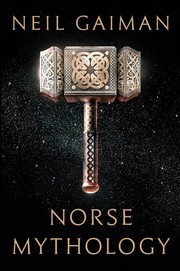
Gaiman retells the core myths (Odin, Thor, Loki, Ragnarök) in gripping modern prose, making the pantheon immediately memorable and enjoyable. Starting here means the gods feel like characters, not a list to memorize.
A more complete and scholarly retelling than Gaiman's, with careful notes on sources. Reading it after Gaiman deepens and corrects the picture, introducing nuance and variant traditions the reader is now ready to appreciate.
Raiders, Traders, and Settlers — The Wider World
IntermediateTrace the full geographic reach of the Vikings — from Vinland to Byzantium — and understand their role as traders, colonizers, and political actors who reshaped medieval Europe.
▸ Study plan for this stage
Pace: 10–12 weeks total, roughly 25–35 pages per day. Suggested breakdown: Weeks 1–4 for "The Sea Wolves" (~30 pages/day, narrative-driven and accessible); Weeks 5–8 for "The Vikings and the Victorians" (~25 pages/day, denser cultural-historical argument); Weeks 9–10 for "The Vinland Sagas" (~20 pages/day
- The dual identity of the Vikings as simultaneous raiders, long-distance traders, and permanent settlers — all three roles often performed by the same peoples in different contexts, as illustrated throughout 'The Sea Wolves'
- The geographic sweep of the Viking world: from the North Atlantic colonies (Iceland, Greenland, Vinland) in the west to the Varangian routes through Russia to Byzantium and the Islamic caliphates in the east, traced across both 'The Sea Wolves' and 'The Vinland Sagas'
- The Vinland voyages as the first documented European contact with the Americas — understanding Leif Eriksson, Thorfinn Karlsefni, and Freydís as historical actors whose ambitions and failures are preserved in the two sagas ('Grœnlendinga saga' and 'Eiríks saga rauða') edited by Eiricksson
- The saga tradition as a literary and historical source: how the Vinland Sagas blend oral memory, myth, and eyewitness-derived detail, and what that means for historical reliability
- The Victorian and Romantic reinvention of the Vikings — how 'The Vikings and the Victorians' by Andrew Wawn shows that the 'Viking' image familiar today was largely constructed by 19th-century British and Scandinavian scholars, poets, and politicians for modern ideological purposes
- Reception history as a historical method: distinguishing what medieval Vikings actually did from what later cultures needed them to have been
- Viking political agency: their role not merely as disruptors but as state-builders and power-brokers — founding Normandy, shaping Kievan Rus, serving as the Byzantine Emperor's Varangian Guard — covered in 'The Sea Wolves'
- The tension between indigenous peoples and Norse settlers visible in the Vinland Sagas' accounts of the Skrælings, representing one of history's earliest recorded cross-cultural contact narratives in the Western Hemisphere
- According to 'The Sea Wolves,' how did the same Viking culture produce raiders in England, traders in Baghdad, and colonizers in Iceland — and what economic and political conditions drove each role?
- What are the two Vinland Sagas included in Eiricksson's edition, how do their accounts of the Vinland voyages differ, and what does Wawn's argument about reception history suggest we should keep in mind when reading them?
- How does Andrew Wawn argue that Victorian-era Britain constructed its image of the Vikings, and which specific cultural products (literature, art, scholarship) does he identify as central to that reinvention?
- Using 'The Sea Wolves' as your primary source, trace the eastern Viking routes: who were the Varangians, what trade goods moved along the river routes of Rus, and how did Norse warriors end up serving the Byzantine Emperor?
- What do the Skræling encounters in 'The Vinland Sagas' reveal about Viking attitudes toward indigenous peoples, and how does the ultimate failure of the Vinland colony reflect broader limits on Viking expansion?
- After reading all three books, how would you distinguish between the historical Viking (primary and near-contemporary sources), the saga Viking (literary construction of the 12th–13th centuries), and the mythologized Viking (19th-century and modern popular culture)?
- MAPPING EXERCISE (ongoing, all three books): Keep a large blank map of the medieval world. Each week, add Viking routes, settlements, and trading posts as they appear in your reading — Lindisfarne, Dublin, Normandy, Novgorod, Constantinople, Reykjavik, L'Anse aux Meadows. By the end of Stage, you should have a fully annotated Viking world-map drawn entirely from the three books.
- COMPARATIVE SAGA ANALYSIS ('The Vinland Sagas'): After finishing Eiricksson's edition, create a two-column table comparing 'Grœnlendinga saga' and 'Eiríks saga rauða' on five key events (e.g., the first sighting of Vinland, the Skræling encounters, Freydís's role). Note where they agree, contradict, or omit. Write a one-page conclusion on which account you find more historically credible and why.
- RECEPTION AUDIT ('The Vikings and the Victorians'): Choose one modern Viking representation you know well — a film, TV show, video game, or novel. Using Wawn's analytical framework, write a 400–600 word essay identifying which specific Victorian-era myths or tropes it perpetuates or subverts.
- ROLE DIFFERENTIATION EXERCISE ('The Sea Wolves'): Select three different Viking figures or groups discussed by Brownworth — one primarily a raider, one a trader, one a settler/colonizer. Write a one-paragraph profile of each, then a final paragraph arguing whether these roles are truly distinct or points on a single continuum.
- TIMELINE CONSTRUCTION (synthesis across all three books): Build a master chronological timeline from roughly 793 CE (Lindisfarne) to the early 1000s (Vinland voyages), integrating events from all three books. Color-code entries by theme: red for raids, blue for trade, green for settlement, yellow for political/dynastic events. Identify any gaps or contradictions between the books' accounts.
- DISCUSSION OR JOURNAL PROMPT (synthesis): After completing all three books, write a 500-word response to this question: 'Is the word Viking a useful historical category, or does it obscure more than it reveals?' Draw specific evidence from Brownworth's narrative history, Wawn's reception study, and the Vinland Sagas as a primary source.
Next up: By establishing the full geographic, economic, and cultural range of the Vikings — and by learning to critically distinguish historical evidence from later myth-making — the reader is now equipped to move into deeper archaeological, linguistic, or thematic studies that demand both factual grounding and source-critical sophistication.

Organized around key figures and expeditions, this accessible intermediate history zooms in on the human stories of exploration and conquest, reinforcing the big picture with memorable biographical detail.

Explains how the Victorian era invented the horned-helmet myth and romanticized the Norse past — giving the reader critical tools to evaluate everything they have read and will read about Vikings.

The actual medieval accounts of Norse voyages to North America, in a clean modern translation. Placed here so the reader has enough context to read them critically rather than just as adventure stories.
Into the Primary Sources — Sagas and Scholarship
ExpertEngage directly with the great Norse sagas and cutting-edge archaeological scholarship, reading the Vikings in their own literary voice and through the latest material evidence.
▸ Study plan for this stage
Pace: 10–13 weeks total: ~3–4 weeks for Njal's Saga (read ~20–25 pages/day, pausing to annotate legal disputes and character genealogies); ~3 weeks for Egil's Saga (~20 pages/day, with focused journaling on skaldic verse passages); ~4–5 weeks for Children of Ash and Elm (~25–30 pages/day, cross-referencin
- Saga as historical source vs. literary construct: understanding the tension between oral tradition, manuscript transmission, and historical fact in both Njal's Saga and Egil's Saga
- The Norse legal and honor system: how Njal's Saga dramatizes the Althing, blood-feud cycles, and the limits of law as a social technology in 10th–11th century Iceland
- Skaldic poetry as primary evidence: Egil Skallagrímsson's lausavísur and drápur (especially Höfuðlausn and Sonatorrek) as first-person Viking-Age testimony, distinct from prose saga narrative
- The Viking 'mind-set' and cosmology: Neil Price's argument in Children of Ash and Elm that seiðr, the Norse mythological worldview, and concepts of fate (wyrd/örlög) were operational beliefs shaping real decisions, not mere folklore
- Material culture as text: how Price uses grave goods, ship burials (Oseberg, Gokstad), settlement archaeology, and runestones to reconstruct Viking-Age life independently of — and in dialogue with — the sagas
- Migration, diaspora, and the Atlantic world: the geographic sweep from Scandinavia to Iceland, Greenland, the British Isles, and beyond as traced through both saga narrative and Price's archaeological synthesis
- Gender, agency, and the 'shield-maiden' question: how saga women (Hallgerðr, Bergþóra in Njal's Saga) and Price's re-examination of female warrior burials (Birka grave Bj.581) challenge and complicate gendered assumptions
- The problem of anachronism: reading sagas written in the 13th century about events in the 9th–11th centuries, and how Price's scholarship helps calibrate what can and cannot be trusted in the literary record
- After reading Njal's Saga, can you trace the full arc of the blood-feud from Gunnar's outlawry to the Burning at Njál's farm — and explain what each escalation reveals about the structural limits of Icelandic law?
- What does Egil Skallagrímsson's poetry (particularly Sonatorrek, his lament for his drowned son) tell us about Viking-Age attitudes toward the gods, fate, and personal grief that the prose narrative alone cannot convey?
- How does Neil Price in Children of Ash and Elm define the 'Viking phenomenon,' and why does he insist on beginning with cosmology and belief rather than with raids and warfare?
- Where do the sagas and Price's archaeological evidence corroborate each other, and where do they conflict? Give at least two specific examples drawn from the books.
- How does Price's analysis of the Oseberg ship burial or the Birka warrior grave complicate or enrich a scene or character type you encountered in Njal's Saga or Egil's Saga?
- What is the significance of skaldic verse as a primary source, and how does Egil's Saga's embedding of authentic poems within prose narrative make it a different kind of historical document than a chronicle or annals?
- Feud mapping — Njal's Saga: Draw a large annotated timeline/flowchart of every major killing, legal case, and settlement attempt in Njal's Saga. Label each node with the characters involved, the legal mechanism invoked (if any), and whether honor or law 'won.' Reflect in writing on what the pattern reveals.
- Close-reading a skald — Egil's Saga: Choose one complete poem by Egil (Sonatorrek or Höfuðlausn). Read it aloud in translation, then write a 500-word commentary explaining its occasion, its mythological references, its emotional register, and what it adds to our understanding of the character that the prose does not.
- Artifact dossier — Children of Ash and Elm: Select one archaeological site or burial that Price discusses in depth (e.g., Oseberg, Hedeby, Birka). Compile a one-page 'dossier' summarizing what the material evidence tells us, then write a paragraph on whether any saga character or episode you read maps plausibly onto that evidence.
- Source-comparison essay: Write a 700–1,000-word comparative essay on a single theme — e.g., the role of women, the practice of outlawry, or attitudes toward death — drawing evidence from all three books. Explicitly flag where the saga narrative and Price's scholarship agree, diverge, or cannot be reconciled.
- Annotated re-read: On a second pass through any 30-page section of your choice from Njal's Saga or Egil's Saga, annotate every passage where you can now apply a concept from Price (cosmology, material culture, social structure). Write marginal notes or a reading journal entry synthesizing the two lenses.
- Debate preparation: Formulate and write out both sides of the argument 'The sagas are reliable historical sources' vs. 'The sagas are literary fictions that obscure more than they reveal,' using specific textual and archaeological evidence from all three books. Then write a one-paragraph verdict of your own.
Next up: By having read the Vikings in their own literary voice (the sagas) and through rigorous modern archaeology (Price), the reader is now equipped to engage with historiographical and comparative scholarship — examining how historians have interpreted, debated, and contextualized the Viking Age within broader medieval and world history.
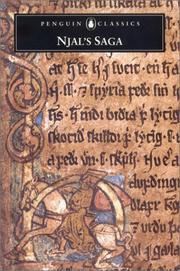
Widely considered the greatest of the Icelandic sagas — a sweeping epic of law, honor, feud, and fate. The reader now has the mythology, history, and cultural context to fully appreciate its moral complexity.

The biography of the poet-warrior Egil Skallagrímsson, offering an unmatched window into skaldic poetry, Viking-age Iceland, and the psychology of a Norse individual. Best read after Njal's Saga to compare saga styles.

The definitive state-of-the-art scholarly synthesis, drawing on decades of archaeology and new research to present the most complete and nuanced picture of Viking-age life available. Saved for last because it rewards a reader who already knows the stories, myths, and sources well enough to see why Price's revisions matter.
Discussion
Keep reading
Paths that share books, cover the same subject, or open a related topic.