Norse mythology: an ordered reading list from myths to sagas
This curriculum moves from vivid modern retellings that make the Norse world feel alive, through scholarly context and myth analysis, and finally into the primary sources — the Poetic Edda, Prose Edda, and the great Icelandic sagas — so that each stage builds the vocabulary, characters, and cosmological framework needed to fully appreciate the next. By the end, the reader will engage with the original medieval texts with genuine depth and confidence.
First Encounters — Accessible Retellings
BeginnerMeet the gods, giants, heroes, and cosmology of Norse myth through fluid, engaging modern prose, building a mental map of the characters and story cycles before tackling any scholarly or primary material.
▸ Study plan for this stage
Pace: 6–8 weeks, ~25–30 pages/day. Gaiman's book (~320 pages) in weeks 1–2, Crossley-Holland's volumes (~500+ pages total) in weeks 3–8, with weekly review days to consolidate characters and story arcs.
- The Nine Realms and Yggdrasil: understanding the cosmological structure that connects all beings and events in Norse mythology
- The major gods and their domains: Odin (wisdom, war, death), Thor (thunder, strength, protection), Freyja (love, fertility, battle), Loki (chaos, trickster), and their relationships and conflicts
- Giants, dwarves, and other beings: recognizing the roles of Jotnar, dwarves, elves, and humans in the Norse cosmos and their interactions with gods
- The Creation and Ragnarok cycle: grasping how Norse mythology frames time as cyclical rather than linear, from Muspelheim and Niflheim to the end of all things
- Hero cycles and human agency: understanding how mortals like Sigurd interact with gods and fate, and the Norse concept of honor and wyrd (destiny)
- Narrative patterns and recurring themes: identifying quests, transformations, curses, and the role of magic (seidr) and prophecy across myths
- Gaiman's voice vs. Crossley-Holland's approach: recognizing how different retellings emphasize character psychology and emotional stakes versus comprehensive mythological scope
- What are the Nine Realms, and how does Yggdrasil connect them? What role do the Norns play in maintaining this structure?
- Describe the personalities, domains, and key relationships of at least five major Norse gods. How do their conflicts drive the mythology forward?
- What is Ragnarok, and why is it central to understanding Norse cosmology? How does the inevitability of Ragnarok shape the gods' and heroes' behavior?
- Who is Loki, and why is he both a companion to the gods and their greatest threat? Trace his role across multiple myths.
- What is the story of Sigurd (or Sigmund), and how does it illustrate the Norse concept of heroism, fate, and the consequences of cursed treasure?
- How do Gaiman's retellings differ from Crossley-Holland's in tone, emphasis, and narrative structure? Which approach helps you understand the myths better, and why?
- Create a visual map of the Nine Realms and Yggdrasil as you read Gaiman, labeling each realm and noting which beings inhabit it. Refine it as you move through Crossley-Holland.
- Build a character dossier for 8–10 major figures (Odin, Thor, Freyja, Loki, Sigurd, etc.) with columns for domain, key relationships, major deeds, and personality traits. Update it as you encounter new details.
- Write a one-page summary of three myth cycles (e.g., the theft of the apples of youth, the building of Asgard's wall, the death of Baldur) in your own words after finishing Gaiman, then compare your version to Crossley-Holland's telling.
- Create a timeline of events from Creation to Ragnarok, marking major events, births of heroes, and prophecies. Identify patterns in how fate unfolds.
- Select one myth that appears in both books (e.g., Thor's fishing for Jormungandr) and write a comparative analysis: What does Gaiman emphasize? What does Crossley-Holland add or change? How do these differences affect your understanding?
- Draw or collage an image of one scene from the myths that moved you (e.g., Baldur's funeral, Sigurd slaying the dragon) and write 200 words on why that moment matters to the larger mythology.
Next up: This stage equips you with a vivid, internalized cast of characters and a coherent mental model of Norse cosmology, enabling you to engage critically with primary sources (the Poetic Edda and Prose Edda) and scholarly analysis in the next stage, where you'll examine how these myths were actually recorded, interpreted, and used by medieval Norse and Icelandic cultures.
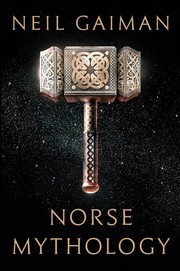
Gaiman's retelling is the perfect entry point — beautifully written, faithful to the sources, and covering the essential myths from creation to Ragnarök. It makes the gods feel vivid and memorable before any heavier reading.
A more complete retelling than Gaiman's, covering a wider range of myths with brief but illuminating notes. Reading it second reinforces the characters and fills in stories Gaiman omits, deepening the mental map.
Scholarly Foundation — Context and Interpretation
BeginnerUnderstand the historical, cultural, and religious world behind the myths — who believed them, how they functioned, and how scholars interpret them — so the primary sources can be read with critical awareness.
▸ Study plan for this stage
Pace: 8–10 weeks, ~25–30 pages/day (approximately 4–5 hours/week of focused reading and reflection)
- The religious and cosmological worldview of pre-Christian Norse peoples: the Nine Worlds, Yggdrasil, and cyclical time
- The social function of mythology in Viking Age society: how myths reinforced values, explained natural phenomena, and legitimized power structures
- The role of gods, giants, and other beings in Norse cosmology and their relationships to human fate and morality
- The historical context of Norse religion: archaeological evidence, regional variations, and the transition from paganism to Christianity
- Scholarly approaches to interpreting Norse mythology: source criticism, the problem of later Christian-influenced texts, and distinguishing historical practice from literary invention
- The cultural values embedded in Norse myths: honor, fate (wyrd), kinship, and the warrior ethos
- How the Poetic and Prose Eddas function as primary sources: their composition dates, authorship, and reliability for reconstructing ancient beliefs
- What was the cosmological structure of the Norse universe, and how did concepts like Yggdrasil and the Nine Worlds function in Norse religious thought?
- How did Norse mythology serve practical social functions in Viking Age society, and what values did it reinforce?
- What are the major challenges in interpreting Norse mythology from surviving sources, and how do scholars account for Christian influence and textual gaps?
- What can archaeological and historical evidence tell us about actual Norse religious practice versus what the literary sources describe?
- How did Norse concepts of fate (wyrd), honor, and kinship differ from other European religious and cultural systems of the period?
- What were the key differences between the gods (Aesir and Vanir) and giants in Norse cosmology, and what did these differences represent?
- Create a detailed map or diagram of the Nine Worlds and Yggdrasil based on Davidson's account, labeling each realm and noting which beings inhabit them and their relationships
- Read and annotate a passage from the Poetic Edda (e.g., Völuspá or Hávamál) alongside McCoy's interpretation, noting where the literary text aligns with or complicates the scholarly framework presented
- Write a 2–3 page comparative analysis: choose one myth (e.g., Ragnarök, the creation of humans, or a god's deed) and explain how its religious function differs from how a modern reader might interpret it
- Compile a table of Norse religious practices (sacrifice, divination, oath-taking) mentioned in both books and note what evidence (textual, archaeological, or historical) supports each practice
- Interview or discuss with another reader: explain to them why a scholar cannot simply read the Eddas as straightforward historical documents, using specific examples from Davidson and McCoy
- Create character profiles for 3–4 major gods (Odin, Thor, Freyja, Loki) that synthesize both books, noting their roles in cosmology, their relationships to humans, and the values they embody
Next up: This stage equips you with the historical, cultural, and interpretive framework necessary to read the primary sources (Eddas and sagas) critically, understanding not just what the myths say but why they mattered and how to evaluate their reliability—preparing you to engage directly with the original texts in the next stage.
The classic scholarly introduction to Norse religion, written accessibly for non-specialists. It explains the social and ritual context of the myths, bridging the gap between enjoyable retelling and serious study.

A modern, rigorously researched overview of Norse mythology and religion that reads clearly and covers the full pantheon, cosmology, and afterlife beliefs — ideal preparation for reading the Eddas directly.
The Primary Sources — The Eddas
IntermediateRead the two foundational medieval texts of Norse mythology in their entirety, understanding their structure, poetic conventions, and theological depth, armed with the context built in earlier stages.
▸ Study plan for this stage
Pace: 8–10 weeks, ~40–50 pages/day (Prose Edda: 3–4 weeks; Poetic Edda: 4–5 weeks; review & synthesis: 1 week)
- Snorri's framing device and purpose: how the Prose Edda uses the Aesir-Asgard narrative to preserve pre-Christian Norse knowledge within a Christian medieval context
- The four-part structure of the Prose Edda (Prologue, Gylfaginning, Skáldskaparmál, Háttatal) and how each section builds understanding of cosmology, poetic craft, and theological layers
- The Poetic Edda's oral-formulaic style, alliteration, and kennings as both aesthetic and mnemonic devices that encode mythological meaning
- Cosmological architecture: Yggdrasil, the Nine Worlds, and the cyclical time-structure (creation, maintenance, Ragnarök, renewal) as foundational to Norse theological thought
- The distinction between gods (Aesir and Vanir), giants, and humans in the Prose Edda's systematic theology versus the Poetic Edda's fragmentary, dramatic presentation
- Poetic conventions and meters in the Poetic Edda (eddaic verse) and their relationship to the Prose Edda's explanations in Háttatal
- Mythological narrative as cultural memory: how both texts preserve pre-Christian worldviews, values, and explanations of natural and cosmic phenomena
- What is Snorri Sturluson's stated purpose in writing the Prose Edda, and how does his Christian medieval perspective shape his presentation of pagan mythology?
- Explain the structure and contents of Gylfaginning: what cosmological and theological questions does it answer, and how does the dialogue format serve Snorri's pedagogical goals?
- How does Skáldskaparmál use mythological narratives to teach poetic technique, and what is the relationship between kennings and the stories of the gods?
- Compare the presentation of Ragnarök in the Prose Edda (Gylfaginning) versus the Poetic Edda (Völva's Prophecy): what different emphases or details does each text provide?
- What are the key formal features of eddaic verse (alliteration, stress patterns, stanza forms) as demonstrated in the Poetic Edda, and how do they differ from the prose of the Prose Edda?
- How do the Prose Edda and Poetic Edda differ in their treatment of divine conflict, particularly the war between Aesir and Vanir, and what does each version emphasize?
- Create a detailed cosmological map of the Nine Worlds based on Gylfaginning, labeling each world, its inhabitants, and its relationship to Yggdrasil; compare your map to scholarly diagrams to refine accuracy
- Select 5–10 kennings from the Poetic Edda (e.g., 'bone-house' for body, 'whale-road' for sea) and trace how Snorri explains their mythological origins in Skáldskaparmál; write brief explanations for each
- Read one complete mythological narrative in both texts (e.g., the theft of the Brisingamen, the building of Asgard's wall, or the death of Baldr) and write a comparative analysis of narrative emphasis, detail, and theological meaning
- Analyze a passage of eddaic verse from the Poetic Edda (e.g., a stanza from Hávamál or Völuspá) for alliteration, stress patterns, and semantic density; annotate how form reinforces meaning
- Create a genealogical chart of the Aesir and Vanir gods using both texts, noting where the Prose Edda and Poetic Edda agree or diverge on relationships and attributes
- Write a 2–3 page essay on how Snorri's Prologue frames the Aesir as historical figures and the mythology as euhemerized history; evaluate the effectiveness of this strategy for a medieval Christian audience
Next up: This stage equips you with direct, textual knowledge of the two foundational sources, positioning you to critically examine how later Norse mythology scholarship, modern retellings, and contemporary Norse spirituality interpret, adapt, or diverge from these medieval texts.
Snorri's 13th-century handbook of Norse myth is the single most important source for the gods and cosmology. Reading it before the Poetic Edda is easier, as Snorri writes in clear prose and explicitly explains the mythological system.

The older, more cryptic collection of mythological and heroic poems — the raw ore from which Snorri drew. Larrington's translation is scholarly yet readable, and her notes are essential for unlocking the dense allusive style of Old Norse verse.
The Icelandic Sagas — Heroes and History
ExpertExperience Norse mythology and heroic legend as they flow into the great prose sagas — stories of gods, legendary heroes, and real Icelandic families — seeing how the mythological worldview shaped an entire literary tradition.

The legendary saga of Sigurd the dragon-slayer and the cursed gold of Andvari — the closest Norse equivalent to an epic. It directly continues the heroic lays of the Poetic Edda and is the essential bridge between myth and saga.

Widely considered the greatest of the Icelandic family sagas, it shows how the Norse worldview — fate, honor, law, and doom — plays out in a richly human drama. Reading it last reveals how deeply mythology saturated everyday Icelandic life.
Discussion
Keep reading
Paths that share books, cover the same subject, or open a related topic.