The Chinese Civil War: books to read, in order
Between 1945 and 1949 a Nationalist government with more troops, more equipment and American backing lost China to a Communist party that had been nearly destroyed a decade earlier. The literature splits along a single question — whether the Nationalists lost it or the Communists won it — and this path is organised around that split, giving each case its own stage with its strongest advocates. It opens with the modern military-political narrative and closes with the Manchurian campaigns that decided the war and the years immediately after 1949. Several books here are openly partisan and are labelled as such.
The narrative
BeginnerGet the 1945-49 sequence straight — the Japanese surrender, the failed American mediation, the Manchurian campaigns, the fall of the cities — and the longer history of Nationalist-Communist conflict behind it.
▸ Study plan for this stage
Pace: Five to six weeks. Decisive Encounters is a full scholarly monograph with no page count on the catalogue record; budget three weeks and read it with a map open. China's Civil War is 295 pages and much easier going; two weeks. Read Westad first and completely before touching anything in the argument
- The sequence to fix before anything else: Japanese surrender in August 1945, a race for the territory the Japanese had held, the American mediation effort and its collapse by early 1947, the fighting in the northeast, the three great campaigns of late 1948 and early 1949, and the declaration of the
- Manchuria is the hinge of the whole war. Soviet forces occupied it after the Japanese surrender, stripped its industry, and their timing of withdrawal shaped who got there first — which is why the northeast recurs in every stage of this path.
- Westad's method is the reason he goes first: Chinese and Soviet archives, and a deliberate refusal to reduce the outcome to any single factor. He gives military decisions, political organisation and social conditions weight without collapsing them into each other.
- American mediation failed for reasons on both sides, and Westad is careful about what Washington could and could not have altered. Accounts that make American policy the decisive variable are arguing something he does not.
- Diana Lary's social history supplies what the operational narrative leaves out: refugee movement on an enormous scale, forced conscription, family separation, and a currency collapse that destroyed savings and salaries in months.
- The population had already endured eight years of war against Japan before 1945. Exhaustion is a condition of the civil war, not a consequence of it, and it is the single most important thing Lary adds to Westad.
- Keep the vocabulary straight from the start: Nationalist and Guomindang for one side, Communist and CCP for the other, and the People's Liberation Army as the name the Communist forces take during this period.
- Lay out the sequence from August 1945 to October 1949 without notes. Which six months would you nominate as the turning point, and on what basis?
- Why does Manchuria matter more than its population or distance from the capital would suggest?
- What was the American mediation attempting, and what does Westad identify as the reasons it failed?
- What did the currency collapse actually do to an ordinary urban household? Lary is specific; be specific back.
- Where do Westad and Lary look at the same event and see different things?
- Draw the map yourself: Manchuria, the North China plain, the Yangtze, the major cities, and the rail lines. Mark the front line at the end of 1945, 1946, 1947 and 1948. Everything in the later stages hangs on this.
- Build a one-page chronology from Westad and keep adding to it as you read the argument stages. Every book on this path assumes you have one.
- Write 300 words summarising Westad's own explanation of the outcome, in his proportions. You will use it to measure every later book.
- From Lary, list ten concrete effects of the war on civilians and mark which are consequences of policy and which of collapse.
Next up: With the sequence secure and an author who refuses a single explanation, you can now read the two committed cases without mistaking either for the whole story.

The best single scholarly account of the war in English, using both Chinese and Soviet archives and giving military, political and social factors their proper weight. Start here; it is the book the rest of the path argues around.

A social history of the same years — refugees, currency collapse, conscription, the emptying of cities. Read second, for what the war felt like to people who had already endured eight years of the Japanese war.
The case that the Nationalists lost it
IntermediateUnderstand the argument from Nationalist failure: hyperinflation, factionalism, a hollow officer corps, and a government that never built a base in the countryside.
▸ Study plan for this stage
Pace: Eight to ten weeks. Seeds of Destruction is 302 pages of argument and can be read in two and a half; the Chiang biography is 564 pages and reads like journalism, so three weeks; Civil War in China is 483 pages of close political history and is the slowest, so give it four. Read Eastman first — the o
- Eastman's argument is internal decay: a fiscal system that funded the war by printing money, conscription that operated as press-ganging and killed men before they reached a unit, an officer corps promoted on loyalty rather than competence, and a regime that never built support in the villages where
- Hyperinflation is the mechanism that connects all of it. When salaries become worthless, corruption stops being a moral failing of individuals and becomes the way officials feed their families, which is Eastman's point rather than an excuse.
- The Nationalist state was a coalition of factions rather than a unified party, and Chiang's method of managing it — balancing rivals, controlling appointments personally — made the army harder to command. Eastman treats this as structural, not personal.
- Fenby's biography is readable, generally unsympathetic, and written by a journalist rather than a specialist. It is useful for the arc of a career, and it should be read knowing that other historians have argued at length for a considerably more favourable reading of the same evidence — that Chiang
- Pepper's book examines the ground the other two skip: the cities the Nationalists actually held. Students, professors, journalists and businessmen were the government's natural constituency, and it lost them.
- The takeover of formerly Japanese-occupied areas after 1945 did enormous political damage — arriving officials treated the population as collaborators and the property as spoils — and Pepper traces how that shaped urban opinion.
- The urban protest movements of 1946 and 1947 were not Communist creations, and the government's response to them turned critics into opponents. That distinction matters when weighing this stage against the next.
- The whole case has a shape worth naming: it explains the outcome as something the losing side did. Keep that in view, because the next stage explains it as something the winning side did, and the two are not simply additive.
- State Eastman's argument in four sentences, with the causal order he gives it.
- How does hyperinflation reach the front line? Trace the chain from the printing press to a soldier who deserts.
- What does Fenby think Chiang got wrong, and what would the more favourable reading of the same decisions say instead? Give the strongest version of each.
- Which groups does Pepper show the government losing, in what order, and over what?
- If every failure Eastman describes had been corrected in 1946, would the outcome have changed? Say what your answer depends on.
- What can this stage not explain, on its own terms?
- Make a list of every Nationalist failure Eastman identifies and mark each F (fiscal), M (military), P (political) or S (social). The distribution is his thesis in visual form.
- Take one chapter of Fenby and check three of its claims against Westad. Note where they agree, where the emphasis differs, and where Fenby is going beyond his evidence.
- From Pepper, build a timeline of urban protest 1945-1949 and annotate the government's response to each episode.
- Write 500 words stating the Nationalist-failure case as strongly as you can, citing all three books. Do not mention the Communists except where the argument requires it.
- Note every point at which one of these three books concedes something to the other side of the argument. Those concessions are where the honest historiography is.
Next up: You now hold the strongest version of one explanation; the next stage supplies the other, including two authors who were personally committed to the side they were describing.
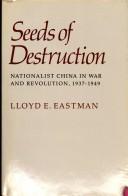
The classic statement of the internal-decay case, on Nationalist China from 1937 to 1949 — corruption, conscription abuses, fiscal collapse. Unsparing, and the foundation for most later versions of this argument.
A full biography of the Nationalist leader by a journalist, readable and generally unsympathetic. Note that other historians, including Jay Taylor, have argued for a considerably more favourable reading of the same career.
Examines the political struggle in Nationalist-held cities — students, intellectuals, the press — and how the government lost the people most likely to support it. Scholarly and the most detailed treatment of the urban politics of the war.
The case that the Communists won it
IntermediateUnderstand the argument from Communist strength: rural organisation, land reform, discipline and a coherent programme, and read the committed accounts written from inside that view.
▸ Study plan for this stage
Pace: Ten weeks. Red Star Over China is 525 pages of reportage and reads quickly; two weeks. Fanshen is 637 pages of village detail and is the long haul — four weeks at 25 pages a day. Bianco is 223 pages of dense interpretation; two weeks and reread the conclusion. Read in the order given: two eyewitness
- Red Star Over China is a 1937 book by the first Western journalist to reach the Communist base area, and its importance is as much about reception as content: it is where the Long March narrative and the personal legend of Mao entered the outside world.
- Snow was working from what his hosts told him and showed him, and the book is credulous in places. That is not a reason to skip it — it is the reason to read it, because you are reading the manufacture of an image, and the image is itself a historical force.
- Later editions were revised, sometimes substantially, as Snow's own view and the politics around him changed. Check which edition you have and read any editorial introduction.
- Fanshen is a first-hand account of land reform in one Shanxi village in 1948, watched over months: the classification of every household into landlord, rich peasant, middle peasant and poor peasant, the public accounting sessions, the redistribution, and the Party's own examination of its cadres aft
- The book's value is granularity that exists nowhere else — who owned what, who accused whom, what the work team did when the process went wrong. Its author was a committed supporter of the revolution and it reads that way throughout, which he does not conceal.
- The violence in the process is present in Fanshen rather than absent, and readers coming to it from either direction tend to be surprised by that. Note what it reports and note the frame it places around it, separately.
- Bianco is the sober synthesis: long-run peasant conditions, the collapse of liberal alternatives, and above all the effect of the Japanese invasion in creating the space and the cause the Communists organised around.
- The argument shape here mirrors the previous stage. This stage explains the outcome by what the winners built; the last stage explained it by what the losers destroyed. Deciding how much weight each carries is the question the whole path is organised around, and it is not settled.
- What does Snow's book tell you about the Communist base area in 1936, and what does it tell you about how the Party wished to be seen? Separate the two.
- Which claims in Red Star Over China would you want corroborated, and by what kind of source?
- Describe the land-reform process in Fanshen step by step, as a procedure. How much of it is redistribution and how much is a reordering of authority?
- What does Fanshen show going wrong, and what does the Party do about it? That correction is the part most summaries omit.
- Bianco gives the Japanese invasion a central role. What exactly does he say it did, and is that compatible with Eastman's account?
- Take one specific Communist advantage — organisation, land policy, discipline, or a coherent programme — and say how much of the outcome you think it explains, and why.
- Read the Long March chapters of Snow, then find how Westad and Bianco treat the same episode. Write 200 words on what a scholarly account keeps and what it drops.
- Draw the class categories used in Fanshen and, for one household in the book, follow it through every stage of the process.
- Write 500 words stating the Communist-strength case as strongly as you can, using all three books, without mentioning Nationalist failure.
- Set your two 500-word cases side by side. Mark every claim they both make and every claim only one makes. The overlap is the agreed history; the remainder is the argument.
- For both Snow and Hinton, write a paragraph on how their commitment shows in the writing — in what is described, in what is not, and in the vocabulary.
Next up: Both cases are now in hand; the last stage takes the campaign that actually decided the war and the years that followed, where the two arguments meet on concrete ground.
The 1937 book by the first Western journalist to reach the Communist base at Bao'an, and the source of the Long March narrative that made Mao internationally famous. Sympathetic to the point of credulity in places, and essential precisely because it is where the legend was manufactured.
A village-level account of land reform in Shanxi in 1948, observed at first hand over months. Hinton was a committed supporter of the revolution and the book reads that way, but it is the most detailed picture anyone has of how the Party actually reorganised a village.
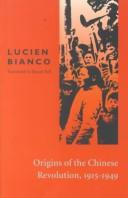
A short interpretive classic on the long-run causes — peasant conditions, the failure of liberal alternatives, the effect of the Japanese invasion. Read last in this stage as the sober synthesis after two eyewitness partisans.
The decision, and what followed
IntermediateFollow the campaign that actually settled the war, and the first years of Communist rule that the victory produced.
▸ Study plan for this stage
Pace: Eight to ten weeks. The Battle for Manchuria is 288 pages of operational history and needs maps; two and a half weeks. Anvil of Victory is 320 pages of administrative history; two weeks, read against Tanner rather than after him. The Tragedy of Liberation is 406 pages and heavy in subject matter; th
- Tanner's subject is the fighting around Siping in 1946 and its aftermath, argued as the point at which the strategic balance in the northeast shifted. It is a corrective to accounts in which the outcome was socially determined and the battles merely illustrated it.
- Operational history matters to this argument because contingency is the thing both social explanations underweight. If the northeast could have gone differently in 1946, then the outcome was not settled by inflation or land reform alone.
- Levine's book is the other half: how the Communists built a functioning administration in Manchuria — taxation, recruitment, supply, local government — behind the front, and why an army with a state behind it beat one without.
- Read together, Tanner and Levine show the same region as a battlefield and as a machine. Neither book is complete without the other, and their combination is the closest this literature comes to synthesising the two cases.
- The three great campaigns of late 1948 and early 1949 in the northeast, the Huai river region and around Beijing and Tianjin destroyed the Nationalist field armies within roughly four months. By the time the Yangtze was crossed the military question was already answered.
- The Tragedy of Liberation covers the first years of the new state — land-reform killings, campaigns against alleged counter-revolutionaries, urban political campaigns, and the siege of Changchun.
- Its author writes as a prosecutor, and his critics argue that the archival material is selected to support a case and that some figures are the highest available rather than the best established. Read it as the hostile case built from archives — which is a real and necessary thing to have read — whi
- This stage completes the path's design: two irreconcilable explanatory frames, then the ground where both are tested, then a book about what the victory produced, on which the historiography is also unsettled.
- What does Tanner claim about Siping, and what would have to have been different for his counterfactual to hold?
- In Levine's account, what does a functioning rear-area administration supply that an army cannot generate for itself?
- How do Tanner and Levine together modify Westad's balance of factors? Be specific about which factor gains weight.
- The three great campaigns ended the war militarily in about four months. Does that speed support the Nationalist-failure case, the Communist-strength case, both, or neither?
- What does Dikötter establish that is not in dispute, and what does he claim that his critics contest? Keep the two lists separate.
- Having read the whole path: what would change your mind about the balance between the two explanations? Name the evidence.
- Follow the Siping fighting on your own map, marking positions at each stage. Operational history is unreadable without doing this.
- Make a two-column comparison of Tanner and Levine on the same six months of 1946 — one column military, one administrative — and note where an event appears in both.
- For The Tragedy of Liberation, keep a running note of each major claim with its source type: archive document, memoir, secondary work, or estimate. The proportions are the thing his critics dispute.
- Write a final 800 words on the path's central question, giving each case its due and stating clearly where you think the evidence is insufficient to decide.
- Return to the chronology you built in the first stage and annotate every entry with which book changed your understanding of it.
Next up: This closes the path: the narrative, both explanatory cases with their strongest advocates, the campaign that decided it, and a contested account of what the victory produced.

The Siping campaigns of 1946, argued as the point where the strategic balance in the northeast turned. Detailed operational history, and the corrective to accounts that treat the outcome as socially predetermined.

How the Communists built a functioning state in Manchuria — administration, supply, recruitment — behind the front. Read alongside Tanner: one is the battle, the other is the machine that fed it.
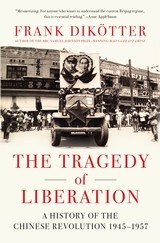
The first years of the People's Republic, covering land-reform killings, campaigns against counter-revolutionaries and urban repression. Dikötter writes as a prosecutor and his critics say he selects accordingly; read it as the hostile case, made from archival material, on what victory meant.
Discussion
Keep reading
Paths that share books, cover the same subject, or open a related topic.