The Spanish Civil War: a reading path into a divided Spain
This curriculum takes the reader from vivid, accessible narrative accounts of the Spanish Civil War through to rigorous political, ideological, and international analysis. Each stage builds on the last: first you inhabit the war through eyewitness prose, then you gain structural historical understanding, and finally you wrestle with the deeper forces — fascism, Stalinism, anarchism, and geopolitics — that made Spain the crucible of the twentieth century.
Foundations — Seeing the War Through Living Eyes
BeginnerBuild an immediate, human-scale feel for the conflict — its atmosphere, factions, and moral stakes — through firsthand and narrative accounts before tackling formal history.
▸ Study plan for this stage
Pace: 8–10 weeks, ~40–50 pages/day (Orwell first: 3–4 weeks; Hemingway second: 4–5 weeks). Pace deliberately to absorb both narrative and historical texture; reread key passages.
- The Spanish Civil War as lived experience: how ordinary soldiers, militiamen, and civilians experienced combat, fear, camaraderie, and disillusionment
- Ideological factions and their human faces: anarchists, Communists, Republicans, and Fascists as people with competing visions, not abstractions
- The fog of war and moral ambiguity: how propaganda, censorship, and conflicting loyalties obscure truth even for those in the thick of it
- The role of international volunteers and foreign powers: why outsiders came to fight and what their presence reveals about the war's global significance
- The cost of commitment: how individuals grapple with sacrifice, betrayal, and the gap between revolutionary ideals and brutal reality
- Landscape and atmosphere as character: how Spain's terrain, cities, and countryside shape the mood and meaning of the conflict
- The personal toll of political violence: trauma, loss, and the psychological weight of witnessing atrocity
- What was Orwell's initial impression of Barcelona and the militia, and how did it change by the end of his experience? What specific events or observations drove that shift?
- In *For Whom the Bell Tolls*, what does Robert Jordan's mission reveal about the strategic and moral stakes of the war? What is he willing to sacrifice, and why?
- How do Orwell and Hemingway portray the relationship between individual soldiers and the larger political machinery of the war? Where do personal loyalties conflict with ideological demands?
- What role do foreign volunteers and international brigades play in both narratives, and what does their presence suggest about how the Spanish Civil War was understood globally?
- How do both authors depict the experience of fear, violence, and death in combat? What emotional or psychological truths do they convey that a history textbook might miss?
- What is the moral ambiguity or tragedy at the heart of each book, and how does it complicate a simple 'good vs. evil' reading of the war?
- Timeline mapping: As you read *Homage to Catalonia*, create a chronological chart of Orwell's movements, the political events he witnesses, and his emotional state. Repeat for *For Whom the Bell Tolls* to compare how narrative time and historical time interact.
- Character faction tracker: For each major character in both books, note their political affiliation, their stated beliefs, and their actual behavior. Identify moments where ideals and actions diverge.
- Close reading of a key passage: Select one pivotal scene from each book (e.g., Orwell's account of the Barcelona street fighting, or Jordan's night with Maria). Annotate it for sensory detail, emotional tone, and what it reveals about the war's human cost.
- Perspective comparison: Write two short paragraphs describing the same aspect of the war (e.g., the role of the Communist Party, or the experience of waiting before battle) from Orwell's perspective and then Hemingway's. What does each author emphasize or omit?
- Propaganda and truth exercise: Identify moments in both books where characters encounter propaganda, censorship, or conflicting accounts of events. Create a list of 'what really happened' vs. 'what people were told,' and reflect on why the gap matters.
- Visual mapping: Sketch or describe the key locations in each book (Barcelona, the front lines, the mountains, the caves in *For Whom the Bell Tolls*). How does geography shape the narrative and the characters' choices?
Next up: This stage establishes the war's human texture and moral complexity; the next stage will layer on formal historical context—the political origins, the major military campaigns, and the international dimensions—so you can understand *why* these individuals faced the choices they did.
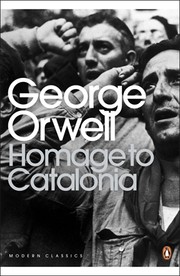
The perfect entry point: Orwell's firsthand memoir of fighting with the POUM militia is gripping, honest, and introduces the key factions (Republicans, Nationalists, anarchists, Communists) in plain language. It also plants the essential question of why the Left devoured itself.
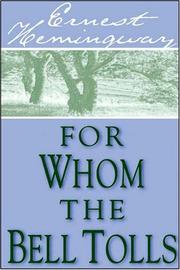
Read immediately after Orwell to flesh out the emotional and geographic texture of the war — the guerrilla landscape, the International Brigades, and the tragedy of idealism — through Hemingway's deeply researched fiction.
The Narrative History — What Actually Happened and Why
BeginnerAcquire a clear, chronological command of events: the origins of the conflict, the military campaigns, the foreign interventions, and Franco's path to victory.
▸ Study plan for this stage
Pace: 8–10 weeks, ~40–50 pages/day (Beevor's book is ~500 pages; adjust based on note-taking and re-reading of complex sections)
- The structural causes of Spanish conflict: regional identities (Catalonia, Basque Country), class divisions, Church power, and the weakness of the Spanish state in the 1920s–30s
- The collapse of the Second Republic (1931–1936): political polarization, failed reforms, and the radicalization of left and right
- The military uprising of July 1936 and Franco's emergence as the Nationalist leader; the initial balance of forces
- The role of foreign intervention: Nazi Germany and Fascist Italy's support for Franco; Soviet aid to the Republicans; the Non-Intervention Committee's failure
- Major military campaigns and turning points: the siege of Madrid, the Basque campaign, the Battle of the Ebro, and the final collapse of Republican resistance
- The social and ideological dimensions: anarchists, socialists, communists, and Nationalist forces; collectivization experiments and repression
- Franco's consolidation of power and the Nationalist victory (1939): military strategy, resource advantages, and Republican fragmentation
- What were the main structural tensions in Spanish society that made the country vulnerable to civil war, and how did the Second Republic's early reforms intensify rather than resolve them?
- How did Franco rise to leadership of the Nationalist forces, and what advantages did the Nationalists have over the Republicans in terms of military organization and foreign support?
- What was the role of Nazi Germany and Fascist Italy in the Spanish Civil War, and why did the Non-Intervention Committee fail to prevent their involvement?
- Describe the major phases of the military conflict: What were the key campaigns, and why did the Republicans lose despite initial advantages in population and resources?
- How did the ideological divisions within the Republican side (anarchists, socialists, communists) affect their ability to wage war effectively?
- What was the significance of the Battle of the Ebro, and why is it considered a turning point in the war?
- Create a detailed timeline of events from 1931–1939, marking key political moments (elections, uprisings, reforms), military campaigns, and foreign interventions; use different colors for political, military, and international events
- Draw or annotate a map of Spain showing the territorial control of Nationalist vs. Republican forces at three key moments: July 1936, mid-1937, and early 1939; note major cities, regions, and campaign locations
- Write a 2–3 page narrative summary of Franco's rise to power: How did he become the Nationalist leader, and what were his strategic advantages?
- Create a comparison chart of the three main Republican factions (anarchists, socialists, communists) listing their goals, tactics, and conflicts with each other during the war
- Outline the foreign intervention in the war: For each major foreign power (Germany, Italy, Soviet Union, Portugal), list what they sent, why they intervened, and what they gained or lost
- Analyze the Battle of the Ebro (July–November 1937): Write a 1–2 page explanation of why the Republicans launched it, what went wrong, and how it sealed their fate
Next up: This stage gives you the factual scaffolding—the who, what, when, and where of the war—that is essential before moving to deeper analysis of ideology, international relations, and long-term consequences in subsequent stages.

The ideal first 'proper' history: authoritative yet accessible, it covers the full arc of the war with vivid narrative drive. Reading it after Orwell and Hemingway means you already have emotional anchors for the places and factions Beevor analyses.
Going Deeper — Politics, Ideology, and the Republic's Fractures
IntermediateUnderstand the internal ideological wars within the Republican side — anarchism, Stalinism, socialism — and why the Republic's political contradictions were as fatal as Franco's armies.
▸ Study plan for this stage
Pace: 6–8 weeks, ~40–50 pages/day (alternating between Brenan and Broué; Brenan first for context, then Broué for deeper ideological analysis)
- The anarchist-syndicalist tradition in Spain and its vision of revolutionary transformation outside state structures
- The socialist movement's internal divisions: reformism vs. revolutionary socialism, and the UGT's competing interests
- Stalinism's infiltration of the Republican cause and the Soviet Union's strategic priorities over Spanish revolution
- The POUM (Workers' Party of Marxist Unification) as a symbol of revolutionary Marxism independent of Moscow
- The structural contradiction between bourgeois republicanism and working-class revolutionary movements within the same coalition
- The May 1937 Barcelona uprising (Journées de Mai) as the turning point where internal ideological war became violent
- How regional nationalism (Catalonia, Basque Country) intersected with class ideology and fragmented Republican unity
- The role of the Communist Party's suppression of revolutionary movements as a fatal strategic error that weakened the Republic
- What were the core differences between anarchist and socialist visions for post-war Spain, and why did they prove irreconcilable during the Civil War?
- How did Stalin's foreign policy interests shape Soviet intervention in Spain, and what was the cost to the Spanish revolution?
- What role did the POUM play in the Spanish Civil War, and why did the Communists target it as fiercely as they fought Franco's forces?
- Explain the May 1937 Barcelona uprising: what triggered it, who fought whom, and what did it reveal about Republican fractures?
- How did the Republic's attempt to unite bourgeois republicans, socialists, anarchists, and regional nationalists create structural contradictions that weakened its war effort?
- According to Brenan and Broué, was the Republic's defeat primarily due to Franco's military superiority or to internal ideological collapse—or both equally?
- Create a detailed organizational chart mapping the major Republican factions (CNT-FAI, UGT, PSOE, POUM, PCE, regional parties) with their ideological positions, membership numbers, and key leaders from both books.
- Write a 2–3 page comparative analysis: How did anarchist and Stalinist strategies for winning the war differ? Use specific examples from Brenan and Broué.
- Timeline exercise: Plot the key moments of ideological conflict (collectivizations, May 1937, suppression of POUM, etc.) alongside military events; annotate how political fractures affected military decisions.
- Close-read the sections on the Barcelona May Days in Broué; write a detailed narrative account from at least two competing perspectives (anarchist, Communist, POUM) based on the evidence presented.
- Debate preparation: Argue both sides—'The Republic lost because of internal ideological war' vs. 'The Republic lost because Franco had superior military force'—using evidence from both Brenan and Broué.
- Create a glossary of key Spanish political organizations and terms (CNT, FAI, UGT, POUM, PCE, collectivización, etc.) with definitions grounded in how Brenan and Broué explain them.
Next up: This stage equips you with a granular understanding of why the Republican side imploded from within, setting up the next stage to examine how Franco's Nationalist forces exploited these fractures and consolidated power—and what the Republic might have achieved had it resolved its ideological contradictions.

A masterwork of social and political history explaining the deep roots of the conflict — land inequality, regionalism, the Church, anarchism — that made civil war almost inevitable. Best read now that you have the narrative in place.

A rigorous Marxist analysis of the revolutionary movements within the Republic, especially the anarchists and the POUM. It deepens and challenges what Orwell described personally, showing the structural forces at work.
The International Dimension — Foreign Powers and the Road to World War II
IntermediateGrasp why Germany, Italy, the Soviet Union, and the Western democracies all intervened or stood aside, and how Spain became the dress rehearsal for the Second World War.
▸ Study plan for this stage
Pace: 4–5 weeks, ~25–30 pages/day, with 2–3 days per week dedicated to reflection and note-taking
- The British political context of non-intervention and why the British government refused to support the Spanish Republic despite ideological alignment with democratic values
- The role of British volunteers in the International Brigades as a grassroots counter to official policy, revealing the gap between state neutrality and popular antifascism
- How the Spanish Civil War exposed ideological divisions within British society—between the left, the establishment, and the working class
- The strategic implications of foreign intervention: how Germany and Italy used Spain as a testing ground while Britain and France maintained official neutrality
- The personal testimonies and lived experiences of British volunteers as evidence of how ordinary citizens understood Spain's significance for the future of democracy
- The connection between Spain and the broader European crisis: how the war foreshadowed the alliances and conflicts that would define World War II
- The suppression and marginalization of the International Brigades narrative in British official history and memory
- Why did the British government pursue a policy of non-intervention in the Spanish Civil War, and what were the consequences of this stance?
- Who were the British volunteers in the International Brigades, and what motivated them to fight in Spain despite their government's neutrality?
- How did the Spanish Civil War reveal ideological divisions within British society, and what does this tell us about British attitudes toward fascism in the 1930s?
- What evidence does Alexander provide that Spain served as a 'dress rehearsal' for World War II, particularly in terms of military technology, tactics, or international alignments?
- How did the experiences and perspectives of British volunteers differ from the official British government position on Spain?
- What role did class, politics, and social identity play in determining who went to Spain and how they were treated upon return to Britain?
- Create a timeline of key events in the Spanish Civil War with annotations on British government responses and volunteer mobilization moments
- Write character sketches of 3–4 British volunteers featured in Alexander's book, noting their backgrounds, motivations, and outcomes
- Construct a comparison chart: official British policy vs. the actions and beliefs of British volunteers—what does the gap reveal?
- Research and summarize one specific military engagement or campaign described in the book, then identify parallels to tactics or technology later used in WWII
- Analyze primary source excerpts (letters, memoirs, or testimonies) from British volunteers; identify recurring themes about why they saw Spain as crucial to stopping fascism
- Create a visual map showing the routes British volunteers took to reach Spain, the brigades they joined, and their fates—annotate with key biographical details
Next up: This stage grounds the international dimension in the lived experience of British citizens and establishes how ordinary people understood Spain's existential stakes for democracy, preparing you to examine the broader geopolitical calculations and strategic decisions of major powers in subsequent stages.

Focuses specifically on the International Brigades — who volunteered, why, and what happened to them — giving a human face to the foreign intervention on the Republican side and rounding out the geopolitical picture.
Advanced Synthesis — Franco, Memory, and the War's Long Shadow
ExpertCritically assess Franco's regime, the suppression of historical memory in Spain, and the war's lasting legacy for European politics and Spanish society.
▸ Study plan for this stage
Pace: 8–10 weeks, ~40–50 pages/day (with 1–2 days/week for review and synthesis)
- The ideological foundations of Francoism: nationalism, Catholicism, and anti-communism as pillars of regime legitimacy
- Franco's consolidation of power (1936–1939) and the mechanisms of authoritarian control during and after the Civil War
- The institutional structure of the Franco regime: the role of the military, the Falange, the Church, and the state apparatus
- Economic policies and social transformation under Franco: from autarky to limited liberalization (1960s–1970s)
- Repression, violence, and the suppression of memory: how Franco's regime erased Republican history and regional identities
- The regime's international positioning: isolation, Cold War alignment, and gradual rehabilitation in Western Europe
- Regional tensions and the suppression of Catalan and Basque nationalism as a case study in authoritarian cultural control
- The regime's legacy: how Franco's suppression of historical memory shaped post-1975 Spanish society and transitional justice
- What were the core ideological pillars of Francoism, and how did Franco use nationalism, Catholicism, and anti-communism to legitimize his regime?
- How did Franco consolidate power between 1936 and 1939, and what mechanisms of control did he employ to maintain authoritarian rule for nearly four decades?
- What role did the military, the Falange, and the Catholic Church play in sustaining the Franco regime, and how did their influence shift over time?
- How did Franco's economic policies evolve from autarky in the 1940s–1950s to limited liberalization in the 1960s–1970s, and what were the social consequences?
- What strategies did the Franco regime use to suppress historical memory and regional identities, particularly in Catalonia and the Basque Country?
- How did Franco's regime navigate international isolation and eventual Cold War integration, and what does this reveal about the regime's adaptability?
- Create a detailed timeline of Franco's consolidation of power (1936–1975), marking key institutional changes, economic shifts, and repressive policies; annotate how each phase reflects Payne's argument about regime stability
- Construct a comparative chart analyzing the roles of the military, Falange, and Catholic Church across three periods (Civil War, 1940s–1950s, 1960s–1970s); assess how their relative power shifted and why
- Write a 1,500–2,000 word analytical essay on how Franco's regime used the suppression of memory (banning regional languages, erasing Republican history, controlling education) as a tool of political control; ground your argument in specific examples from Payne
- Map the Franco regime's international relations across three phases: isolation (1940s), Cold War alignment (1950s–1960s), and rehabilitation (1970s); explain how geopolitical shifts forced the regime to adapt while maintaining authoritarian control
- Analyze Payne's treatment of regional resistance (Catalonia, Basque Country) as a case study; write a 1,000-word memo explaining how Franco's suppression of regional nationalism both sustained and destabilized the regime
- Create a visual infographic or annotated document tracing the economic transformation from autarky to limited liberalization; identify which social groups benefited and which were marginalized, and assess the regime's vulnerability to economic change
Next up: This stage equips you with a comprehensive understanding of Franco's institutional machinery, ideological foundations, and mechanisms of memory suppression—essential context for examining how Spain's post-1975 transition grappled with historical amnesia and how contemporary Spanish society continues to reckon with the regime's long shadow.
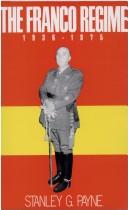
Payne is the foremost English-language scholar of Spanish fascism; this authoritative study explains how Franco consolidated power after victory and what his regime actually was — essential for understanding what the Republican defeat meant in practice.
Discussion
Keep reading
Paths that share books, cover the same subject, or open a related topic.