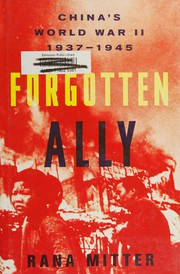
Start with Rana Mitter's Forgotten ally. It is the book that makes the case implied by its title — that China's war is missing from the standard Western account of the Second World War, and that leaving it out distorts the whole picture. It is also simply the best-written single volume on the subject.
The alternative starting point is Iris Chang's The Rape of Nanking, which is the book most Western readers have heard of. It should not be first, for a reason that has nothing to do with its quality: it is about six weeks of an eight-year war, and reading it cold gives you an atrocity without the war it happened inside.
The war itself
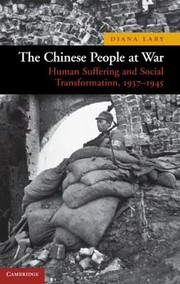
Diana Lary's The Chinese People At War Human Suffering And Social Transformation 19371945 — the record runs the subtitle together; it is published as The Chinese People at War — approaches the same period through what it did to ordinary people rather than through campaigns. Peter Harmsen's Shanghai 1937 and Nanjing 1937 cover the opening battles at close range; the Shanghai fighting was on a scale Western readers rarely associate with the Asian war at all. Mark R. Peattie's The battle for China is the operational military history, assembled by both Chinese and Japanese scholars.
Nanjing, and the argument about Nanjing
This needs three books rather than one, and they need to be read together.
Chang's The Rape of Nanking brought the massacre to Western attention and remains the most-read account. Specialists have documented errors in it, particularly around some figures and photographs, and that is a fact worth knowing without concluding that the book is worthless — the massacre is established beyond serious dispute.
What is disputed is the death toll, and the range is wide for real methodological reasons: the boundaries of the city and the period, whether disarmed soldiers are counted as civilians, and the destruction of records. The figure of 300,000 is the official Chinese commemorative number and is inscribed at the memorial. Lower academic estimates exist, and they shade at the far end into positions that are properly called denial — but not every lower estimate is denial, and treating them as identical makes the actual argument impossible to follow.
Takashi Yoshida's The making of the "Rape of Nanking" is a history of the memory rather than the event: how the massacre has been remembered, taught, denied and politicised in China, Japan and the United States. Joshua A. Fogel's The Nanjing Massacre in History and Historiography (Asia: Local Studies/Global Themes) is the scholarly collection on the same ground. Read them after Chang, and you will be able to say what is established, what is contested, and why.
Collaboration, ecology, and the wider frame
Hans van de Ven's China at War reassesses the Nationalist military effort, which older accounts written under Cold War assumptions treated dismissively. Timothy Brook's Collaboration studies the Chinese who worked with the Japanese occupation and refuses easy verdicts about them. Micah S. Muscolino's Ecology of War in China takes the 1938 Yellow River dyke breach — a Chinese decision that drowned the invasion and hundreds of thousands of Chinese peasants with it — and follows the environmental consequences for a decade.
Where to stop
Mitter, Lary and the three Nanjing books give you the war and the memory of it, which is the harder and more valuable half. Van de Ven and Brook are for readers who want the arguments about Chinese conduct. Muscolino is the specialist end and the most original book here.
Follow the full ordered path here: The Second Sino-Japanese War: Books to Read, in Order.
Ready to learn something deeply?
Build a reading path — free