The Second Sino-Japanese War: books to read, in order
China fought Japan from 1937 to 1945, absorbed somewhere between fourteen and twenty million deaths, and is the theatre most Western accounts of the Second World War treat as a footnote. This path starts with the war as a whole and as civilians experienced it, then works through the opening campaigns, then gives a full stage to Nanjing and the still-unfinished argument about how it is remembered in Japan and China, and ends with the war's less visible dimensions — occupation, collaboration, famine and the environment. Several of these books are in open disagreement with each other and the path says where.
The war entire
BeginnerHold the whole 1937-45 sequence, understand why the Nationalist government's war effort was written out of the story for decades, and see what the war did to ordinary people.
▸ Study plan for this stage
Pace: Five to six weeks. Mitter runs to about 450 pages and needs three weeks at 25 pages a sitting — read it with a map of China open, because the geography is doing constant work. Lary's social history is around 230 pages and can be read in two weeks. Read them in this order.
- The war ran from 1937 to 1945 — longer, if you count the seizure of Manchuria in 1931 as its opening — and China absorbed deaths usually estimated between fourteen and twenty million. It is the theatre most Western accounts of the Second World War treat as a footnote.
- Mitter's argument is that China's resistance was strategically decisive: it tied down the bulk of the Japanese army for years, and both Cold War camps then had reasons to forget it — the Communists because the Nationalists had done most of the fighting, the West because Chiang's government had been
- Mitter's book is published in the UK under a different title covering the same years, so do not read both; they are the same text.
- The three-way structure to hold from the start: Chiang Kai-shek's Nationalist government, Mao's Communists in the northwest, and Wang Jingwei's collaborationist regime in occupied China. Each is fighting Japan and each is positioning against the others.
- The strategic logic of the whole war is trading space for time — retreating up the Yangtze to Chongqing, stretching Japanese supply lines, and waiting for the wider war to change the odds. Everything in the campaign narratives follows from a government that could not win a decisive battle and knew i
- Lary's social history supplies what the strategy cost: mass refugee movement, brutal conscription, hyperinflation, families permanently separated, and the deliberate breaching of the Yellow River dykes by the Nationalists to slow the Japanese advance.
- The dyke breach is the case to remember from this stage: a Chinese government destroying Chinese farmland and drowning Chinese civilians as a military measure. It complicates any account with a clean line between invader and defender.
- Reading Mitter then Lary sets up the path's method — a strategic account followed immediately by the human consequence of the same decisions, so that neither is read alone.
- What is Mitter's case that China's resistance was strategically decisive? What would have to be true of Japanese deployments for it to hold?
- Why was the Nationalist war effort written out of the story for decades? Give the reason on each side of the Cold War divide.
- What did trading space for time actually require of the Chinese government, and at what point does a strategy of retreat stop being a strategy?
- How does Lary's account of conscription change your reading of the army Mitter describes?
- The Yellow River dyke breach was a Chinese decision. How should a history weigh it, and does Lary weigh it differently from Mitter?
- After both books, what is the single fact about this war that would most surprise a reader who knows the European theatre well?
- Build a timeline of the war from Mitter with the main campaigns, the government's moves west, and the shifts in the Nationalist-Communist relationship. Keep it for the whole path.
- Mark on a map the successive seats of the Nationalist government and the extent of Japanese control at three points in the war. The retreat becomes legible as a shape.
- From Lary, write 300 words on what conscription meant in practice for a rural family, using her specifics rather than generalities.
- Write a one-paragraph account of the Yellow River breach — decision, consequence, and how each book frames it — without concluding on whether it was justified.
- List the three Chinese political forces and, for each, what it was trying to achieve by 1945. Keep the list; the last stage will complicate it.
Next up: With the shape of the whole war and its social cost in hand, the next stage takes you into the campaigns that set the pattern of everything after.
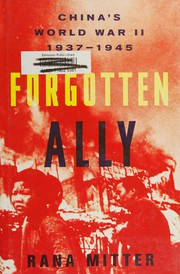
The standard modern single-volume account, arguing that China's resistance was strategically decisive and that both Cold War camps had reasons to forget it. Published in the UK as China's War with Japan, 1937-1945 — the same book, so do not read both.
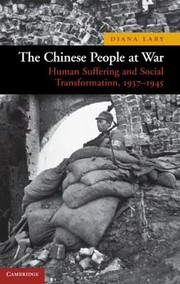
A social history of the war: refugees, conscription, inflation, family separation, the deliberate breaching of the Yellow River dykes. Read second, because Mitter gives you the strategy and Lary gives you what the strategy cost.
The opening campaigns
IntermediateFollow the fighting itself from Shanghai through Nanjing and into the interior, and understand the military balance that made a long retreat China's only viable strategy.
▸ Study plan for this stage
Pace: Ten to twelve weeks for roughly 1,370 pages. Harmsen's two books are popular military history and move quickly — about 340 and 370 pages, two to three weeks each. The operational history is around 665 pages of dense scholarship; use it as a reference alongside the first two and then read selectively
- Shanghai 1937 covers the three-month urban battle that opened the full war, fought street by street in a modern city with an international settlement watching from across the creek.
- Chiang committed his best German-trained divisions at Shanghai and lost them. That decision destroyed the core of his modern army in the war's first season and shaped every campaign afterwards, which is why this book has to come first.
- The choice to fight at Shanghai was partly political: a visible battle in front of foreign observers, intended to force international attention and to prove the government would not simply concede the north. Whether that justified the losses is a real question.
- Nanjing 1937 is the direct sequel and covers the retreat up the Yangtze and the fall of the capital as a military operation — a disintegrating army, a broken chain of command and a city whose defence was ordered and then abandoned.
- That book explains the conditions in which the massacre occurred without being a book about the massacre, which is exactly the sequence this path wants: military collapse first, atrocity as a separate stage.
- The Battle for China is an operational history by Chinese, Japanese and Western military historians working together, and its value is precisely that collaboration — the same campaigns described by scholars from the countries involved.
- The military balance to understand: Japan had air superiority, artillery, armour, logistics and a professional officer corps; China had numbers, space and a small modernised core. Every Chinese operational choice follows from that asymmetry.
- Read the popular narratives for the shape and the scholarly volume for the correction. Where Harmsen dramatises a decision, The Battle for China usually shows the constraints behind it.
- Why did Chiang fight at Shanghai rather than trade the city for time? State the military and the political case separately.
- What did the loss of the German-trained divisions cost China for the rest of the war?
- How did the Nanjing defence break down? Distinguish orders given, orders received and what units actually did.
- Where does The Battle for China correct or complicate Harmsen's account? Find two specific instances.
- What is the effect of reading campaigns described by Japanese as well as Chinese historians? Name a point where the perspectives visibly differ.
- Given the material asymmetry, was there any Chinese strategy in 1937 that could have produced a better outcome?
- Map the Shanghai battle by phase, marking where the front stood at the start of each month. The compression of the fighting is the point.
- Write 400 words on the decision to defend Nanjing, setting out what was known at the time rather than what is known now.
- Take one campaign covered in both Harmsen and The Battle for China and write a page comparing how each handles casualties, command decisions and Japanese intentions.
- List the Japanese operational advantages and the Chinese counter-measures for each. Where there is no counter-measure, note it.
- Add the campaigns to the timeline from stage one, with unit-level detail for Shanghai and Nanjing.
Next up: The military collapse of Nanjing sets the conditions for what followed; the next stage is devoted to that and to the argument over it that has never ended.

The three-month urban battle that opened the full war, where Chiang committed his best German-trained divisions and lost them. Popular military history, well paced, and the necessary first campaign narrative.
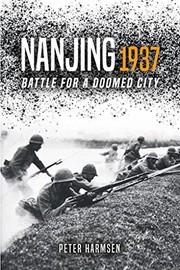
The direct sequel, covering the retreat up the Yangtze and the fall of the capital as a military operation. Read it in order: it explains the conditions in which the massacre happened without being a book about the massacre.

An operational history of the war's major campaigns by Chinese, Japanese and Western military historians working together. The most detailed and most demanding book in this stage; use it as the reference the popular narratives condense.
Nanjing, and the fight over memory
IntermediateUnderstand what happened in Nanjing in December 1937, why the death toll is contested, and how the atrocity became a political instrument in both China and Japan.
▸ Study plan for this stage
Pace: Six to eight weeks for about 835 pages, and this is the stage to pace deliberately rather than efficiently. The Rape of Nanking is around 300 pages and is distressing reading — two weeks, in short sittings. Yoshida's study of memory is about 270 pages, two to three weeks. The scholarly essay collect
- The events: after the fall of the capital in December 1937, Japanese forces carried out mass killings of prisoners and civilians and widespread rape over a period of weeks. That an atrocity of major scale occurred is established by Japanese, Chinese and Western documentary evidence, including contem
- The death toll is contested, and the range in scholarly estimates is very wide — from figures in the tens of thousands to the 300,000 used in Chinese official commemoration. The disagreement turns on the geographic boundary of the city, the period counted, and whether disarmed soldiers are included.
- Chang's book put the massacre in front of a Western public and was written with real moral force by a journalist rather than a historian. Specialists have documented factual errors in it, and its casualty figures sit at the high end of the range.
- Reading Chang first and the two examinations after is deliberate: it puts you in the position most Western readers were in, and then shows you what a professional reading of the same material looks like.
- Yoshida traces how the massacre has been remembered, denied and re-remembered in Japan, China and the United States since it happened — including how Chang's own book changed the terms of the argument.
- Yoshida's central insight is that the dispute is not primarily about evidence. Each country's account of Nanjing has served domestic purposes — Japanese textbook politics, Chinese national commemoration, American wartime and postwar framing — and those purposes explain the persistence better than th
- Denial in Japan is not a single position: it ranges from disputing the number, to disputing the classification of executed prisoners, to outright denial that anything happened. Collapsing those into one category makes the argument impossible to follow.
- The essay collection is the closest thing to a professional consensus statement on a subject where consensus is thin, and it includes a much-discussed assessment of Chang's book. Read it last so you can judge that assessment against your own reading.
- What kinds of evidence exist for what happened at Nanjing, and what are the specific limitations of each?
- Why do scholarly estimates of the death toll vary so widely? Identify the three or four methodological choices that drive the range.
- What errors do specialists identify in Chang's book, and do they bear on her central claims or on details?
- Yoshida argues that the memory of Nanjing has served different purposes in three countries. Give the purpose in each case and the evidence he uses.
- Distinguish the different positions grouped together as denial in Japan. Which are historical claims and which are political ones?
- After all three books, what can be stated as established, what remains genuinely open, and what is disputed for reasons that are not evidentiary?
- As you read Chang, keep a list of the claims that struck you most. Afterwards, check each against the essay collection and record what the specialists say.
- Write 400 words setting out why the death toll is contested, laying out the methodological choices without proposing a figure of your own.
- From Yoshida, build a timeline of how the massacre was treated in Japan and in China at successive periods, and mark each shift's domestic trigger.
- Separate the Japanese positions on Nanjing into a short taxonomy, with a line on what each would require to be true.
- Write one page on what a responsible general-audience book about Nanjing would do differently from Chang's, using the specialists' criticisms rather than your own impression.
Next up: Having taken the war's most contested episode seriously, the last stage turns to the dimensions the campaign narratives omit entirely.

The 1997 book that put the massacre in front of a Western public, written with real moral force by a journalist rather than a historian. It contains errors that specialists have documented, and its casualty figures are at the high end of the range; read it first and then read the two books that examine it.

Traces how the massacre has been remembered, denied and re-remembered in Japan, China and the United States since 1937 — including how Chang's own book changed the argument. The single most useful book for understanding why the dispute persists.
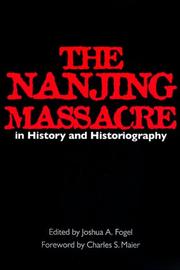
Scholarly essays on the evidence, the numbers and the Japanese debate, including a much-discussed assessment of Chang's book. Read last: it is the closest thing to a professional consensus statement on a subject where consensus is thin.
The war behind the war
IntermediateEngage the dimensions the campaign narratives leave out — occupation and collaboration, wartime famine and environmental destruction, and how historians now judge the Nationalist war effort.
▸ Study plan for this stage
Pace: Eight to ten weeks for about 975 pages. Van de Ven is around 370 pages and should be read first, over three weeks, directly against your Mitter notes. Brook's collaboration study is about 295 pages of case studies and takes two to three weeks. Muscolino's environmental history is around 310 pages an
- Van de Ven argues that the war must be read as a Chinese civil conflict as much as a foreign invasion, and that Allied treatment of Chiang's forces — particularly the American assessment of them — was unjust and has distorted the record ever since.
- Van de Ven and Mitter overlap substantially and weight the Nationalist record differently. Reading them against each other is the clearest available demonstration that this field's disagreements are about emphasis and framing at least as much as about facts.
- The Nationalist-Communist relationship across the war — a formal united front, with real fighting between them and each preserving strength for what came after — is the thread that makes 1949 legible as a continuation rather than a new event.
- Brook's Collaboration takes five case studies of local elites in the Yangtze delta who worked with the Japanese occupation, and asks what collaboration meant when the practical alternative was administrative chaos.
- Brook refuses easy verdicts deliberately: the men in his cases are neither traitors nor resisters in any clean sense, and the book's method is to reconstruct the choices as they appeared at the time rather than to score them afterwards.
- Occupation covered a large share of China's population and its most productive regions for most of the war. Any account that omits it describes a minority of the wartime Chinese experience.
- Muscolino's environmental history takes the 1938 Yellow River flood — caused deliberately by the Nationalists to slow the Japanese — and the Henan famine that followed, and treats them as a single connected catastrophe of energy, food and land.
- The Henan famine killed on a scale comparable to major battles and is usually given a sentence. Ending on it makes the point the whole stage is built for: the largest wartime catastrophes were often not battles, and the responsibility for them is not always the invader's.
- Where exactly do Van de Ven and Mitter differ on the Nationalist war effort? Is the difference evidentiary, interpretive, or about what a history should emphasise?
- What does it mean to read this war as a civil conflict as much as an invasion? What does the framing explain, and what might it obscure?
- In Brook's cases, what were the realistic alternatives available to a local elite under occupation? Take one case and set them out.
- Brook refuses to deliver verdicts. Is that a scholarly virtue or an evasion? Argue it from a specific case.
- How does Muscolino connect the flood, the famine and the military situation? Trace the causal chain in your own words.
- After the full path: how would you now describe China's war — its shape, its cost, and the two or three things most commonly got wrong about it?
- Read Van de Ven with your Mitter timeline open and annotate every point where the two accounts diverge. The annotated timeline is the stage's main product.
- Take one of Brook's five cases and write 400 words reconstructing the decision as it looked at the time, without using the word collaborator.
- From Muscolino, write 300 words tracing the chain from the dyke breach to the Henan famine, marking each link as documented or inferred.
- Revisit the list of three Chinese political forces you made in stage one and rewrite it now, adding what each was doing in occupied territory.
- Write a final two-page account of the Second Sino-Japanese War as you now understand it, and mark every sentence that reflects a scholarly disagreement rather than a settled fact.
- List the five books on this path you would keep if you could keep only five, with a line each on what would be lost without them.
Next up: This closes the path: you can now state what happened in China between 1937 and 1945, where the historians disagree, and why the memory of it is still being fought over.

A revisionist account arguing that the war must be read as a Chinese civil conflict as much as a foreign invasion, and that Allied treatment of Chiang's forces was unjust. Van de Ven and Mitter overlap but weight the Nationalist record differently.

Five case studies of local Chinese elites who worked with the Japanese occupation in the Yangtze delta, and of what collaboration actually meant when the alternative was chaos. Careful, humane and refuses easy verdicts.

On the 1938 Yellow River flood, deliberately caused by the Nationalists to slow the Japanese advance, and the Henan famine that followed. An environmental history that makes visible a catastrophe most accounts mention in a sentence — the right place to end.
Discussion
Keep reading
Paths that share books, cover the same subject, or open a related topic.