The English Civil War: a reading path from Charles I to Cromwell
This curriculum takes the reader from an accessible narrative overview of the English Civil War through to specialist works on its key institutions, ideologies, and long-term consequences. Each stage builds on the last: foundational storytelling first, then analytical depth on Parliament, the New Model Army, and regicide, and finally the broader revolutionary and intellectual legacy of the period.
Foundations: The Story of the War
BeginnerGrasp the essential narrative — who fought, why, and what happened — and build the vocabulary needed for deeper study.
▸ Study plan for this stage
Pace: 6–8 weeks, ~40–50 pages/day. Start with Purkiss (approx. 400 pages, 2–3 weeks), then move to Worden (approx. 500 pages, 3–4 weeks), with 1 week for review and consolidation.
- The political and religious tensions between Charles I and Parliament that triggered the conflict (1625–1642)
- The three distinct phases of the wars: First Civil War (1642–1646), Second Civil War (1648), and Third Civil War (1650–1651)
- Key figures and their roles: Charles I, Oliver Cromwell, the Parliamentarians, and the Royalists
- The ideological divide: divine right monarchy vs. parliamentary sovereignty and religious reform
- Major battles and military campaigns and their strategic significance (e.g., Edgehill, Marston Moor, Naseby)
- The social and economic grievances underlying the conflict: taxation, land, and religious settlement
- The execution of Charles I (1649) as a watershed moment and its constitutional implications
- The Interregnum and Cromwell's military dictatorship as an outcome of the wars
- What were the primary causes of conflict between Charles I and Parliament, and how did religious and political disagreements escalate into civil war?
- Describe the three phases of the English Civil Wars and explain what distinguished each phase militarily and politically.
- Who were the major military and political leaders on both sides, and what were their core objectives?
- What was the significance of the Battle of Naseby, and how did it shift the course of the First Civil War?
- Why was the execution of Charles I in 1649 considered revolutionary, and what did it reveal about changing ideas of sovereignty?
- How did the English Civil Wars lead to the Interregnum and Cromwell's rise to power?
- Create a detailed timeline of events from 1625–1660, marking key political crises, battles, and turning points. Use both Purkiss and Worden to cross-check dates and significance.
- Construct a character map identifying 8–10 major figures (e.g., Charles I, Cromwell, Fairfax, the Earl of Strafford) with their allegiances, motivations, and how their influence changed over the course of the wars.
- Draw or annotate a map of England and Scotland showing the locations of 5–6 major battles (Edgehill, Marston Moor, Naseby, Worcester, etc.). Note which side won and why the location mattered strategically.
- Write a 2–3 page narrative summary of the First Civil War (1642–1646) in your own words, explaining the chain of events that led to Parliament's victory.
- Compare and contrast the arguments made by Purkiss and Worden on a key topic (e.g., the causes of the war, or Cromwell's character). Note where they agree and where their interpretations differ.
- Create a glossary of 15–20 terms specific to the period: e.g., Roundhead, Cavalier, Parliamentarian, the Long Parliament, the New Model Army, regicide, the Protectorate. Use definitions from both texts.
Next up: This stage equips you with the narrative backbone and essential vocabulary needed to move into deeper analysis—whether examining the ideological roots of the conflict, the social composition of each side, or the long-term constitutional and religious consequences of the wars.

A vivid, accessible narrative told through ordinary voices — soldiers, women, clergy — that makes the conflict feel human and immediate. Perfect as a first book because it builds empathy and context before tackling politics.

A concise, authoritative overview by one of the leading historians of the period. Worden maps the political and religious fault lines clearly, giving the beginner a reliable intellectual framework to carry forward.
King vs. Parliament: Causes and Political Crisis
BeginnerUnderstand the deep constitutional, religious, and financial tensions between Charles I and Parliament that made war inevitable.
▸ Study plan for this stage
Pace: 4–5 weeks, ~25–30 pages/day. Start with Gregg's biography (2–3 weeks) to build narrative context around Charles I's personality and early reign, then move to Russell's analytical work (2 weeks) to deepen understanding of structural causes.
- Charles I's personality, religious convictions, and political rigidity as factors in the crisis
- The constitutional conflict between royal prerogative and parliamentary rights
- Religious tensions: Puritanism, Arminianism, and the fear of 'popery' in the 1620s–1630s
- Financial crisis and the Crown's resort to controversial revenue methods (Ship Money, feudal incidents)
- The breakdown of trust between Crown and Parliament, particularly after 1625
- The role of the Scottish crisis (1637–1640) in forcing Charles to recall Parliament
- Long-term structural causes versus short-term triggers in explaining the war's outbreak
- How patronage networks and court factionalism deepened political divisions
- What were Charles I's core beliefs about kingship, and how did they clash with parliamentary expectations?
- Explain the financial crisis of the 1620s–1630s: what methods did Charles use to raise revenue, and why did Parliament find them unconstitutional?
- How did religious anxiety—particularly fears of Catholicism and Arminianism—fuel political opposition to Charles I?
- What role did the Scottish crisis of 1637–1640 play in precipitating the English Civil War?
- According to Russell, what are the key structural causes of the conflict, and how do they differ from Charles's personal failings?
- Why did the trust between Crown and Parliament break down irreparably by 1640?
- Create a timeline of Charles I's reign (1625–1640) marking key financial crises, religious controversies, and parliamentary conflicts; annotate each with Gregg's interpretation of Charles's motivations.
- Write a character sketch of Charles I based on Gregg's biography: identify 3–4 personality traits that made compromise difficult, with specific examples from the text.
- Analyze one controversial revenue method (Ship Money, feudal incidents, or monopolies) using both Gregg and Russell: explain the Crown's rationale and Parliament's constitutional objection.
- Create a two-column comparison table: 'Crown's View of Prerogative' vs. 'Parliament's View of Rights' based on specific incidents from both books.
- Trace the religious conflict: map the spread of Arminianism in the 1620s–1630s and explain why Puritans and parliamentarians saw it as a threat to Protestantism.
- Write a 500-word essay: 'Was the English Civil War inevitable by 1640?' using Russell's structural analysis to argue for or against inevitability, citing specific causes from both texts.
Next up: This stage establishes the political, religious, and financial grievances that made conflict unavoidable; the next stage will examine how these tensions erupted into open warfare and trace the military and ideological dimensions of the conflict itself.
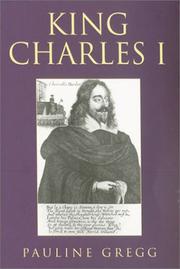
A thorough and readable biography of Charles I that illuminates his personality, his belief in divine right, and his catastrophic political misjudgements — essential for understanding why compromise failed.
Russell, the foremost revisionist historian of the period, dismantles simple narratives and shows how structural problems in the Stuart monarchy made conflict likely. Read after Gregg so you can test the biography against the structural argument.
War, Army, and Revolution
IntermediateAnalyse how the war was actually fought, how the New Model Army became a revolutionary force, and how radical ideas exploded from its ranks.
▸ Study plan for this stage
Pace: 8–10 weeks, ~40–50 pages/day. Fraser's biography (~600 pages) takes 3–4 weeks; Hill's thematic work (~400 pages) takes 2–3 weeks; remaining time for review, note synthesis, and exercises.
- The New Model Army's organizational innovation and military effectiveness: how Cromwell and Fairfax built a professional, meritocratic force that defeated the Royalists
- Cromwell's rise from country gentleman to Lord Protector: his religious conviction, military genius, and political pragmatism as revealed through Fraser's biography
- The radicalization of the army: how soldiers and officers developed independent political and religious ideas, moving beyond Parliament's original war aims
- The Levellers and Diggers: radical movements within and around the army demanding social equality, land redistribution, and democratic representation
- Religious enthusiasm and sectarianism: how Puritan conviction and competing visions of the 'godly commonwealth' drove both military cohesion and revolutionary ideology
- The regicide and the execution of Charles I: the army's decisive break with monarchy and the constitutional crisis that followed
- The tension between military necessity and radical transformation: how winning the war created conditions for social revolution that alarmed the conservative elite
- What were the key organizational and tactical innovations of the New Model Army, and how did they contribute to Parliament's military victory?
- How did Cromwell's personal religious beliefs and military decisions shape the army's identity and its role in the revolution?
- What were the main radical movements (Levellers, Diggers, Fifth Monarchists) that emerged from the army's ranks, and what did they demand?
- How did the army's radicalization create a rift between the soldiers and Parliament, and what role did this play in the regicide?
- What does Hill's analysis of radical ideas reveal about the social and religious vision of ordinary soldiers and sectaries during the Civil War?
- How did the war itself—its length, its ideological intensity, and its military organization—create the conditions for revolutionary change?
- Create a timeline of Cromwell's military campaigns (1642–1651) using Fraser's narrative, noting key victories, turning points, and his evolving political role.
- Compile a comparative chart of radical groups (Levellers, Diggers, Fifth Monarchists) from Hill's work: their social composition, demands, and fate—what unified them and what divided them?
- Write a 500-word character study of Cromwell based on Fraser's portrayal: identify the tensions between his religious conviction, military ambition, and political pragmatism.
- Trace the army's radicalization through key moments in both books: the Putney Debates, the regicide, the Protectorate—how did the army's ideology shift?
- Analyze a primary source speech or letter by Cromwell (referenced in Fraser) and a Leveller manifesto (discussed in Hill): what do their rhetorics reveal about competing visions of the revolution?
- Create a visual map or diagram showing the relationship between the New Model Army, Parliament, the Levellers, the Diggers, and the Royalists—how did these forces interact and conflict?
Next up: This stage establishes how military revolution and radical ideology were inseparable during the Civil War, preparing you to examine the Protectorate's attempt to stabilize the revolution and the ultimate restoration of monarchy—the question of whether radical transformation could be institutionalized or contained.
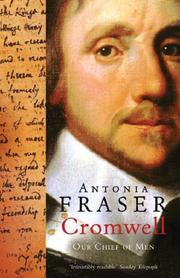
A landmark biography of Oliver Cromwell that traces his rise from obscure gentleman to Lord Protector. It anchors the military and political story in a single compelling life, bridging the war and the Commonwealth.
Hill's classic study of the radical religious and political movements — Levellers, Diggers, Ranters — that erupted during the war. Now that the reader knows the narrative, this book reveals the revolutionary ideas fermenting within it.
Regicide and the Commonwealth
IntermediateUnderstand the trial and execution of Charles I as a world-historical event, and grasp how England governed itself without a king.
▸ Study plan for this stage
Pace: 4–5 weeks, ~40–50 pages/day (approximately 250–300 pages total)
- The legal and constitutional arguments used to justify Charles I's trial as a regicide, including the concept of sovereignty and parliamentary supremacy
- The role of Oliver Cromwell and the Army as the driving force behind the trial, distinct from Parliament's initial hesitation
- The trial as a revolutionary act that broke with centuries of English legal tradition and the doctrine of divine right
- The execution of Charles I as a watershed moment that shocked European monarchies and demonstrated the power of revolutionary ideology
- The Commonwealth period's attempt to govern without a monarch, including the challenges of legitimacy and stability
- Wedgwood's narrative technique in reconstructing the trial from contemporary documents and how historians interpret contested events
- What were the main legal charges against Charles I, and how did the prosecution argue that a king could be tried for treason against his own people?
- How did Oliver Cromwell and the Army's role differ from Parliament's position on the trial, and what pressures did they exert?
- Why was the execution of Charles I considered shocking and revolutionary in the context of 17th-century European politics?
- What were the key constitutional innovations attempted during the Commonwealth, and why did they ultimately fail to provide stable governance?
- How does Wedgwood use primary sources to reconstruct the trial, and what interpretive challenges does she identify?
- What was the relationship between religious conviction and political action among the regicides, particularly among the Army leadership?
- Create a timeline of key events from Charles I's capture to his execution, noting the turning points where the trial became inevitable
- Write a one-page summary of the prosecution's legal case against Charles I, as presented in the trial, and identify which arguments were novel versus traditional
- Compare two or three contemporary accounts of the trial (excerpts provided or found in Wedgwood) and note where they differ; discuss what this reveals about how the event was perceived
- Construct a diagram showing the competing power centers during the trial (Parliament, Army, Cromwell, the King, the courts) and how each tried to control the outcome
- Write a short reflection on how the Commonwealth's lack of a monarch created a legitimacy crisis—what alternatives did they propose, and why were they unstable?
- Debate in pairs or small groups: Was the trial of Charles I legally justified, or was it a show trial? Use evidence from Wedgwood's account to support your position
Next up: This stage establishes the revolutionary rupture with monarchy and divine right, providing the foundation to explore how the Commonwealth's experiment in republican governance ultimately collapsed and led to the Restoration—the subject of the next stage.

A masterful short account of the king's trial by one of the greatest narrative historians of the twentieth century. Wedgwood makes the legal and moral drama of regicide viscerally real — the ideal entry point to this stage.
Legacy and Long Revolution
ExpertPlace the English Civil War within the broader sweep of British and Atlantic history, and assess its contested legacy for democracy, religion, and political thought.
▸ Study plan for this stage
Pace: 4–5 weeks, ~40–50 pages/day (approximately 280–350 pages total)
- The English Civil War as a pivotal moment in the development of British state formation and imperial expansion, not merely a domestic conflict
- The interconnections between religious reformation, political theory, and social upheaval across England, Scotland, and Ireland
- How the Civil War's outcomes shaped long-term trajectories in parliamentary sovereignty, religious settlement, and constitutional development
- The contested nature of the Civil War's legacy: competing interpretations of progress, liberty, and legitimacy in subsequent centuries
- The Atlantic dimension: how English Civil War ideas and participants influenced colonial America and transatlantic political culture
- The role of violence, trauma, and memory in shaping post-war society and political identity
- The relationship between the Civil War and the broader 'long revolution' of early modern state-building and modernization
- How does Braddick situate the English Civil War within the context of British state formation and imperial development across the 16th–17th centuries?
- What were the major religious, political, and social fault lines that made civil war possible, and how did they intersect across England, Scotland, and Ireland?
- How did the Civil War's outcomes shape the development of parliamentary sovereignty and constitutional thought in Britain?
- What competing narratives or interpretations of the Civil War's legacy does Braddick identify, and why have different groups claimed it as foundational to their own political projects?
- How did ideas, people, and conflicts from the English Civil War influence Atlantic and colonial politics in the 17th–18th centuries?
- What role did religious settlement and toleration play in the Civil War's causes and its long-term political consequences?
- Create a timeline mapping the Civil War's major events alongside parallel developments in Scotland and Ireland, noting how Braddick treats these as interconnected rather than separate histories
- Write a comparative essay analyzing two competing interpretations of the Civil War's legacy (e.g., as a triumph of parliamentary liberty vs. a cautionary tale of religious extremism) and trace how Braddick evaluates each
- Construct a concept map showing how religious reformation, state centralization, and Atlantic expansion intersected as long-term drivers of conflict and change
- Select three key figures or groups (e.g., Parliament, the Crown, Scottish Covenanters, Irish Catholics) and write brief position papers explaining their stakes in the conflict and vision for Britain's future
- Research and annotate one primary source passage (sermon, petition, or political tract) from the Civil War era, identifying how Braddick's interpretation illuminates its historical context and contested meanings
- Develop a historiographical essay addressing the question: 'Was the English Civil War a revolution or a civil war?' using Braddick's evidence and framing to support your argument
Next up: This stage establishes the Civil War as a transformative moment within long-term processes of state formation, religious change, and Atlantic expansion, preparing readers to examine how subsequent periods either consolidated or contested these outcomes in the 18th–19th centuries.
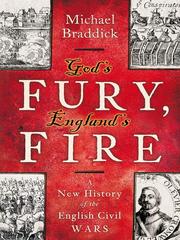
Braddick's sweeping synthesis integrates politics, religion, society, and culture into the most complete single-volume account available. It serves as a capstone that rewards readers who already know the story and are ready to see it whole.
Discussion
Keep reading
Paths that share books, cover the same subject, or open a related topic.