Best Books on China's Cultural Revolution, in Order
This curriculum moves from vivid personal testimony to rigorous historical analysis to long-term reckoning, building the reader's emotional and factual foundation before introducing scholarly debate and comparative perspective. Starting at the intermediate level, each stage assumes the vocabulary and context built by the one before it, so that by the final stage the reader can engage with the Cultural Revolution's contested legacy and its echoes in contemporary China.
Ground-Level Witness: Living the Revolution
IntermediateBuild an immediate, human-scale understanding of what the Cultural Revolution felt like from the inside — the Red Guards, denunciation sessions, family ruptures, and the sent-down youth experience — through the most powerful memoirs.
▸ Study plan for this stage
Pace: 8–10 weeks, ~40–50 pages/day (accounting for reflection and note-taking on memoir material)
- The generational rupture: how the Cultural Revolution fractured families across three generations (grandmother, mother, daughter in Wild Swans; parents vs. children in Red Scarf Girl and Born Red)
- Ideological possession and peer pressure: how Red Guards and youth were mobilized through revolutionary fervor, struggle sessions, and social coercion rather than force alone
- The sent-down experience: rural exile as both punishment and formative trauma for urban youth, and its role in the Revolution's social engineering
- Denunciation and betrayal as systemic tools: how public accusation sessions destroyed trust within families and communities, and the psychological toll on both accusers and accused
- Personal agency vs. historical forces: how ordinary people navigated, resisted, or complied with the Revolution—the space between victimhood and complicity
- The body as political text: physical appearance (armbands, red scarves, clothing), violence, and bodily humiliation as mechanisms of control and identity
- Memory and trauma: how memoir writers reconstruct and make sense of experiences that were chaotic, contradictory, and psychologically overwhelming in real time
- How does Jung Chang's three-generation narrative in Wild Swans reveal the different ways the Cultural Revolution was experienced and internalized across age cohorts, and what does this tell us about how revolutionary ideology took root?
- In Red Scarf Girl, how did Ji-li Jiang's initial enthusiasm for the Revolution and the Red Guards gradually transform, and what specific moments or realizations triggered her disillusionment?
- What role did denunciation sessions and public struggle meetings play in the three memoirs, and how did they function as tools of both political control and personal destruction?
- Compare the sent-down experience across Born Red (Gao Yuan) and the other two memoirs: what were the common hardships, and how did exile reshape the youth who experienced it?
- How do the three authors position themselves in relation to complicity—did they see themselves as victims, perpetrators, or something more ambiguous? How does their retrospective stance as memoir writers differ from their perspective as participants?
- What does the treatment of family relationships in these three memoirs reveal about how the Cultural Revolution weaponized kinship and trust?
- Create a three-generation timeline for Wild Swans: map the grandmother's, mother's, and Jung Chang's own experiences of political upheaval (from the 1920s onward). Annotate moments where ideology, trauma, or survival strategies passed between generations.
- Track Ji-li Jiang's emotional arc in Red Scarf Girl using a graph or narrative map: plot her enthusiasm, doubt, and despair across key events (joining the Red Guards, her father's denunciation, her own interrogation). Identify the turning points.
- Conduct a close reading of one denunciation or struggle session from each memoir. Write a 500-word analysis comparing the mechanics, emotional tenor, and aftermath across the three accounts.
- Create a "sent-down diary" from Gao Yuan's perspective in Born Red: write 3–4 entries imagining his internal thoughts during key moments of rural exile. Use details from the memoir to ground your imaginative reconstruction.
- Write a comparative character study: choose one family member from each memoir (e.g., Ji-li's father, Gao Yuan's mother, Jung Chang's grandmother) and analyze how they coped with accusation, exile, or ideological pressure. What survival strategies did they employ?
- Reflect in a personal essay (800–1000 words): How do these three memoirs complicate the notion of victimhood? Where do you see the authors claiming agency, and where do they acknowledge their own participation in the Revolution's violence?
Next up: This stage immerses you in the lived texture of the Revolution through intimate, first-person testimony, preparing you to step back and examine the broader institutional, political, and ideological structures that made such experiences possible—the focus of the next stage.
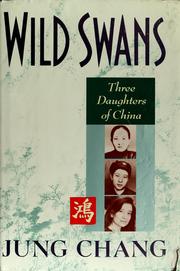
Spanning three generations of women, this global bestseller gives the reader an unmatched panoramic view of 20th-century China culminating in the Cultural Revolution. Its narrative sweep makes it the ideal entry point for an intermediate reader with no prior deep knowledge.
A tightly focused memoir of a Shanghai schoolgirl swept up in Red Guard fever, it zooms in on exactly what Wild Swans surveys broadly — the classroom, the struggle sessions, the agonizing family loyalty tests — cementing the personal stakes before moving to history.
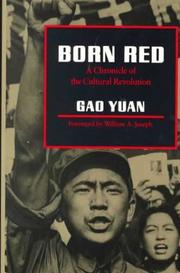
Written from the perspective of an enthusiastic Red Guard rather than a victim, this rare insider account corrects any one-sided picture and explains how ordinary teenagers became perpetrators of violence.
The Sent-Down Youth and Rural China
IntermediateUnderstand the rustication campaign — the mass exile of urban youth to the countryside — as both a political instrument and a formative generational trauma that shaped post-Mao China's leadership and culture.
▸ Study plan for this stage
Pace: 6–7 weeks, ~40–50 pages/day. Week 1–2: "Son of the Revolution" (~300 pages); Week 3–4: "To the Edge of the Sky" (~400 pages); Week 5: review and overlap; Week 6–7: synthesis and exercises.
- The rustication campaign as state policy: how the CCP systematized the exile of urban youth (xiaoxiang) to rural communes as both ideological reeducation and labor mobilization
- Generational trauma and psychological rupture: how separation from families, manual labor, and political persecution created lasting emotional and identity wounds in the sent-down generation
- Rural China as both destination and mirror: how the countryside exposed urban youth to poverty, inequality, and the gap between revolutionary propaganda and lived reality
- Political persecution through family background: how class labels (landlord, capitalist, intellectual) inherited by children made them targets for struggle sessions and discrimination
- Survival strategies and moral compromise: how sent-down youth navigated between ideological conformity, self-preservation, and maintaining human dignity in hostile environments
- The sent-down generation's role in post-Mao leadership: how this cohort's experiences shaped their pragmatism, skepticism of ideology, and influence on reform-era policies
- Gender and vulnerability: how female sent-down youth faced compounded dangers including sexual assault, forced marriage, and reproductive control
- Memory and testimony: how personal memoirs function as historical evidence and emotional reckoning with state violence
- What were the stated ideological justifications for the rustication campaign, and how do Liang Heng and Anhua Gao's accounts reveal the gap between propaganda and reality?
- How did family background and political labels determine the experiences of sent-down youth, and what role did inherited class stigma play in their persecution?
- What were the major survival strategies employed by sent-down youth, and what moral costs did these strategies exact?
- How did the rural environment—poverty, labor conditions, social structures—challenge or reinforce the revolutionary ideals urban youth had been taught?
- What specific forms of trauma did sent-down youth experience, and how do Liang Heng and Gao represent the long-term psychological and social impacts?
- How did the experiences of the sent-down generation influence their later roles in Chinese leadership and policy-making during the reform era?
- Create a timeline of Liang Heng's family's political persecution across both his childhood and rustication years, identifying how each event (struggle sessions, labels, exile) compounded his vulnerability.
- Comparative character analysis: map how Liang Heng and Anhua Gao each responded differently to similar challenges (separation, labor, political pressure), noting what personal or circumstantial factors shaped their choices.
- Write a 'propaganda vs. reality' document: extract one ideological claim about rustication from the texts (e.g., 'youth will be reeducated through labor'), then cite specific passages showing how lived experience contradicted it.
- Gender analysis exercise: identify and analyze scenes involving female sent-down youth in both memoirs (especially Gao's account), noting the specific vulnerabilities and forms of violence they faced that male youth did not.
- Oral history simulation: conduct a mock interview with either Liang Heng or Anhua Gao based on the texts, asking questions about their decision-making, regrets, and how they made sense of their experiences afterward.
- Policy reflection: research one post-Mao economic or educational reform (e.g., the restoration of the college entrance exam, special economic zones) and hypothesize how the sent-down generation's experiences might have influenced its design or implementation.
Next up: This stage establishes the sent-down generation as a crucial historical actor and trauma-bearer, preparing you to examine how their experiences and subsequent rise to power shaped the ideological, economic, and social transformations of the reform era and beyond.
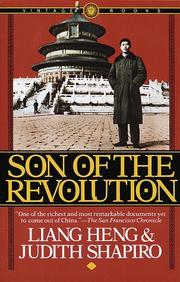
Liang's memoir traces his family's destruction and his own years in the countryside with sober clarity, bridging the Red Guard stage and the sent-down experience and showing how both phases were part of a single continuous catastrophe.
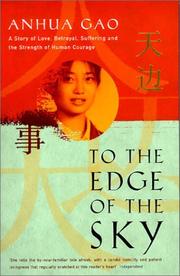
A harrowing account of a woman who endured nearly every circle of Cultural Revolution hell — labor camp, rustication, political marriage — providing the most complete single-life portrait of the era's full duration before the reader moves to analytical history.
Historical Architecture: How and Why Mao Did It
IntermediateMove from testimony to causation — understand Mao's political motives, the institutional machinery of the Cultural Revolution, and the sequence of events from 1966 to 1976 with scholarly precision.
▸ Study plan for this stage
Pace: 8–10 weeks, ~40–50 pages/day (approximately 800 pages total; adjust based on note-taking intensity)
- Mao's personality, ideology, and psychological drivers for launching the Cultural Revolution
- The factional power struggles within the CCP leadership (Liu Shaoqi, Deng Xiaoping, Lin Biao) and how Mao used the CR to eliminate rivals
- The institutional machinery: the role of the PLA, Red Guards, propaganda apparatus, and mass mobilization techniques
- The sequence and escalation of events from 1966–1976: launch, radicalization, the Lin Biao incident, and the transition to 'Criticism of Lin Biao and Confucius'
- How Mao's earlier policies (Great Leap Forward, economic failures) created the conditions for the CR
- The distinction between Mao's stated revolutionary ideology and his actual consolidation of personal power
- The mechanisms of terror, denunciation, and social control that sustained the CR for a decade
- What were Mao's core political motives for initiating the Cultural Revolution in 1966, and how did his personality shape its trajectory?
- How did Mao use the Cultural Revolution to eliminate or neutralize his rivals within the CCP leadership, and what was the significance of the Lin Biao incident?
- What institutional actors (PLA, Red Guards, propaganda organs) did Mao mobilize to execute the CR, and how did their roles evolve over the decade?
- Trace the major phases of the Cultural Revolution (1966–1976) as presented in Jung Chang's account: what triggered escalations and what drove shifts in policy?
- How did Mao's failures during the Great Leap Forward inform his decision to launch the CR, and how did he use the CR to deflect blame?
- What were the mechanisms by which Mao maintained control over the CR despite its chaos, and how did he manage competing factions?
- Create a detailed timeline of the Cultural Revolution (1966–1976) with key events, policy shifts, and leadership changes, annotated with Mao's strategic objectives at each stage
- Construct a power map showing the major CCP factions (Mao's supporters, Liu Shaoqi's faction, Lin Biao's faction, Deng Xiaoping's position) and how their relationships shifted across the decade
- Write a 2–3 page analytical essay: 'How did Mao's personality and past political failures shape the Cultural Revolution's design and execution?'
- Identify and analyze 3–4 key passages from Jung Chang's biography that reveal Mao's actual motivations versus his public revolutionary rhetoric; annotate with historical context
- Create a diagram showing the institutional machinery of the CR (PLA, Red Guards, propaganda, mass denunciation networks) and trace how Mao used each to consolidate power
- Develop a comparative chart: Great Leap Forward vs. Cultural Revolution — what were the similarities in Mao's methods, and what made the CR a tool for political survival rather than economic transformation?
Next up: This stage equips you with a precise, causally grounded understanding of *why* and *how* Mao orchestrated the Cultural Revolution as a power consolidation strategy, preparing you to examine the human and social consequences of this machinery in the next stage.

Co-authored with Jon Halliday, this exhaustively researched biography reframes Mao as a calculating political actor rather than an ideological visionary, giving the reader the clearest account of why he launched the Cultural Revolution and how he sustained it.
Deep Analysis: Violence, Memory, and Contested Meaning
ExpertEngage with the scholarly debates about the scale and nature of Cultural Revolution violence, the suppression of memory in post-Mao China, and how historians and survivors have struggled to make sense of the catastrophe.
▸ Study plan for this stage
Pace: 8–10 weeks, ~40–50 pages/day (accounting for dense scholarly analysis and note-taking)
- The escalation of violence from political struggle to mass persecution: how Red Guard factionalism and Mao's manipulation of youth transformed ideological conflict into systematic brutality
- MacFarquhar's archival methodology and use of internal Party documents to reconstruct decision-making during the Cultural Revolution
- Dikötter's quantitative approach to estimating death tolls and documenting violence across regions, challenging earlier underestimates
- The role of factional conflict (conservative vs. radical Red Guard groups) in driving violence and the breakdown of state control
- Post-Mao amnesia and the Party's deliberate suppression of Cultural Revolution memory through official narratives and censorship
- Survivor testimony and oral history as contested sources: whose memories are preserved, whose are silenced, and why
- The tension between historical accountability and political stability in contemporary China's approach to the Cultural Revolution
- How different scholarly frameworks (political history vs. social history vs. memory studies) produce different interpretations of the same events
- How did MacFarquhar use Party documents and internal communications to reconstruct the decision-making process that led to the escalation of Cultural Revolution violence?
- What are the key differences between MacFarquhar's and Dikötter's estimates of death tolls and violence, and what methodological choices account for these differences?
- How did Red Guard factionalism contribute to the shift from political struggle to mass violence, and what role did Mao play in encouraging or exploiting these divisions?
- What mechanisms did the post-Mao Chinese state use to suppress or control public memory of the Cultural Revolution, and what were the consequences for historical understanding?
- How do survivor accounts and oral histories challenge or complicate the narratives presented in MacFarquhar and Dikötter's works?
- What is at stake in the scholarly debate about the 'true' scale and nature of Cultural Revolution violence, and why does this debate remain politically sensitive in China today?
- Create a detailed timeline of key escalation points in Cultural Revolution violence (1966–1976) using evidence from both books, noting where MacFarquhar and Dikötter diverge in their accounts
- Analyze 3–4 excerpts from Party documents cited in MacFarquhar's work: identify what these documents reveal about elite decision-making and what they conceal or omit
- Construct a regional comparison chart documenting violence patterns across provinces using Dikötter's data; identify which regions experienced the most severe persecution and hypothesize why
- Write a 1,500–2,000 word comparative essay on how MacFarquhar (top-down political history) and Dikötter (bottom-up social history) construct different explanations for the same violent events
- Conduct a close reading of one survivor testimony or memoir excerpt (if available in the texts); annotate it for gaps, silences, and what it reveals about memory suppression
- Create a debate brief: argue both sides of the question 'Should the Chinese state officially acknowledge and teach the full history of Cultural Revolution violence?' using evidence from both books to support each position
Next up: This stage equips you with the scholarly tools and contested evidence needed to evaluate how historical trauma is documented, remembered, and politically managed—preparing you to examine how survivors, artists, and activists have worked to reclaim and reframe Cultural Revolution memory in the present day.
Co-authored with Michael Schoenhals, this is the definitive academic history of the political elite's role — the factional struggles, Lin Biao, the Gang of Four — providing the top-down institutional analysis that complements Dikötter's bottom-up archival work.
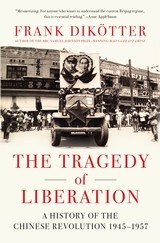
Reading the first volume of Dikötter's People's Trilogy here places the Cultural Revolution in the longer arc of Communist violence from 1945 onward, showing the reader that 1966 was an intensification of existing patterns rather than an aberration.
Discussion
Keep reading
Paths that share books, cover the same subject, or open a related topic.