The Divine Cities Reading Order and Guide
This curriculum guides a beginner through Robert Jackson Bennett's Divine Cities trilogy in the correct sequence, with light preparation before diving in and a deeper reflection stage after. Each stage builds on the last — first establishing comfort with epic secondary-world fantasy, then reading the trilogy in order, and finally exploring the broader themes and craft that make the series so resonant.
Warm-Up: Secondary-World Fantasy Foundations
BeginnerBuild comfort with immersive secondary-world fantasy — layered societies, political intrigue, and magic systems — so the Divine Cities' dense world-building feels immediately accessible rather than overwhelming.
▸ Study plan for this stage
Pace: 6–8 weeks total: spend ~3–4 weeks on The Name of the Wind (~30 pages/day, ~400 pages) and ~3–4 weeks on The City of Brass (~25 pages/day, ~530 pages). Read at a relaxed pace — pause to take notes on world-building details, magic rules, and political factions as they emerge.
- Secondary-world immersion: how authors establish unfamiliar worlds through 'show, don't tell' — trusting the reader to absorb rules and history organically (as Rothfuss does with the University and the Arcanum)
- Layered magic systems: The Name of the Wind's Sympathy magic is rule-bound, logical, and has a cost (alar fatigue, bodily harm) — recognizing that a magic system's *limits* define its drama as much as its powers
- Unreliable narration and frame stories: Kvothe tells his own legend to Chronicler, meaning every event is filtered through ego, memory, and myth-making — a key lens for evaluating any first-person fantasy narrator
- Multicultural world-building: The City of Brass draws on Islamic Golden Age history, Arabic mythology, and djinn lore to build Daevabad — understanding how real-world cultural frameworks can ground and enrich a fictional world
- Political intrigue through faction conflict: Daevabad's tensions between the Daeva, Geziri, Ayaanle, and other tribes show how fantasy societies mirror real ethnic, religious, and class hierarchies — and how outsiders (Nahri) expose those fault lines
- Dual-protagonist structure: following both Nahri and Ali in The City of Brass trains the reader to hold competing loyalties and perspectives simultaneously, a skill essential for ensemble-cast fantasy
- Magic as identity and power: in both books, who can use magic, who is allowed to learn it, and who is punished for it is inseparable from social class and political control
- Pacing and information rationing: both authors deliberately withhold key lore (Kvothe's parents' killers, Nahri's true lineage) to sustain tension — noticing *what* is withheld is as important as what is revealed
- In The Name of the Wind, what are the core rules of Sympathy magic — what does it cost the practitioner, and what happens when those limits are exceeded? Why does a magic system with hard costs create more compelling storytelling than one without?
- Kvothe narrates his own story as an adult looking back. What are at least two moments where his narration seems self-aggrandizing or suspiciously convenient, and how does that unreliability affect your trust in the world-building he describes?
- In The City of Brass, Daevabad is a city of rigid ethnic and caste hierarchies. How does Nahri's ambiguous heritage make her both an outsider and a threat to every faction? What does her arc reveal about how power structures respond to people who don't fit their categories?
- Ali is a true believer in Geziri ideals of equality, yet he enforces a system that oppresses shafit (mixed-blood) people. How does Chakraborty use his internal conflict to critique political idealism versus complicity?
- Both books use a 'stranger arrives in a new world' structure (Kvothe entering the University; Nahri arriving in Daevabad). Compare how each author uses that arrival to deliver exposition — which techniques felt most natural, and which felt forced?
- After finishing both books, how would you define 'secondary-world fantasy' in your own words? What distinguishes it from portal fantasy or historical fantasy, and what demands does it place on the reader?
- World-building map journal: As you read each book, maintain a running document with two columns — 'What I know for certain' and 'What I'm inferring.' Track how your inferences get confirmed or overturned. This trains the active reading posture that dense world-building (like the Divine Cities trilogy) demands.
- Magic system diagram: After finishing The Name of the Wind, draw or chart the rules of Sympathy — its principles (the Doctrine of Correspondence, alar splitting), its costs, and its failure modes. Then do the same for djinn magic in The City of Brass. Compare: which system is more codified? Which is more mythological? What does that difference signal about each book's themes?
- Faction relationship map: For The City of Brass, create a visual map of Daevabad's tribes and factions (Daeva, Geziri, Ayaanle, shafit, etc.), noting what each group wants, fears, and controls. Draw arrows showing alliances, conflicts, and dependencies. Revisit it after each major political scene to update it.
- Narrator reliability exercise: Choose one scene in The Name of the Wind where Kvothe describes himself doing something impressive. Rewrite a short paragraph (150–200 words) of that scene from the perspective of a skeptical witness — someone who saw the same events but doesn't share Kvothe's self-image. Reflect on how the 'truth' of the scene changes.
- Cultural source-spotting: The City of Brass is rooted in specific real-world traditions. After finishing it, spend 30–60 minutes researching one element Chakraborty draws from (e.g., the historical Abbasid Caliphate, the Islamic concept of djinn, or the Daeva as a Zoroastrian term). Write 3–4 sentences on how knowing the real-world source deepens your reading of the fictional version.
- Pre-reading primer for the next stage: Before moving on, write a one-page personal 'world-building checklist' — the 5–7 questions you now know to ask when entering any new fantasy world (e.g., Who holds power and why? What are the rules and costs of magic? Whose perspective am I getting?). This checklist will serve as your active reading guide for the Divine Cities.
Next up: Having internalized how Rothfuss builds a rule-bound magic system and how Chakraborty layers political and cultural complexity into a single city, the reader is now equipped to engage with Robert Jackson Bennett's Divine Cities — a series that fuses both of those skills simultaneously, in a world where magic is industrial, colonialism is the central conflict, and no single narrator can be fully tr
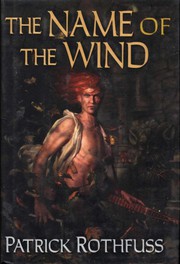
A beautifully written, beginner-friendly introduction to deep secondary-world lore and a narrator-driven epic; it trains the reader to absorb rich world-building at a steady pace, a skill essential for Bennett's trilogy.
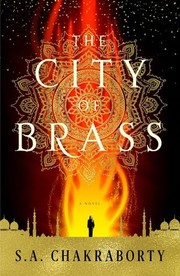
A city-centric fantasy steeped in mythology, colonialism, and political tension — themes that map almost perfectly onto the Divine Cities — making it an ideal tonal bridge before starting Bennett.
The Trilogy, Book One: City of Stairs
BeginnerEnter the world of the Continent and Bulikov, understand the central premise of dead gods and colonial power dynamics, and meet the core cast of characters.
▸ Study plan for this stage
Pace: 3–4 weeks, ~25–30 pages/day (City of Stairs is ~450 pages); aim for 5 reading days per week, leaving 2 days for reflection and exercises
- The Divinities and the Miracle Economy: Understanding how the now-dead gods of the Continent once shaped physical reality through Miracles, and why their deaths left the world literally broken and restructured.
- Colonial Power Inversion: Grasping the novel's central political conceit — the Continent, once a dominant theocratic empire, is now subjugated by the formerly enslaved Saypuri nation, and how that reversal breeds resentment, denial, and violence on both sides.
- The Blink and Historical Suppression: Recognizing why the Saypuri government forbids knowledge of the Divinities and their history on the Continent, and the cultural trauma this enforced amnesia creates for Bulikov's citizens.
- Bulikov as a Character: Reading the city itself — its collapsed architecture, its anachronistic pockets of Miraculous reality, and its fractured identity — as a living embodiment of the novel's themes of loss and memory.
- Shara Thivani as Spy-Scholar: Understanding Shara's dual role as a Saypuri intelligence operative and a secret expert on Divine history, and how her personal obsession with the gods drives the investigation.
- Sigrud je Harkvaldsson — Loyalty, Trauma, and the 'Blunt Instrument': Appreciating Sigrud not merely as muscle but as a figure of suppressed grief and fierce loyalty, and how his dynamic with Shara anchors the novel emotionally.
- The Nature of Belief and Reality: Engaging with Bennett's philosophical core — that the Divinities' power was sustained by worship, meaning belief literally shaped the physical world, and exploring what that implies about faith, power, and history.
- Factions and Competing Agendas: Mapping the key players (the Restorationists, the Saypuri Ministry of Foreign Affairs, the local Bulikovian government, and covert Divine remnants) and understanding how each faction's goals create the novel's central conflicts.
- How does the historical relationship between the Continent and Saypur — specifically the period of Divine enslavement and the subsequent Kaj's revolution — explain the present-day political tensions Shara navigates in Bulikov?
- What is the significance of the Blink, and why does the Saypuri government enforce the suppression of Divine history? What does this policy cost the people of the Continent culturally and psychologically?
- How does Bennett use the physical geography and architecture of Bulikov — its collapsed districts, its impossible spaces — to externalize the themes of grief, denial, and lost identity?
- What motivates the Restorationists, and in what ways does Bennett complicate a simple 'villain' reading of their ideology? Where does the reader's sympathy lie, and why?
- How do Shara's personal history (her family lineage, her relationship with Vo, her academic obsession) and her professional role as a spy create internal conflicts that shape her decisions throughout the investigation?
- By the end of City of Stairs, how has Bennett established that 'dead' does not necessarily mean 'gone' when it comes to the Divinities, and what does this suggest about the nature of Divine power?
- City Map Journal: As you read, sketch a rough map of Bulikov, annotating it with locations as they appear (the Seat of the World, the collapsed districts, the Saypuri embassy quarter). Note how the city's physical layout changes your mental image of the power dynamics at play.
- Faction Tracker: Create a simple one-page chart with columns for each major faction (Saypuri Ministry, Restorationists, Bulikovian City Fathers, Divine remnants). For each chapter block, jot down what each faction wants, what they know, and what they're hiding — update it as revelations occur.
- Divinity Dossiers: After finishing the novel, write a short paragraph (5–8 sentences) for each named Divinity mentioned in City of Stairs, summarizing their domain, their relationship to the Continent's people, and the legacy they left behind. This builds the theological vocabulary you'll need for later stages.
- Thematic Reflection Essay (500–700 words): Choose ONE of the following prompts and write a short informal essay: (a) 'Bulikov is a city in denial — discuss.' or (b) 'Bennett presents colonialism as a cycle rather than a direction — do you agree?' Ground every claim in specific scenes from City of Stairs.
- Character Voice Exercise: Pick one scene told from Shara's perspective and rewrite a single page of it from Sigrud's point of view. Focus on what details he would notice, what he would feel but not say, and how his voice differs from Shara's scholarly interiority. This deepens your understanding of both characters.
- Re-read the Prologue and Final Chapter Back-to-Back: Once you've finished the novel, return to the prologue with fresh eyes. Write 3–5 bullet points noting details, phrases, or images that now carry entirely different weight. This exercise trains the close-reading skills essential for the rest of the trilogy.
Next up: City of Stairs establishes the world's rules, its wounds, and its cast of morally complex players — the next stage builds directly on these foundations by shifting the setting and deepening the political and Divine stakes, so a firm grasp of Bulikov's history and the nature of Miraculous power is essential before moving forward.

The first book in the trilogy and the essential starting point — it establishes the world's history, its murdered gods, the political relationship between Saypur and the Continent, and introduces Shara Thivani and Sigrud.
The Trilogy, Book Two: City of Blades
IntermediateDeepen understanding of the trilogy's themes — the cost of war, the nature of duty, and what happens to soldiers when their god dies — through a new protagonist perspective.
▸ Study plan for this stage
Pace: 3–4 weeks, ~25–30 pages/day — City of Blades runs ~500 pages; a steady daily pace allows time for reflection without losing narrative momentum. Reserve the final 2–3 days for review, journaling, and exercise completion.
- The Cost of War and Trauma: General Turyin Mulaghesh is a veteran haunted by past atrocities; Bennett uses her perspective to explore PTSD, moral injury, and the psychological weight soldiers carry long after combat ends.
- Duty vs. Personal Redemption: Mulaghesh is pulled out of retirement against her will, forcing a central tension between obligation to her country and her own need for peace — interrogating whether duty can ever truly be 'done'.
- The Death of a God and Its Consequences: The Goddess of Death, Voortya, is dead, yet her influence and her soldiers (the Voortyashtani) persist. The novel asks what happens to a warrior culture — and individual warriors — when the divine purpose that defined them is gone.
- The Nature of the Afterlife as Ideology: Voortya's promised 'Sea of Swords' afterlife functions as a belief system that gave soldiers meaning. Bennett examines how ideology (religious or otherwise) can be weaponized to make people willing to die — and kill.
- Female Soldierhood and Aging: Unlike Shara in Book One, Mulaghesh is older, physically scarred, and explicitly post-heroic. Her body and her weariness are central to the narrative, challenging conventional depictions of the action hero.
- Colonialism and Extraction: The Saypuri presence in Voortyashtan mirrors colonial resource extraction (thinadeskite mining), and Bennett deepens the trilogy's critique of empire by showing how economic motives dress themselves in the language of civilization and progress.
- Memory, Myth, and Historical Erasure: The Voortyashtani culture has been systematically suppressed. The novel treats recovered history as dangerous — what a society chooses to forget is as revealing as what it remembers.
- Grief as a Structural Force: Multiple characters — Mulaghesh, Sigrud, and the Voortyashtani themselves — are defined by unresolved grief. Bennett positions grief not as a personal failing but as a force that shapes politics, violence, and identity.
- How does Mulaghesh's experience of war differ from Shara's experience of espionage in Book One, and what does this shift in protagonist type reveal about Bennett's thematic intentions for the trilogy?
- What does the fate of the Voortyashtani soldiers — warriors still bound to a dead goddess — suggest about the relationship between purpose, faith, and identity? Can a soldier exist without a cause?
- How does Bennett use the thinadeskite mining operation to comment on colonialism, and in what ways does Mulaghesh herself become complicit in — or resistant to — that colonial project?
- In what ways is the 'Sea of Swords' both a literal plot element and a metaphor? What does it mean for a promised afterlife to be real, and what does it mean when that promise is broken?
- How does Mulaghesh's physical and psychological state (her missing arm, her alcoholism, her retirement) function as a narrative device? What would be lost if she were a younger, unbroken protagonist?
- By the end of City of Blades, has Mulaghesh found redemption, or has she simply accumulated more damage? Use specific scenes to support your reading.
- **Protagonist Comparison Essay (500–700 words):** Write a structured comparison of Shara Thivani (Book One) and Turyin Mulaghesh as protagonists. Focus on how each character's relationship to violence, power, and belief shapes the kind of story Bennett tells around them. This forces active synthesis across the two books you've now read.
- **'The Dead Soldier' Character Map:** Draw or diagram the Voortyashtani soldiers as a group — their origin, their bond to Voortya, what they want, and what they represent thematically. Annotate each node with a direct quote from the text. This visual exercise makes the novel's central metaphor concrete and quotable.
- **Dual-Entry Reading Journal:** For the final 100 pages of the novel, keep a dual-entry journal: on the left, summarize what happens; on the right, write what it *means* thematically. Pay special attention to Mulaghesh's internal monologue during action sequences — Bennett embeds his thematic arguments there.
- **Colonial Lens Re-read:** Choose any two scenes set in the Saypuri military compound or the mining operation and re-read them specifically asking: *Who benefits? Who is erased? What language is used to justify presence here?* Write a one-page close reading of the colonial dynamics at work.
- **'What Does Duty Cost?' Debate Prep:** Identify three moments where Mulaghesh chooses duty over self-preservation or personal desire, and three moments where she resists or subverts her orders. Prepare a short argument (bullet points are fine) for both sides of the question: *Is Mulaghesh ultimately a loyal soldier or a moral agent?* This prepares you for the ethical complexity of Book Three.
- **Thematic Vocabulary Glossary:** Compile a personal glossary of 8–10 recurring thematic terms as Bennett uses them in this novel (e.g., 'duty,' 'the dead,' 'the Sea,' 'civilization,' 'the wound'). Write Bennett's implied definition for each based on context — not a dictionary definition. This sharpens close-reading skills and builds a vocabulary for discussing Book Three.
Next up: By mapping Mulaghesh's confrontation with a dead god's legacy and the cost of soldierly duty, the reader is primed for Book Three, which brings the trilogy's accumulated questions about divinity, empire, and sacrifice to their culmination through yet another new perspective.

The second book shifts focus to General Turyin Mulaghesh and explores military trauma and mortality; reading it after City of Stairs lets the reader appreciate how Bennett deliberately reframes the world through a new lens.
The Trilogy, Book Three: City of Miracles
IntermediateComplete the trilogy's emotional and thematic arc, following Sigrud's concluding journey and experiencing Bennett's payoff of every thread laid across the first two books.
▸ Study plan for this stage
Pace: 3–4 weeks, ~25–30 pages/day — City of Miracles runs ~500 pages; a measured pace allows emotional beats and thematic callbacks to the first two books to land fully rather than being rushed.
- Sigrud je Harkvaldsson as tragic protagonist: his arc from instrument of violence to self-sacrificing father figure, and what his journey says about guilt, grief, and redemption
- The nature of the Divine in its final form: how the last surviving Divinities and their miracles are portrayed differently from Books One and Two, reflecting a world that has largely moved on from the age of gods
- Mortality and legacy: the trilogy's central meditation on what outlives us — institutions, love, memory, and myth — crystallized through Sigrud's relationship with Shara's daughter Tatyana
- Grief as a structuring force: City of Miracles opens in the aftermath of Shara's death, and Bennett uses Sigrud's mourning to reframe every action and relationship in the novel
- The cost of power and the cycle of violence: the antagonist Nokov embodies what happens when Divine power is wielded without accountability, mirroring and contrasting earlier villains across the trilogy
- Technological and social modernity vs. the miraculous: the world of City of Miracles is more industrialized and secular than ever, and Bennett uses this tension to ask whether miracles (and myths) still have a place in a rational age
- Payoff and resonance: recognizing how Bennett deliberately echoes, inverts, and resolves plot threads, character relationships, and thematic questions seeded in City of Stairs and City of Blades
- Sacrifice and chosen family: the theme of people choosing bonds that transcend blood or duty, and how those bonds demand — and justify — ultimate sacrifice
- How does Sigrud's emotional and moral journey in City of Miracles differ from his role in the first two books, and what does his transformation reveal about Bennett's view of redemption?
- In what ways does Nokov represent a culmination of the trilogy's exploration of Divine power — what makes him a fitting final antagonist, and how does he reflect themes introduced with the Divinities in City of Stairs?
- How does Bennett use Shara's death (which occurs before the novel begins) as both a plot engine and a thematic statement about legacy and the cost of idealism?
- What is the significance of Tatyana's role in the story — how does her relationship with Sigrud reframe his identity and the trilogy's ideas about chosen family and inheritance?
- How does City of Miracles resolve the tension between the miraculous/divine and the modern/secular world that has run through all three books? Is the resolution optimistic, pessimistic, or ambivalent?
- Looking back across all three books, how has Bennett's central argument about history, power, and colonialism evolved — and does City of Miracles offer any kind of answer or hope?
- Sigrud character map: Before starting, write a one-page profile of Sigrud as he stood at the end of City of Blades. Update it chapter by chapter with new revelations, decisions, and emotional shifts, then write a final comparison essay on how he changed.
- Thematic callback log: Keep a running list as you read of every explicit or implicit callback to City of Stairs and City of Blades — a character reference, a location revisited, a mirrored scene, or a resolved mystery. At the end, rank the top five most satisfying payoffs and explain why they work.
- Villain analysis: Write a 300–400 word character study of Nokov, comparing his use of Divine power and his motivations to at least one villain or antagonistic force from each of the previous two books. What does the progression of antagonists say about the trilogy's themes?
- Grief and structure exercise: Identify three scenes where Sigrud's grief for Shara directly shapes a decision he makes. For each, write a short paragraph exploring how the scene would play out differently if he were not grieving — what does this reveal about Bennett's use of emotion as plot?
- Trilogy synthesis essay: After finishing the book, write a 500–700 word essay answering the question: 'What does The Divine Cities trilogy ultimately argue about the relationship between power, history, and the individual?' Draw on specific evidence from City of Miracles as your primary source, with supporting references to the earlier books.
- Ending reflection journal: Immediately after reading the final chapter, write an unedited, timed (15-minute) journal entry capturing your emotional and intellectual reaction. One week later, re-read it and annotate it with calmer, more analytical observations — this two-pass method reveals how the ending works on both gut and intellectual levels.
Next up: Completing City of Miracles gives the reader a fully-formed understanding of Bennett's world-building philosophy, thematic ambition, and long-form narrative craft, providing an ideal foundation for exploring either his other works, the broader secondary-world fantasy genre, or critical essays and interviews where Bennett discusses the trilogy's inspirations — all of which reward the deep contextua
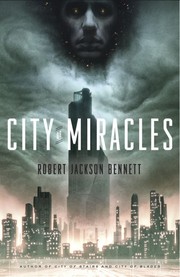
The trilogy's finale centers on Sigrud je Harkvaldsson and brings the overarching story to a close; it rewards readers who have followed the full sequence with deep emotional resonance and thematic resolution.
After the Trilogy: Themes in Conversation
ExpertReflect on the trilogy's core themes — colonialism, the death of gods, institutional power, and grief — through companion reads that enrich a re-read or deeper critical appreciation of Bennett's work.
▸ Study plan for this stage
Pace: 10–12 weeks total: ~3–4 weeks per book (~25–35 pages/day depending on length). Suggested breakdown — Weeks 1–3: The Fifth Season; Weeks 4–7: American Gods; Weeks 8–10: Piranesi. Reserve Weeks 11–12 for re-reading key passages from all three alongside Bennett's trilogy for comparative reflection.
- Colonialism and systemic oppression: How The Fifth Season uses the orogenes' subjugation and the Fulcrum as an allegory for colonial extraction and bodily control, paralleling the Continent's occupation in Bennett's trilogy
- Death and displacement of gods: How American Gods frames divine beings as immigrants stripped of power in an indifferent new world, enriching the tragedy of the Divinities' fall in the Divine Cities
- Institutional power and complicity: How all three books depict bureaucracies, religions, and states that perpetuate harm through mundane compliance — the Fulcrum, the new American gods of media and technology, and the House's hidden architecture in Piranesi
- Grief as a structural force: How grief shapes narrative form itself — Jemisin's second-person address as dissociation, Shadow's numbness after Laura's death, and Piranesi's fragmented journal as a record of self-erasure
- Memory, identity, and erasure: How Piranesi's stolen name and history mirror the cultural amnesia imposed on colonized peoples in The Fifth Season and Bennett's Bulikov
- Narrative unreliability and withheld truth: How all three authors use fragmented or defamiliarized perspectives (second person, road-novel drift, journal entries) to implicate the reader in the act of discovery
- The sacred and the political: How divine power is never purely spiritual in any of these texts — gods are always entangled with labor, territory, and survival
- Survival vs. liberation: The distinction between characters who endure oppressive systems and those who dismantle them, and what each author suggests about the cost of each path
- How does The Fifth Season's use of second-person narration function as both a stylistic choice and a thematic argument about trauma, dissociation, and the reader's complicity in Essun's suffering?
- American Gods presents old gods as immigrants and new gods as corporate forces — in what ways does this framework illuminate or complicate how Bennett depicts the Divinities as political prisoners of a post-colonial settlement?
- Piranesi's protagonist has had his identity systematically stolen and replaced — how does Clarke use the House's impossible architecture as a metaphor for the constructed nature of the self under institutional control?
- Across all three books, institutions (the Fulcrum, the House, the new gods' media empire) perpetuate harm without a single malevolent mastermind. What does each author suggest about how ordinary people become instruments of systemic violence?
- Grief in these three novels is never purely personal — it is political, cosmological, or civilizational. Choose one character from each book and trace how their grief is shaped by the larger power structures around them.
- All three books withhold critical information from the reader for extended periods. Compare the effect of Jemisin's, Gaiman's, and Clarke's respective strategies of delayed revelation — what does each author want the reader to feel upon learning the truth?
- Comparative annotation: As you read each book, keep a running three-column journal (one column per book) tracking moments of institutional violence. After finishing all three, write a 500-word synthesis identifying the single most important structural difference in how Bennett, Jemisin, Gaiman, and Clarke each imagine resistance to that violence.
- God-mapping exercise: After finishing American Gods, draw a diagram of the power relationships between old gods, new gods, and humans. Then create a parallel diagram for the Divine Cities trilogy. Write a paragraph comparing what 'divine death' costs humanity in each world.
- Narrative voice experiment: Rewrite one paragraph from Piranesi's journal in The Fifth Season's second-person present tense, then rewrite it again in American Gods' third-person past tense. Reflect in a short note on how voice alone changes the emotional stakes of the same content.
- Grief timeline: For one central character per book (suggested: Essun, Shadow, Piranesi), build a timeline of their losses and map each loss to a corresponding shift in their relationship with institutional or divine power. Present this as an annotated list or visual chart.
- Re-read one chapter from Bennett's The City of Stairs or The City of Blades after finishing each companion book. Write a one-page reading note on what the companion read made you notice for the first time in Bennett's text.
- Thematic debate prep: Formulate the strongest possible argument for this claim — 'These three books are more pessimistic about institutional change than Bennett's trilogy' — then write an equally strong rebuttal. Use at least two specific scenes per book as evidence.
Next up: By wrestling with how Jemisin, Gaiman, and Clarke handle colonialism, divine loss, and grief through radically different narrative forms, the reader is now equipped to approach a more formal critical or theoretical stage — examining Bennett's trilogy through established lenses such as postcolonial theory, theology, or trauma studies with concrete literary comparisons already in hand.

Like the Divine Cities, this novel interrogates systemic oppression and the violence of empire through a fantastical lens; its structural boldness rewards readers now comfortable with complex secondary-world storytelling.

A thematic companion on the life, death, and relevance of gods in a world that has moved on — reading it after the trilogy sparks rich comparison about what belief does to power and identity.

A compact, profound meditation on memory, myth, and mysterious architecture that echoes the Divine Cities' haunted, god-built spaces; its brevity makes it a perfect closing reflection.
Discussion
Keep reading
Paths that share books, cover the same subject, or open a related topic.