Epic fantasy: where to start, then go deep
Epic fantasy is a vast genre built on layers — mythic foundations, world-building craft, moral complexity, and modern reinvention. This curriculum starts with the genre's most accessible and defining classics, then moves through increasingly complex works: richer prose, darker themes, and subversive ideas that challenge and expand what epic fantasy can be. Each stage builds the genre literacy needed to fully appreciate the next.
The Foundations
BeginnerUnderstand the DNA of epic fantasy — the archetypes, the quest structure, the world-building template, and the mythic tone that every later author is either building on or reacting against.
▸ Study plan for this stage
Pace: 6–8 weeks total. Week 1–2: The Hobbit (~20–25 pages/day, ~310 pages). Week 3–5: The Fellowship of the Ring (~20–25 pages/day, ~480 pages). Week 6–7: The Lion, the Witch and the Wardrobe (~15–20 pages/day, ~210 pages). Reserve Week 8 for review, journaling, and completing exercises.
- The Hero's Journey / Quest Structure: Trace Bilbo's reluctant departure from Bag End, Frodo's charge at the Council of Elrond, and Lucy's stumble through the wardrobe as three distinct but structurally parallel quest initiations — the 'call,' the threshold, and the road of trials.
- Archetypes in Action: Identify the Wise Mentor (Gandalf in both Tolkien books), the Unlikely Hero (Bilbo, Frodo), the Dark Lord as embodiment of absolute evil (Sauron, the White Witch), and the loyal Companion (Samwise, the Pevensie siblings) as load-bearing pillars of the genre.
- World-Building as Sub-Creation: Study how Tolkien constructs Middle-earth through invented history, languages, and maps — and how Lewis builds Narnia through mythic shorthand (talking animals, eternal winter) — understanding that a convincing secondary world is a genre requirement, not decoration.
- Mythic Tone and Register: Recognize the elevated, legend-like prose style in both authors — the use of song, prophecy, and ancient lore — and how it signals to the reader that events carry cosmic, not merely personal, stakes.
- Good vs. Evil as Cosmic Architecture: Both Tolkien and Lewis frame conflict not as moral ambiguity but as a fundamental war between light and darkness, establishing the genre's default moral framework that later authors will complicate or subvert.
- The Importance of the Ordinary World: Bag End and the Shire in Tolkien, and the wardrobe/wartime England in Lewis, function as deliberate contrasts to the epic realm — grounding the reader and making the fantastical legible.
- Fellowship and Community: The formation of the Company of Thorin, the Fellowship of the Ring, and the Pevensie group illustrates how epic fantasy uses ensemble bonds — loyalty, sacrifice, and shared purpose — as a primary dramatic engine.
- Eucatastrophe and Hope: Tolkien's own concept (the sudden, joyous turn) is visible in Bilbo's escape from Gollum, the Eagles' rescue, and Aslan's resurrection — establishing the genre's characteristic refusal of pure tragedy.
- How does Bilbo's arc in The Hobbit establish the 'reluctant hero' template, and where do you see Frodo either repeating or departing from that template in The Fellowship of the Ring?
- Compare Gandalf's role in The Hobbit with his role in The Fellowship of the Ring — how does the Wise Mentor archetype shift in function and weight as the stakes escalate?
- What specific world-building techniques does Tolkien use (maps, appendices, invented names, embedded songs and poems) to make Middle-earth feel historically real, and how does Lewis achieve a similar sense of depth in Narnia with far fewer pages?
- Both Sauron and the White Witch are largely off-page presences for most of their respective books. How do Tolkien and Lewis make these antagonists feel threatening without showing them directly, and what does this technique reveal about how epic fantasy constructs evil?
- Identify one moment of eucatastrophe in each of the three books. What narrative and emotional work does each moment perform, and why is this structural device so central to the genre's appeal?
- How do the 'ordinary world' settings — the Shire and wartime England — function as more than mere starting points? What thematic and emotional purposes do they serve when the heroes eventually long to return to them?
- Quest Map Exercise: Draw a physical or digital map of the journey in each book (Bilbo's route to the Lonely Mountain, the Fellowship's path from the Shire toward Mordor, Lucy and Edmund's travels in Narnia). Annotate each major story beat on the map and label it with its Hero's Journey stage (Call, Threshold, Ordeal, etc.).
- Archetype Character Card: Create a one-page 'character card' for one hero and one villain from each book. For each card, list: their defining trait, their greatest moment, their greatest weakness, and the archetype they embody. Compare the six cards side by side — what patterns emerge across all three books?
- Prose Style Imitation: Choose one paragraph of elevated, mythic narration from each book (e.g., the description of Rivendell in The Fellowship, the arrival of Father Christmas in The Lion, the Witch and the Wardrobe). Write your own 150-word passage imitating that register for an invented fantasy setting. Reflect on what makes the tone feel 'epic.'
- Good vs. Evil Spectrum Chart: List every named character from all three books and place them on a moral spectrum from 'purely good' to 'purely evil.' Note any characters who resist easy placement (Gollum is a strong candidate). Write a short paragraph on what this exercise reveals about the genre's moral architecture.
- World-Building Inventory: Make a checklist of world-building elements each author deploys — languages, maps, histories, religions, flora/fauna, political structures, songs/poetry. Score each book out of 10 for each category. Write a 200-word reflection: which techniques feel most essential to the 'epic' effect, and why?
- Reader Response Journal: After finishing each book, write a one-page journal entry answering: (1) What was the moment I most felt the 'weight' of the world? (2) Which archetype surprised me? (3) What question does this book leave unanswered that makes me want to read further in the genre?
Next up: Mastering these foundational archetypes, quest structures, and world-building conventions in Tolkien and Lewis gives you the critical vocabulary and genre instincts needed to recognize — and appreciate — how the next stage's authors consciously expand, complicate, or push back against this template.
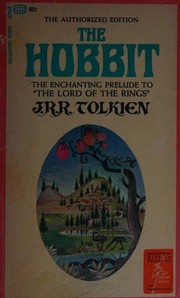
The perfect on-ramp: short, warm, and adventure-driven, it introduces Middle-earth and the hero's journey without overwhelming the new reader. Reading this first makes The Lord of the Rings feel earned, not daunting.
The foundational text of the entire genre. Its scope, invented languages, and moral weight set the template every epic fantasy author since has had to reckon with — you cannot go deep in this genre without it.
A near-contemporary of Tolkien and a crucial counterpoint: where Tolkien builds myth through history, Lewis builds it through allegory and wonder. Reading both reveals the two great poles of classic epic fantasy.
The Genre Takes Shape
BeginnerSee how the genre expanded beyond Tolkien in the 1960s–80s: longer series, female protagonists, invented magic systems, and the first hints of moral ambiguity — the building blocks of everything modern.
▸ Study plan for this stage
Pace: 8–10 weeks total. Week 1–2: "A Wizard of Earthsea" (~40 pages/day, short novel — finish in ~4 sittings). Week 3–6: "The Eye of the World" (~50 pages/day, ~800 pages — a steady but manageable pace). Week 7–10: "The Name of the Wind" (~45 pages/day, ~700 pages — savor the prose-heavy chapters).
- The Post-Tolkien Expansion: How Le Guin, Jordan, and Rothfuss each deliberately moved the genre beyond the Tolkien template — shorter mythic fables, sprawling multi-book epics, and intimate first-person character studies all count as 'epic fantasy'
- Invented Magic Systems: Le Guin's True Names (magic as knowledge and consequence), Jordan's One Power / the Five Powers (a structured, rule-bound system with gendered asymmetry), and Rothfuss's Sympathy and Naming (magic as academic discipline with a cost) — three radically different philosophies of
- Female Protagonists and Gender in the Genre: Le Guin's Tenar/Ged dynamic and her feminist subtext, Jordan's unusually large cast of powerful women (Moiraine, Egwene, Nynaeve) who drive the plot, and how these choices were genre-shifting for their eras
- The Chosen One Archetype and Its Complications: Ged's pride-driven fall and redemption, Rand al'Thor's reluctant-hero arc, and Kvothe's unreliable self-mythologizing — three versions of the 'special protagonist' that grow progressively more self-aware and ironic
- World-Building Strategies: Earthsea's archipelago built through myth and naming; the Wheel of Time's exhaustive cartography, history, and cultural plurality; The Name of the Wind's layered frame narrative (a story within a story) as a world-building device
- Moral Ambiguity Emerges: The Shadow in Earthsea as a part of Ged himself (internal evil); the Dark One as external cosmic evil in Jordan (more traditional); Kvothe as a hero who may be the author of his own legend's exaggerations — a spectrum from clear-cut to deeply ambiguous
- Series Architecture: What it means for a fantasy story to be 'epic' in scope — Le Guin's slim, self-contained novel vs. Jordan's 14-book Wheel of Time vs. Rothfuss's planned trilogy — and how each author signals scale to the reader from page one
- The Unreliable Narrator: Kvothe's first-person frame in The Name of the Wind introduces a concept largely absent from Le Guin and Jordan — the idea that the hero telling his own story has reasons to shape, omit, and embellish it
- How does Le Guin use the concept of 'True Names' in A Wizard of Earthsea to make magic feel philosophically meaningful rather than merely spectacular, and what does Ged's shadow ultimately represent about his character?
- The Eye of the World was published in 1990, decades after Tolkien. Identify at least three specific ways Jordan expands or complicates the Tolkien formula — consider gender roles, the scale of the magic system, and the structure of the ensemble cast.
- Kvothe narrates The Name of the Wind from a framed present-tense perspective as an older, broken man. How does this framing device create dramatic irony, and why does it make him a fundamentally different kind of epic fantasy protagonist than Ged or Rand?
- Compare the magic systems across all three books: which feels the most rule-bound and why? Which carries the greatest personal cost to the user? How do these design choices reflect each author's broader themes?
- All three books feature a young protagonist discovering extraordinary ability. How does each author use that discovery differently — as a source of wonder, burden, danger, or identity — and what does that tell you about each book's moral worldview?
- By the end of this stage, how would you define 'epic fantasy' as a genre? What are the non-negotiable ingredients, and which elements are optional or variable, based on the evidence of these three books alone?
- Magic System Design Sketch: After finishing each book, spend 20 minutes writing a one-page description of that book's magic system as if explaining it to a newcomer — rules, costs, limits, and feel. After all three, lay them side by side and write a paragraph on what the differences reveal about each author's priorities.
- Protagonist Voice Swap: Choose one scene from The Eye of the World (e.g., the Trolloc attack on Emond's Field) and rewrite it in one paragraph as if Kvothe from The Name of the Wind were narrating it from memory years later. Notice how the unreliable, self-aware voice changes the scene's meaning.
- World-Building Map Audit: Draw or annotate the maps provided in The Eye of the World and compare the geographic and cultural detail to the Earthsea archipelago. Write 5 bullet points on what each map 'promises' the reader about the kind of story they're entering.
- Moral Spectrum Chart: Create a simple chart with 'Clear Good vs. Evil' on one end and 'Morally Ambiguous' on the other. Place Ged, Rand, and Kvothe on the spectrum and write 2–3 sentences justifying each placement with specific scenes from the books.
- Genre-Definition Essay (500 words): Without looking anything up, write your own working definition of 'epic fantasy' using only evidence from these three books. What must a book have? What can it do without? Revisit this essay at the end of the full curriculum to see how your definition evolved.
- Reading Journal — One Question Per Session: Each time you sit down to read, write one question the text raises for you before you start, and answer it (or note that it went unanswered) when you stop. By the end of the stage you'll have a personal record of how your reading instincts are developing.
Next up: Mastering these three books gives you a firm grasp of the genre's foundational moves — chosen heroes, invented magic, vast worlds, and the first cracks of moral complexity — so the next stage can push into darker, more subversive works that deliberately interrogate or dismantle these very conventions.

Lean, precise, and philosophically rich, this novella-length masterpiece proves epic fantasy doesn't need bloat. Le Guin's magic system rooted in language and consequence is a direct ancestor of modern 'hard magic' systems.
Jordan's Wheel of Time is the genre's great maximalist achievement — enormous cast, intricate world, and a magic system with strict rules. Starting here shows how Tolkien's template was industrialized into the modern doorstop epic.
A bridge between classic and modern epic fantasy: lush, literary prose wrapped around a classic hero-myth structure. Its self-aware, unreliable narrator signals that the genre has grown sophisticated enough to interrogate itself.
Grimdark and the Moral Turn
IntermediateGrapple with the genre's darker revolution — stories where heroes are morally compromised, power corrupts absolutely, and the world does not bend to a tidy resolution. Understand why this subgenre emerged and what it achieves.
▸ Study plan for this stage
Pace: 6–8 weeks total: Weeks 1–3 for The Blade Itself (~30 pages/day), Weeks 4–7 for A Game of Thrones (~35 pages/day), Week 8 reserved for reflection, comparison, and completing exercises. Read each book in order without skipping ahead.
- Grimdark as a subgenre: its origins as a reaction against Tolkienian idealism and the 'hero's journey' template, and why it emerged prominently in the 1990s–2000s
- Moral ambiguity vs. moral nihilism: understanding the difference between characters who exist in ethical grey zones (Logen Ninefingers, Jaime Lannister) and a worldview that abandons ethics entirely
- Deconstruction of fantasy archetypes: how Abercrombie systematically dismantles the Chosen One (Jezal), the wise mentor (Bayaz), and the noble warrior (Logen) to expose the violence and self-interest beneath
- Power and corruption: how both books treat institutions — the Union's political class in The Blade Itself, the Iron Throne in A Game of Thrones — as inherently corrupting rather than ennobling
- Consequences and the refusal of narrative safety: George R. R. Martin's principle that no character is plot-armored, demonstrated through the fates of 'heroic' POV characters in A Game of Thrones
- Point-of-view as moral instrument: how both authors use close third-person POV (Glokta's sardonic interiority, Ned Stark's honorable blindness) to implicate the reader in characters' worldviews and make sympathy uncomfortable
- The role of history and trauma: how backstory — the First Law's ancient wars, the Targaryens' fall — functions not as lore-building but as evidence that cycles of violence are structural, not accidental
- Realism and the body: grimdark's insistence on physical suffering, injury, and death as a counter to romanticized violence — Glokta's tortured body as the genre's thesis statement
- By the end of The Blade Itself, what has Abercrombie revealed about Bayaz that reframes the 'wise wizard' archetype, and how does Abercrombie use reader expectations against them?
- Sand dan Glokta is both torturer and victim. How does Abercrombie use his POV to make the reader complicit, and what does this say about the grimdark genre's relationship with its audience?
- A Game of Thrones is often praised for 'subverting' fantasy tropes. Identify two specific moments where Martin punishes a character for behaving like a traditional fantasy hero, and explain what moral argument each moment makes.
- Both Logen Ninefingers and Jaime Lannister are introduced as fearsome, morally compromised figures who gradually earn reader sympathy. What techniques do Abercrombie and Martin each use to achieve this, and do you think that sympathy is earned or manipulated?
- How do both books use political institutions (the Union's court, the King's Landing court) to argue that systemic corruption is more dangerous than individual villainy?
- What distinguishes grimdark's darkness from mere shock value or 'edginess'? Using specific scenes from both books, make the case that the darkness in each serves a thematic purpose.
- Character Moral Ledger: For Glokta (The Blade Itself) and one character of your choice from A Game of Thrones, create a two-column ledger of their morally defensible and morally indefensible actions as of each book's end. Then write a single paragraph verdict: are they a villain, a victim, or something the genre forces you to hold without resolution?
- Archetype Autopsy: Identify one classic fantasy archetype in each book (e.g., the Chosen One, the Noble Knight, the Wise Counselor). Write a one-page close reading of a single scene where that archetype is deliberately subverted, explaining exactly what expectation is set up and how it is undercut.
- Rewrite the Ending (Then Reject It): Take one chapter-ending moment from A Game of Thrones where a 'heroic' outcome was possible but denied. Write a 300-word alternative version where the traditional fantasy resolution occurs — then write a 150-word reflection on why Martin's version is more honest or more effective.
- Comparative Tone Analysis: Select one passage of violence from each book (roughly one page each). Annotate them side by side for sentence rhythm, word choice, and emotional distance. Write a short essay on how Abercrombie's and Martin's prose styles differently construct the reader's relationship to brutality.
- The 'Why Grimdark Now?' Research Exercise: Read one short critical essay or interview (Joe Abercrombie's blog essays or George R. R. Martin's interviews on fantasy are freely available) in which the author explains their intentions. Write a one-paragraph summary of their stated goals and a one-paragraph response: does the book you just read actually achieve them?
- Reading Journal — Sympathy Tracking: As you read A Game of Thrones, keep a running log (one sentence per chapter) noting which POV character you trusted most and least. At the end, review the log and write a reflection on how your trust shifted and what narrative devices caused those shifts.
Next up: Having interrogated how grimdark strips away moral certainty and narrative safety, the reader is now prepared to explore how epic fantasy can rebuild meaning — examining subgenres and authors who respond to, synthesize, or transcend the grimdark turn by reintroducing hope, myth, and wonder without naivety.
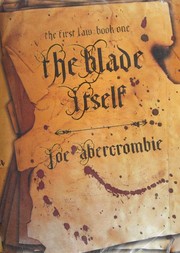
The defining grimdark novel: Abercrombie systematically dismantles every Tolkien archetype — the wise wizard, the noble warrior, the chosen hero — and exposes the ugliness underneath. Essential for understanding the genre's self-critique.
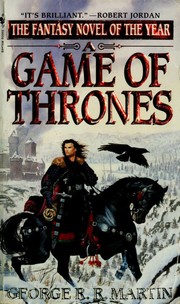
Martin applies the political realism of historical fiction to epic fantasy, killing sacred cows and making power feel genuinely dangerous. After Tolkien and Jordan, reading this shows exactly how the genre's moral stakes were raised.
The Modern Renaissance
IntermediateDiscover how 21st-century authors synthesize everything — classic myth, grimdark realism, diverse perspectives, and innovative structure — into a new golden age of epic fantasy that is broader and more ambitious than ever before.
▸ Study plan for this stage
Pace: 10–12 weeks total: ~4 weeks on The Way of Kings (~35–40 pages/day), ~3 weeks on The Fifth Season (~25–30 pages/day), ~3 weeks on The Priory of the Orange Tree (~30–35 pages/day), plus 1–2 weeks for review, journaling, and comparative reflection across all three books.
- Synthesis worldbuilding: how 21st-century authors fuse classic mythological archetypes, original cosmologies, and internally consistent magic systems (e.g., Sanderson's Stormlight Archive and its Investiture-based Surgebinding) into a single cohesive whole
- Grimdark realism and moral complexity: the rejection of clean heroism in favor of trauma, systemic oppression, and ambiguous ethics — seen in the broken Knights Radiant history in The Way of Kings and the apocalyptic Stillness in The Fifth Season
- Structural and narrative innovation: how form itself becomes meaning — Jemisin's radical second-person present-tense narration in The Fifth Season as an act of forced empathy and political statement
- Diverse and marginalized perspectives as epic center stage: The Fifth Season's orogenes as an allegory for racial and bodily oppression; The Priory of the Orange Tree's deliberate decentering of the white male hero through its all-female and LGBTQ+ central cast
- Deconstructing the dragon myth: Shannon's Priory of the Orange Tree dismantles Tolkien-derived dragon lore by presenting dragons as morally complex beings with their own civilizations, loyalties, and agency
- The 'big book' ambition: how all three novels embrace scope — multiple POV characters, continent-spanning plots, multi-generational timelines — as a deliberate artistic and commercial statement about what epic fantasy can hold
- Magic as metaphor: Sanderson's Stormlight as a metaphor for depression and recovery (Kaladin's arc); Jemisin's orogeny as a metaphor for inherited trauma and state-sanctioned violence against bodies that are 'different'
- Standalone vs. series architecture: comparing the self-contained completeness of The Priory of the Orange Tree against the serial, long-game storytelling of The Way of Kings and The Fifth Season, and what each approach demands of the reader
- How does Brandon Sanderson use the dual timelines of Kaladin's present enslavement and his past in The Way of Kings to build a portrait of systemic injustice, and how does this structure serve the novel's thematic argument about hope and leadership?
- N. K. Jemisin narrates The Fifth Season almost entirely in the second person ('you'). What is the effect of this choice on the reader's relationship to Essun's trauma, and what does it suggest about who epic fantasy is written for and who it addresses?
- All three books feature societies built on the exploitation or suppression of a specific group (the enslaved darkeyes in The Way of Kings, the orogenes in The Fifth Season, the dragon-kin in The Priory of the Orange Tree). Compare how each author uses their fantasy world to illuminate real-world power structures.
- The Priory of the Orange Tree consciously subverts the Tolkien-derived 'dragon as ultimate evil' trope. How does Samantha Shannon reframe the dragon myth, and what does this reframing say about how inherited genre conventions can encode cultural biases?
- How do all three novels handle the concept of a 'chosen one' or messianic figure — do they embrace it, subvert it, or dismantle it entirely? Use specific characters (Kaladin, Dalinar, Essun, Ead) to support your answer.
- What does the sheer physical scale of these three books (each 300,000–400,000+ words) argue about the state of epic fantasy in the 21st century? Is 'bigness' itself a meaningful artistic choice, or a commercial one — and can it be both?
- Narrative voice experiment: Write a 500-word scene from the perspective of a marginalized character in your own fictional world, then rewrite the same scene in second person (as Jemisin does). Reflect in a short paragraph on how the pronoun shift changes your emotional relationship to the character's suffering.
- Magic system audit: After finishing The Way of Kings, diagram Sanderson's Stormlight/Surgebinding system — its rules, costs, and limitations. Then identify one moment where the magic system directly externalizes a character's internal emotional state. Write a paragraph arguing that the magic is doing thematic work, not just plot work.
- Myth deconstruction map: Choose one classic mythological archetype present in The Priory of the Orange Tree (the dragon, the sacred queen, the holy relic) and trace it back to a real-world myth or earlier fantasy text. Write a one-page analysis of how Shannon transforms that archetype and to what ideological end.
- Comparative oppression systems chart: Create a three-column chart (one per book) mapping out: (1) the oppressed group, (2) the mechanism of their oppression, (3) the in-world justification given by the oppressors, and (4) the real-world parallel the author seems to be drawing. Use this chart as the basis for a short comparative essay.
- Structure and meaning journal: As you read The Fifth Season, keep a running log every 50 pages noting: whose POV you are in, what tense and person is used, and what emotional effect that choice has on you in that moment. At the end, write a one-page reflection on whether Jemisin's structural choices earned their ambition.
- The 'big book' defense: Write a 400-word op-ed either defending or critiquing the trend toward very long, multi-volume epic fantasy series (drawing on The Way of Kings and The Fifth Season as evidence). Then write the counter-argument in 200 words. This forces you to hold the tension between epic ambition and narrative discipline.
Next up: Having mapped how 21st-century authors synthesize myth, realism, diverse voices, and structural innovation into a new epic ambition, the reader is now equipped to move into a critical and comparative stage — examining how these modern works are received, debated, and positioned within the broader literary and cultural conversation about what fantasy literature is for.
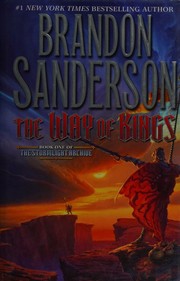
Sanderson is the master of the modern 'hard magic' epic: rigorously designed systems, enormous scope, and relentless forward momentum. This is the genre's current maximalist benchmark and a direct heir to Jordan's tradition.

A Hugo Award-winning revolution: Jemisin uses second-person narration, a non-linear structure, and a world shaped by oppression to prove epic fantasy can carry the full weight of literary fiction. It redefines what the genre is capable of.
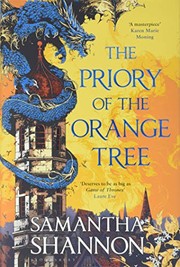
A standalone epic of Tolkienian scale written from a feminist perspective, with dragons, matriarchal societies, and multiple continents. It synthesizes the entire curriculum — scope, myth, moral complexity, and diverse voice — into one complete vision.
Discussion
Keep reading
Paths that share books, cover the same subject, or open a related topic.