How to Become a Tax Preparer: The Best Books, In Order
This curriculum takes a complete beginner from zero tax knowledge to running a professional seasonal tax practice. It starts with the foundational language of individual taxation, builds into mastery of deductions and IRS rules, and finishes with the business and professional skills needed to attract clients and operate a profitable tax prep service.
Foundations: Understanding the U.S. Tax System
BeginnerUnderstand how the U.S. income tax system works, key terminology, and how a basic individual (Form 1040) return is structured from start to finish.
▸ Study plan for this stage
Pace: 4–5 weeks, ~25–30 pages/day. Start with "Taxes 2007 for Dummies" (Weeks 1–2, ~150 pages), then move to "J.K. Lasser's Your Income Tax 2023" (Weeks 3–5, ~200 pages). Allocate 1–2 days per week for review and exercises.
- The structure of the U.S. income tax system: progressive taxation, tax brackets, and marginal vs. effective tax rates
- Key terminology: gross income, adjusted gross income (AGI), taxable income, deductions, credits, and filing status
- Types of income: wages, interest, dividends, capital gains, and self-employment income
- Standard deduction vs. itemized deductions and when to use each
- Tax credits vs. tax deductions and their different impact on tax liability
- Form 1040 structure and the step-by-step process of completing a basic individual return
- Common filing statuses (single, married filing jointly, head of household) and their tax implications
- Record-keeping and documentation requirements for supporting tax return claims
- How does the progressive tax system work, and what is the difference between marginal and effective tax rates?
- What is the difference between a tax deduction and a tax credit, and which has a greater impact on your tax liability?
- What are the main components of Form 1040, and in what order should they be completed?
- When should you itemize deductions versus take the standard deduction, and how do you calculate each?
- What types of income must be reported on a tax return, and how are they treated differently (e.g., ordinary income vs. capital gains)?
- What documents and records should a taxpayer maintain to support the information reported on their return?
- Complete a practice Form 1040 for a single filer with W-2 wages and standard deduction using examples from 'Taxes 2007 for Dummies'
- Calculate AGI and taxable income for a sample taxpayer scenario, identifying all income sources and applicable deductions
- Compare two filing scenarios (standard deduction vs. itemized deductions) for the same taxpayer to determine which is more beneficial
- Create a personal tax document checklist based on your own income sources, using guidance from both books
- Work through a multi-income household example (e.g., married couple with wages, interest, and dividends) to practice Form 1040 completion
- Identify the tax bracket and calculate effective tax rate for a sample taxpayer, then explain the difference between the two
Next up: This foundation in tax system mechanics and Form 1040 basics prepares you to tackle specialized income types, complex deductions, and advanced filing scenarios in the next stage.
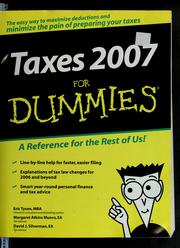
The ideal starting point for a true beginner — it demystifies tax vocabulary, filing status, income types, and the 1040 in plain English before any technical depth is introduced.

The most widely used annual individual tax guide in the U.S.; read after Dummies to see every line of the 1040 explained in detail, building the map of a complete individual return.
Core Skills: Deductions, Credits & Individual Returns
BeginnerMaster the full landscape of deductions, credits, and common individual tax situations (W-2 employees, self-employed, dependents) that make up the bulk of a tax preparer's daily work.
▸ Study plan for this stage
Pace: 8–10 weeks, ~40–50 pages/day (with 2–3 review days per week). Lasser's book (~500 pages) over 5–6 weeks, then Daily's book (~300 pages) over 3–4 weeks.
- Deduction categories (above-the-line vs. itemized, standard deduction thresholds) and how to determine which applies to a client
- Common business deductions for self-employed individuals: home office, vehicle, meals, supplies, and depreciation basics
- Dependent qualification rules (relationship, residency, citizenship, income limits, support test) and tax credits tied to dependents (Child Tax Credit, EITC)
- W-2 employee deductions: unreimbursed employee expenses, education credits, student loan interest, and when AGI limits eliminate them
- Tax credits vs. deductions: how credits directly reduce tax liability and which credits are refundable (EITC, CTC) vs. non-refundable
- IRS audit triggers, documentation standards, and substantiation requirements for common deductions (charitable, medical, business)
- Record-keeping systems and what the IRS expects as proof for deductions and credits on individual returns
- How to advise clients on aggressive vs. defensible positions and the risk-reward of taking questionable deductions
- A client is a W-2 employee earning $65,000 with $3,500 in unreimbursed job expenses. Can they deduct these, and if so, how? What changed in recent tax law?
- Your self-employed client has a home office (200 sq ft in a 2,000 sq ft house), drives 8,000 business miles, and spent $2,400 on meals with clients. Walk through which deductions are allowed and how to calculate the home office deduction.
- Explain the difference between the Child Tax Credit and the Earned Income Tax Credit. Who qualifies for each, and why does it matter if one is refundable?
- A client claims their adult child (age 26, earning $15,000) as a dependent. What tests must the child pass, and what documentation would you ask for?
- Your client took a $12,000 charitable deduction but only has a bank statement showing one $5,000 donation. What are the IRS substantiation rules, and what's your advice?
- Describe three common audit triggers for individual returns and how proper documentation can defend against each one.
- Work through 10 deduction scenarios from Lasser's book (e.g., home office, vehicle, education) and categorize each as above-the-line, itemized, or not deductible; note AGI limits and phase-outs.
- Create a dependent qualification checklist and apply it to 5 hypothetical family situations (mixed ages, incomes, relationships, residency statuses) to practice the five-part test.
- Build a simple record-keeping template for a self-employed client covering business income, mileage, meals, supplies, and home office; then populate it with sample transactions.
- Compare two client profiles (W-2 employee vs. self-employed) and calculate their tax liability under different deduction/credit scenarios using tax software or a spreadsheet.
- Role-play an IRS audit defense: select one deduction from Daily's book (e.g., charitable contribution, business expense) and prepare a written response with supporting documentation.
- Prepare a one-page client advisory memo on a gray-area deduction (e.g., home office for a part-time side business) that explains the IRS position, risk level, and documentation needed.
Next up: This stage equips you with the foundational knowledge of what clients can and cannot deduct, and how to document it defensibly—essential before moving to the next stage, which will focus on specialized returns (business entities, investment income, rental property) and advanced tax planning strategies.
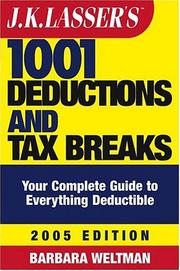
A comprehensive, practitioner-friendly catalog of every major deduction and credit available to individuals and small businesses — essential vocabulary for advising real clients.

Introduces the IRS's rules, notices, and audit process from the taxpayer's perspective, giving a preparer the context to file defensible returns and counsel clients on risk.
Going Deeper: IRS Rules, Ethics & Professional Standards
IntermediateUnderstand the IRS Circular 230 rules governing paid preparers, preparer penalties, due diligence requirements, and the ethical obligations of a professional tax practice.
▸ Study plan for this stage
Pace: 4–5 weeks, ~40–50 pages/day. Start with Hopkins' charitable giving chapters on compliance and donor substantiation (2 weeks), then transition to Daily's small business tax sections on recordkeeping, deductions, and preparer responsibilities (2–3 weeks).
- Circular 230 standards of practice: authority, representation, and conduct requirements for paid preparers
- Charitable contribution substantiation and documentation rules (Form 8283, appraisals, quid pro quo disclosures) from Hopkins
- Preparer penalties and sanctions: accuracy-related penalties, understatement penalties, and consequences of non-compliance
- Due diligence obligations: reasonable basis, substantial authority, and disclosure requirements when taking tax positions
- Small business recordkeeping requirements and the preparer's role in ensuring clients maintain adequate books and records (Daily)
- Ethical boundaries: conflicts of interest, confidentiality, and the distinction between aggressive planning and tax fraud
- Professional liability and malpractice exposure when failing to meet IRS standards
- Practical compliance workflows: how to document positions, communicate with clients, and maintain engagement letters
- What are the core standards of conduct outlined in Circular 230, and how do they apply to your role as a paid preparer?
- Explain the substantiation requirements for charitable contributions under IRC §170 and the preparer's responsibility to ensure clients meet them (per Hopkins).
- What is the difference between reasonable basis, substantial authority, and more likely than not, and when does each standard apply to a tax position?
- Describe the due diligence requirements a preparer must follow before claiming business deductions on a small business return (per Daily).
- What are the main preparer penalties under IRC §6694 and §6695, and what conduct triggers each?
- How should you document your work and communicate with a client when you believe their proposed tax position is aggressive or unsupported?
- Review a sample charitable contribution return (with Form 8283) from Hopkins' examples and identify all substantiation gaps; draft a client letter explaining what documentation is missing and why.
- Create a due diligence checklist for a small business client using Daily's recordkeeping guidance; apply it to a hypothetical business scenario (e.g., home office, vehicle expenses, meals).
- Analyze a Circular 230 opinion letter or IRS guidance on a specific tax position; determine whether the position meets reasonable basis, substantial authority, or more likely than not standards.
- Draft an engagement letter for a small business tax preparation client that explicitly addresses your preparer responsibilities, limitations, and the client's obligation to provide accurate records (per Daily).
- Work through a preparer penalty scenario: given a fact pattern involving an understatement and a preparer's position, determine which IRC §6694 or §6695 penalty applies and what the preparer should have done differently.
- Conduct a mock audit defense: prepare a memo explaining and supporting a charitable deduction position using Hopkins' substantiation framework, as if responding to an IRS inquiry.
Next up: This stage equips you with the ethical and regulatory guardrails of professional tax practice, preparing you to advance to specialized technical areas (such as entity selection, retirement planning, or advanced business deductions) with confidence that you understand the compliance and documentation standards that protect both your clients and your practice.
Charitable deductions are one of the most audit-prone areas; Hopkins is the authoritative author on nonprofit and giving tax law, deepening expertise in a high-value specialty.
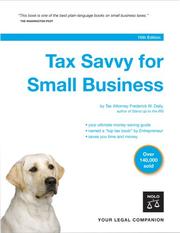
Many tax prep clients are self-employed or run small businesses; this book bridges individual and business returns, covering Schedule C, home office, and depreciation in depth.
Advanced Practice: Building a Seasonal Tax Business
ExpertApply tax knowledge to build, market, price, and operate a profitable seasonal tax preparation practice — including client acquisition, workflow, software, and year-round retention.
▸ Study plan for this stage
Pace: 4–5 weeks, ~25–30 pages/day (approximately 150–180 pages total for "The E-Myth Revisited")
- The E-Myth framework: understanding the difference between working *in* your business versus working *on* your business as a tax preparer
- Systems and processes: documenting repeatable workflows for client intake, tax preparation, and delivery to scale without burning out
- The entrepreneurial perspective: shifting from technician mindset (doing taxes) to business owner mindset (building a sustainable practice)
- Franchise model thinking: designing your tax practice so it could theoretically run without you present, enabling growth and delegation
- Client lifecycle and retention: creating systems that keep clients returning year after year rather than chasing new clients constantly
- Leverage and leverage points: identifying where small process improvements yield disproportionate business gains
- The importance of documentation and standards: written procedures that ensure consistent quality and allow you to hire and train staff
- What is the core difference between the technician and the entrepreneur, and which role are you currently playing in your tax practice?
- How would you document your current tax preparation process as a repeatable system that someone else could follow?
- What are the three most critical leverage points in your seasonal tax business where better systems would save the most time or money?
- How does Gerber's franchise model concept apply to a solo tax preparer or small tax firm, and what would it look like for your practice?
- What specific client touchpoints (intake, communication, delivery, follow-up) could be systematized to improve retention and reduce year-to-year client churn?
- Why is working *on* your business (building systems) more important than working *in* your business (doing taxes) for long-term profitability?
- Map your current tax preparation workflow from initial client contact through final delivery; identify every step, decision point, and handoff. Highlight where you personally are the bottleneck.
- Create a written standard operating procedure (SOP) for your most time-consuming tax preparation task (e.g., gathering documents, organizing records, preparing returns). Make it detailed enough that a new hire could follow it.
- Design a client intake system: document the questions you ask, the information you collect, the format you use, and the timeline. Create a template or checklist that removes guesswork.
- Audit your current client retention: calculate what percentage of clients return year-to-year, identify why clients leave, and design one new touchpoint (e.g., post-season check-in, tax planning call) to improve retention.
- Identify your top 3 leverage points: where would a small improvement in systems yield the biggest time or revenue gain? (Examples: faster document intake, automated reminders, standardized pricing, batch processing.) Draft a plan to systematize one of them.
- Sketch out a "franchise prototype" of your tax practice: if you had to document everything needed for someone else to run your practice, what would be missing? Create a list of systems you need to build.
Next up: This stage establishes the foundational business systems and mindset needed to scale a tax practice; the next stage will likely focus on the tactical execution—implementing client acquisition strategies, pricing models, software selection, and operational workflows that turn these E-Myth principles into a profitable, repeatable business model.
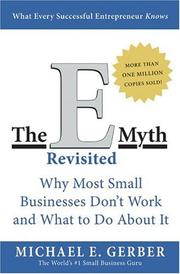
Read last to shift mindset from technician to business owner — teaches systems thinking and client experience design that separates a thriving practice from a stressful solo grind.
Discussion
Keep reading
Paths that share books, cover the same subject, or open a related topic.