Go freelance: from first client to full-time
This curriculum takes a complete beginner from "what even is freelancing?" to running a scalable, sustainable independent business. Each stage builds on the last: you first rewire your mindset and learn the fundamentals, then master positioning and pricing, then handle the operational and legal realities of client work, and finally learn how to grow income beyond the hourly-rate ceiling.
Foundations — Mindset & the Freelance Model
BeginnerUnderstand what freelancing actually is, overcome the fear of starting, and grasp the core difference between trading time for money and building a practice.
▸ Study plan for this stage
Pace: 4–5 weeks total: Weeks 1–2 on "The $100 Startup" (~25–30 pages/day), Weeks 3–4 on "Free Agent Nation" (~25–30 pages/day), with Week 5 reserved for reflection, journaling, and completing exercises.
- The 'convergence' principle from The $100 Startup: the sweet spot where your passion, skill, and what people will pay for overlap — your freelance practice lives here.
- Lean launching: Guillebeau's proof that you don't need significant capital, credentials, or permission to start — a viable offer can be built and tested with minimal resources.
- Value vs. hustle: The $100 Startup reframes success around delivering genuine value to a specific person, not simply working more hours.
- The shift from employee to free agent: Pink's 'Free Agent Nation' documents how the traditional employer–employee contract has broken down and why independent work is a durable, structural trend — not a fallback.
- The three flavors of free agency (Pink): free agents, temps, and micropreneurs — understanding which model fits your goals and risk tolerance.
- The psychological contract of freelancing: Pink's exploration of the trade-offs — autonomy, meaning, and flexibility gained vs. security, benefits, and predictability surrendered — and why mindset determines whether those trade-offs feel like freedom or fear.
- Time-for-money vs. value-based practice: synthesizing both books to see the difference between selling hours and building a repeatable, scalable service offer.
- Overcoming the 'stability myth': both authors dismantle the illusion that traditional employment is inherently safer than independent work, reframing risk as manageable and freelancing as a legitimate career architecture.
- According to Guillebeau, what is 'convergence,' and how would you map your own skills and interests onto his convergence framework to identify a potential freelance offer?
- The $100 Startup argues you can launch a business for very little money. What are the three or four non-negotiable elements Guillebeau says every micro-business needs at minimum?
- Pink describes a large-scale shift away from traditional employment in Free Agent Nation. What economic and cultural forces does he identify as driving this shift, and are those forces still relevant today?
- What are the key psychological trade-offs Pink outlines for free agents — what do you gain and what do you give up — and how does your own risk tolerance align with those trade-offs?
- How do both books together distinguish between 'freelancing as a job' (trading time for money) and 'freelancing as a practice' (building recurring, value-driven client relationships)?
- After reading both books, what is the single biggest mindset obstacle you personally identified, and what specific reframe from either author helps you address it?
- Convergence map: Draw three overlapping circles labeled 'What I'm good at,' 'What I enjoy,' and 'What people will pay for.' Fill each in honestly using your own experience, then write 2–3 sentences describing the freelance offer that lives at the center — grounded in Guillebeau's framework.
- Lean offer sketch: Following The $100 Startup's one-page business plan format, draft the simplest possible version of a freelance service you could offer this month. Define the customer, the problem solved, the price, and how you'd find your first client.
- Free-agent self-assessment: Using Pink's three categories (free agent, temp, micropreneur), write a one-page personal essay on which model fits your life right now and why — address income needs, family situation, risk appetite, and desired autonomy.
- Stability myth audit: List every reason you (or someone close to you) believes traditional employment is 'safer' than freelancing. Then, using arguments from both Guillebeau and Pink, write a counter-argument for each item on the list.
- Interview one freelancer: Find one person in your network (or online community) who freelances in any field. Ask them: How did they start? What was their biggest fear? How do they find clients? Map their answers back to concepts from both books.
- Stage reflection journal: Write a 500-word entry answering: 'What does freelancing mean to me now that I've finished both books, and what one concrete action will I take in the next 30 days?' Keep this entry — you'll revisit it at the end of the full curriculum.
Next up: Having dismantled the fear of starting and internalized the freelance model conceptually, the reader is now ready to move from mindset into mechanics — specifically, how to identify a marketable niche, craft a compelling offer, and position themselves to attract real clients.
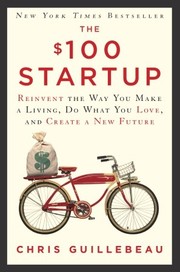
A gentle, story-driven entry point that proves ordinary people can build income from skills they already have — ideal for dissolving 'I'm not ready' paralysis before anything else.
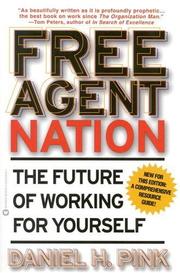
Provides the big-picture context for why independent work is a legitimate, durable career path, giving beginners the vocabulary and confidence to commit to the freelance identity.
Positioning & Pricing — Standing Out and Charging What You're Worth
BeginnerDefine a clear niche, articulate your value to clients, and set prices based on value rather than hours so you stop undercharging from day one.
▸ Study plan for this stage
Pace: 5–6 weeks total: Week 1–2 — "Positioning" (~20–25 pages/day, reading in focused 30-min sessions); Week 3 — "Breaking the Time Barrier" (short read, ~1 hour total; re-read once and take notes); Week 4–6 — "The Win Without Pitching Manifesto" (~10–15 pages/day, one proclamation per sitting to allow de
- Positioning as a mental battle: your brand lives in the client's mind, not in your portfolio — from 'Positioning' by Al Ries
- The power of being first or narrowing focus: it is better to own a small category than to compete broadly — from 'Positioning'
- Repositioning competitors: understanding how clients already perceive alternatives shapes how you differentiate yourself — from 'Positioning'
- The time-for-money trap: billing hourly commoditizes your expertise and caps your income — from 'Breaking the Time Barrier'
- Value-based pricing: price the outcome and transformation for the client, not the hours you spend — from 'Breaking the Time Barrier'
- The expert positioning stance: stop acting like a vendor who executes orders and start acting like a specialist who diagnoses problems — from 'The Win Without Pitching Manifesto'
- Saying no as a business strategy: turning away bad-fit clients and refusing to pitch speculatively protects your positioning and profitability — from 'The Win Without Pitching Manifesto'
- The conversation over the presentation: replacing the pitch with a diagnostic conversation shifts power to the expert (you) — from 'The Win Without Pitching Manifesto'
- According to Al Ries in 'Positioning', why is it more effective to own a narrow niche than to market yourself as a generalist, and how does this apply to your freelance services?
- What is the 'time barrier' described by Mike McDerment, and what specific mindset shift does he argue freelancers must make to break through it?
- How does value-based pricing (from 'Breaking the Time Barrier') change the conversation you have with a prospective client compared to quoting an hourly rate?
- Blair Enns opens 'The Win Without Pitching Manifesto' by declaring that the pitch is broken — what is his core argument, and what does he propose instead?
- How do the positioning principles from Al Ries reinforce the 'specialist vs. vendor' distinction that Blair Enns makes in 'The Win Without Pitching Manifesto'?
- After reading all three books, how would you describe your freelance positioning in one sentence, and how does that positioning justify a premium price?
- Niche Ladder Exercise (from 'Positioning'): List every service you can offer, then ruthlessly narrow them into one sentence — 'I help [specific client type] achieve [specific outcome] through [specific service].' Test it: could any other freelancer in your city say the exact same thing?
- Mind-Map Your Competition (from 'Positioning'): Draw a perceptual map with two axes meaningful to your target clients (e.g., speed vs. depth, affordable vs. premium). Plot 5 competitors and then plot yourself. Identify the open space you can credibly own.
- The Value Conversation Script (from 'Breaking the Time Barrier'): Write out a mock discovery-call script where you ask a prospect about the business outcome they want, the cost of NOT solving the problem, and their timeline. Practice it out loud until it feels natural.
- Repackage One Service with Value-Based Pricing (from 'Breaking the Time Barrier'): Take one service you currently price (or would price) hourly. Research what that outcome is worth to the client's business. Create three tiered packages (Good / Better / Best) priced on value, not hours.
- The Proclamation Journal (from 'The Win Without Pitching Manifesto'): After reading each of Blair Enns' proclamations, write 1–2 paragraphs on how you currently violate that principle and one concrete action you will take to align with it.
- The No-Pitch Pitch Rewrite (from 'The Win Without Pitching Manifesto'): Find a past proposal or pitch you wrote (or draft a hypothetical one). Rewrite it so it leads with a diagnosis of the client's problem, positions you as the expert authority, and replaces speculative creative work with a paid discovery engagement.
Next up: With a clear niche, a value-based pricing model, and an expert positioning stance now established, the next stage can focus on the practical mechanics of finding and converting the right clients — turning your positioning into a repeatable pipeline and sales process.

The canonical text on differentiation — read first in this stage so you understand why being 'the specialist' beats being 'the generalist' before you write a single proposal.

A short, story-format book specifically about shifting freelancers from hourly billing to value-based pricing — the perfect practical follow-up to the positioning concepts.

Teaches freelancers how to position themselves as experts rather than vendors, and how to have pricing conversations with confidence — builds directly on the two books above.
Getting Clients & Doing the Work — Sales, Proposals, and Contracts
IntermediateLand your first paying clients through outreach and referrals, write proposals that win, protect yourself with solid contracts, and deliver work professionally.
▸ Study plan for this stage
Pace: 8–10 weeks total: Weeks 1–5 on "Book Yourself Solid" (~25–30 pages/day, including reflection time), Weeks 6–10 on "The Freelancer's Bible" (~20–25 pages/day, with extra time for worksheets and action steps). Aim for 5 reading days per week, leaving 2 days for exercises and review.
- The Book Yourself Solid 'Red Velvet Rope Policy' — defining your ideal client and confidently turning away poor-fit work to protect your energy and reputation
- The six core self-promotion strategies in Book Yourself Solid (networking, direct outreach, referrals, speaking, writing, and web presence) and how to build a personal marketing engine from them
- Michael Port's 'Sales Cycle' and 'Keep-in-Touch' strategy — nurturing relationships over time so prospects convert naturally without hard selling
- Crafting a compelling 'Who and Do What' statement and a memorable personal brand that communicates your unique value proposition instantly
- Sara Horowitz's framework for pricing your services: calculating your 'real rate,' factoring in taxes, benefits, and downtime so you never underprice again
- Writing winning proposals: structuring scope, deliverables, timeline, and terms so the client feels confident and scope creep is prevented from day one
- Contract essentials from The Freelancer's Bible: kill fees, intellectual property clauses, payment schedules, revision limits, and how to negotiate without losing the deal
- Professional project delivery: client communication rhythms, managing feedback cycles, and building the kind of experience that generates referrals automatically
- According to Book Yourself Solid, what is the 'Red Velvet Rope Policy' and how do you apply it to decide which clients to pursue or decline?
- What are the six self-promotion strategies Michael Port outlines, and which two or three are most realistic for a freelancer just starting to build a client base?
- Using the 'real rate' formula from The Freelancer's Bible, how do you calculate what you actually need to charge per billable hour to cover taxes, benefits, slow periods, and business expenses?
- What are the non-negotiable clauses Sara Horowitz recommends every freelance contract include, and what risk does each one protect against?
- How does Michael Port's 'Keep-in-Touch' strategy differ from cold outreach, and why does it tend to produce higher-quality client relationships?
- What steps does The Freelancer's Bible recommend for handling a client who is late on payment or disputes the scope of work?
- Red Velvet Rope Audit: Write a one-page 'ideal client profile' using Port's criteria (values alignment, energy, ability to pay). Then list 3 current or past clients/prospects and honestly evaluate whether each one passes the rope — articulate why or why not.
- Personal Brand Statement Draft: Using Port's 'Who and Do What' formula, write 3 versions of your positioning statement, test them on a friend or colleague outside your industry, and refine to the one that gets the clearest 'oh, so you help people with X' response.
- Real Rate Calculator: Using Horowitz's formula from The Freelancer's Bible, build a simple spreadsheet that inputs your desired annual income, estimated billable hours, tax rate, benefits costs, and a buffer for slow months — then compare the result to what you are currently charging (or planning to charge).
- Proposal Template Build: Draft a reusable proposal template with clearly labeled sections (executive summary, scope of work, deliverables, timeline, revision policy, investment, and next steps). Write one real or practice proposal for a hypothetical project using this template.
- Contract Checklist: Using The Freelancer's Bible as your guide, create a personal contract checklist of at least 10 must-have clauses. Then find a free freelance contract template online and mark which clauses are present, which are missing, and rewrite or add the missing ones.
- 30-Day Outreach Sprint: Using Port's Keep-in-Touch and direct outreach strategies, identify 10 real prospects or warm contacts. Send personalized, value-first outreach messages to all 10 over 2 weeks, log responses, and follow up at least once. Reflect on what messaging worked best.
Next up: Mastering client acquisition, pricing, and contracts gives you a reliable pipeline and protected projects — the perfect foundation for the next stage, which focuses on scaling your freelance practice: raising rates, systematizing operations, and building long-term financial stability.

The most comprehensive system for consistently attracting clients through networking, referrals, and outreach — read first here because clients must come before contracts.

A thorough operational guide covering contracts, taxes, insurance, and client management — the practical legal and business infrastructure every freelancer needs before scaling.
Scaling — Growing Beyond Trading Hours for Money
ExpertRaise your rates strategically, productize your services, build passive or leveraged income streams, and design a freelance business that doesn't require you to work more hours to earn more.
▸ Study plan for this stage
Pace: 6–8 weeks total: Weeks 1–3 on "Company of One" (~25–30 pages/day, including reflection time); Weeks 4–7 on "The E-Myth Revisited" (~20–25 pages/day, slower pace for systems-mapping exercises); Week 8 reserved for integration, review, and completing all exercises.
- The 'Company of One' philosophy: questioning growth for growth's sake and optimizing for sustainability, autonomy, and profit over headcount
- Resilience and 'enough': defining your own ceiling of sufficiency rather than chasing infinite scale, as Jarvis argues through his own freelance business story
- Productizing services: packaging expertise into fixed-scope, fixed-price offerings that reduce sales friction and decouple income from hourly negotiation
- Teaching as marketing: Jarvis's principle that generously sharing knowledge builds trust, audience, and inbound leads without paid advertising
- The E-Myth's core insight: most freelancers are technicians having an 'entrepreneurial seizure' — skilled at their craft but untrained in building a business that runs without them
- The three personas — Technician, Manager, Entrepreneur — and why advanced freelancers must consciously develop all three to escape the time-for-money trap
- Systems and process documentation: Gerber's franchise-prototype mindset applied to a solo practice — every repeatable task should be scripted so it could theoretically be delegated or automated
- Turning your freelance practice into a 'turnkey system': designing workflows, client onboarding, delivery, and follow-up so the business has consistent, scalable outputs independent of heroic individual effort
- According to Jarvis, why is 'staying small' a legitimate and often superior long-term strategy, and how does this reframe what 'scaling' means for a solo freelancer?
- What is a productized service, and how does converting at least one of your offerings into a fixed-scope product change your pricing power and client conversations?
- How does Gerber's Technician–Manager–Entrepreneur framework diagnose the most common reason experienced freelancers hit an income ceiling, and what is the prescribed remedy?
- What does Gerber mean by the 'franchise prototype,' and how can a freelancer with no intention of franchising apply this mindset to document and systematize their practice?
- How do Jarvis's ideas about audience-building and teaching-as-marketing create leveraged income streams that are philosophically consistent with staying a Company of One?
- In what specific ways do the two books agree — and disagree — about the role of systems, growth, and personal identity in building a sustainable freelance business?
- Rate audit & productization sprint (Jarvis): List every service you currently offer. For at least one, design a productized version — write a one-page 'product sheet' with a fixed scope, fixed price, clear deliverables, timeline, and one-sentence value proposition. Price it at a rate that reflects outcomes, not hours.
- 'Enough' number calculation (Jarvis): Define your personal 'ceiling of sufficiency.' Calculate the exact monthly revenue that covers your ideal lifestyle, savings, and business costs. Then work backward: how many productized engagements per month does that require? Use this as your north-star metric instead of vague growth goals.
- Teach-to-lead content piece (Jarvis): Publish one piece of content — a newsletter, article, short video, or detailed social post — that gives away genuinely expert knowledge in your niche. Track engagement and note what questions it generates from potential clients. Repeat monthly.
- Three-persona time audit (Gerber): Log every work activity for one full week and label each task as Technician (doing the craft), Manager (admin, client comms, scheduling), or Entrepreneur (strategy, positioning, product design). Calculate the percentage split. Set a 90-day goal to shift at least 10% of time from Technician tasks toward Entrepreneur tasks.
- Franchise-prototype process map (Gerber): Choose one repeatable process in your freelance business — client onboarding, project kickoff, or final delivery. Write a step-by-step Standard Operating Procedure (SOP) detailed enough that a competent stranger could execute it. Identify which steps could be templated, automated, or eventually delegated.
- Leveraged income brainstorm & pilot (synthesis of both books): Using Jarvis's productization logic and Gerber's systems thinking, identify one leveraged or passive income idea adjacent to your current work (e.g., a digital template, a mini-course, a retainer productized as a subscription). Outline the minimum viable version and set a launch date within 60 days.
Next up: By internalizing intentional scale, productization, and systems thinking from Jarvis and Gerber, the reader has transformed their freelance practice into a designed business — the essential foundation for the next stage, which explores long-term financial independence, personal brand authority, and building lasting assets beyond any single client relationship.

Challenges the 'always grow bigger' myth and shows how to build a highly profitable solo business by optimizing for sustainability — the right philosophical frame before adding leverage.
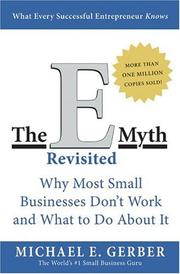
The classic text on systematizing a small business so it doesn't depend entirely on the owner — essential reading for any freelancer who wants to stop being the bottleneck in their own business.
Discussion
Keep reading
Paths that share books, cover the same subject, or open a related topic.