Personal Tax Planning: The Best Books, In Order
This curriculum builds from zero tax literacy to confident, strategic personal tax planning across four progressive stages. You'll start by mastering how the U.S. tax system actually works, then layer in deductions and credits, then unlock tax-advantaged accounts and investment strategies, and finally reach the advanced techniques used to legally minimize your lifetime tax bill.
Foundations: How the Tax System Works
BeginnerUnderstand the U.S. tax system from scratch — how income is defined, how brackets work, the difference between deductions and credits, and how a return is structured.
▸ Study plan for this stage
Pace: 4–5 weeks, ~25–30 pages/day. Start with "Taxes Made Simple" (full read, ~200 pages in 1 week), then move to "J.K. Lasser's Your Income Tax 2023" (focus on chapters 1–8 covering fundamentals, ~200 pages in 3–4 weeks).
- Gross income definition and what counts as taxable income (wages, interest, dividends, capital gains)
- Tax bracket mechanics: how marginal rates work vs. effective tax rates, and why higher income doesn't push all earnings into higher brackets
- Standard deduction vs. itemized deductions: when to use each and how they reduce taxable income
- Tax credits vs. deductions: why credits are more valuable dollar-for-dollar and common credits (Child Tax Credit, Earned Income Tax Credit)
- The structure of a tax return: Form 1040 and how income flows from schedules into the main form
- Filing status categories (Single, Married Filing Jointly, Head of Household) and their impact on brackets and deductions
- Tax withholding and estimated taxes: why employers withhold and how quarterly payments work for self-employed individuals
- Adjusted Gross Income (AGI) and taxable income: the step-by-step reduction from gross income to the amount actually taxed
- What is the difference between a tax deduction and a tax credit, and why is a $1,000 credit more valuable than a $1,000 deduction?
- How do tax brackets work? If you're in the 22% bracket, does that mean all your income is taxed at 22%?
- What is the standard deduction, and when might someone choose to itemize deductions instead?
- Walk through the journey from gross income to taxable income: what are the major steps and reductions?
- What is the difference between your filing status options, and how does filing status affect your tax brackets and deductions?
- Explain the relationship between tax withholding, estimated taxes, and your final tax bill or refund.
- Calculate your effective tax rate vs. marginal tax rate using a sample income and 2023 tax brackets from Lasser's book.
- Work through a simplified Form 1040 using a hypothetical scenario (e.g., $60,000 salary + $2,000 interest income) and trace how income flows through schedules.
- Compare two scenarios: taking the standard deduction vs. itemizing deductions for a sample household, and determine which saves more tax.
- Identify which tax credits a hypothetical family qualifies for (e.g., Child Tax Credit, EITC) and calculate the total credit value.
- Create a personal tax profile: estimate your own gross income, identify deductions and credits you'd likely claim, and calculate approximate taxable income and tax owed.
- Read a real 1040 form (IRS website or Lasser's examples) and label each section, explaining what information goes where and why.
Next up: This stage equips you with the foundational vocabulary and mechanics of the tax system, preparing you to explore specialized strategies in the next stage—such as retirement accounts, investment tax optimization, and business deductions—by ensuring you understand how income is taxed and how deductions and credits reduce your liability.

The single best starting point for a beginner — short, plain-English, and laser-focused on explaining brackets, filing status, deductions vs. credits, and the overall flow of a tax return before anything else.

The definitive annual reference guide; read it second so you can look up every line item and rule with confidence now that you have the conceptual map from Piper's book.
Deductions, Credits & Filing Smart
BeginnerIdentify every major deduction and credit available to individuals — including home, family, education, and business expenses — and know how to claim them correctly.
▸ Study plan for this stage
Pace: 6–7 weeks, ~40–50 pages/day (approximately 280–350 pages total across both books)
- The distinction between deductions (reduce taxable income) and credits (reduce tax owed dollar-for-dollar), and why credits are generally more valuable
- Eligibility requirements and phase-out thresholds for major individual credits: Child Tax Credit, Earned Income Tax Credit (EITC), education credits (American Opportunity, Lifetime Learning), and Saver's Credit
- Categories of itemized deductions vs. standard deduction, and how to determine which filing method saves more taxes
- Home-related deductions including mortgage interest, property taxes, home office deduction (simplified vs. actual expense method), and home improvements vs. repairs
- Education and dependent-related deductions: tuition, student loan interest, dependent exemptions, and education credits
- Business expense deductions for self-employed individuals and home-based businesses: vehicle expenses, supplies, equipment depreciation, and home office allocation
- Record-keeping and documentation requirements for substantiating deductions and credits during an audit
- Common mistakes and red flags that trigger IRS scrutiny on specific deductions (e.g., excessive home office, inflated vehicle expenses)
- What is the key difference between a tax deduction and a tax credit, and why would a $1,000 credit typically be more valuable than a $1,000 deduction?
- You have two filing options: itemize deductions totaling $18,000, or take the standard deduction of $13,850. Which should you choose, and why?
- A taxpayer works from home 3 days per week in a 200 sq. ft. home office. Can they claim a home office deduction? What are the two methods available, and what documentation is required?
- Your client is self-employed and uses their car 60% for business and 40% for personal use. What are the two methods for calculating vehicle deductions, and what records must they maintain?
- Explain the eligibility requirements and phase-out income limits for the American Opportunity Tax Credit vs. the Lifetime Learning Credit. When would you recommend each?
- A taxpayer claims their adult child (age 26) as a dependent and deducts $4,150 in tuition. What are the potential issues with this claim, and what documentation is needed?
- Create a personal deduction inventory: List every deduction you (or a sample taxpayer) could potentially claim across all categories—home, family, education, business, medical, charitable. Research eligibility for each and note income phase-outs.
- Compare itemized vs. standard deduction: Using a realistic tax scenario, calculate total itemizable deductions and compare against the current standard deduction. Determine the optimal filing method and quantify the tax savings.
- Home office deduction calculation: Calculate both the simplified method ($5 per sq. ft.) and actual expense method for a home office scenario. Determine which yields greater deductions and what records are required.
- Vehicle expense tracking: Set up a mileage and expense log for a self-employed individual. Calculate deductions using both the standard mileage rate method and actual expense method. Identify which records the IRS requires for substantiation.
- Education credit eligibility matrix: Create a table mapping different taxpayer scenarios (income levels, student types, expenses) to determine which education credits apply, calculate phase-outs, and identify documentation needed.
- Home business deduction audit scenario: Review a sample home business tax return with aggressive deductions (e.g., high home office %, vehicle expenses, meals). Identify red flags, determine which items are defensible, and suggest documentation improvements.
Next up: This stage equips you with the tactical knowledge to maximize individual tax benefits; the next stage will teach you how to integrate these deductions and credits into a comprehensive tax strategy that aligns with your long-term financial and business goals.
A comprehensive but accessible catalog of legal deductions and credits; reading it now gives you a concrete checklist to apply to your own situation immediately.
Even for non-business owners, this Nolo Press title teaches the logic of business deductions — the most powerful and often misunderstood category — building intuition for the intermediate stage.
Tax-Advantaged Accounts & Investing
IntermediateMaster the full landscape of tax-advantaged accounts — 401(k)s, IRAs, HSAs, 529s — and understand how investment decisions interact with your tax bill.
▸ Study plan for this stage
Pace: 8–10 weeks, ~40–50 pages/day. Start with "The Bogleheads' Guide to Investing" (2–3 weeks), move to "IRAs, 401(k)s & Other Retirement Plans" (3–4 weeks), then "The Power of Zero" (2–3 weeks) to synthesize tax strategy across accounts.
- Core principles of low-cost, diversified index investing as the foundation for tax-efficient wealth building
- Structural differences between 401(k)s, Traditional IRAs, Roth IRAs, and SEP-IRAs: contribution limits, withdrawal rules, and tax treatment
- How employer matching, vesting schedules, and plan features affect your 401(k) strategy and retirement timeline
- Tax-deferred vs. tax-free growth: when to prioritize Roth conversions and how to model long-term tax liability
- HSAs as triple-tax-advantaged vehicles: eligibility, investment options, and coordination with health insurance decisions
- 529 education savings plans: state tax benefits, investment choices, and impact on financial aid and future tax bills
- The concept of tax-free wealth: how strategic Roth conversions and zero-tax-bracket planning can minimize lifetime taxes
- Interaction between account types: sequencing withdrawals in retirement to minimize tax brackets and preserve tax-advantaged space
- What are the key differences between a Traditional 401(k) and a Roth 401(k), and when should you prioritize each based on your current and projected tax bracket?
- How do you calculate whether a Roth conversion makes sense in a given year, and what are the tax consequences (including the pro-rata rule)?
- What is an HSA, why is it considered triple-tax-advantaged, and how should you invest HSA funds to maximize their tax benefits?
- How do 529 plan tax benefits vary by state, and what are the trade-offs between 529s and other education savings strategies from a tax perspective?
- In retirement, what is the optimal withdrawal sequence across Traditional accounts, Roth accounts, and taxable accounts to minimize your lifetime tax bill?
- How do employer 401(k) matching and vesting schedules affect your contribution strategy, and what is the relationship between capturing match and tax-deferred growth?
- Map your current retirement accounts (401(k), IRA, HSA, etc.) and calculate your total annual contribution capacity across all accounts; identify any unused space.
- Model a Roth conversion scenario for your specific situation using your current tax bracket and projected retirement bracket; calculate the tax cost and break-even timeline.
- Research your employer's 401(k) plan documents: identify the match formula, vesting schedule, investment options (expense ratios), and any special features (mega backdoor Roth, loan provisions).
- Build a simple withdrawal strategy spreadsheet for retirement that sequences withdrawals from Traditional, Roth, and taxable accounts to stay in a target tax bracket.
- If you have or plan to have an HSA, create a 5-year investment plan for HSA funds (separate from emergency medical expenses) and calculate projected tax savings.
- Compare 529 plan options in your state vs. neighboring states; calculate the state tax deduction benefit and model the growth of a $10,000 annual contribution over 18 years.
Next up: This stage equips you with the mechanics and tax optimization strategies for individual accounts; the next stage will likely address how to coordinate these accounts with broader tax planning strategies (income timing, charitable giving, capital gains harvesting) and lifetime tax projection.
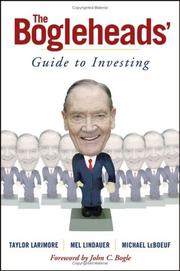
Establishes the critical link between investing and taxes — tax-efficient fund placement, asset location, and account types — providing the investment context needed before going deeper into retirement accounts.
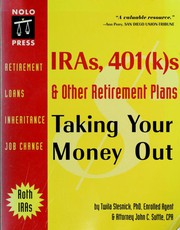
A thorough, plain-language Nolo guide covering contribution limits, Roth vs. traditional decisions, rollovers, and required minimum distributions — the definitive reference for tax-advantaged retirement accounts.

Introduces the strategic concept of managing your future tax bracket by shifting assets into tax-free accounts now — a pivotal mindset shift from reactive filing to proactive lifetime planning.
Advanced Strategy: Legally Lowering Your Lifetime Tax Bill
ExpertApply sophisticated, legal tax-reduction strategies — Roth conversions, tax-loss harvesting, real estate tax benefits, and multi-year planning — to minimize taxes over your entire lifetime.
▸ Study plan for this stage
Pace: 8–10 weeks, ~40–50 pages/day (mix of dense strategy sections and workable examples). Allocate 3 weeks to "Tax-Free Wealth," 2.5 weeks to "The Tax and Legal Playbook," and 2.5 weeks to "Retire Secure!" with 1 week for integration and case-study work.
- Entity selection (S-corps, LLCs, C-corps) and how each structure affects your lifetime tax burden across income, self-employment, and capital gains
- Roth conversion mechanics: timing, income thresholds, pro-rata rules, and when conversions pay for themselves over decades
- Tax-loss harvesting strategies: identifying harvestable losses, wash-sale rules, and integrating harvesting into a multi-year portfolio plan
- Real estate tax benefits: depreciation recapture, cost segregation, 1031 exchanges, and how to layer them for maximum lifetime savings
- Qualified Charitable Distributions (QCDs), Donor-Advised Funds (DAFs), and charitable remainder trusts as lifetime tax-optimization vehicles
- Multi-year tax planning: coordinating business income, investment income, and retirement distributions to stay in lower brackets and preserve deductions
- Succession and legacy planning: how entity structure, gifting, and trust strategies reduce taxes across generations
- When is a Roth conversion worth doing, and how do you calculate whether the upfront tax cost will be offset by decades of tax-free growth?
- How do S-corp elections, LLC classifications, and C-corp structures differ in their tax treatment, and which structure minimizes your lifetime tax bill given your income level and business type?
- What is the pro-rata rule in Roth conversions, and how does it prevent high-income earners from converting small amounts while leaving pre-tax IRAs untouched?
- How do you identify and execute a tax-loss harvest, and what is the wash-sale rule—and how do you avoid it while maintaining your desired asset allocation?
- What is cost segregation in real estate, and how can it accelerate depreciation deductions in the early years of ownership to offset other income?
- How do charitable vehicles (QCDs, DAFs, CRTs) reduce your lifetime tax bill, and when should you use each one?
- How do you coordinate business income, investment income, and retirement distributions across multiple years to minimize your effective tax rate and preserve valuable deductions?
- Map your current entity structure (sole proprietor, LLC, S-corp, C-corp) and run a tax projection comparing it to 2–3 alternative structures using your last 2 years of income and expenses; calculate the lifetime savings over 10 years.
- Identify one Roth conversion scenario for your situation: calculate the upfront tax cost, project the account balance in 20 and 30 years, and determine the break-even point where tax-free growth exceeds the conversion tax.
- Audit your investment portfolio for tax-loss harvesting opportunities: list positions with unrealized losses, identify wash-sale risks, and design a 12-month harvesting plan that maintains your target allocation.
- If you own or are considering real estate: obtain a cost-segregation analysis (or study a sample report) and model how accelerated depreciation reduces your taxable income over years 1–5 and 6–15.
- Model a charitable giving strategy: compare donating cash, appreciated securities, and using a DAF across 3 scenarios; calculate the tax deduction, capital gains avoided, and income-tax savings for each.
- Build a multi-year tax projection (5–10 years) that coordinates your business income, retirement distributions, and investment sales to minimize your effective tax rate and preserve deductions like the standard deduction or charitable deductions.
Next up: This stage equips you with the sophisticated, integrated strategies needed to execute a lifetime tax plan; the next stage will likely focus on implementation, monitoring, and adapting your plan as laws, income, and life circumstances change.

Written by a CPA, this book reframes the tax code as a series of government incentives you can deliberately use — covering real estate, business structures, and depreciation at a strategic level.

Bridges tax planning with legal entity structuring (LLCs, S-corps), showing how the two work together to produce the largest legal reductions — ideal for anyone with self-employment or investment income.
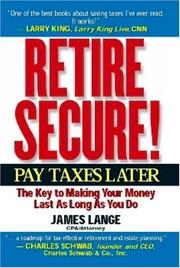
The capstone read: a rigorous, numbers-driven guide to Roth conversion strategies, beneficiary planning, and sequencing withdrawals across account types to minimize taxes across decades.
Discussion
Keep reading
Paths that share books, cover the same subject, or open a related topic.