Franchising as a career: the reading path to owning a franchise
This curriculum takes a beginner from "what is franchising?" all the way through legal documents, financing strategies, and day-to-day operations. Each stage builds on the last — first you absorb the big picture and mindset, then you learn to evaluate and negotiate deals, and finally you master the financial and operational depth needed to run and grow a franchise business. Remember: books provide frameworks, but always engage a qualified franchise attorney and financial advisor before signing anything.
Foundations: What Franchising Really Is
BeginnerUnderstand the franchise business model, its pros and cons, key vocabulary (FDD, royalties, territory, franchisee vs. franchisor), and whether franchising as a career fits your goals and personality.
▸ Study plan for this stage
Pace: 4–5 weeks, ~25–30 pages/day. Read "Franchising for Dummies" first (weeks 1–2, ~150 pages), then "The Educated Franchisee" (weeks 3–5, ~200 pages). Allow 2–3 days between books for reflection and concept consolidation.
- The franchise business model: how franchisors, franchisees, and customers interact in a standardized system
- Key vocabulary: FDD (Franchise Disclosure Document), royalties, territory, franchisee vs. franchisor roles and responsibilities
- Advantages of franchising: brand recognition, proven systems, support, lower risk than startups
- Disadvantages of franchising: ongoing fees, loss of autonomy, dependence on franchisor, territorial restrictions
- The FDD as a legal and financial disclosure tool: what it contains and why it matters
- Self-assessment: personality traits, financial readiness, and goals that align with franchise ownership
- The difference between being a franchisee and a franchisor, and why it matters for your decision
- What is the core difference between a franchise business model and a traditional independent business?
- What are the main advantages and disadvantages of owning a franchise versus starting a business from scratch?
- What is an FDD, what does it contain, and why is it critical to review before signing a franchise agreement?
- What are royalties and territory restrictions, and how do they affect a franchisee's profitability and autonomy?
- What personality traits and financial circumstances make someone a good fit for franchise ownership?
- How do the responsibilities and incentives of a franchisor differ from those of a franchisee?
- Create a comparison chart: list 5–7 franchise systems (from the books or research) and compare their startup costs, royalty rates, support systems, and territory restrictions
- Write a personal franchise readiness assessment: answer questions about your risk tolerance, desire for autonomy, capital availability, and long-term goals, then evaluate whether franchising aligns with your profile
- Obtain and annotate a real FDD (available from franchise companies' websites): highlight key sections, identify royalty rates, territory terms, and any red flags or concerns
- Interview or research 2–3 franchisees (from the books' case studies or external sources): document their experience with support, profitability, and relationship with the franchisor
- Create a glossary of 15–20 franchise terms from both books (e.g., royalties, territory, FDD, area developer, sub-franchising) with definitions and real examples
- Draft a personal decision framework: list your top 3 franchise interests and evaluate each against the pros/cons and self-assessment criteria from the books
Next up: This stage equips you with the vocabulary, conceptual foundation, and self-awareness needed to evaluate specific franchise opportunities in the next stage, where you'll dive deeper into financial analysis, legal due diligence, and detailed franchisor evaluation.
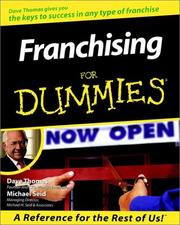
The ideal starting point — it demystifies every core concept (FDDs, fees, support systems) in plain language, giving you the vocabulary you'll need for every book that follows.

Builds directly on that vocabulary to teach a disciplined, step-by-step process for researching and selecting the right franchise, emphasizing self-assessment before you ever talk to a franchisor.
Mindset & the Franchisor Perspective
BeginnerUnderstand how successful franchisors think about systems, culture, and scalability — giving you the 'other side of the table' perspective that makes you a smarter franchisee and prepares you to evaluate any brand.
▸ Study plan for this stage
Pace: 6–7 weeks, ~25–30 pages/day (approximately 3–4 weeks for The E-Myth Revisited, then 2–3 weeks for Franchise Your Business)
- The three roles of the entrepreneur (Technician, Manager, Entrepreneur) and how franchisors must master all three to build scalable systems
- Systems thinking: documenting processes and procedures so that a business can run without the owner's constant involvement
- The franchise prototype as a replicable, teachable, and profitable business model that works regardless of who operates it
- Culture and brand consistency as the foundation for scaling a franchise system across multiple locations
- The franchisor's perspective on franchisee selection, training, and support as critical success factors
- Financial modeling and unit economics: understanding what makes a franchise opportunity attractive to potential franchisees
- The relationship between operational excellence and franchisability—why you must perfect your business before franchising it
- What are the three roles of the entrepreneur according to Gerber, and why must a franchisor be competent in all three?
- How does Gerber define the difference between working 'in' your business versus working 'on' your business, and why is this distinction critical for franchising?
- What is a franchise prototype, and what specific systems and processes must be documented to create one?
- According to Siebert, what are the key criteria for evaluating whether your business is ready to be franchised?
- How should a franchisor think about franchisee selection and training to ensure brand consistency across locations?
- What financial metrics and unit economics should a franchisor understand before offering franchise opportunities to others?
- Map your own business (or a business you know well) against Gerber's three roles: identify which role is strongest and which needs development to make the business franchisable
- Document 3–5 core processes in a business using Gerber's systems approach: write out step-by-step procedures as if training someone with no prior experience
- Create a one-page 'franchise prototype' outline for a real or hypothetical business, identifying the non-negotiable systems, culture markers, and operational standards
- Analyze a franchise brand you're familiar with (or research one): identify how their systems, training, and support reflect the principles from both books
- Build a simple financial model showing unit economics: calculate what a franchisee would need to invest, expected revenue, and profitability based on a real or realistic scenario
- Interview a franchisor or franchisee (in person or via email): ask them about their selection process, training program, and how they maintain consistency—then map their answers to Siebert's framework
Next up: This stage equips you with the franchisor's mental model—understanding systems, scalability, and culture—which is essential before moving to the next stage where you'll evaluate specific franchise opportunities and learn how to assess whether a particular brand's systems and support are actually sound.
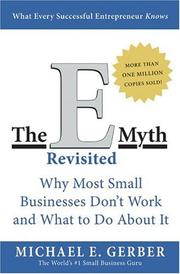
Explains why most small businesses fail and how franchise-style systems solve that problem; reading this first in the stage reframes franchising as a systems business, not just a job purchase.

Written for those who want to franchise their own concept, but invaluable for franchisees too — it reveals exactly how franchisors build their models, price royalties, and structure support, so you know what to look for.
Legal & Financial Due Diligence: The FDD Deep Dive
IntermediateRead and interpret a Franchise Disclosure Document (FDD) with confidence, understand the legal obligations in a franchise agreement, and know what questions to bring to your attorney.
▸ Study plan for this stage
Pace: 4–5 weeks, ~40–50 pages/day (approximately 280–350 pages total across both books)
- The 23 Items of the FDD: what each disclosure item reveals and why it matters (Item 1–23 structure and legal significance)
- How to read financial statements and Item 19 financial performance representations critically—spotting red flags and unrealistic claims
- The franchise agreement as a binding contract: key clauses (term, renewal, termination, non-compete, indemnification) and their real-world implications
- Due diligence checklists and frameworks: what to verify independently, what to ask franchisors, and what requires attorney review
- Risk assessment in franchising: identifying deal-breakers, hidden costs, and misaligned incentives between franchisor and franchisee
- State and federal franchise laws (FTC Rule, state registration requirements) and how they protect or constrain you
- The relationship between the FDD and the franchise agreement: where they align, conflict, and what that means for your obligations
- What are the 23 Items of the FDD, and what critical information should you extract from Items 1, 6, 7, 19, and 20?
- How do you identify red flags in Item 19 (financial performance representations), and what questions should you ask if a franchisor claims average unit volumes?
- What are the five most dangerous clauses in a typical franchise agreement, and how do they limit your control or exit options?
- Walk through a due diligence checklist: what would you verify independently, who would you contact (current/former franchisees, suppliers, landlords), and what would you bring to your attorney?
- How do FTC regulations and state franchise laws protect you, and what happens if a franchisor fails to comply with disclosure requirements?
- Given a sample FDD and franchise agreement, identify at least three areas of misalignment or risk that warrant attorney negotiation.
- Obtain a real FDD (from a franchisor's website or UFOC database) and annotate all 23 Items, flagging which ones contain financial, legal, or operational red flags. Write a one-page risk summary.
- Analyze Item 19 (financial performance representations) from a real FDD: calculate average unit volumes, identify which franchisees are included/excluded, and draft three critical questions for the franchisor.
- Create a side-by-side comparison of a franchise agreement and its corresponding FDD, highlighting three areas where the agreement imposes stricter obligations than the disclosure suggests.
- Interview or survey 2–3 current or former franchisees from a real franchise system using a structured due diligence questionnaire; document their responses and identify patterns that contradict franchisor claims.
- Draft a personal due diligence checklist tailored to your target franchise industry (e.g., food service, fitness, retail), including verification steps, contact lists, and attorney review priorities.
- Role-play a negotiation scenario: given a franchise agreement with non-compete and termination clauses, identify which terms you would push back on and draft alternative language to propose to the franchisor's counsel.
Next up: This stage equips you to read and critically evaluate the legal and financial documents that govern a franchise relationship, preparing you to move into the next stage—likely financial modeling and unit economics—where you'll translate FDD data into projections and make a go/no-go decision.
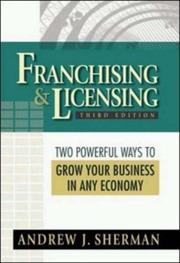
The most authoritative legal and business reference on franchise agreements and FDDs; reading it here — after you have the foundational vocabulary — lets you engage with the legal detail without being overwhelmed.

Bridges legal knowledge and business strategy by walking through each of the 23 FDD items in a practical, decision-making context, reinforcing what Sherman covers from a more operational angle.
Financing Your Franchise
IntermediateIdentify and evaluate all major funding paths — SBA loans, rollovers for business startups (ROBS), seller financing, and investors — and build a realistic financial model for your franchise investment.
▸ Study plan for this stage
Pace: 4–5 weeks, ~25–30 pages/day. Allocate 2 weeks to Whittemore's "Financing Your Franchise" (deeper conceptual work), then 2–3 weeks to DeBaise's WSJ guide (practical application and financial modeling). Build in 3–4 days for review and financial model refinement.
- SBA loan structures (7(a) loans, microloans) and qualification criteria specific to franchise borrowers
- Rollovers for Business Startups (ROBS) as a tax-advantaged alternative to traditional debt financing
- Seller financing mechanics: earnouts, holdbacks, and risk mitigation for both franchisor and franchisee
- Investor capital sources (angel investors, private equity, venture debt) and equity dilution trade-offs
- Building a comprehensive franchise financial model: startup costs, cash flow projections, break-even analysis, and sensitivity testing
- Debt-to-equity ratios, personal guarantees, and collateral requirements in franchise lending
- Due diligence on franchise disclosure documents (Item 19 financial performance representations) to validate assumptions
- Comparing total cost of ownership across funding scenarios and assessing personal financial risk
- What are the key differences between SBA 7(a) loans and microloans, and which franchise profile is better suited to each?
- How does a ROBS transaction work, and what are the primary tax and cash flow advantages over a traditional bank loan?
- What role does seller financing play in franchise deals, and what protections should a franchisee negotiate into a seller-financed agreement?
- How do you construct a realistic 3-year cash flow projection for a franchise, and what assumptions should you stress-test?
- What is the relationship between Item 19 financial performance representations in the FDD and the financial model you build?
- How do you evaluate the true cost of capital across different funding sources (debt, ROBS, seller financing, equity), and when should you use a blended approach?
- Using Whittemore's framework, map out the eligibility requirements for an SBA 7(a) loan for a specific franchise concept; identify 2–3 potential disqualifying factors and mitigation strategies.
- Build a side-by-side comparison spreadsheet of three funding scenarios (SBA loan, ROBS, seller financing) for a franchise with $250K startup costs, showing total interest paid, cash flow impact, and personal guarantee exposure.
- Extract Item 19 financial performance data from a real franchise disclosure document (FDD); use DeBaise's guidance to identify which metrics are most relevant to your financial model and which assumptions need validation.
- Create a 36-month cash flow projection for a franchise investment, including startup phase, ramp-up, and profitability; run sensitivity analysis on 3–4 key variables (e.g., customer acquisition cost, average transaction value, labor costs).
- Draft a seller financing term sheet outline (using Whittemore's risk-mitigation principles) that protects both parties; include earnout structure, holdback amount, and default remedies.
- Interview or survey 2–3 franchise owners who used different funding sources; document their actual vs. projected cash flow and lessons learned about capital structure decisions.
Next up: This stage equips you with the financial architecture and funding toolkit to move into the next stage—operational planning and risk management—where you'll translate your funded franchise model into a detailed launch and growth strategy.

Sherman's focused companion on capital covers every financing vehicle available to franchisees, with clear explanations of SBA 7(a) loans, equity structures, and lender expectations — essential before you commit capital.

Provides broader small-business financial literacy (cash flow, P&L, break-even analysis) that contextualizes franchise-specific financing and ensures you can read and stress-test your own numbers.
Operations, Growth & Long-Term Success
ExpertMaster the operational disciplines — hiring, training, marketing, multi-unit growth, and exit planning — that separate thriving franchise owners from struggling ones.
▸ Study plan for this stage
Pace: 4–5 weeks, ~40–50 pages/day (approximately 280–350 pages total)
- The Profit First system: separating profit, owner's pay, taxes, and operating expenses into dedicated accounts before spending
- Cash flow management and the psychology of money—why most businesses fail despite revenue and how to reverse it
- The importance of paying yourself first as a business owner and establishing a sustainable owner's draw
- Seasonal revenue fluctuations and how to smooth income across lean and peak periods using the Profit First method
- Scaling operations profitably: growing revenue without proportionally increasing expenses
- Building financial discipline and accountability through weekly account reviews and monthly reconciliation
- Adapting Profit First to multi-unit franchise operations and complex organizational structures
- How does the Profit First system differ from traditional accounting, and why does Michalowicz argue it's more effective for franchise owners?
- What are the core Profit First accounts, and how should a franchise owner allocate incoming revenue across them?
- How can a franchise owner use Profit First to manage seasonal revenue swings common in many franchise businesses?
- What is the 'owner's pay' concept in Profit First, and why is it critical for long-term franchise success and personal financial health?
- How would you implement weekly and monthly financial reviews using Profit First, and what metrics should you monitor?
- How can Profit First principles be adapted for a multi-unit franchise operation with multiple revenue streams?
- Audit your current franchise's bank accounts and cash flow: map where money is currently going and identify leaks or inefficiencies that Profit First would address
- Set up the five core Profit First accounts (Profit, Owner's Pay, Tax, Operating Expenses, Sales) for your franchise and establish realistic allocation percentages based on your current revenue
- Create a 12-month cash flow projection for your franchise, identifying seasonal peaks and valleys, then model how Profit First would smooth income across those periods
- Conduct a weekly account review ritual for 4 consecutive weeks, documenting what you learn about your spending patterns and where discipline is breaking down
- Calculate your 'owner's pay' target based on your personal financial needs and franchise profitability, then work backward to determine what operational changes are needed to hit that target
- If you operate or plan to operate multiple franchise units, create a Profit First allocation strategy that accounts for inter-unit transfers, consolidated profit distribution, and tax planning across locations
Next up: Mastering Profit First establishes the financial discipline and cash management foundation necessary to scale operations sustainably; the next stage will build on this financial clarity to address hiring, training, marketing systems, and multi-unit growth strategies that depend on knowing your true profitability and owner's pay capacity.

Introduces a cash-management system perfectly suited to franchise operations where royalties and fees are fixed costs; reading it here, after mastering financing, lets you implement it immediately in your P&L.
Discussion
Keep reading
Paths that share books, cover the same subject, or open a related topic.