How to Become a Business Analyst: The Best Books, In Order
This curriculum takes a complete beginner from zero to job-ready as a Business Analyst across four tightly sequenced stages. It opens with plain-English foundations of requirements and BA thinking, moves into the industry-standard BABOK framework, then sharpens the human-side skills (stakeholder management, communication, and facilitation) that employers probe in interviews and on the job.
Foundations: What a BA Actually Does
BeginnerUnderstand the BA role, core vocabulary, and the end-to-end lifecycle of a project before touching any formal framework.
▸ Study plan for this stage
Pace: 4–5 weeks, ~25–30 pages/day. Start with "Business Analysis For Dummies" (Weeks 1–2, ~200 pages), then move to "The Business Analyst's Handbook" (Weeks 3–5, ~250 pages). Include 1–2 review days per week.
- The BA role: bridge between business stakeholders and technical teams, translating needs into actionable requirements
- Core BA vocabulary: requirements, stakeholders, scope, elicitation, analysis, documentation, and sign-off
- Project lifecycle stages: initiation, planning, requirements gathering, analysis, design, implementation, and closure
- Stakeholder identification and management: who they are, what they need, and how to engage them effectively
- Requirements types: functional vs. non-functional, business vs. technical, and how they flow through a project
- Documentation fundamentals: use cases, user stories, process flows, and requirement specifications as communication tools
- The BA's toolkit: interviews, workshops, observation, prototyping, and data analysis as elicitation techniques
- Change management and scope control: why projects drift and how BAs prevent or manage it
- What is the primary role of a business analyst, and how does it differ from project manager, developer, and product owner roles?
- Walk through a complete project lifecycle from the BA's perspective—what does the BA do at each stage?
- What are the key differences between functional and non-functional requirements, and why does a BA need to capture both?
- Name at least three elicitation techniques a BA can use to gather requirements, and describe when you'd use each one.
- What is scope creep, why does it happen, and what tools or practices can a BA use to prevent or manage it?
- Describe the relationship between a BA, stakeholders, and the development team—what communication challenges might arise and how do you address them?
- Read 'Business Analysis For Dummies' Chapter 1–3 and write a one-page summary of what a BA does in your own words, then compare it to the book's definition.
- Identify a real project you know (work, school, or personal)—map out its lifecycle stages and describe what a BA would do at each stage.
- Interview a colleague, manager, or friend about a recent project they worked on; practice elicitation by asking open-ended questions and documenting their 'requirements' in bullet points.
- Create a simple use case or user story for a familiar process (e.g., ordering coffee, submitting a timesheet)—include actors, steps, and alternative flows.
- Read a sample requirements document (provided in 'The Business Analyst's Handbook' or online) and annotate it: identify functional vs. non-functional requirements, spot ambiguities, and suggest improvements.
- Role-play a stakeholder conflict: one person is a business stakeholder wanting feature X, another is a developer concerned about timeline—practice as the BA mediating the discussion and documenting the outcome.
Next up: This stage establishes the BA's foundational mindset—understanding the *why* and *who* before diving into formal methodologies—preparing you to learn specific frameworks (Agile, Waterfall, etc.) and advanced techniques in the next stage.
The friendliest entry point to the BA profession — covers the role, deliverables, and mindset in plain language, giving beginners the vocabulary they need for every book that follows.

Bridges the gap between 'what is a BA' and 'how do I actually do the work,' introducing requirements elicitation, use cases, and documentation in a practical, step-by-step way.
Requirements: The Core Craft
BeginnerMaster the art and science of eliciting, writing, and validating requirements — the single most-tested skill in BA interviews and on the job.
▸ Study plan for this stage
Pace: 8–10 weeks, ~40–50 pages/day (approximately 2–3 weeks per book with time for exercises and review)
- Requirements as the foundation: understanding why clear, complete, and correct requirements prevent costly rework and project failure
- Elicitation techniques: interviews, workshops, observation, prototyping, and document analysis to uncover stakeholder needs and hidden requirements
- Writing effective requirements: using clear language, testable criteria, and structured templates to create unambiguous specifications
- Requirements validation and verification: techniques to ensure requirements are correct, complete, feasible, and traceable before development begins
- Stakeholder management: identifying, engaging, and balancing competing interests of diverse stakeholders throughout the requirements process
- Requirements traceability and change management: tracking requirements through the lifecycle and managing scope creep systematically
- Quality attributes and non-functional requirements: capturing performance, security, usability, and other system qualities alongside functional requirements
- Requirements documentation standards: organizing and formatting requirements for clarity, consistency, and handoff to development teams
- What are the primary causes of requirements failures, and how can a BA prevent them through better elicitation and documentation?
- Describe at least three elicitation techniques and when you would use each one to uncover different types of requirements.
- What makes a requirement 'good,' and how would you evaluate whether a set of requirements is ready for development?
- How do you identify and manage conflicting stakeholder needs, and what role does traceability play in managing scope?
- What is the difference between functional and non-functional requirements, and why are both critical to capture?
- Walk through a complete requirements process from elicitation through validation—what are the key checkpoints and deliverables?
- Conduct a mock elicitation interview with a peer or mentor: prepare questions, record insights, and document 5–10 requirements from the conversation. Compare your output to best practices in the books.
- Take a poorly written requirement and rewrite it using the criteria and templates from Wiegers—make it testable, unambiguous, and traceable.
- Facilitate a small requirements workshop (even with 2–3 people) to gather requirements for a simple project; practice managing competing viewpoints and synthesizing consensus.
- Create a requirements traceability matrix for a small system or feature; trace each requirement from stakeholder need through to test cases and identify gaps.
- Build a requirements specification document (5–10 pages) for a real or hypothetical project, including functional requirements, non-functional requirements, assumptions, and constraints.
- Conduct a requirements validation review: present a set of requirements to a peer and gather feedback on clarity, completeness, and feasibility; iterate based on feedback.
Next up: Mastering requirements elicitation and validation equips you with the foundational skill to move into analysis and modeling—the next stage will teach you how to structure and visualize those validated requirements using tools like use cases, data models, and process flows.
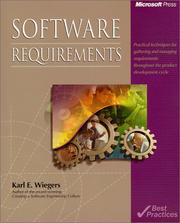
The canonical, most-cited book on requirements engineering; read it first in this stage to build a rigorous mental model of requirement types, quality attributes, and elicitation techniques.
Introduces the Volere requirements process and template, giving you a repeatable, structured approach to gathering and documenting requirements that complements Wiegers' theory with hands-on process.
The BABOK: Industry-Standard Framework
IntermediateUnderstand the IIBA's Business Analysis Body of Knowledge — the framework employers reference in job postings and certification exams — and apply its knowledge areas to real work.
▸ Study plan for this stage
Pace: 4–5 weeks, ~40–50 pages/day (BABOK is dense; allow time for re-reading and note-taking)
- The six knowledge areas of BABOK: Business Analysis Planning & Monitoring, Elicitation & Collaboration, Requirements Life Cycle Management, Strategy Analysis, Requirements Analysis & Design Definition, and Solution Evaluation
- The distinction between business requirements, stakeholder requirements, solution requirements, and transition requirements
- Stakeholder analysis and management as a foundational practice across all knowledge areas
- The role of requirements traceability in ensuring alignment from business need to solution delivery
- Techniques for elicitation, analysis, and documentation (e.g., interviews, workshops, use cases, user stories, acceptance criteria)
- How BABOK knowledge areas interconnect and support the full business analysis lifecycle
- The importance of solution evaluation and measuring business value realization post-implementation
- BABOK as a reference standard for job roles, certification (CCBA/CBAP), and organizational BA maturity
- What are the six BABOK knowledge areas, and what is the primary focus of each?
- How do business requirements differ from solution requirements, and why is this distinction important?
- What are the key activities in the Elicitation & Collaboration knowledge area, and which techniques would you use for different stakeholder types?
- How does Requirements Life Cycle Management ensure that requirements remain valid and traceable throughout a project?
- What is the role of Strategy Analysis in business analysis, and how does it inform requirements gathering?
- How would you apply BABOK practices to a real project scenario (e.g., a software implementation or process improvement initiative)?
- Create a stakeholder analysis matrix for a hypothetical business initiative, identifying key stakeholders, their interests, influence, and engagement strategy—directly applying BABOK's stakeholder management guidance
- Document a set of business, stakeholder, solution, and transition requirements for a real or fictional project, ensuring each requirement type is clearly distinguished and traceable
- Conduct a mock elicitation session (interview or workshop) using BABOK-recommended techniques; record findings and translate them into documented requirements
- Build a requirements traceability matrix (RTM) linking business objectives → business requirements → solution requirements → test cases, demonstrating end-to-end coverage
- Analyze a case study or past project; map its activities to the six BABOK knowledge areas to identify gaps or misalignments in the BA approach
- Draft a business analysis plan for a small initiative, including scope, approach, stakeholder communication, and success metrics—using BABOK's Business Analysis Planning & Monitoring framework
Next up: Mastery of BABOK provides the conceptual foundation and vocabulary for the next stage, where you'll apply these frameworks to specific methodologies (Agile, Waterfall, Hybrid) and learn how to tailor BA practices to different organizational contexts and project constraints.

The official BABOK guide is the definitive industry reference; reading it after the foundations stages means you can map its abstract knowledge areas to concrete skills you already understand.
Translates the dense BABOK into digestible study material with practice questions and worked examples, solidifying your understanding and preparing you for ECBA or CBAP certification interviews.
Stakeholder & Human Skills: The Differentiator
IntermediateDevelop the communication, facilitation, and stakeholder-management skills that separate good BAs from great ones — and that experienced employers probe hardest in interviews.
▸ Study plan for this stage
Pace: 8–10 weeks, ~25–30 pages/day. Read "Collaboration Explained" (weeks 1–2), "Crucial Conversations" (weeks 3–6), and "How to Win Friends and Influence People" (weeks 7–10), with 1–2 weeks for review and integration exercises.
- Collaboration as a deliberate practice: how to structure team interactions and decision-making processes to maximize buy-in and shared ownership (Tabaka)
- The anatomy of crucial conversations: recognizing high-stakes moments, managing emotions, and creating psychological safety to discuss difficult topics without damaging relationships (Patterson)
- Moving from debate to dialogue: shifting from 'winning' arguments to genuinely understanding opposing viewpoints and finding mutual solutions (Patterson)
- Genuine interest and active listening as the foundation of influence: how authentic curiosity about others' needs and perspectives builds trust and credibility (Carnegie)
- Stakeholder mapping and relationship-building: identifying key players, understanding their motivations, and tailoring your communication approach to each group (Tabaka, Carnegie)
- Emotional intelligence in facilitation: recognizing and managing your own emotions and those of others to maintain productive conversations under pressure (Patterson, Tabaka)
- Practical persuasion techniques grounded in reciprocity, consistency, and social proof—not manipulation (Carnegie)
- Translating soft skills into business outcomes: how better communication directly reduces rework, accelerates decision-making, and improves project success rates
- What are the key differences between collaboration and cooperation, and why does Tabaka argue that true collaboration requires deliberate structure and practice?
- Describe the four key conditions that make a conversation 'crucial' according to Patterson, and explain why BAs encounter these situations regularly.
- How does Patterson's framework for moving from silence or violence to dialogue apply to a BA's interactions with resistant stakeholders or conflicting business units?
- What does Carnegie mean by 'genuine interest,' and how is it different from the manipulative tactics people often associate with influence?
- How would you map stakeholders for a complex business change initiative, and what communication strategy would you tailor for each group based on Tabaka and Carnegie's principles?
- Explain how emotional intelligence—recognizing and managing emotions in yourself and others—directly improves your effectiveness in requirements-gathering sessions and design reviews.
- Stakeholder mapping exercise: Identify 5–8 key stakeholders in a real or hypothetical BA project. For each, document their priorities, communication preferences, potential concerns, and how you would adapt your approach based on Carnegie's principles of genuine interest and Tabaka's collaboration framework.
- Crucial conversation simulation: Record yourself (or practice with a peer) conducting a difficult conversation—e.g., delivering bad news about a project delay or pushing back on an unrealistic requirement. Review using Patterson's framework: Did you create psychological safety? Did you move toward dialogue? What would you do differently?
- Active listening audit: In your next three meetings, practice deep listening without planning your response. After each meeting, write down what you heard, what emotions you detected, and what assumptions the speaker held. Compare your notes to what was actually intended.
- Collaboration structure design: For a current or recent project, design a decision-making process (meeting agenda, roles, escalation path) that embodies Tabaka's collaboration principles. Document how this structure would have prevented past misalignments or rework.
- Influence audit: Identify a recent situation where you successfully influenced a stakeholder or failed to do so. Analyze it against Carnegie's principles: Did you show genuine interest? Did you appeal to their motivations? Did you avoid arguing? What would you do differently?
- Emotional temperature check: Before and after your next three high-stakes conversations (status update, scope negotiation, conflict resolution), rate the emotional temperature (1–10 scale) and document what triggered shifts. Reflect on how you managed your own emotions and responded to others' emotional cues.
Next up: This stage equips you with the interpersonal mastery to navigate complex stakeholder environments and influence decisions—skills that are now foundational for the next stage, where you'll apply these capabilities to leading organizational change, managing resistance, and driving adoption of new processes and systems.

Teaches structured facilitation techniques for workshops and meetings — a daily BA activity — giving you a repeatable toolkit for running elicitation sessions and resolving stakeholder conflict.
Equips you to handle the high-stakes, politically charged conversations with executives and resistant stakeholders that no requirements template can prepare you for.

A timeless capstone on human influence and relationship-building; read last because by now you can consciously map its principles to the specific stakeholder dynamics you have studied throughout the curriculum.
Discussion
Keep reading
Paths that share books, cover the same subject, or open a related topic.