Audiology spans an unusual range — from the physics of sound and the biology of the ear to the deeply human work of helping someone hear again. The reading works best in that order: understand how hearing works, then how to measure and diagnose it, then how to treat it, and finally how to counsel the person living with the loss. Start with hearing aids before you understand the auditory system and the fittings become guesswork.
These books complement, not replace, a Doctor of Audiology (AuD) program, supervised clinical training, and licensure. Reading deepens the science and craft the degree formalizes.
Learn how hearing works
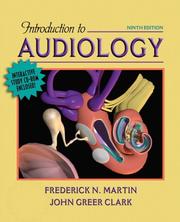
Start with the science. The Ear and Hearing by Robert Dobie grounds you in the anatomy and physiology of the auditory system, and Introduction to audiology by Frederick Martin is the accessible, widely used gateway to the whole field. For the perceptual layer — how the brain interprets sound — Psychoacoustics: Facts and Models is the rigorous reference that explains what we actually hear and why. Read the introductions first, then let psychoacoustics add depth.
Diagnose and measure
With the science set, move to assessment. Audiology Diagnosis by Ross Roeser covers the diagnostic process, and Handbook of clinical audiology by Jack Katz is the comprehensive standard reference that many audiologists keep for a career. For the electrophysiology of hearing, Auditory Evoked Potentials by Frank Musiek explains the objective measures used when behavioral testing is not enough. The broad text Audiology by Michael Valente ties the clinical picture together.
Treat, and then counsel
Treatment often means amplification, so Hearing Aid Amplification teaches the devices, their fitting, and their verification. But the most underrated skill comes last: Counseling in Audiology by David Luterman is the essential book on the human side — helping patients and families accept and adapt to hearing loss. Reading it at the end, once you understand the clinical work, is what makes it land.
Read in this order — science, diagnosis, treatment, counseling — and audiology becomes a whole discipline rather than a set of tests. Follow the full path to enter the clinic prepared for both the ear and the person attached to it.
Follow the full reading path →
Ready to learn something deeply?
Build a reading path — free