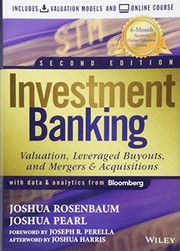
Breaking Into Investment Banking: The Best Books, In Order
This curriculum builds from core valuation and accounting intuition up through the technical modeling skills and deal mechanics that investment bankers use daily. Starting at an intermediate level, each stage sharpens a specific skill set — valuation first, then M&A and LBO deal structures, then financial modeling mastery — before pulling everything together with an insider view of how Wall Street actually works.
Valuation Foundations
IntermediateBuild a rigorous, professional-grade understanding of how companies are valued using DCF, comparable companies, and precedent transactions — the universal language of investment banking.
▸ Study plan for this stage
Pace: 8–10 weeks, ~40–50 pages/day (focus on chapters 1–15 covering DCF, comparables, and precedent transactions; skip advanced chapters initially)
- Discounted Cash Flow (DCF) mechanics: projecting free cash flows, terminal value, and discount rates (WACC)
- Weighted Average Cost of Capital (WACC) calculation and sensitivity to cost of equity and debt
- Comparable company analysis: selecting peers, calculating EV/EBITDA, EV/Revenue, P/E multiples, and adjusting for differences
- Precedent transaction analysis: extracting valuation multiples from historical M&A deals and applying them to targets
- Terminal value estimation: perpetuity growth method vs. exit multiple method and impact on valuation
- Valuation bridges: reconciling DCF, comparables, and precedent transaction approaches to triangulate fair value
- Working capital, capex, and tax adjustments in cash flow projections
- Sensitivity analysis and scenario modeling to stress-test valuation assumptions
- How do you calculate WACC, and why does each component (cost of equity, cost of debt, capital structure) matter to valuation?
- Walk through a complete DCF model: how would you project 5 years of free cash flows, calculate terminal value, and discount back to present value?
- What are the key differences between using a perpetuity growth rate vs. an exit multiple for terminal value, and when would you choose each?
- How do you identify comparable companies, calculate trading multiples, and adjust them for differences in growth, profitability, and risk?
- What information do you extract from precedent transactions, and how do you use those multiples to value a target company?
- How would you reconcile a DCF valuation that differs significantly from comparable company and precedent transaction valuations?
- What are the most critical assumptions in a DCF model, and how sensitive is the valuation to changes in WACC, growth rate, and margin assumptions?
- Build a complete 3-statement financial model (P&L, balance sheet, cash flow) for a real public company using 5 years of historical data and project 5 years forward
- Calculate WACC from scratch for a chosen company: gather market data, estimate cost of equity using CAPM, cost of debt, and target capital structure
- Construct a full DCF valuation model: project FCF, calculate terminal value using both perpetuity growth and exit multiple methods, discount at WACC, and compare to current stock price
- Pull 5–8 comparable public companies for your target, calculate EV/EBITDA, EV/Revenue, and P/E multiples, and apply them to your target's metrics
- Research 3–5 precedent M&A transactions in the same industry, extract the transaction multiples, and apply them to your target company
- Create a sensitivity table showing how DCF valuation changes with ±1–2% changes in WACC and terminal growth rate; identify which assumptions drive value most
- Reconcile three valuation approaches (DCF, comparables, precedent transactions) for the same company, explain discrepancies, and justify a final valuation range
- Practice building a quick 'back-of-envelope' valuation using only public multiples and basic financials—develop speed and intuition for sanity-checking valuations
Next up: This stage equips you with the core valuation methodologies that underpin every investment banking analysis; the next stage will apply these tools to real-world deal scenarios, including LBO modeling, accretion/dilution analysis, and fairness opinions.

The definitive academic-yet-practical guide to valuation; establishes the conceptual bedrock (DCF, cost of capital, multiples) that every subsequent book assumes you know.
M&A Deal Structure & Strategy
IntermediateUnderstand how mergers and acquisitions are structured, negotiated, and executed — including accretion/dilution analysis, deal mechanics, and the strategic logic bankers pitch to clients.
▸ Study plan for this stage
Pace: 6–8 weeks, ~40–50 pages/day (DePamphilis first 3 weeks, then Reed for remaining 3–5 weeks)
- Deal structure types (stock, cash, mixed consideration) and their tax and accounting implications
- Accretion/dilution analysis: how to model earnings per share impact and identify value-creating vs. value-destroying deals
- Valuation methods in M&A context (DCF, comparable companies, precedent transactions, sum-of-the-parts)
- Deal mechanics: due diligence, representations & warranties, closing conditions, and post-closing adjustments
- Strategic rationale and synergy identification: revenue synergies, cost synergies, and financial engineering
- Negotiation dynamics: seller expectations, buyer leverage, deal protection mechanisms, and walk-away scenarios
- Regulatory and antitrust considerations affecting deal feasibility and structure
- Financing structures: cash, debt, equity, and earnouts in the context of deal economics
- How do stock vs. cash vs. mixed consideration structures differ in their tax treatment, accounting treatment, and impact on buyer EPS?
- Walk through a simple accretion/dilution analysis: what drives accretion, what drives dilution, and how do you interpret the results to advise a client?
- What are the key components of a comprehensive due diligence process, and what red flags should a banker watch for?
- How do revenue synergies differ from cost synergies, and why is it harder to realize revenue synergies in practice?
- Describe the negotiation process from initial indication of interest through signing: what are the key milestones and leverage points?
- How does the choice of financing (all-cash vs. leveraged) affect deal returns and the strategic appeal to a buyer?
- Build a simple accretion/dilution model for a hypothetical acquisition: assume a buyer with $100M EBITDA acquiring a target with $30M EBITDA at 10x multiple, using 50% cash and 50% stock. Calculate pro forma EPS impact.
- Analyze a real M&A deal (e.g., from DePamphilis case studies or public filings): identify the deal structure, stated synergies, and financing sources. Assess whether the deal was likely accretive or dilutive.
- Conduct a mock due diligence checklist: create a 20–30 item list of financial, legal, operational, and commercial items to investigate in a target company, with brief notes on why each matters.
- Compare two different deal structures for the same hypothetical acquisition (e.g., all-cash vs. all-stock vs. mixed) and model the tax, accounting, and EPS implications of each.
- Write a one-page investment thesis for a fictional M&A transaction: identify the buyer, target, strategic rationale, key synergies, and deal structure. Justify why the buyer should proceed.
- Role-play a negotiation scenario: as a banker advising the seller, identify your walk-away price, key deal protection mechanisms, and negotiation tactics based on market conditions and buyer urgency.
Next up: This stage equips you with the technical and strategic foundations of M&A deal-making; the next stage will likely focus on leveraged buyouts (LBOs) and private equity, where you'll apply accretion/dilution analysis and deal structure knowledge to highly leveraged transactions and return optimization.
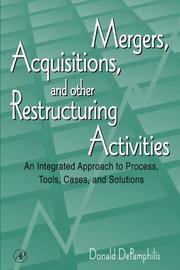
A comprehensive, deal-process-oriented text covering valuation in an M&A context, deal structuring, and due diligence — read first to get the full strategic and legal framework.

A practitioner Q&A reference that goes deep on deal terms, representations and warranties, and negotiation tactics — builds the vocabulary needed for real deal rooms.
LBOs & Leveraged Finance
IntermediateMaster the mechanics of leveraged buyouts — how debt is structured, how returns are engineered, and how private equity sponsors think about deals — a core skill tested in every IB interview.
▸ Study plan for this stage
Pace: 4–5 weeks, ~40–50 pages/day. This is dense, technical material requiring active note-taking and model-building practice, so pace yourself to allow 2–3 days per major chapter section.
- LBO mechanics: how leverage amplifies equity returns through debt paydown and multiple expansion
- Sources and uses of funds: capital stack composition (equity, senior debt, subordinated debt, mezzanine) and deployment across purchase price, fees, and working capital
- Debt structure and covenants: senior secured, unsecured, and mezzanine tranches; financial maintenance covenants and their role in risk management
- Return drivers: EBITDA growth, multiple expansion, debt paydown, and dividend recaps as levers for IRR engineering
- Sponsor value creation: operational improvements, cost synergies, and revenue growth as distinct from financial engineering
- Exit scenarios and sensitivity analysis: how holding period, exit multiple, and leverage impact returns across bull/base/bear cases
- Underwriting discipline: why debt capacity, interest coverage, and leverage ratios constrain deal sizing and structure
- Private equity investment thesis: how sponsors evaluate management, market dynamics, and competitive positioning before committing capital
- Walk through a complete sources and uses statement for a $500M LBO: what goes on each side, and how does the capital stack change if you increase leverage?
- Explain how debt paydown contributes to equity returns in an LBO. Why does a sponsor care about the amortization schedule?
- What is the difference between EBITDA growth and multiple expansion as return drivers? Which is more controllable by the sponsor?
- Describe the role of financial covenants in a leveraged facility. What happens if the company breaches a covenant, and how does this affect sponsor returns?
- Build a simple LBO model: given purchase price, entry multiple, target leverage, and exit assumptions, calculate the IRR. How sensitive is the return to exit multiple?
- Compare senior debt, mezzanine, and equity in an LBO capital stack: what are the risk/return profiles, and why would a lender accept each tranche?
- Read Chapters 1–2 (LBO fundamentals and deal mechanics) and create a one-page visual summary of the sources and uses waterfall for a hypothetical $1B LBO.
- Build a 3-statement LBO model in Excel using a real company (or case study data): project 5 years of P&L, balance sheet, and cash flow; calculate leverage ratios and covenant compliance.
- Work through Pignataro's worked examples (if provided) or case studies in the book; replicate the math and sensitivity tables to understand how changes in EBITDA, exit multiple, and holding period affect IRR.
- Create a debt structure memo: given a target company's cash flow profile, design a capital stack (senior, sub, mezz, equity) that balances sponsor return targets with lender risk appetite.
- Analyze a real LBO from news or case databases (e.g., Blackstone, Apollo, KKR deals): map the capital stack, estimate entry/exit multiples, and reverse-engineer the sponsor's return assumptions.
- Practice sensitivity analysis: build a two-way table showing IRR across exit multiples (x-axis) and holding periods (y-axis); explain which scenarios are most attractive to sponsors and why.
Next up: This stage equips you with the technical foundation to evaluate deal quality, underwrite leverage, and engineer returns—skills you'll apply immediately in M&A case studies, where you'll learn to assess strategic rationales and synergies alongside financial mechanics.

A focused, step-by-step walkthrough of LBO mechanics and modeling from a practitioner; read before Rosenbaum to build intuition on debt waterfalls and sponsor returns.
Financial Modeling Mastery
ExpertTranslate conceptual deal knowledge into the Excel-based financial models bankers actually build — three-statement models, DCF, merger models, and LBO models from scratch.
▸ Study plan for this stage
Pace: 8–10 weeks, ~40–50 pages/day (Benninga first 3–4 weeks, Pignataro next 4–6 weeks, with 1–2 weeks overlap for integrated modeling projects)
- Three-statement integration: building income statement, balance sheet, and cash flow statement models that link dynamically and tie to operating assumptions
- DCF valuation mechanics: constructing free cash flow projections, terminal value calculation, discount rate (WACC) derivation, and sensitivity analysis
- Merger models (M&A): modeling purchase accounting, synergy assumptions, accretion/dilution analysis, and pro forma financial statements post-acquisition
- LBO models: structuring debt/equity sources and uses, debt paydown schedules, return calculations (IRR and MOIC), and sensitivity to leverage assumptions
- Excel best practices for banking: formula auditing, dynamic linking, scenario management, and building models that scale and are easy to audit
- Valuation triangulation: comparing DCF, comparable company multiples, and precedent transaction approaches within a single model framework
- Assumption sensitivity and scenario planning: stress-testing models to understand which drivers move valuation most and presenting multiple outcomes
- How do you build a three-statement model where changes to revenue assumptions automatically cascade through the income statement, balance sheet, and cash flow statement?
- What are the key components of a DCF model, and how do you calculate terminal value using both perpetuity growth and exit multiple methods?
- In a merger model, what is purchase accounting, and how does it affect the pro forma balance sheet and earnings accretion/dilution?
- How do you structure and model an LBO, including sources and uses of funds, debt schedules, and return metrics (IRR and MOIC)?
- What is WACC, why does it matter for DCF valuation, and how do you build a WACC calculation from market data?
- How do you set up sensitivity tables and scenario analyses in Excel to present multiple valuation outcomes to clients?
- Build a complete three-statement model for a real or fictional company using 5–10 years of historical data and forward projections; ensure all three statements link dynamically
- Construct a DCF model from scratch: project free cash flows, calculate WACC, compute terminal value, and create a sensitivity table showing valuation across discount rates and terminal growth rates
- Model a merger scenario: assume you are acquiring a target company; build purchase accounting entries, calculate pro forma financials, and analyze accretion/dilution to EPS over 3–5 years
- Build an LBO model: structure a leveraged buyout with debt and equity sources, model debt paydown, calculate IRR and MOIC, and stress-test returns under different exit multiples and leverage scenarios
- Create a valuation summary page that triangulates DCF, comparable company multiples, and precedent transaction valuations; present a range of values with clear assumptions
- Audit and refine a pre-built model provided in the textbooks or online: trace formulas, identify circular references, improve clarity, and document assumptions in a separate tab
Next up: This stage equips you with the technical modeling toolkit and Excel discipline to move into advanced deal structuring and real-world transaction analysis, where you'll apply these models to evaluate strategic alternatives, negotiate terms, and present investment recommendations to clients.

The canonical academic-to-practitioner modeling text; establishes best practices for building integrated three-statement models before tackling deal-specific models.

A hands-on, deal-focused modeling guide that applies three-statement and DCF models to real companies — bridges Benninga's foundations to the live-deal environment.
How Wall Street Really Works
ExpertGain an insider perspective on IB culture, deal flow, career dynamics, and the human side of transactions — essential context for interviews, networking, and surviving the job.
▸ Study plan for this stage
Pace: 4–5 weeks, ~40–50 pages/day (approximately 350–400 pages total across both memoirs)
- IB culture: hierarchy, work ethic, and the 'eat what you kill' mentality that drives deal-making and compensation
- Deal flow mechanics: how bankers source, pitch, win, and execute transactions; the role of relationships and reputation
- Career trajectory in banking: analyst → associate → VP progression, exit opportunities, and the personal costs of advancement
- Client dynamics and conflicts of interest: how bankers balance multiple stakeholders, manage egos, and navigate ethical gray areas
- The psychology of dealmaking: risk-taking, ego, competition, and how personal ambition shapes decision-making
- Networking and rainmaking: building client relationships, maintaining deal pipelines, and the importance of trust and credibility
- Work-life balance myth: the reality of 80+ hour weeks, burnout, and the human toll of investment banking
- Deal economics: understanding fees, deal structures, and how bankers extract value from transactions
- What are the key differences between analyst and associate roles in investment banking, and how do the pressures and opportunities differ at each level?
- How do investment bankers source and win deals? What role do relationships, reputation, and industry expertise play in deal flow?
- What ethical dilemmas and conflicts of interest do bankers face, and how do they navigate them? Provide specific examples from the books.
- What is the 'eat what you kill' culture, and how does it shape compensation, competition, and behavior within an IB firm?
- What are the personal and professional costs of a career in investment banking? Why do some bankers leave, and what are common exit opportunities?
- How do client egos, competing interests, and power dynamics influence deal negotiations and outcomes?
- Create a detailed timeline of a deal from Monkey Business or The Accidental Investment Banker: map out each stage (sourcing, pitching, due diligence, closing) and identify the banker's role and key decisions at each step.
- Write a character analysis of either John Rolfe or Jonathan Knee: identify their motivations, turning points, and how their personal values shaped their career decisions and ethical choices.
- Conduct a mock networking conversation: practice pitching yourself as a banker to a potential client, drawing on lessons about relationship-building and trust from the books.
- Analyze a specific deal or transaction from the books: identify the fee structure, the value proposition to the client, and the risks or conflicts of interest involved.
- Interview someone in investment banking or finance (or a peer who has IB experience): ask them to validate or challenge the cultural observations from the books and discuss how the industry has changed.
- Write a reflection essay: 'Why I Would (or Wouldn't) Pursue Investment Banking'—use specific examples from both books to support your argument about IB culture and career viability.
Next up: This stage equips you with the cultural and human context of investment banking, preparing you to move into technical modules on deal structures, valuation, and financial modeling with a grounded understanding of *why* bankers make the decisions they do and *how* those decisions play out in real transactions.
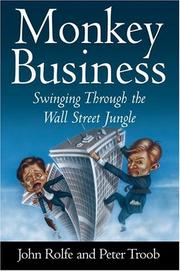
A candid, witty insider account of analyst life at a bulge-bracket bank — demystifies the culture and hierarchy before you walk in the door.
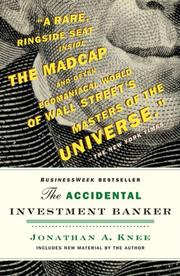
A senior banker's reflective memoir on how deals are won, lost, and navigated politically — provides the strategic and interpersonal context that no modeling book can teach.
Discussion
Keep reading
Paths that share books, cover the same subject, or open a related topic.