Index funds and passive investing: the best books to build wealth slowly
This curriculum takes a beginner from the core "why" of passive investing all the way through portfolio construction and long-term behavioral discipline. Each stage builds on the last: first understanding why low-cost index funds beat active management, then learning how to build and hold a simple portfolio, and finally deepening the intellectual foundation with market theory and advanced portfolio thinking.
The Case for Passive Investing
BeginnerUnderstand why low-cost index funds consistently outperform actively managed funds, and feel motivated to invest simply.
▸ Study plan for this stage
Pace: 4–5 weeks, ~25–30 pages/day (approximately 2 weeks per book with time for reflection and exercises)
- The power of low-cost index funds: why they outperform 80–90% of actively managed funds over long periods
- Cost matters most: expense ratios and fees are the primary driver of underperformance in active management
- The futility of stock picking and market timing: even professional managers cannot consistently beat the market
- Time in the market beats timing the market: compound growth over decades is the path to wealth
- Behavioral investing: how emotions and cognitive biases lead investors to buy high and sell low
- The three-fund portfolio concept: simplicity and diversification through total market, international, and bond index funds
- Starting early and investing consistently: the dramatic impact of beginning in your 20s versus 30s or 40s
- Asset allocation and rebalancing: how to construct a portfolio aligned with your risk tolerance and time horizon
- Why do most actively managed funds fail to outperform low-cost index funds over 15+ year periods, and what role do fees play?
- What is the relationship between expense ratios and long-term returns, and how much can high fees cost you over a lifetime?
- How do behavioral biases (fear, greed, herd mentality) cause investors to underperform, and how does passive investing protect against them?
- What is a simple, low-cost portfolio structure you could build today, and why is simplicity an advantage?
- How much more wealth could you accumulate by starting to invest at age 25 versus age 35, assuming the same annual contribution?
- What is the difference between asset allocation and market timing, and why is the former controllable while the latter is not?
- Calculate your personal break-even point: determine how many years of 1% annual fee drag would cost you on a $100,000 investment (use compound interest formula or a spreadsheet)
- Compare three real funds: find an actively managed fund and a comparable index fund, calculate the fee difference over 30 years, and document the projected wealth gap
- Build a three-fund portfolio on paper: allocate a hypothetical $50,000 across total US market, international, and bond index funds based on your age and risk tolerance
- Track your emotional investing triggers: for one week, note moments when you feel tempted to buy, sell, or check your portfolio based on news; reflect on how passive investing would have prevented poor decisions
- Create a 40-year wealth projection: use a compound interest calculator to show how $5,000/year invested from age 25 to 65 grows at 7% annual returns (the historical market average)
- Interview or survey 3–5 people about their investing approach: ask why they chose active or passive investing, what fees they pay, and whether they've beaten the market; compare their results to index fund benchmarks
Next up: This stage establishes the *why* and *what* of passive investing (the philosophy and evidence); the next stage will teach you the *how*—selecting specific funds, setting up accounts, and executing your first investment.
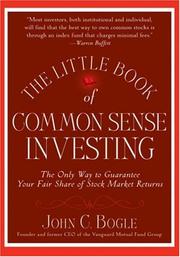
The definitive, plain-English manifesto from the founder of Vanguard and inventor of the index fund. Read this first to understand the core argument: costs matter, markets are hard to beat, and simplicity wins.

A short, free pamphlet-length primer that distills the entire passive investing philosophy into a beginner-friendly read, reinforcing Bogle's message and introducing the behavioral obstacles every investor must overcome.
Building Your Simple Portfolio
BeginnerKnow exactly how to construct a low-cost, diversified, buy-and-hold portfolio using index funds, and understand asset allocation basics.
▸ Study plan for this stage
Pace: 4–5 weeks, ~40–50 pages/day (approximately 250–300 pages total)
- Asset allocation as the primary driver of returns and risk management—how to determine your personal allocation across stocks, bonds, and cash based on time horizon and risk tolerance
- The three-fund portfolio concept: total stock market index, total international stock index, and total bond market index as a simple, diversified foundation
- Why low-cost index funds outperform actively managed funds over time due to lower fees, tax efficiency, and consistency
- Rebalancing strategy: how and when to rebalance your portfolio to maintain your target allocation without market timing
- Dollar-cost averaging and buy-and-hold discipline: the behavioral and mathematical advantages of consistent investing and staying invested through market cycles
- Fee impact on long-term wealth: understanding expense ratios, loads, and commissions and how they compound to reduce returns
- Tax-efficient investing: holding tax-inefficient assets in tax-advantaged accounts and understanding the tax implications of different account types
- Bogleheads philosophy: simplicity, diversification, low costs, and long-term thinking as the core principles of successful passive investing
- How do you determine your personal asset allocation, and what role does your time horizon and risk tolerance play in this decision?
- What is a three-fund portfolio, and why does the Bogleheads approach recommend this simple structure over more complex alternatives?
- Why do index funds typically outperform actively managed funds over long periods, and what specific advantages do they have?
- What is rebalancing, how often should you rebalance, and why is it important to your portfolio's long-term success?
- How does dollar-cost averaging work, and what psychological and mathematical benefits does it provide to long-term investors?
- How do fees and expense ratios impact your wealth over 20, 30, or 40 years, and what fee levels should you target?
- Calculate your personal asset allocation: determine your time horizon, risk tolerance, and financial goals, then assign percentage allocations to stocks, bonds, and cash using the Bogleheads framework
- Build a sample three-fund portfolio: select three specific low-cost index funds (e.g., VTSAX, VTIAX, VBTLX) and allocate a hypothetical $10,000 across them based on your calculated allocation
- Compare expense ratios: research and document the fees of at least 5 index funds vs. 5 actively managed funds in the same categories, then calculate the 30-year wealth difference using a compound interest calculator
- Create a rebalancing plan: establish your target allocation, set rebalancing triggers (e.g., quarterly or when allocations drift 5%), and write out the specific steps you'd take to rebalance your portfolio
- Model dollar-cost averaging: compare investing a lump sum vs. investing the same amount monthly over 12 months during a simulated volatile market, tracking the average cost per share
- Design your personal investment policy statement: write a 1–2 page document outlining your asset allocation, fund choices, rebalancing schedule, and commitment to staying invested through market downturns
Next up: This stage equips you with a concrete, actionable portfolio blueprint and the discipline to execute it; the next stage will deepen your understanding of how to optimize this foundation through tax strategies, account selection, and adapting your portfolio as life circumstances change.
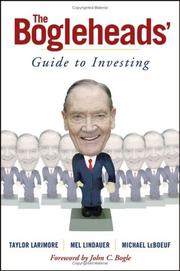
The community handbook of the index-fund faithful, covering account types, tax efficiency, and three-fund portfolio construction in a practical, jargon-free way that bridges philosophy and action.
Mastering the Long Game: Behavior & Asset Allocation
IntermediateDevelop the psychological discipline to stay the course through market crashes, and refine your asset allocation with a deeper understanding of risk and return.
▸ Study plan for this stage
Pace: 8–10 weeks, ~40–50 pages/day (approximately 2–3 weeks per book with overlap for reflection)
- The four pillars of investing: theory, history, psychology, and business—and how they interact to determine long-term success
- Efficient market hypothesis and the evidence that active management underperforms passive index investing over time
- Asset allocation as the primary driver of returns and risk, not security selection
- How cognitive biases and emotional reactions (loss aversion, recency bias, overconfidence) sabotage investment decisions
- The relationship between risk tolerance, time horizon, and appropriate portfolio construction
- Reversion to the mean: why past performance doesn't predict future results and why market crashes are inevitable
- The behavioral discipline required to maintain a strategy through market downturns without panic selling
- How personal circumstances, values, and life goals should shape your asset allocation, not market timing or trends
- What are the four pillars of investing according to Bernstein, and why is each one essential to long-term success?
- How does the efficient market hypothesis support the case for passive index investing over active management?
- What evidence does Malkiel present about the historical performance of active managers versus passive index funds?
- How do loss aversion and recency bias specifically undermine investment discipline during market crashes, and what can you do to counteract them?
- How should your asset allocation change based on your time horizon, risk tolerance, and life circumstances?
- Why does Housel argue that behavior and psychology matter more than investment knowledge or skill?
- What is reversion to the mean, and why should it give you confidence during market downturns?
- Build a personal asset allocation model (stocks/bonds/alternatives) based on your actual time horizon and risk tolerance, then document your reasoning from each book's framework
- Analyze your own investment history or a family member's: identify at least three decisions driven by behavioral biases (FOMO, panic selling, chasing returns) and explain how Housel's or Bernstein's frameworks would have prevented them
- Create a 'market crash playbook': write out specific rules you will follow if the market drops 20%, 30%, or 40%, grounded in Malkiel's historical data on recovery times
- Track your emotional reactions to market news for 2 weeks; log each reaction and categorize it using Housel's behavioral psychology concepts (e.g., loss aversion, narrative fallacy, anchoring)
- Backtest a simple 60/40 stock/bond portfolio over a historical period (e.g., 2000–2002, 2008–2009) using real data; calculate drawdowns and recovery times to internalize Malkiel's historical lessons
- Write a personal investment philosophy statement (1–2 pages) that integrates Bernstein's four pillars, Malkiel's evidence on markets, and Housel's behavioral insights—this becomes your anchor during volatility
Next up: This stage equips you with both the intellectual framework (why passive indexing works) and the psychological tools (how to stay disciplined) needed to execute a long-term strategy, preparing you to move into the next stage where you'll learn the practical mechanics of building and maintaining a real portfolio.

Bernstein systematically covers the theory of returns, investment history, the psychology of investing, and the business of finance — giving the passive investor a robust intellectual armor against panic and salesmanship.
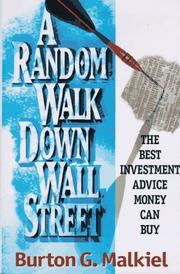
The classic academic case that stock prices are essentially unpredictable, making index funds the rational default. Reading this after Bernstein cements the evidence-based worldview with decades of data.
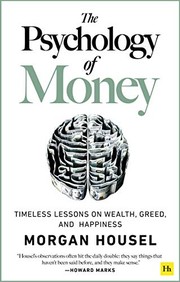
Addresses the human side of wealth-building — why behavior, patience, and avoiding mistakes matter more than picking the right fund. A perfect capstone to the behavioral layer of passive investing.
Deep Foundations: Market Theory & Portfolio Science
ExpertUnderstand the academic and historical evidence behind passive investing at a sophisticated level, including factor investing and global diversification.
▸ Study plan for this stage
Pace: 8–10 weeks, ~40–50 pages/day (mix of reading and concept review)
- The mathematics of compounding and why costs (fees, turnover, taxes) are the primary drag on long-term returns
- The efficient market hypothesis and why most active managers underperform their benchmarks consistently
- Asset allocation as the dominant driver of portfolio returns, not security selection
- The historical equity risk premium and why stocks outperform bonds over long periods despite volatility
- Factor investing: understanding size, value, and momentum factors as sources of systematic returns
- Global diversification benefits and the case for international equity exposure
- The behavioral pitfalls of market timing and the power of staying invested through cycles
- Index fund construction: how to build a low-cost, tax-efficient, globally diversified portfolio
- Why do most actively managed mutual funds underperform their benchmarks after fees, and what does Bogle's data reveal about the persistence of outperformance?
- What is the efficient market hypothesis, and how does Siegel's historical analysis support or challenge it?
- How does the historical equity risk premium justify a long-term equity allocation, and what does the data show about real returns over different time horizons?
- What are the key cost drags on mutual fund returns (expense ratios, turnover, taxes), and how do index funds minimize them?
- How do factor premiums (value, size, momentum) work, and should a passive investor attempt to harvest them or stick with market-cap weighting?
- What is the case for global diversification, and how much international exposure should a long-term investor hold?
- How do behavioral biases lead investors to underperform, and what portfolio discipline does Bogle advocate?
- How would you construct a globally diversified, low-cost index portfolio based on the principles in these two books?
- Analyze the expense ratios, turnover rates, and tax efficiency of 5–10 mutual funds (both active and index) using real fund data; calculate the drag of fees and turnover over 20 years using Bogle's cost framework
- Plot the historical returns of the S&P 500 vs. the average actively managed large-cap fund over rolling 10-year and 20-year periods; identify how often active managers beat their benchmark
- Calculate the real (inflation-adjusted) returns of stocks, bonds, and bills over the past 50+ years using Siegel's data; compute the historical equity risk premium and compare it to current valuations
- Build a three-asset-class portfolio (US stocks, international stocks, bonds) using market-cap weights; backtest it against a 60/40 stock/bond portfolio over a 30-year period
- Research and document the performance of a single factor (value, size, or momentum) using historical data; assess whether the premium justifies active factor tilting or if market-cap weighting is preferable
- Create a personal investment policy statement that specifies your asset allocation, rebalancing schedule, and rules for staying disciplined during market downturns (based on Bogle's behavioral principles)
- Compare the tax efficiency of an actively managed fund vs. an index fund by modeling the after-tax returns over 20 years with realistic turnover and capital gains distributions
- Design a globally diversified index portfolio (US, developed international, emerging markets, bonds) and justify each allocation decision using evidence from both books
Next up: This stage equips you with the theoretical and empirical foundation to understand why passive, globally diversified, low-cost investing works—preparing you to apply these principles to real-world implementation, tax optimization, and behavioral discipline in the next stage.

Bogle's comprehensive, data-heavy follow-up to his earlier work, diving deep into fund costs, taxes, and long-term return arithmetic — essential for the investor who wants to understand the numbers rigorously.

A thorough historical analysis of equity returns across centuries and countries, providing the empirical bedrock that justifies a long-horizon, stock-heavy passive portfolio.
Discussion
Keep reading
Paths that share books, cover the same subject, or open a related topic.