Financial planning career: an ordered reading list to break in
This curriculum takes a beginner from core personal finance literacy through the professional knowledge required for a CFP career, ending with the art of client relationships and practice management. Each stage builds on the last — you must understand money before you can plan it for others, and you must master the technical content before you can deliver it with skill and empathy.
Money Foundations
BeginnerBuild a solid personal finance vocabulary and mindset — budgeting, saving, investing basics, debt, and behavioral traps — so that professional concepts introduced later feel grounded and intuitive.
▸ Study plan for this stage
Pace: 8–10 weeks, ~40–50 pages/day (approximately 2–3 weeks per book with time for reflection and exercises)
- The psychology of debt and the debt snowball method as a behavioral tool for motivation and momentum
- The distinction between needs, wants, and values-based spending; how to build a realistic budget that sticks
- The power of compound interest and why starting early with low-cost index investing matters more than stock-picking
- Emergency funds and the safety net principle: why 3–6 months of expenses is foundational before investing
- The relationship between risk tolerance, time horizon, and asset allocation in a simple portfolio
- Behavioral finance traps: lifestyle inflation, emotional spending, and overconfidence in market timing
- The automation principle: how to remove willpower from saving and investing through systems and defaults
- Net worth as a holistic metric: understanding assets, liabilities, and why tracking progress matters psychologically
- What is the debt snowball method, and why does Dave Ramsey emphasize the psychological benefit of small wins over mathematical optimization?
- How does John Bogle's philosophy on index investing challenge the conventional wisdom of active stock-picking, and what is the role of fees in long-term returns?
- What are the three core pillars of Ramit Sethi's approach to personal finance, and how do they differ from a purely restrictive budgeting mindset?
- Why is an emergency fund essential before investing, and how does this principle protect you from derailing your financial plan?
- What are at least three behavioral finance traps discussed across these books, and how can you design your financial system to counteract them?
- How do you calculate your net worth, and what does tracking it over time reveal about your financial progress beyond just income?
- List all your current debts (credit cards, student loans, car loans, etc.) with balances and interest rates; order them by balance (smallest to largest) and calculate your debt snowball payoff timeline
- Track every expense for one full week, categorize it as need/want/value-aligned, and identify three spending patterns that surprise you
- Build a zero-based budget for the next month using Ramit Sethi's 50/30/20 framework (or similar), allocating every dollar to a category before the month begins
- Calculate your net worth by listing all assets (cash, retirement accounts, home equity, etc.) and liabilities (debts); set a baseline and commit to tracking it quarterly
- Research and compare the expense ratios and historical returns of three index funds (e.g., S&P 500, total market, target-date fund); calculate the long-term cost difference of a 0.5% fee vs. 1.5% fee on a $10,000 investment over 30 years
- Design one automated savings system (e.g., automatic transfer to savings account, employer 401k contribution, or investment app) and set it up; commit to it for 30 days and reflect on how it reduces decision fatigue
Next up: This stage equips you with the psychological and foundational vocabulary—debt psychology, behavioral traps, and simple investing principles—so that the next stage can build on these intuitions with more sophisticated strategies like tax optimization, real estate, and advanced portfolio construction.

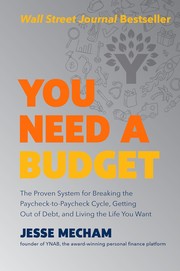
A plain-language starting point that instills financial discipline and covers debt elimination, emergency funds, and saving — essential vocabulary before anything more technical.
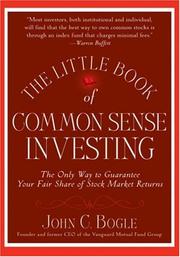
Introduces index funds, costs, and long-term investing philosophy in an accessible way, giving the beginner a clear mental model of how markets work before diving into planning strategy.
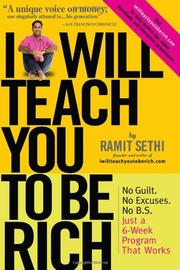
Bridges personal behavior and financial systems (accounts, automation, credit) with a modern, practical tone — ideal for cementing habits before studying planning as a profession.
The CFP Body of Knowledge
IntermediateGain command of the core technical domains tested on the CFP exam: financial planning process, investment planning, tax planning, retirement, insurance, and estate planning.
▸ Study plan for this stage
Pace: 12–14 weeks, ~40–50 pages/day. Gitman (weeks 1–5, ~450 pages), Ernst & Young (weeks 6–9, ~350 pages), WSJ Retirement Guidebook (weeks 10–14, ~250 pages). Allocate 1–2 days per book for review and synthesis.
- The six-step financial planning process (analysis, goal-setting, plan development, implementation, monitoring, and revision) as the framework for all CFP domains
- Asset allocation, diversification, and risk tolerance assessment as foundational investment planning principles
- Tax-advantaged account structures (401k, IRA, HSA, 529) and tax-loss harvesting strategies to minimize client tax liability
- Retirement income needs analysis, including Social Security optimization, pension evaluation, and withdrawal sequencing strategies
- Insurance gap analysis and the role of life, disability, and long-term care insurance in comprehensive financial plans
- Estate planning fundamentals: wills, trusts, power of attorney, and tax-efficient wealth transfer mechanisms
- Integration of all six domains into a cohesive, client-centered plan that balances competing objectives
- What are the six steps of the financial planning process, and how does each step inform the others?
- How would you construct an appropriate asset allocation for a 45-year-old client with moderate risk tolerance and a 20-year time horizon?
- What are the key differences between traditional and Roth IRAs, and when would you recommend each to a client?
- How do you calculate retirement income needs, and what role does Social Security play in a comprehensive retirement plan?
- What types of insurance gaps might exist in a typical household, and how would you quantify the need for life and disability coverage?
- How would you structure an estate plan for a high-net-worth client with multiple beneficiaries and tax concerns?
- Complete a full financial planning analysis for a hypothetical client using Gitman's six-step framework: gather data, identify goals, develop a plan, implement recommendations, and outline monitoring checkpoints.
- Build a sample investment portfolio for three different client personas (conservative, moderate, aggressive) using asset allocation principles from Gitman and Ernst & Young; justify your allocation choices.
- Calculate retirement income needs for a case study client using the Ernst & Young guide's methodology; compare outcomes under different Social Security claiming strategies using the WSJ Retirement Guidebook.
- Perform a tax-optimization analysis: identify tax-loss harvesting opportunities, recommend appropriate account types (401k vs. IRA vs. taxable), and estimate tax savings for a sample client.
- Conduct an insurance needs analysis for a hypothetical household; quantify life insurance and disability insurance requirements and recommend appropriate coverage amounts.
- Draft a basic estate plan outline (will, trust structure, power of attorney) for a case study client with specific goals and constraints; identify potential tax implications using Ernst & Young's guidance.
Next up: Mastery of these six integrated domains and the planning process equips you to tackle advanced CFP topics—such as complex tax strategies, alternative investments, business succession planning, and specialized client situations—with a solid technical foundation and a systematic approach to problem-solving.

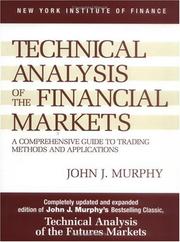
A comprehensive college-level textbook that maps directly to the CFP curriculum domains, making it the ideal first technical read to see how all planning areas connect.

A practitioner-oriented reference covering taxes, retirement, insurance, and estate planning in integrated fashion — reinforces the textbook with real-world application and depth.

Deepens the retirement planning domain specifically — income strategies, Social Security, Medicare, and withdrawal sequencing — a critical and heavily tested CFP topic area.
Investment & Tax Mastery
IntermediateDevelop professional-level fluency in investment analysis and tax-efficient planning — two pillars that differentiate a competent financial planner from a basic advisor.
▸ Study plan for this stage
Pace: 6–8 weeks, ~40–50 pages/day. Week 1–4: "A Random Walk Down Wall Street" (600 pages, ~150 pages/week); Week 5–8: "Taxes Made Simple" (300 pages, ~75 pages/week) with concurrent application work.
- Efficient Market Hypothesis (EMH) and its three forms (weak, semi-strong, strong) — the foundation for understanding why active stock picking often underperforms
- Random walk theory and the role of chance vs. skill in investment returns — critical for setting realistic client expectations
- Asset allocation and diversification as the primary drivers of portfolio performance, not security selection
- The behavioral pitfalls that lead investors astray: overconfidence, loss aversion, and recency bias
- Tax-deferred and tax-advantaged accounts (401k, IRA, HSA) and their strategic role in wealth accumulation
- Capital gains taxation (short-term vs. long-term), ordinary income, and tax-loss harvesting mechanics
- Tax-efficient withdrawal sequencing and the interaction between investment strategy and tax liability
- How to integrate tax planning into investment recommendations — the bridge between portfolio construction and after-tax returns
- What is the Efficient Market Hypothesis, and what does the evidence in 'A Random Walk' suggest about an average investor's ability to beat the market consistently?
- How does Malkiel's random walk theory challenge the value of active management, and what does this imply for your investment recommendations?
- What are the three main behavioral biases that cause investors to make poor decisions, and how can you help clients overcome them?
- Explain the difference between short-term and long-term capital gains taxation, and why this distinction matters for portfolio construction.
- What is tax-loss harvesting, and under what circumstances is it an appropriate strategy for a client's portfolio?
- How would you sequence withdrawals from a taxable account, a traditional IRA, and a Roth IRA to minimize lifetime tax liability?
- Given Malkiel's argument for low-cost, diversified investing, how would you explain to a client why their tax bill might actually increase with a more tax-efficient portfolio in the short term?
- Build a three-asset-class portfolio (stocks, bonds, real estate) for a hypothetical client and justify the allocation using EMH principles from 'A Random Walk' — explain why you chose this mix rather than trying to time the market or pick winners.
- Analyze a real mutual fund's historical returns vs. its benchmark index; calculate the impact of fees and taxes on net returns to demonstrate Malkiel's thesis that most active managers underperform.
- Create a tax-loss harvesting strategy for a taxable portfolio with $100k in unrealized gains; identify which positions to harvest and what replacement securities you'd buy to maintain the intended allocation.
- Model a client's tax liability under three withdrawal scenarios: (1) all from taxable account, (2) all from traditional IRA, (3) optimized sequencing across account types — quantify the tax savings.
- Write a one-page client memo explaining why you recommend a low-cost, diversified portfolio rather than a high-conviction stock-picking strategy, grounding it in Malkiel's evidence and behavioral psychology.
- Calculate the after-tax return on a $50k investment in a taxable brokerage account vs. a Roth IRA over 20 years, assuming 7% annual returns and a 24% tax bracket — show the compounding benefit of tax deferral.
Next up: This stage equips you with the intellectual foundation (why passive, diversified investing works) and the technical toolkit (how to minimize taxes on that strategy), preparing you to move into advanced planning topics like estate strategy, risk management, and behavioral coaching — where you'll apply these principles to complex, multi-generational client situations.
The canonical text on market efficiency and portfolio theory; gives planners the intellectual foundation to construct and defend investment recommendations to clients.

A concise, accurate guide to U.S. income tax mechanics — essential for planners who must integrate tax strategy into every financial plan without replacing a CPA.
The Art of Client Work & Practice
ExpertLearn how to translate technical knowledge into real client relationships — communication, behavioral coaching, ethical practice, and building a planning business — the skills that separate great planners from knowledgeable ones.
▸ Study plan for this stage
Pace: 8–10 weeks, ~25–30 pages/day (approximately 2–3 weeks per book with time for reflection and exercises)
- The behavior gap: understanding the disconnect between what people know they should do financially and what they actually do, and how to coach clients through this gap
- Simplicity and accessibility in financial advice: making complex concepts understandable and actionable for everyday clients, not just the wealthy
- One-page planning methodology: distilling comprehensive financial plans into a single, clear, visual document that clients can understand and commit to
- Behavioral coaching and psychology: recognizing emotional triggers, cognitive biases, and life circumstances that drive financial decisions, and using empathy to guide clients
- Building trust and relationships: establishing yourself as a trusted advisor through clarity, honesty, and genuine interest in client wellbeing rather than product sales
- Ethical practice and fiduciary responsibility: putting client interests first, avoiding conflicts of interest, and maintaining integrity in all client interactions
- Communication skills for planners: translating technical jargon into plain language, listening actively, and adapting your message to each client's values and goals
- What is the behavior gap, and why do most people fail to follow their own financial advice? How can you help clients close this gap?
- How does David Barr Chilton's approach to financial advice differ from traditional wealth management, and what makes it effective for ordinary people?
- What are the core components of a one-page financial plan, and why is simplicity more powerful than complexity in client planning?
- How do behavioral biases and emotional factors influence client financial decisions, and what coaching techniques can you use to address them?
- What does it mean to be a trusted financial advisor, and how do you build and maintain that trust with clients?
- How do you communicate financial concepts to clients with varying levels of financial literacy, and what common mistakes should you avoid?
- Read 'The Behavior Gap' and identify three specific examples of the behavior gap in your own financial life or in people you know; write a brief analysis of what caused the gap and how coaching might have helped
- Create a simplified financial explanation (one paragraph, no jargon) for three complex concepts: compound interest, diversification, and tax-loss harvesting; test it on a friend unfamiliar with finance
- Draft a one-page financial plan for a fictional client (or yourself) using Carl Richards' methodology; include goals, current situation, and three concrete action steps
- Conduct a mock client consultation with a partner or mentor; practice active listening, identifying emotional barriers, and reframing advice in behavioral terms rather than technical terms
- Review a sample financial plan or advisor communication; identify where jargon, complexity, or product-focused language might alienate or confuse a client, and rewrite it for clarity
- Interview a financial advisor or planner about their biggest challenges in client communication and behavioral coaching; synthesize insights into a one-page summary of best practices
Next up: This stage equips you with the human-centered, communication-driven skills to translate technical knowledge into client value; the next stage will likely deepen your expertise in specific planning domains (retirement, tax, estate, investment strategy) with the confidence that you can communicate and coach effectively.

Teaches planners how to close the gap between what clients know they should do and what they actually do — essential for effective, empathetic client conversations.
A story-driven model for how to communicate financial planning concepts simply and memorably to everyday clients — a masterclass in translating complexity into clarity.

Provides a practical framework for building client-centered financial plans that are actionable and clear, tying together all prior technical and behavioral knowledge into a deliverable.
Discussion
Keep reading
Paths that share books, cover the same subject, or open a related topic.