Understanding Schopenhauer: Best Books, in Order
This curriculum builds a rigorous, layered understanding of Schopenhauer — starting with accessible introductions, moving through his core texts, and culminating in his influence on philosophy, art, and culture. Because the learner begins at an intermediate level, the path skips purely elementary overviews and instead moves efficiently from a reliable secondary guide into Schopenhauer's own major works, before tracing his profound legacy in Nietzsche, Wittgenstein, and beyond.
Orientation: Getting a Map of the Territory
IntermediateGain a clear, reliable conceptual map of Schopenhauer's philosophy — the will, representation, pessimism, and aesthetics — before diving into his dense primary texts.
▸ Study plan for this stage
Pace: 4–5 weeks, ~25–30 pages/day (Janaway first: ~2.5 weeks; Safranski second: ~2 weeks)
- The Will as the thing-in-itself: the underlying reality behind all phenomena, blind and aimless striving
- Representation (Vorstellung): the phenomenal world as our mental construction, subject to space, time, and causality
- The subject-object distinction: how consciousness divides reality into knower and known
- Pessimism as metaphysical doctrine: suffering as fundamental to existence, not accidental
- Aesthetic experience and the denial of the will: how art and beauty offer temporary escape from suffering
- The ascetic ideal: renunciation and denial as responses to the will's dominance
- Schopenhauer's relationship to Kant and Hegel: his debts and radical departures
- The biographical context: how Schopenhauer's life and temperament shaped his philosophy
- What is the Will in Schopenhauer's system, and how does it differ from reason or consciousness?
- How does Schopenhauer's concept of representation relate to Kant's distinction between phenomena and noumena?
- Why does Schopenhauer argue that existence is fundamentally characterized by suffering, and what is his evidence?
- What role does aesthetic experience play in Schopenhauer's philosophy, and how does it relate to the denial of the will?
- How do Schopenhauer's biographical circumstances and personality illuminate or complicate his pessimistic worldview?
- What are the key differences between Schopenhauer's philosophy and the idealism of Kant and Hegel?
- Create a visual diagram mapping the Will, representation, and the phenomenal world—show how the Will manifests through different levels (inorganic, organic, human) and how representation mediates our access to it
- Write a 2–3 page synthesis comparing Schopenhauer's and Kant's approaches to the thing-in-itself and phenomena; identify where Schopenhauer agrees and where he radically departs
- Analyze a specific aesthetic experience from your own life (a piece of music, painting, or natural scene) using Schopenhauer's framework: how did it temporarily suspend the will and the subject-object distinction?
- Create a timeline of Schopenhauer's life (using Safranski) alongside major philosophical developments; annotate how personal events (isolation, conflicts, travels) correlate with shifts in his thinking
- Write character sketches of Schopenhauer as Janaway and Safranski present him; note tensions between the philosopher's doctrines and his lived personality
- Develop a 'pessimism checklist': list Schopenhauer's main arguments for pessimism (from both books) and evaluate each one—which are most compelling, which most questionable?
Next up: This stage equips you with a reliable conceptual scaffolding and biographical context, allowing you to approach Schopenhauer's primary texts (especially *The World as Will and Representation*) with confidence in the underlying architecture, so you can focus on his arguments and evidence rather than getting lost in unfamiliar terminology.

Janaway is the leading Anglophone Schopenhauer scholar, and this compact book efficiently lays out all the major themes — will, representation, suffering, and art — giving the intermediate reader a precise framework to hang everything else on.
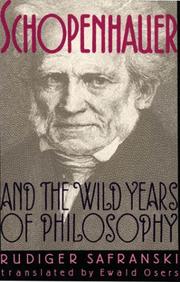
Safranski's intellectual biography weaves Schopenhauer's life and historical context into his ideas, making the philosophy feel alive and motivated; reading this second cements the 'why' behind the doctrines before tackling the primary texts.
Shorter Works: Pessimism, Ethics, and Practical Wisdom
IntermediateExplore Schopenhauer's more accessible writings on ethics, free will, and the art of living, consolidating the core philosophy and seeing how it applies to human conduct.
▸ Study plan for this stage
Pace: 4–5 weeks, ~25–30 pages/day (approximately 150–170 pages/week across both texts)
- Compassion as the foundation of morality: how sympathy for suffering beings grounds ethical action rather than abstract duty or self-interest
- The metaphysics of ethics: the connection between the Will-in-itself, individuation, and moral responsibility
- Free will and determinism: Schopenhauer's distinction between empirical unfreedom and transcendental freedom, and its implications for moral accountability
- Denial of the Will-to-live as the path to asceticism and resignation: how renunciation of desire leads to ethical perfection
- The three virtues: justice, loving-kindness, and asceticism—their metaphysical roots and practical manifestations in human conduct
- Pessimism as a realistic worldview: suffering as fundamental to existence and the implications for how we should live
- Practical wisdom and the art of living: aphoristic insights on happiness, relationships, reputation, and the management of life's inevitable suffering
- The limits of reason and the primacy of will: how intellect serves the Will and why intellectual understanding alone cannot transform character
- What is Schopenhauer's critique of Kantian ethics, and how does he propose compassion as an alternative foundation for morality?
- How does Schopenhauer reconcile moral responsibility with his deterministic metaphysics? What does he mean by transcendental freedom?
- Explain the three virtues in Schopenhauer's ethics and trace their metaphysical origins in his philosophy of the Will.
- What is the relationship between pessimism and ethics in Schopenhauer's thought? How does recognizing universal suffering inform moral conduct?
- How does Schopenhauer distinguish between the denial of the Will-to-live and mere resignation or suicide? What role does asceticism play in his ethics?
- What practical wisdom does Schopenhauer offer regarding happiness, human relationships, and the conduct of life? How does this wisdom reflect his broader metaphysics?
- Annotate key passages in 'On the Basis of Morality' that explain compassion as the metaphysical root of morality; compare Schopenhauer's language to Kant's in your notes to clarify the contrast.
- Write a 2–3 page essay: 'How does Schopenhauer's pessimism lead to ethical action rather than paralysis?' Use specific examples from both texts.
- Create a visual diagram or table mapping the three virtues (justice, loving-kindness, asceticism) to their metaphysical foundations and their practical expressions in daily life.
- Select 5–7 aphorisms from 'Essays and Aphorisms' that resonate with you; for each, write a paragraph explaining how it reflects Schopenhauer's core philosophy and how you might apply it to a real-life situation.
- Debate or journal response: 'Is Schopenhauer's ethics ultimately pessimistic or optimistic?' Support your position with textual evidence from both works.
- Practice the art of living: keep a one-week journal applying Schopenhauer's practical wisdom on one theme (e.g., managing anger, dealing with reputation, or finding contentment). Reflect on how his philosophy shaped your choices.
Next up: This stage consolidates Schopenhauer's ethical system and practical wisdom, preparing you to examine how his philosophy engages with—and critiques—other philosophical traditions, and to explore the aesthetic and metaphysical dimensions that underpin his entire worldview in subsequent stages.

Schopenhauer's most sustained ethical argument — that compassion, not Kantian duty, is the foundation of morality — is presented here in concentrated form, and it is essential for understanding his humanism within his pessimism.
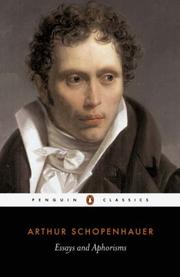
Selected from Parerga and Paralipomena, these essays on suffering, boredom, genius, and the wisdom of life show Schopenhauer at his most readable and aphoristic, and reward re-reading after the major works.
Critical Deepening: Scholarly Engagement
ExpertEngage with rigorous scholarly analysis of Schopenhauer's arguments — their strengths, internal tensions, and relationship to Kant — developing a critical rather than merely receptive understanding.
▸ Study plan for this stage
Pace: 6–8 weeks, ~25–30 pages/day with 2–3 days per week for reflection and note-taking. Start with Atwell (4 weeks), then Norman (3–4 weeks), allowing overlap for comparative analysis in the final 1–2 weeks.
- Schopenhauer's critique of Kant's thing-in-itself and how Will replaces it as the noumenal reality
- The relationship between representation (Kant's phenomena) and Will as the underlying metaphysical ground
- Internal tensions in Schopenhauer's system: the problem of individuation, the status of the intellect, and the coherence of pessimism
- Schopenhauer's arguments for aesthetic experience and asceticism as responses to the Will's manifestation
- The genealogy of Schopenhauer's ideas from Kant, Plato, and Eastern philosophy—and where he departs
- Critical evaluation of Schopenhauer's logic, consistency, and philosophical vulnerabilities (as presented in scholarly analysis)
- Norman's close reading of 'The World as Will and Representation' as a text: its structure, argumentative strategy, and interpretive debates
- How Schopenhauer's pessimism and ethics follow (or fail to follow) necessarily from his metaphysics
- How does Schopenhauer's concept of Will differ from and improve upon Kant's thing-in-itself, and what problems does this substitution create?
- What is the relationship between representation and Will in Schopenhauer's system, and how does he argue for the primacy of Will?
- What are the major internal tensions or contradictions in Schopenhauer's philosophy, and how do Atwell and Norman identify and evaluate them?
- How does Schopenhauer's pessimism logically follow from (or fail to follow from) his metaphysical claims about Will and representation?
- What is Schopenhauer's debt to Kant, Plato, and Eastern thought, and where does he fundamentally diverge from these sources?
- How do aesthetic experience and asceticism function as responses to the Will in Schopenhauer's ethics, and are these responses philosophically justified?
- Create a detailed comparative chart mapping Kant's critical philosophy (phenomena/noumena, categories, thing-in-itself) to Schopenhauer's system (representation/Will), noting where Schopenhauer accepts, modifies, and rejects Kant.
- Write a 2,000–2,500 word critical essay identifying and analyzing one major internal tension in Schopenhauer's system (e.g., the problem of individuation, the role of intellect, or the justification of pessimism), using both Atwell and Norman as sources.
- Construct a logical argument map for Schopenhauer's move from metaphysics (Will as thing-in-itself) to ethics (pessimism, asceticism, compassion), identifying where the chain of reasoning is strongest and where it breaks down.
- Develop a 'scholarly debate' document: identify 3–4 interpretive disagreements between Atwell and Norman (or within each author's own analysis), present both sides, and argue for one interpretation with textual evidence.
- Close-read a key passage from 'The World as Will and Representation' (e.g., on the nature of Will, the denial of the Will-to-live, or aesthetic contemplation) using Norman's interpretive framework, then write a 1,000-word analysis of its logical structure and philosophical implications.
- Conduct a 'stress-test' exercise: take Schopenhauer's central claims and systematically challenge them using counterexamples, alternative interpretations, or logical objections; document your findings in a 1,500-word response.
Next up: This stage equips you with a rigorous, critically informed understanding of Schopenhauer's system—its architecture, internal tensions, and philosophical stakes—preparing you to engage with either specialized secondary literature on particular aspects (aesthetics, ethics, metaphysics) or comparative studies situating Schopenhauer within broader intellectual history.

Atwell provides a careful analytic reconstruction of Schopenhauer's ethics and metaphysics of will, helping the reader test the internal consistency of the system and identify where the arguments succeed or strain.

Janaway's full-length scholarly study examines Schopenhauer's relationship to Kant in precise detail — essential for understanding what Schopenhauer inherited, what he transformed, and where critics have pushed back.
Legacy: Schopenhauer's Influence on Later Thought
ExpertTrace how Schopenhauer's ideas on will, pessimism, and art shaped Nietzsche, Wagner, Wittgenstein, Freud, and 20th-century culture, understanding his place in the broader history of ideas.
▸ Study plan for this stage
Pace: 8–10 weeks, ~40–50 pages/day (with philosophical reflection time). *The Birth of Tragedy* and *Genealogy of Morals* (3–4 weeks, ~40 pages/day); *Schopenhauer as Educator* (1–2 weeks, ~30 pages/day); *Waiting for Godot* (1 week, ~50 pages/day plus scene analysis).
- Nietzsche's critique and appropriation of Schopenhauer: how Nietzsche uses Schopenhauer's pessimism as a springboard to develop his own philosophy of affirmation and the will to power
- The Apollonian-Dionysian dyad in *The Birth of Tragedy*: how Schopenhauer's metaphysics of the will underlies Nietzsche's analysis of Greek tragedy and its decline
- Genealogy of morals as a method: tracing how Schopenhauer's pessimism and ascetic ideals shaped Nietzsche's historical critique of morality's origins
- Schopenhauer as educator: the role of genius, suffering, and self-overcoming in intellectual formation—Nietzsche's selective praise and ultimate rejection
- Pessimism in modernist literature: how Schopenhauerian themes of meaninglessness, will, and suffering manifest in Beckett's *Waiting for Godot*
- The absurd and the will: connections between Schopenhauer's metaphysics and existential absurdism in 20th-century drama
- Art as redemption vs. art as symptom: the evolution from Schopenhauer's aesthetic theory through Nietzsche to Beckett's minimalist aesthetic
- How does Nietzsche both depend on and reject Schopenhauer's pessimism in *The Birth of Tragedy*, and what does he propose as an alternative to Schopenhauerian denial of the will?
- What is the Apollonian-Dionysian distinction, and how does Schopenhauer's metaphysics of the will ground Nietzsche's interpretation of Greek tragedy?
- In *Genealogy of Morals*, how does Nietzsche use genealogical method to expose the Schopenhauerian ascetic ideal as a life-denying force, and what are its three stages?
- What does Nietzsche mean by 'Schopenhauer as educator,' and why does he ultimately argue that one must overcome one's educators?
- How do the themes of meaninglessness, waiting, and the paralysis of will in *Waiting for Godot* reflect Schopenhauerian pessimism, and how does Beckett's treatment differ from Schopenhauer's?
- What is the relationship between Schopenhauer's aesthetic theory and the minimalist, anti-redemptive art of *Waiting for Godot*?
- Create a two-column comparison chart: Schopenhauer's pessimism vs. Nietzsche's affirmation. For each major concept (will, suffering, art, morality), note how Nietzsche appropriates, inverts, or rejects Schopenhauer's ideas.
- Trace the Apollonian-Dionysian dyad through *The Birth of Tragedy*: identify specific passages where Nietzsche invokes Schopenhauer's metaphysics, and explain how this framework explains the rise and fall of Greek tragedy.
- Genealogical analysis: outline the three stages of the ascetic ideal in *Genealogy of Morals* (priestly, scientific, philosophical). For each, explain how Schopenhauer's pessimism and denial of the will function as a symptom of life-negation.
- Close reading exercise: select 3–4 key passages from *Schopenhauer as Educator* where Nietzsche praises Schopenhauer's influence on him, then identify where he begins to critique or distance himself. What does this reveal about the limits of Schopenhauer's teaching?
- Dramatic analysis of *Waiting for Godot*: identify scenes or speeches that embody Schopenhauerian themes (meaninglessness, the will's futility, suffering without redemption). How does Beckett's theatrical form itself enact these ideas?
- Philosophical dialogue: write a three-way conversation between Schopenhauer, Nietzsche, and Beckett on the question 'Is life worth living?' Use direct quotes and paraphrases from the texts to ground each voice.
Next up: This stage establishes Schopenhauer's foundational role in modern and contemporary thought, preparing you to examine how his metaphysics, aesthetics, and pessimism continue to reverberate through 20th- and 21st-century philosophy, psychology, literature, and culture—and to evaluate his enduring relevance and limitations.

Nietzsche's first book is saturated with Schopenhauerian aesthetics — the Apollonian/Dionysian duality is a direct reworking of Schopenhauer's theory of art and music — making it the ideal first stop for tracing his legacy.

This Untimely Meditation shows Nietzsche at his most admiring and most critical of Schopenhauer simultaneously, illuminating exactly what the next generation took, transformed, and ultimately rejected from his philosophy.

Beckett absorbed Schopenhauer deeply, and this play dramatizes pessimism, the futility of willing, and the redemptive power of art more vividly than any philosophical commentary — a perfect capstone that shows the ideas living in culture.
Discussion
Keep reading
Paths that share books, cover the same subject, or open a related topic.