F. Scott Fitzgerald Reading Order: Where to Start
Fitzgerald wrote four completed novels, one unfinished one, and roughly one hundred and sixty short stories, and the usual mistake is to read only the most famous of them. This path starts with The Great Gatsby because it is short, perfect, and the book everything else is measured against, then goes back to the two early novels that made him famous at twenty-four, forward to Tender Is the Night, and finally into the stories and the essays where the collapse is documented in his own voice.
The way in
BeginnerRead the one indispensable Fitzgerald novel and enough of the early stories to hear what made his sentences famous in the first place
▸ Study plan for this stage
Pace: 2 weeks. The Great Gatsby is 185 pages — read it across three or four evenings, a chapter or two at a time, then immediately reread chapter 3 and chapter 9. Tales of the Jazz Age is 317 pages of stories: dip rather than march, three or four a week, giving 'May Day' and 'The Diamond as Big as the Rit
- Nick Carraway as an unreliable and complicit narrator — he tells you he is honest on the first page and behaves otherwise for the rest of the book
- Fitzgerald's double register: a lyric sentence and a socially precise one, often in the same paragraph. When the prose turns beautiful, ask what it is covering
- Class is the real subject, not romance — old money against new, East Egg against West Egg, and the Midwest that produced every character in the book
- The economy of Gatsby: nine chapters and almost no waste, with every party detail returning later
- The range of Tales of the Jazz Age, from outright farce to the genuine social panic of 'May Day', whose riot and suicide are not comedy at all
- Fitzgerald invented the public idea of the Jazz Age and then had to live inside it; the stories show him building the brand in real time
- The green light, the eyes on the billboard, the valley of ashes — symbols placed deliberately heavily. Decide for yourself whether they earn it
- Where does Nick's narration become unreliable, and what does he stand to gain by shading it?
- What is the actual source of Gatsby's money, how much does the novel tell you, and why is the vagueness useful?
- Which chapter carries the most information about class, and how is that information delivered?
- Set 'May Day' beside the Gatsby party scenes: what does the story do with a crowd that the novel does not?
- If you read Gatsby at school, name one thing you now read completely differently.
- Copy out the final page of Gatsby by hand and mark where the sentence stops describing and starts declaiming. It is the most imitated ending in American fiction and worth knowing intimately.
- Read chapter 3 and then 'May Day' back to back — the same party, one written for the glamour and one for the aftermath.
- Track every mention of money in the first two chapters and note who says the number. Fitzgerald's characters price everything.
- Write down in one sentence what you think Gatsby wants, once before chapter 6 and again after chapter 9.
Next up: With the mature Fitzgerald in your ear, the early novels stop looking like juvenilia and start looking like a writer learning in public — which is the only way to read them profitably.
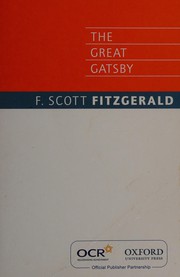
Under two hundred pages, and the most economical demonstration of everything he could do — the lyricism, the social precision, and the moral chill under the glamour. Start here even if you read it in school; it is a different book at thirty.
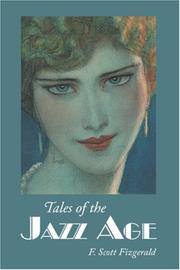
The 1922 collection that includes 'The Curious Case of Benjamin Button' and 'May Day', showing the range of the young Fitzgerald from farce to social panic. Read it second as a palate-cleanser before the early novels, which are much rougher.
The early novels
BeginnerSee the writer before Gatsby — brilliant, undisciplined, and inventing the public idea of the Jazz Age as he goes
▸ Study plan for this stage
Pace: 3–4 weeks. This Side of Paradise is 270 pages and structurally a scrapbook — verse, letters, a stretch set out as a play — so read it in whatever units it offers rather than fighting it for a novel's rhythm; ~30 pages a night finishes it in ten days. The Beautiful and Damned's 439 pages are slower a
- Fitzgerald was twenty-three when This Side of Paradise appeared; the confidence and the shapelessness are both a young man's
- The book invented a public — the flapper, the petting party, Princeton as a stage — and made him famous by describing his readers to themselves
- The mixed-form construction, with verse and dialogue set as drama, is an ambition the later books abandon in favour of control
- Amory Blaine as a self-portrait Fitzgerald has not yet learned to judge; set him against how Nick and Gatsby are handled
- The Beautiful and Damned is the first sustained run at the theme that consumed him: money running out, drink taking over, and a marriage eroding in real time
- Anthony and Gloria waiting on an inheritance is a plot engine that supplies nothing to do but decline, which is exactly why the book feels long
- Reading these after Gatsby lets you measure what five years of craft bought — compression, a narrator, and a plot that closes
- What holds This Side of Paradise together if not plot, and does it hold?
- Where do you first hear the sentence rhythm that becomes Gatsby's?
- What is Anthony Patch waiting for, and what does the waiting do to the novel's structure?
- Which of the two early books is the better novel, and which tells you more about Fitzgerald? They are not the same answer.
- What did he cut out of his method between 1922 and 1925?
- Take one page of This Side of Paradise and one of Gatsby and count sentences, clauses and adjectives. The difference is visible in the arithmetic.
- Mark every scene in The Beautiful and Damned that involves drinking, and watch the tone move from comic to grim without the prose ever announcing it.
- Write a one-paragraph defence of the early novels for someone who has read only Gatsby, then a one-paragraph case against. You will need both in the next stage.
Next up: Having watched the marriage-and-money theme in its rough form, you are ready for the book where Fitzgerald finally does it properly — and for the fragment suggesting he had one more mode left.
The Princeton novel that made him famous overnight in 1920. It is structurally a mess and knows it, but reading it after Gatsby shows exactly how much craft he acquired in five years.
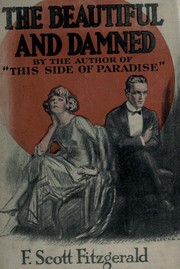
A long, uneven account of a marriage drinking itself to pieces, and the first sign of the theme that would consume him. Second because it sits chronologically and tonally between the campus novel and the mature work.
The mature novels
IntermediateRead the book Fitzgerald considered his best and the one he died writing, and understand why his reputation collapsed before it recovered
▸ Study plan for this stage
Pace: 4–5 weeks. Tender Is the Night is 352 pages and deliberately slow: read the Riviera opening in long sittings and expect the shift of perspective in the middle to cost you a day of reorientation — ~25 pages a night is about two weeks. The Last Tycoon is 198 pages of unfinished novel plus Fitzgerald's
- Nine years and many drafts — Tender Is the Night is the exact opposite of Gatsby's economy, and the sprawl is partly the point
- The structural problem: the novel opens through Rosemary's eyes and then goes back to Dick and Nicole. Fitzgerald himself doubted the order and a rearranged edition exists — decide what the opening buys
- Dick Diver's decline as the theme finally faced head-on: charm treated as a depleting resource
- Nicole's illness drawn directly from Zelda's breakdown, and the ethics of that borrowing, which readers still argue about
- Why the reputation collapsed: the book landed in 1934 before a Depression audience with no appetite for wealthy expatriates, and Fitzgerald was already being treated as a period artefact
- Monroe Stahr in The Last Tycoon is the only fully competent professional in Fitzgerald's fiction — a man who is good at his job, which was new territory for him
- How to read a fragment honestly: what exists is a run of finished chapters plus notes, and the temptation to grade it against an imagined whole should be resisted
- What does opening through Rosemary give you that starting with Dick and Nicole would not?
- Trace Dick Diver's decline and name three scenes where it is visible without being stated.
- How does the novel handle Nicole's recovery, and what does it appear to think that recovery costs Dick?
- What is different about Stahr as a Fitzgerald protagonist, and what does that suggest the finished book might have been?
- Why did the 1934 reception go the way it did, and what does that tell you about how reputations move?
- Read the first fifty pages of Tender Is the Night twice — once for the glamour, once noticing how much of it is being staged for Rosemary. The novel does both at once.
- Read The Last Tycoon's surviving chapters with the notes covered, then read the notes, and write down how much of your sense of the book came from the fragment and how much from the plan.
- Rewrite the opening paragraph of one Tender Is the Night scene in Gatsby's compressed register. What is lost in the rewrite is what the later book exists for.
- Line up when each novel was written against Zelda's hospitalisations and the Hollywood contracts. The chronology is the argument for the next stage.
Next up: You now have all the fiction Fitzgerald finished or nearly finished, which is exactly what the stories, the essays and the biography exist to explain.

Nine years in the making, drawn directly from Zelda's breakdown, and the richest thing he wrote. It is slower and sadder than Gatsby, which is why it belongs here rather than at the start.
The unfinished Hollywood novel, broken off by his death at forty-four, and on the evidence of what exists it might have been his second masterpiece. Read it last among the novels; the fragment is far more moving once you know the whole arc.
The stories, the essays, and the life
IntermediateCover the short fiction where he actually earned his living, read his own account of the breakdown, and place the work against the biography
▸ Study plan for this stage
Pace: 5–6 weeks. The big Short Stories collection carries no page count in our catalogue and is not meant to be read cover to cover — take three or four stories a week, starting with 'Winter Dreams', 'Babylon Revisited', 'The Rich Boy' and 'The Last of the Belles'. The Crack-Up is 347 pages of essays, let
- The stories paid for the novels: Fitzgerald sold to the mass-circulation magazines at rates that funded years abroad, and the commercial pressure is visible in the endings
- 'Winter Dreams' as a trial run at Gatsby and 'Babylon Revisited' as the best single thing he wrote after Tender Is the Night — the two poles of the short fiction
- The Crack-Up essays as public confession of breakdown, published in a magazine in 1936 and regarded at the time as professional suicide. The hostility of other writers is part of the record
- The notebooks in the same volume — phrases filed away for reuse — which expose the working method behind the lyric sentences
- Edmund Wilson's editorial hand: the book was assembled after Fitzgerald's death from uncollected pieces and letters, so its shape is Wilson's argument as much as Fitzgerald's
- Bruccoli on the professional life — contracts, advances, debts to the publisher, the Hollywood salary — which reframes the legend of dissipation as, in part, a business story
- Reading a career backwards: the essays and letters revise almost everything you thought the novels were doing, Tender Is the Night most of all
- What does 'Babylon Revisited' do with a decline that Tender Is the Night takes 350 pages to do — and what does it lose?
- In a magazine story, where can you see the ending being bought rather than earned?
- What exactly does Fitzgerald claim in the Crack-Up essays, and why did other writers react with such hostility?
- What do the notebooks reveal about how his most famous sentences were made?
- Which does more to change your reading of the novels, the essays or the biography, and why?
- Read 'Winter Dreams' immediately before rereading Gatsby's chapter 6. The reuse is unmistakable and instructive.
- Read the three confessional essays in one sitting, then Bruccoli's account of the same months. Note every point where the confession and the record disagree.
- Pick ten entries from the notebooks and find where each phrase, or a cousin of it, ended up in the fiction.
- Write 300 words answering the question this path poses: is Fitzgerald a great novelist or the author of one great novel? Use at least three books other than Gatsby as evidence.
Next up: That is the full arc — you can now read any of the uncollected stories, or reread Gatsby, with the whole working life standing behind the sentences.

The standard large collection, gathering 'Babylon Revisited', 'Winter Dreams', and the rest of the work that paid for the novels. Dip rather than march through it — the best half-dozen stories stand with anything he wrote.
![The crack-up, with other uncollected pieces, note-books and unpublished letters, together with letters to Fitzgerald from Gertrude Stein, Edith Wharton, T.S. Eliot, Thomas Wolfe and John Dos Passos, and essays and poems by Paul Rosenfeld [and others] Edited by Edmund Wilson](https://covers.openlibrary.org/b/id/12595612-M.jpg)
The late confessional essays plus letters and notebooks, including the most quoted description of a mind coming apart in American letters. Devastating in a way that only works once you have read the novels it looks back on.
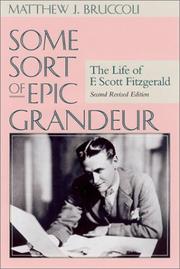
The standard scholarly biography, careful with the legend and good on the working life of a professional writer. Read it last, when you have enough of the work in view for the life to illuminate rather than replace it.
Discussion
Keep reading
Paths that share books, cover the same subject, or open a related topic.