OKRs and goal-setting: the best books to read in order
This curriculum builds from the foundational "why" of goal-setting psychology, through the OKR framework itself, into advanced execution, alignment, and measurement. Each stage deepens the learner's ability to not just understand OKRs conceptually but to implement, adapt, and lead them inside real organizations.
Foundations: Why Goals Matter
BeginnerUnderstand the psychology and science behind effective goal-setting, building the mental model and vocabulary needed to appreciate why OKRs are designed the way they are.
▸ Study plan for this stage
Pace: 4–5 weeks, ~25–30 pages/day. Start with "Drive" (2 weeks), then "The One Thing" (2–3 weeks). Allow time for reflection and exercises between books.
- Intrinsic vs. extrinsic motivation: Why autonomy, mastery, and purpose drive sustained performance better than external rewards
- The three elements of motivation (Autonomy, Mastery, Purpose): How they apply to personal and organizational goal-setting
- The Regret Minimization Framework: How clarity on what matters most reduces wasted effort and decision paralysis
- The 80/20 principle applied to goals: Identifying the one thing that makes everything else easier or unnecessary
- Goal specificity and focus: Why vague aspirations fail and how narrowing scope increases achievement
- The role of habit and environment in goal pursuit: How systems and constraints support goal achievement
- The science of willpower and decision fatigue: Why fewer, clearer priorities preserve mental energy for execution
- What are the three elements of intrinsic motivation according to Pink, and how does each one relate to setting meaningful goals?
- Why does Pink argue that extrinsic rewards often backfire for complex, creative work, and what does this mean for how you should frame your own goals?
- What is the 'one thing' concept in Keller's framework, and how does it differ from traditional goal-setting approaches that focus on doing more?
- How does Keller's regret minimization principle help you prioritize among competing goals, and what questions should you ask yourself to identify your 'one thing'?
- According to both books, what role does environment and habit play in achieving goals, and how should this influence your goal-setting strategy?
- How would you explain to someone why having fewer, more focused goals is more effective than having many goals, using evidence from both books?
- After finishing 'Drive': Write a 1-page reflection on a goal you're currently pursuing. Identify which of Pink's three elements (autonomy, mastery, purpose) is strongest in your motivation, and which is weakest. What would it look like to strengthen the weaker elements?
- Create a personal motivation audit: List 3–5 goals you've abandoned in the past. For each, diagnose whether it failed due to lack of autonomy, mastery, or purpose. What would you do differently now?
- After finishing 'The One Thing': Conduct a 'regret minimization' exercise. Write down 5–7 significant goals or projects you're considering. For each, ask Keller's key question: 'If I could only accomplish one of these in the next year, which would I regret not doing most?' Rank them and identify your true 'one thing.'
- Build a goal clarity statement: Take your 'one thing' and write it in the form of a specific, measurable outcome (not just a vague aspiration). Then identify 3–5 supporting sub-goals that directly enable it. Eliminate anything that doesn't directly serve the main goal.
- Environment design exercise: Map out the habits and environmental factors that would support your 'one thing.' What needs to change in your daily routine, workspace, or social circle to make progress easier? Identify one concrete change to implement this week.
- Peer teaching exercise: Explain Pink's motivation framework and Keller's 'one thing' principle to someone else (friend, colleague, family member). Use their questions to identify gaps in your understanding and refine your mental model.
Next up: This stage establishes *why* goals matter and *how* humans are motivated to pursue them; the next stage will introduce OKRs as a specific, proven framework for translating this psychology into organizational and personal practice.
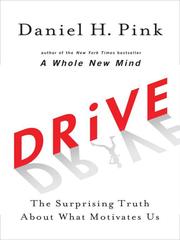
Establishes the motivational foundation — autonomy, mastery, and purpose — that explains why well-crafted goals energize people rather than constrain them. Reading this first gives the 'human why' behind any goal framework.

Introduces the discipline of ruthless prioritization and focus, a core principle that makes OKRs work. It primes the reader to resist the temptation of setting too many objectives.
The OKR Framework: Core Concepts
BeginnerLearn the OKR methodology from the ground up — what Objectives and Key Results are, how they differ from traditional goal-setting, and how to write and structure them correctly.
▸ Study plan for this stage
Pace: 4–5 weeks, ~25–30 pages/day. Start with "Measure What Matters" (Part 1: The Fundamentals, ~80 pages over 3 weeks), then "Radical Focus" (~200 pages over 2 weeks). Include 2–3 days for review and synthesis between books.
- The anatomy of OKRs: what Objectives are (qualitative, inspirational goals) and what Key Results are (quantitative, measurable outcomes)
- How OKRs differ from traditional goal-setting methods (SMART goals, KPIs, strategic planning) and why the distinction matters
- The four superpowers of OKRs: focus, alignment, tracking, and accountability
- The mechanics of writing effective Objectives: clarity, inspiration, and actionability without prescribing the 'how'
- The mechanics of writing effective Key Results: specificity, measurability, and the 70% confidence rule
- Cadence and cycles: how OKRs operate on quarterly and annual timescales, and why this rhythm matters
- The relationship between Objectives (the 'what and why') and Key Results (the 'how much'), and avoiding the trap of confusing activities with outcomes
- Real-world OKR implementation: common pitfalls (too many OKRs, vague Key Results, misalignment) and how to avoid them
- What is the fundamental difference between an Objective and a Key Result, and why does this distinction matter in practice?
- How do OKRs differ from traditional SMART goals or KPIs, and what advantages do OKRs offer in terms of focus and alignment?
- What are the four superpowers of OKRs, and can you give a concrete example of how each one improves organizational performance?
- Write an Objective and 3 Key Results for a real scenario (e.g., a product launch, team productivity improvement). Explain why your Key Results are measurable and your Objective is inspirational.
- What does the 70% confidence rule mean, and why is it better than aiming for 100% certainty when setting Key Results?
- Describe the typical OKR cycle (quarterly and annual) and explain how this cadence helps teams stay focused and accountable.
- Write 3 Objectives and 3 sets of Key Results for your own role or a hypothetical team. Peer-review or self-assess against the criteria: Is the Objective inspirational? Are the Key Results measurable and outcome-focused (not activity-focused)?
- Take a poorly written OKR (vague Objective, unmeasurable Key Results) and rewrite it using the frameworks from both books. Document what you changed and why.
- Map out a quarterly OKR cycle for a fictional startup or team: define 3–5 company-level Objectives, cascade them to 2–3 team-level Objectives, and write Key Results for each. Identify alignment points and conflicts.
- Compare a traditional SMART goal with an equivalent OKR. Write a 1-page analysis of the differences and why the OKR version is clearer or more actionable.
- Conduct a mock OKR planning session: gather 2–3 people (or do this solo with personas), define quarterly Objectives, debate Key Results, and document the reasoning. Reflect on what worked and what was unclear.
- Create a one-page 'OKR cheat sheet' summarizing the rules for writing Objectives and Key Results, common pitfalls, and the 70% confidence rule. Use this as a reference for future planning.
Next up: This stage equips you with the foundational knowledge and practical skills to write and structure OKRs correctly; the next stage will focus on implementation at scale—how to cascade OKRs across teams, track progress, run effective check-ins, and adapt when circumstances change.

The definitive, canonical text on OKRs, written by the person who brought the framework from Intel to Google. This is the essential starting point for understanding OKRs through real-world stories and case studies.

A practical, narrative-driven companion to Doerr's book that shows OKRs in action through a startup story. Reading it immediately after Measure What Matters cements the concepts with a concrete, relatable example.
Strategy & Alignment: Connecting Goals Across the Organization
IntermediateUnderstand how to cascade and align OKRs from company level down to teams and individuals, and how OKRs connect to broader strategy and planning cycles.
▸ Study plan for this stage
Pace: 4–5 weeks, ~40–50 pages/day (approximately 280–350 pages total across both books)
- The kernel of good strategy: diagnosis, guiding policy, and coherent action—and how it differs from vague aspirations or wish lists
- How to identify and focus on the critical few priorities rather than trying to do everything, enabling effective cascading
- The relationship between company-level strategy and team-level execution: connecting the dots from vision to daily work
- The 4 Disciplines of Execution (focus, leverage, engagement, accountability) as a framework for translating strategy into aligned OKRs and results
- Removing organizational silos and misalignment by creating line-of-sight between individual goals and company strategy
- How strategic planning cycles integrate with OKR cadences to maintain alignment over time
- The role of discipline and measurement in preventing strategy drift and ensuring teams stay focused on what matters most
- What are the three components of the kernel of a good strategy, and why is each one essential for cascading OKRs effectively?
- How does Rumelt's critique of bad strategy (wish lists, failure to focus, flawed assumptions) apply to poorly cascaded OKRs in organizations?
- What is the relationship between the 4 Disciplines of Execution and OKR alignment? How does each discipline prevent organizational misalignment?
- How can you use the concept of 'line-of-sight' to ensure that individual contributor goals connect meaningfully to company-level OKRs?
- What role does the Wildly Important Goal (WIG) play in simplifying strategy and enabling teams to align their OKRs?
- How do strategic planning cycles and OKR review cadences work together to maintain alignment and adapt to changing conditions?
- Audit your organization's (or a case study's) current strategy using Rumelt's kernel framework: identify the diagnosis, guiding policy, and coherent actions. Identify gaps where strategy is vague or lacks focus.
- Map a company-level OKR down through 2–3 organizational levels (department, team, individual), explicitly showing how each level's goals support the level above and remain coherent.
- Identify the Wildly Important Goal (WIG) for your organization or team, then design 3–4 OKRs that directly support it. Eliminate any OKRs that don't clearly ladder up.
- Create a 'line-of-sight' document for a team member: show how their individual goals connect to team OKRs, department strategy, and company-level OKRs. Share and get feedback on clarity.
- Run a mock strategic planning session: diagnose a strategic challenge, propose a guiding policy, and define coherent actions (translated into OKRs) that a team would execute.
- Design a 12-month OKR cadence and planning cycle for an organization, integrating quarterly OKR reviews with annual strategic planning moments to maintain alignment.
Next up: This stage equips you with the strategic thinking and cascading frameworks needed to design and implement OKRs at scale; the next stage will focus on the mechanics of writing, measuring, and reviewing OKRs to ensure they drive the right behaviors and outcomes.
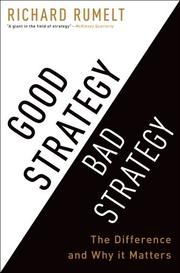
Teaches how to distinguish a real strategy (a coherent diagnosis + guiding policy + actions) from a list of wishes — a critical skill before setting company-level Objectives. This prevents OKRs from becoming meaningless platitudes.
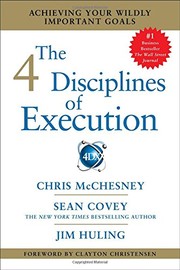
Introduces the concept of Wildly Important Goals and lead vs. lag measures, which maps directly onto how Key Results should be chosen. It bridges strategy and day-to-day execution in a way that complements the OKR cadence.
Execution & Measurement: Making OKRs Stick
IntermediateMaster the operational rhythms, check-ins, scoring, and team habits that turn OKRs from a planning exercise into a living management system that drives real outcomes.
▸ Study plan for this stage
Pace: 6–7 weeks, ~40–50 pages/day. Week 1–3: "Objectives and Key Results" (primary focus on execution chapters); Week 4–5: "Atomic Habits" (full read); Week 6–7: Integration and application work.
- OKR cadence and rhythm: quarterly planning cycles, weekly check-ins, and monthly reviews as the operational backbone of goal execution
- Scoring and transparency: how to measure progress objectively (0–1.0 scale), surface blockers early, and maintain psychological safety in reporting
- Habit stacking and OKR alignment: using habit loops (cue, routine, reward) to embed OKR-supporting behaviors into daily team workflows
- The role of continuous feedback: real-time progress tracking and course correction as superior to end-of-quarter surprises
- Habit formation at scale: how individual habits compound into organizational culture that sustains OKR execution
- Accountability without blame: creating systems where teams own outcomes while learning from misses
- Cascading execution: translating company-level OKRs into team habits and daily actions that reinforce the same goals
- What is the ideal frequency and structure of OKR check-ins, and why does Niven argue that weekly or bi-weekly cadence matters more than the planning phase?
- How should you score OKRs on the 0–1.0 scale, and what does a 0.7 score actually tell you about execution versus ambition?
- According to Clear, how does the habit loop (cue, routine, reward) apply to building team behaviors that sustain OKR progress, and what happens when one element is missing?
- What is the relationship between psychological safety in OKR scoring and honest reporting of progress and blockers?
- How can you use habit stacking (attaching new behaviors to existing routines) to ensure OKR-related actions become automatic rather than requiring constant willpower?
- Why does Niven emphasize transparency in OKR progress, and how does Clear's work on identity-based habits reinforce the importance of making progress visible to the team?
- Design a 13-week OKR execution calendar: map out your weekly check-in rhythm, monthly review cadence, and quarterly planning sprint. Include specific dates and who owns each meeting.
- Score a real or hypothetical set of 5 OKRs using Niven's 0–1.0 scale, and write a brief narrative for each explaining the score, what went well, and what blocked progress. Practice scoring honestly (not all 1.0s).
- Identify one critical behavior needed to hit an OKR (e.g., 'daily customer calls' or 'weekly code reviews'). Map it as a habit loop using Clear's framework: what is the cue, what is the routine, and what is the reward? Then design a 30-day experiment to make it stick.
- Conduct a team habit audit: list the current daily/weekly rituals your team already does (standups, 1-on-1s, etc.). For each OKR, identify which existing ritual could be the 'anchor' for a new OKR-supporting habit (habit stacking).
- Run a mock OKR check-in meeting using Niven's recommended format: progress update, blockers, confidence level, and next week's focus. Record how psychological safety affects honesty in reporting.
- Create a 'progress visibility dashboard' (even a simple spreadsheet) for your team's OKRs. Update it weekly for 4 weeks and reflect on how the act of tracking changes behavior and urgency.
Next up: This stage transforms OKRs from a planning artifact into a living system by embedding execution rhythms and habits; the next stage will likely deepen into advanced topics such as scaling OKRs across organizations, handling misalignment, and adapting OKRs in volatile environments.

A comprehensive, practitioner-focused guide covering OKR implementation step by step — from design workshops to scoring to integration with performance management. Ideal at this stage when the reader is ready to implement, not just understand.
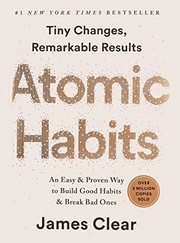
Explains how to build the consistent review and check-in habits that keep OKR cadences alive. Without behavioral systems, even well-written OKRs die in the backlog — this book solves that problem.
Advanced Mastery: Leading High-Performance Goal-Driven Organizations
ExpertSynthesize OKRs with leadership, organizational health, and continuous learning to build a culture where ambitious goal-setting and honest measurement become second nature.
▸ Study plan for this stage
Pace: 8–10 weeks, ~40–50 pages/day (alternating between both books; start with High Output Management weeks 1–5, then Continuous Discovery Habits weeks 6–10, with 1–2 weeks for integration and application)
- Output management as the core leadership discipline: how managers multiply team productivity through leverage, leverage points, and clear goal-setting (Grove's framework)
- OKRs as a tool for organizational alignment: cascading objectives from strategy to execution, with measurable key results that drive accountability
- The relationship between management by objectives and continuous learning: how honest measurement and feedback loops enable rapid iteration
- Discovery habits as a complement to goal-setting: structured customer research and experimentation that inform what goals are worth pursuing
- Building a culture of psychological safety and transparency: creating environments where teams can set ambitious goals and report honestly on progress
- The role of 1-on-1s, staff meetings, and decision-making forums in embedding goal-driven behavior across the organization
- Balancing exploitation (executing known goals) with exploration (discovering new opportunities through continuous discovery)
- Metrics, dashboards, and leading indicators: translating OKRs into actionable, measurable signals that guide daily work
- How does Grove define leverage in management, and what are the three main leverage points a manager can use to multiply team output?
- What is the relationship between OKRs and organizational alignment, and how do you cascade objectives from the top level down to individual contributors?
- How do continuous discovery habits (interviews, experiments, feedback loops) inform which OKRs an organization should set, and how do you avoid setting goals based on assumptions alone?
- What are the key differences between leading indicators and lagging indicators, and how should each inform your goal-setting and measurement practices?
- How do you create psychological safety and transparency in a goal-driven culture so that teams will set ambitious OKRs and report honestly on misses?
- What is the role of 1-on-1s and staff meetings in embedding goal-driven behavior, and how should these forums be structured to reinforce OKRs?
- Map your current organization's strategy to a 3–5 level OKR cascade (company → department → team → individual), identifying gaps and misalignments using Grove's leverage framework
- Conduct a 'High Output Management audit' of your leadership team: evaluate each manager's leverage points (hiring, training, goal-setting, decision-making) and identify one leverage improvement per manager
- Design a continuous discovery program for your organization: define a cadence of customer interviews, experiments, and feedback loops that will feed into next quarter's OKR planning
- Run a 1-on-1 redesign workshop: rewrite your 1-on-1 templates and agendas to explicitly connect individual work to team OKRs and include discovery/learning conversations
- Create a metrics dashboard that tracks both leading indicators (discovery metrics, experiment velocity, learning signals) and lagging indicators (OKR progress, business outcomes)
- Facilitate a 'psychological safety audit' with your team: assess current trust levels, identify barriers to ambitious goal-setting and honest reporting, and design 2–3 interventions to improve transparency
Next up: This stage equips you to lead organizations where OKRs and continuous discovery are embedded in the operating system; the next stage will focus on scaling these practices across multiple teams, managing trade-offs in a resource-constrained environment, and adapting goal-setting for different organizational contexts (startups vs. enterprises, product vs. ops).
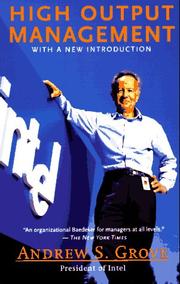
Written by the Intel CEO who invented OKRs, this is the management philosophy that gave birth to the framework. Reading it last reveals the deep managerial thinking underneath OKRs and elevates the reader from practitioner to leader.

Connects OKR outcome-thinking to product discovery and learning loops, showing how teams can use Key Results as signals to continuously adapt — essential for advanced practitioners leading product or cross-functional teams.
Discussion
Keep reading
Paths that share books, cover the same subject, or open a related topic.