Operations Management: Best Books to Run Efficient Operations, in Order
This curriculum builds from core operations principles up to advanced lean, flow, and scale — starting at an intermediate level and progressing to practitioner-grade mastery. Each stage sharpens a distinct lens: first the structural foundations of process and capacity, then lean and flow thinking, and finally the strategic and systems-level challenges of delivering at scale. Books within each stage are ordered so that earlier reads supply the vocabulary and mental models needed to fully absorb the ones that follow.
Process & Capacity Foundations
IntermediateUnderstand how to analyze and design processes, identify bottlenecks, measure capacity, and calculate flow metrics — the quantitative backbone of all operations work.
▸ Study plan for this stage
Pace: 8–10 weeks, ~40–50 pages/day (mix of theory and worked examples)
- Process mapping and flow analysis: how to visualize and trace material/information flow through operations
- Bottleneck identification and constraint theory: recognizing where capacity is limited and why it matters
- Capacity measurement and utilization: calculating effective capacity, design capacity, and bottleneck rates
- Flow metrics (throughput, cycle time, work-in-process): quantifying how fast processes move and what slows them
- Little's Law and its applications: the mathematical relationship between WIP, flow time, and throughput
- Demand-supply matching and inventory positioning: balancing customer demand against process capability
- Process design trade-offs: speed vs. flexibility, cost vs. responsiveness, and batch sizing decisions
- Theory of Constraints (TOC) thinking: managing systems by focusing improvement effort on the constraint
- How do you map a process and identify where the bottleneck is? What metrics reveal bottleneck location?
- What is the difference between design capacity, effective capacity, and actual output? How do you calculate utilization?
- How does Little's Law (L = λW) work, and how would you use it to predict cycle time or WIP given throughput?
- Why is matching supply with demand critical, and what are the main strategies (make-to-stock, make-to-order, chase demand)?
- What is the Theory of Constraints, and why does improving non-bottleneck resources often waste effort?
- How do batch size, setup time, and process layout affect flow metrics and overall system performance?
- Map a real or hypothetical process (e.g., a coffee shop, hospital admission, or manufacturing line) end-to-end; identify task times, parallel steps, and the critical path
- Calculate bottleneck rate, cycle time, and utilization for a multi-step process with unequal task durations; identify which resource constrains throughput
- Apply Little's Law to a real scenario: given average WIP and throughput, calculate flow time; or given desired cycle time, calculate required WIP
- Design a simple process with two demand-supply strategies (e.g., make-to-stock vs. make-to-order) and compare inventory costs, lead times, and responsiveness
- Analyze a case study from *The Goal* (e.g., the Herbie problem or the rope-and-buffer concept) and explain how constraint-based thinking would improve the system
- Create a process improvement proposal: identify a constraint in a chosen process, calculate the impact of breaking it, and recommend the next constraint to address
Next up: This stage equips you with the quantitative tools and mental models to diagnose why processes fail and where to focus improvement—setting the stage for the next level, where you'll learn specific improvement methodologies (Lean, Six Sigma, agile) and how to implement them in real organizations.
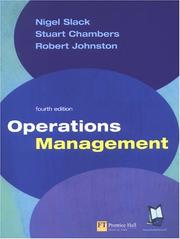
The most comprehensive intermediate-level textbook on operations; covers process design, capacity planning, and performance objectives in a structured, accessible way — giving you the full vocabulary before diving into specialist texts.
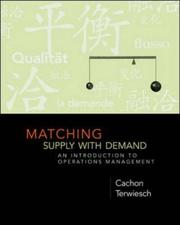
Bridges qualitative operations concepts to rigorous quantitative models for capacity, inventory, and service levels — essential for anyone who needs to make real trade-off decisions.
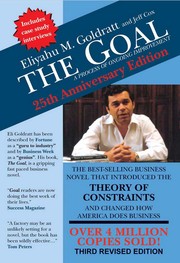
Read third so the Theory of Constraints narrative lands with full force now that you can map its lessons (bottlenecks, throughput, flow) onto the process vocabulary you've just built.
Lean Thinking & Flow
IntermediateInternalize lean principles — value, waste elimination, pull systems, and continuous flow — and learn how to apply them to both manufacturing and service environments.
▸ Study plan for this stage
Pace: 10–12 weeks, ~40–50 pages/day. Allocate 4 weeks to "Lean Thinking," 3 weeks to "Learning to See," and 3–4 weeks to "Toyota Kata," with 1–2 weeks for integration and review.
- The five principles of lean thinking: value, value stream, flow, pull, and perfection, and how they challenge mass production paradigms
- Waste elimination (muda, muri, mura) across manufacturing and service processes, and the eight types of waste
- Value stream mapping as a tool to visualize and analyze current and future states of production
- Pull systems and just-in-time (JIT) production as alternatives to push-based scheduling
- Continuous flow and the elimination of batch-and-queue thinking in both manufacturing and service environments
- The PDCA cycle and the kata approach to embedding continuous improvement as organizational culture
- Gemba walks and direct observation as the foundation for identifying problems and coaching improvement
- Standardized work and the role of stable, repeatable processes in enabling continuous improvement
- What are the five lean principles, and how does each one challenge traditional mass production thinking?
- How do muda, muri, and mura differ, and what are the eight types of waste you should recognize in a process?
- How do you create a current-state value stream map, and what does a future-state map reveal about potential improvements?
- What is the difference between push and pull systems, and why does pull reduce inventory and lead time?
- How does the kata approach (the four-step improvement cycle) embed continuous improvement into daily work rather than treating it as a separate initiative?
- What is a gemba walk, and how does direct observation at the point of work inform better problem-solving than desk analysis?
- Create a current-state value stream map of a real process you know (your work, a service you use, or a personal workflow), identifying all steps, delays, and handoffs
- Identify and categorize at least 10 instances of waste (muda) in that same process using the eight types of waste framework from Lean Thinking
- Sketch a future-state value stream map for the same process, showing how you would reduce lead time, inventory, and non-value-added steps
- Conduct a gemba walk in a real workplace or service environment (your office, a restaurant, a hospital, etc.) and document what you observe about flow, delays, and standardization
- Practice the four-step kata cycle (understand the target condition, grasp the current condition, establish the next condition, and execute) on a small improvement project in your own work or life
- Interview someone in a lean-practicing organization about how they use pull systems, standardized work, or continuous improvement routines, and summarize what you learn
Next up: This stage equips you with the foundational mindset and practical tools of lean thinking; the next stage will likely deepen your ability to design and sustain lean systems at scale, manage organizational change, and apply lean principles to complex, multi-function environments.
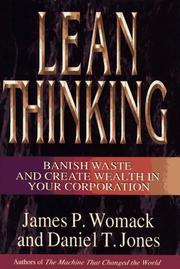
The definitive statement of lean principles (value, value stream, flow, pull, perfection); reading it first in this stage gives you the philosophical framework before the tactical tools.

Teaches value-stream mapping — the single most important lean diagnostic tool — with a hands-on workbook format that makes abstract flow concepts concrete and drawable.
Moves beyond tools to the underlying improvement and coaching routines that sustain lean over time; best read after you can already map a value stream and see waste.
Operational Excellence in Services & Supply Chains
IntermediateExtend lean and process thinking to service operations and multi-node supply chains, understanding demand variability, service design, and end-to-end coordination.
▸ Study plan for this stage
Pace: 8–10 weeks, ~40–50 pages/day (approximately 2–3 weeks per book with time for reflection and exercises)
- Lean production principles: just-in-time, continuous flow, pull systems, and waste elimination as applied to both manufacturing and services
- The Toyota Production System as a foundational model for operational excellence across supply chains
- Variability and its sources: demand uncertainty, process variability, and supply disruptions in multi-node systems
- Service design and service operations: how lean principles adapt when outputs are intangible and customer interaction is direct
- Factory physics fundamentals: Little's Law, cycle time, throughput, and work-in-process (WIP) relationships
- Bottleneck identification and constraint management in complex supply chains and service networks
- End-to-end supply chain coordination: synchronization, visibility, and information flow across multiple nodes
- Variability pooling, buffering strategies, and trade-offs between inventory, capacity, and service level
- What are the core principles of the Toyota Production System, and how do they differ from traditional mass production approaches?
- How do lean principles apply differently to service operations compared to manufacturing, and what are the key adaptations needed?
- What is Little's Law, and how can you use it to diagnose bottlenecks and improve flow in a supply chain or service process?
- How does variability (both demand and process) propagate through multi-node supply chains, and what strategies can mitigate its impact?
- What are the trade-offs between inventory, capacity, and service level, and how do you balance them in a real supply chain?
- How can you design and coordinate a service operation or supply chain to achieve operational excellence while managing customer interaction and uncertainty?
- Map a service operation you know (e.g., a restaurant, hospital, or bank) using value stream mapping; identify waste, handoffs, and variability sources, then propose lean improvements
- Apply Little's Law to a real or hypothetical process: measure or estimate arrival rate, cycle time, and WIP; calculate the relationship and identify where to intervene
- Simulate a multi-stage supply chain (using a spreadsheet or simple model) with demand variability; observe the bullwhip effect and test buffering strategies (safety stock, capacity buffers, information sharing)
- Design a lean service process for a new offering (e.g., a clinic appointment system, order fulfillment, or onboarding); document flow, pull triggers, and variability mitigation
- Conduct a bottleneck analysis on a supply chain or service network you have access to; use Factory Physics concepts to quantify the impact and propose constraint-based improvements
- Create a case study comparing a traditional (push-based, high-inventory) supply chain with a lean (pull-based, low-inventory) alternative; analyze trade-offs in cost, responsiveness, and resilience
Next up: This stage equips you with the foundational lean and physics-based thinking needed to tackle advanced topics such as supply chain resilience, digital transformation, and adaptive operations in volatile environments.
The landmark study of lean production across the global auto industry; provides the empirical and strategic context for why lean supply-chain coordination outperforms mass production at scale.
Provides the scientific laws governing manufacturing and service operations — cycle time, variability, utilization — giving you a rigorous framework to diagnose and fix any production system.
Scaling & Strategic Operations
ExpertMaster the strategic decisions involved in delivering products and services at scale: network design, execution discipline, and building operations as a competitive weapon.
▸ Study plan for this stage
Pace: 8–10 weeks, ~40–50 pages/day (mix of dense strategic content and practical frameworks)
- Time-based competition: how speed and responsiveness create sustainable competitive advantage over cost or quality alone
- Organizational response time: the hidden leverage point in operations—reducing cycle times across product development, manufacturing, and delivery
- Build-measure-learn feedback loops: using rapid iteration and validated learning to scale operations efficiently without waste
- Lean principles applied to strategy: eliminating vanity metrics, focusing on actionable metrics, and pivoting based on evidence
- Operations as a competitive weapon: aligning execution discipline, process design, and organizational structure to deliver strategic objectives
- Network design and capacity planning: making critical decisions about manufacturing footprint, supply chain structure, and resource allocation at scale
- High-output management: designing systems, meetings, and decision-making processes that maintain operational excellence as the organization grows
- How does time-based competition differ from competing on cost or quality, and why is it harder for competitors to replicate?
- What are the key components of organizational response time, and how did Stalk's case studies (e.g., Honda, Wal-Mart) use speed as a strategic weapon?
- How do build-measure-learn cycles help startups and scaling operations avoid waste and make faster decisions than traditional planning?
- What is the difference between vanity metrics and actionable metrics, and why does this distinction matter when scaling operations?
- How should operations strategy align with overall business strategy, and what happens when they diverge?
- What are the key decisions in network design (e.g., centralized vs. distributed manufacturing), and how do they affect cost, flexibility, and response time?
- Map your organization's (or a case study company's) response time across three dimensions: concept-to-market, order-to-delivery, and problem-to-resolution. Identify the bottlenecks and calculate the cost of delay.
- Design a build-measure-learn experiment for a new product or service feature: define the hypothesis, the MVP, the key metric to measure, and the decision rule for pivoting or persisting.
- Audit your organization's metrics dashboard: separate vanity metrics from actionable metrics. Rewrite 3–5 metrics to be more actionable (specific, measurable, tied to decisions).
- Create a network design proposal (manufacturing, distribution, or service delivery) for a hypothetical company entering a new market. Compare centralized vs. distributed approaches on cost, lead time, and flexibility.
- Conduct a 'high-output management' audit: document your current meeting structure, decision-making process, and information flow. Identify one bottleneck and propose a system redesign.
- Write a one-page operations strategy statement for a company at a critical scaling inflection point. Specify how operations will create competitive advantage and what trade-offs you're making.
Next up: This stage equips you with the strategic frameworks and execution discipline to scale operations as a competitive advantage; the next stage will deepen your ability to manage complexity, resilience, and continuous improvement in mature, large-scale systems.
Reframes operations strategy around time-based competition, showing how speed and responsiveness — not just cost — become decisive advantages when scaling delivery.
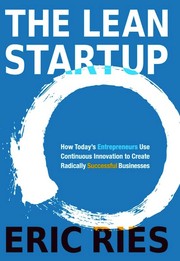
Applies lean flow and rapid-iteration thinking to scaling new products and services under uncertainty — a crucial bridge between operational rigor and growth-stage execution.
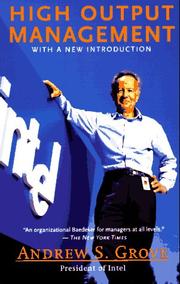
Intel's legendary CEO distills how to manage, measure, and scale operational teams and processes; the best capstone for translating everything learned into day-to-day leadership of operations at scale.
Discussion
Keep reading
Paths that share books, cover the same subject, or open a related topic.