Most people approach wealth management as an investing problem and discover too late that investing is the easy part. The harder parts are sequencing withdrawals, managing the tax drag on a taxable portfolio, coordinating an estate plan that survives contact with a family, and — if you are on the professional side — running a practice that can serve a hundred households without falling over.
That is why order matters here. Read the allocation books first and you will build a beautiful portfolio and then get quietly taxed out of most of its advantage. The planning frame comes first; the portfolio is a component of the plan.
Start with the planning frame
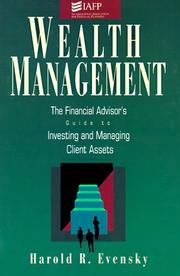
Harold Evensky's Wealth management set out the integrated planning approach — goals, cash-flow, risk, and portfolio design treated as one system rather than separate errands. Its successor, The new wealth management, is the substantially revised and updated version, and it is the one to read if you are only reading one. Take the older book only if you want to see how the discipline's thinking shifted.
Get the portfolio right
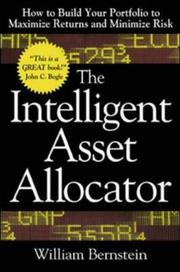
William Bernstein's The Intelligent Asset Allocator is the compact, quantitative case for diversification: why correlation matters more than picking, how rebalancing actually earns its keep, and what the historical return data does and does not support. It is short and unusually honest about uncertainty.
David Swensen wrote two books and they are for different readers. Pioneering Portfolio Management is the institutional one — endowment-style allocation, illiquidity premia, manager selection — and it is where the whole endowment model was laid out. Unconventional Success is Swensen writing for individual investors, and its central argument is close to the opposite conclusion: that most individuals cannot access what institutions can, and should hold low-cost index funds. Read both and the contrast is the lesson. If you are managing your own money, read Unconventional Success.
The parts that quietly decide the outcome
Douglas Rogers's Tax-aware investment management covers the discipline that separates a good pre-tax return from a good after-tax one: asset location, loss harvesting, turnover, and how to measure performance in a way that counts the tax bill. Mark Kohler's The tax and legal playbook is the more practical, entity-and-structure oriented companion, useful especially for business owners.
For the transfer side, The tools and techniques of estate planning by Stephan Leimberg is the working reference — trusts, gifting strategies, valuation, the mechanics. Pair it with Beyond the grave, which is the far more readable book about the human failure mode: how inheritance actually goes wrong between siblings, second marriages and family businesses, regardless of how elegant the documents are.
If this is your profession
Nick Murray's The excellent investment advisor is about client behaviour and the advisor's job of keeping people invested through drawdowns — less technical, more about the conversation. Deena Katz on Practice Management is the operations book: staffing, workflow, pricing, succession, and the unglamorous machinery of a firm.
One plain caveat. Tax and estate law is jurisdiction-specific and changes often, so treat the specifics in any of these books as a framework to check rather than as current rules — the Leimberg and Kohler material in particular ages with legislation. These books will make you a far better-informed client or a far better-prepared professional, but they do not replace a licensed advisor, an accountant, or an estate attorney, and nothing here is a promise about returns.
Follow the full path to read the plan before the portfolio.
Follow the full ordered path here: How to Learn Wealth Management from Books, in Order.