Inventory is the visible symptom of invisible problems. Too much stock and too many stockouts usually coexist in the same warehouse, and both are downstream of the same causes: demand you cannot predict, lead times that vary, and a replenishment policy set by habit. Teams respond by adjusting reorder points, which treats the symptom, and the cycle repeats next quarter.
So the reading order below deliberately puts forecasting and variability near the front, before the optimization mathematics. Safety stock formulas only make sense once you understand that they are pricing uncertainty — and that reducing the uncertainty is almost always cheaper than buying more buffer against it.
The working foundation
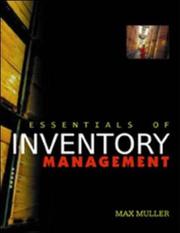
Start with Essentials of Inventory Management by Max Muller. It is the plain-language entry point: stock classification, ABC analysis, counting and accuracy, carrying costs, ordering policies, and warehouse fundamentals. It assumes nothing and it gets a practitioner operational quickly.
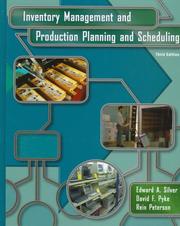
Then move to the field's standard technical reference, Inventory management and production planning and scheduling by Silver, Pyke, and Peterson. This is where the quantitative core lives — EOQ and its limits, order-point and periodic policies, safety stock under uncertainty, aggregate planning, and MRP. It is a graduate text and it repays working the problems rather than skimming. Its successor volume, Inventory and Production Management in Supply Chains, updates and reorganizes the same material with more supply-chain framing; read whichever edition you can get and do not buy both.
Forecasting is the real lever
Demand-Driven Forecasting by Charles Chase is the practitioner's treatment: demand sensing, the statistical methods that matter, and — more importantly — the organizational reality of consensus forecasting and the sales-and-operations planning process where forecasts actually get made and distorted.
Pair it with Forecasting by Hyndman and Athanasopoulos, which is rigorous, free to read online, and the best available text on the methods themselves: decomposition, exponential smoothing, ARIMA, evaluation, and the discipline of measuring forecast accuracy honestly. Chase tells you how forecasting works inside a company; Hyndman tells you how it works.
The wider system
Supply chain management by Chopra and Meindl sets inventory in its context — network design, sourcing, transportation, coordination, and the bullwhip effect that explains why demand variability amplifies as it moves upstream. Understanding bullwhip is what converts inventory work from local optimization into system design.
Optimal inventory modeling of systems by Sherbrooke is the specialist detour: multi-echelon inventory theory and the METRIC model, developed for repairable spare parts. If you manage service parts, aircraft, or any multi-location repairable network, it is the essential book. If you do not, skip it without guilt.
Lean, and knowing what to measure
The machine that changed the world by Womack, Jones and Roos is the study that introduced lean production to a wide audience, and it belongs here because it reframes inventory as a symptom of variability, changeover cost, and quality problems rather than as a quantity to optimize. Lean supply chain and logistics management by Paul Myerson then applies lean tools directly to warehousing, distribution, and inventory practice — value stream mapping, pull systems, waste reduction.
Close with Supply Chain Metrics That Matter by Lora Cecere, which argues from company financial data that many widely used supply chain metrics do not correlate with performance, and pushes toward balanced measurement across cost, service, and cycle time. It is a good final book because it makes you re-examine every improvement the earlier books taught you to make.
Note that the software and planning-system landscape in this field turns over quickly; the mathematics and the lean principles do not. Read for the reasoning, get tool specifics from current documentation. Adjacent management paths sit at sales management.
Follow the full path and inventory becomes a design problem rather than a recurring fire.
Follow the full ordered path here: The Best Inventory Management Books to Read First.