Ryszard Kapuscinski Reading Order: Where to Start
This curriculum moves from Kapuściński's most accessible reportage through his most philosophically demanding work, then situates him within the broader tradition of literary journalism, and finally confronts the fierce ethical and accuracy debates his legacy provoked. Because the learner starts at an intermediate level, the path skips introductory journalism primers and instead builds conceptual and contextual depth at each stage.
The Deeper Reportage
IntermediateEngage with Kapuściński's more structurally complex and politically demanding works, building the historical and stylistic vocabulary needed to read him critically.
▸ Study plan for this stage
Pace: 6–8 weeks total: Weeks 1–5 for "Imperium" (~25–30 pages/day, given its dense historical layering and episodic structure), then Weeks 6–8 for "The Other" (~15–20 pages/day, reading slowly and reflectively given its philosophical density and essay form).
- Palimpsestic history: how Kapuściński layers his three visits to the Soviet empire (1939, 1967, 1989–91) to show how the past bleeds into the present across the vast geography of Imperium
- The reporter as witness and archive: Kapuściński's use of his own body, memory, and childhood trauma (the Soviet occupation of Pinsk) as primary historical evidence in Imperium
- Imperial geography and the politics of space: how Kapuściński maps power through physical landscapes — the vastness of Siberia, the desolation of Vorkuta, the crumbling peripheries — rather than through official political narrative
- Structural fragmentation as meaning: the mosaic, non-linear chapter structure of Imperium as a deliberate formal argument about the incoherence and entropy of empire
- The philosophical turn — from reportage to reflection: how 'The Other' marks a shift from field journalism to ethical and humanistic inquiry, drawing on Lévinas, Herodotus, and anthropology
- Otherness and the ethics of encounter: the central argument in 'The Other' that genuine journalism — and genuine humanity — requires recognizing the Other not as object of study but as a subject with full interiority
- The role of fear and power in shaping the Other: how Kapuściński in 'The Other' traces the historical roots of xenophobia, racism, and colonial violence as distortions of the encounter with difference
- Self-reflexivity and the limits of the reporter: across both books, Kapuściński's growing awareness of his own positionality, cultural biases, and the epistemological limits of eyewitness journalism
- In Imperium, how does Kapuściński use the structure of three chronological visits — rather than a single continuous narrative — to make an argument about the nature of Soviet imperial decline? What would be lost with a linear structure?
- Kapuściński begins Imperium with his childhood memory of Soviet soldiers arriving in Pinsk in 1939. How does this autobiographical opening reframe everything that follows, and what does it reveal about his theory of historical knowledge?
- How does Kapuściński represent the non-Russian peoples of the Soviet periphery (Armenians, Georgians, the peoples of the Caucasus and Central Asia) in Imperium? Does he risk reproducing the imperial gaze he is critiquing, or does he successfully subvert it?
- In 'The Other,' Kapuściński argues that the encounter with the Other has taken three historical forms: war/conquest, isolation/indifference, and dialogue/cooperation. How does this framework illuminate the journalism he practiced throughout his career, including in Imperium?
- How does 'The Other' function generically — is it reportage, philosophy, memoir, or lecture? What does its hybrid form tell us about where Kapuściński believed journalism needed to go by the end of his life?
- Taken together, how do Imperium and 'The Other' redefine what political journalism can and should do? What is Kapuściński's implicit ethical manifesto across these two books?
- Mapping exercise (Imperium): As you read, draw or annotate a physical map of the former Soviet Union, marking every location Kapuściński visits. For each location, note the dominant emotion, sensory detail, or historical event he associates with it — then step back and ask what kind of 'mental map of empire' the full picture produces.
- Timeline layering (Imperium): Create a three-column timeline for the book's three visit periods (1939, 1967, 1989–91). For each chapter, place its events in the correct column. Then write a one-paragraph reflection on how Kapuściński uses juxtaposition across the columns to create meaning that no single timeline could.
- Close-reading passage journal: Select one passage from Imperium where Kapuściński describes a landscape or a crowd, and one passage from 'The Other' where he defines or interrogates the concept of the Other. Write a 400-word comparative analysis of his prose style in each — sentence rhythm, use of 'I,' level of abstraction — and what the differences reveal about the two books' distinct projects.
- Philosophical source-tracing ('The Other'): Kapuściński references thinkers like Emmanuel Lévinas and the tradition of Herodotus in 'The Other.' Choose one external reference, read a short primary excerpt (e.g., a page of Lévinas's 'Totality and Infinity' or a passage from Herodotus), and write a one-page note on how Kapuściński adapts, simplifies, or extends that thinker's idea for a journalistic
- Counter-argument exercise: Write a one-page critical response to Kapuściński from the perspective of a scholar who argues that his portrayal of Soviet-era peoples in Imperium is itself a form of 'Othering.' Use specific scenes from the book as evidence, then write a one-paragraph rebuttal using 'The Other' as your defense.
- Synthesis essay: After finishing both books, write a 600–800 word essay answering: 'By the end of his career, had Kapuściński resolved the tension between the reporter's need to generalize and the ethical demand — articulated in The Other — to treat every person as a unique subject?' Use at least two specific passages from each book.
Next up: By mastering Kapuściński's structural complexity and ethical self-questioning in these two works, the reader is now equipped to engage with advanced critical and biographical scholarship about him — including challenges to his factual accuracy and the post-colonial critiques of his entire body of work — which form the core of the next, advanced stage.
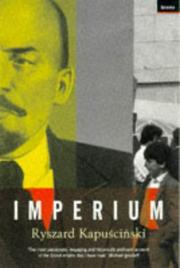
His panoramic account of the Soviet empire's collapse demands more historical background than his African work; reading it after the first stage means the reader already trusts his voice and can focus on the political architecture he constructs.

His final, most philosophical book — a series of lectures on encountering the Other — distills the ethical and humanistic theory underlying all his reportage; it reads most richly once you have seen that theory in action in the earlier books.
The Literary Journalism Tradition
IntermediatePlace Kapuściński inside the broader canon of literary or 'new' journalism, understanding the formal conventions and ambitions he shared with and diverged from his peers.
▸ Study plan for this stage
Pace: 6–8 weeks total: Weeks 1–3 on "The New Journalism" (~25–30 pages/day, including Wolfe's introductory essay re-read twice); Weeks 4–7 on "The Art of Fact" (~20–25 pages/day, reading each anthology piece alongside its editorial headnote); Week 8 reserved for comparative review, notes synthesis, and ex
- The four devices of New Journalism (scene-by-scene construction, extended dialogue, third-person point of view, status details) as defined by Wolfe in his introductory manifesto
- The distinction Wolfe draws between the novel's social realism and journalism's access to 'real life' — and why he saw literary journalism as superseding the realistic novel
- The spectrum of literary nonfiction voices and stances catalogued in 'The Art of Fact': the detached observer, the participant-narrator, the invisible stylist, and the polemicist
- Kerrane's concept of 'the literature of fact' as a tradition with deep historical roots, not merely a 1960s–70s American invention — tracing lineage from Defoe through Orwell to the New Journalists
- Narrative authority and credibility: how literary journalists negotiate the tension between subjective voice and journalistic truth-claims
- The role of immersion and reportorial method: how extended presence in a scene generates the texture that separates literary journalism from conventional reporting
- Formal conventions of the genre: the anecdotal lead, the composite scene, the telling detail, the delayed nut graf, and structural use of white space or section breaks
- Kapuściński's implicit position within this tradition: where his techniques align with Wolfe's four devices and where his poetic compression, political urgency, and postcolonial subject matter mark a divergence
- According to Wolfe's introductory essay in 'The New Journalism,' what four narrative devices did he identify as the toolkit of the new journalist, and can you illustrate each with a specific example from one of the anthology pieces in that volume?
- How does Kerrane's framing in 'The Art of Fact' challenge or complicate Wolfe's claim that literary journalism was essentially a mid-20th-century American innovation?
- What does Wolfe mean when he argues that the New Journalism had 'dethroned the novel' as the dominant form of social realism, and do the pieces in 'The Art of Fact' support or undermine that argument?
- Identify two pieces from 'The Art of Fact' that use radically different narrative stances (e.g., immersed participant vs. fly-on-the-wall observer). How does each stance shape what the reader is allowed to know and feel?
- Using the formal conventions discussed across both books, how would you characterize Kapuściński's style — which conventions does he deploy, and what does his work do that neither Wolfe's anthology nor Kerrane's selections fully account for?
- Both books grapple with the ethics of literary journalism — invented composite scenes, selective detail, authorial intrusion. What positions do Wolfe and Kerrane each take, implicitly or explicitly, on where the genre's ethical boundaries lie?
- Annotation exercise: Re-read Wolfe's introductory essay and physically mark every passage where he names or illustrates one of his four devices. Then open any piece from 'The Art of Fact' and attempt the same markup — note where the devices appear, where they are absent, and what other techniques fill the gap.
- Device audit: Choose three pieces from 'The Art of Fact' that span different eras or nationalities. Create a simple grid (rows = Wolfe's four devices; columns = the three pieces) and score each cell: fully present, partially present, or absent. Write a one-paragraph interpretation of the pattern you find.
- Imitation draft: Write 400–600 words of literary journalism about a scene you can observe directly (a market, a commute, a public event). Consciously apply at least three of Wolfe's four devices. Then annotate your own draft, labeling each device as you used it.
- Comparative voice analysis: Select one piece from 'The Art of Fact' written in first person and one written in close third person. Rewrite the opening two paragraphs of each in the opposite point of view. Reflect in a short paragraph on what is gained and lost in each swap.
- Kapuściński bridge memo: Write a one-page analytical memo arguing where on Kerrane's spectrum of literary nonfiction voices Kapuściński would sit, citing specific passages from his work you have already read alongside evidence from both 'The New Journalism' and 'The Art of Fact' to support your placement.
- Ethics position paper: Drawing on the implicit and explicit arguments in both books, draft a 300-word personal statement on where you believe the ethical line falls between 'literary license' and 'fabrication' in nonfiction. Identify one piece from either anthology that you think comes closest to crossing that line, and explain why.
Next up: By mapping the formal conventions and ethical debates of the broader literary journalism tradition, the reader now has a precise critical vocabulary — Wolfe's four devices, Kerrane's historical spectrum, the tension between voice and veracity — that can be applied directly to close reading of Kapuściński's own texts in the next stage.
Wolfe's landmark anthology and manifesto defines the movement — scene-by-scene construction, dialogue, point of view, status detail — giving the reader a precise critical vocabulary for what Kapuściński was doing in parallel from the Eastern Bloc.
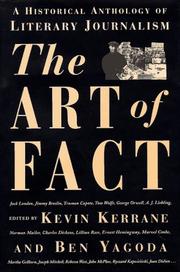
This anthology traces literary journalism from the 19th century to the late 20th, showing Kapuściński's place in a long tradition and exposing the recurring tension between narrative power and factual fidelity that will dominate the next stage.
The Ethics and Accuracy Debate
ExpertCritically evaluate the serious accusations of fabrication, mythologizing, and ethical lapses levelled at Kapuściński, and situate those debates within wider questions about truth in narrative nonfiction.
▸ Study plan for this stage
Pace: 6–8 weeks total: Weeks 1–4 for "Kapuściński Non-Fiction" (~40–50 pages/day, including note-taking pauses); Weeks 5–6 for "The Journalist and the Murderer" (~25–30 pages/day, read slowly and annotatively); Week 7 for comparative synthesis and exercise completion; Week 8 for review, discussion, and wr
- Fabrication vs. literary license: distinguishing deliberate invention from the narrative compression and metaphor Kapuściński defended as 'deeper truth'
- Domosławski's biographical method: how a fellow Polish journalist and admirer constructs a critical yet intimate exposé of Kapuściński's factual lapses, political accommodations, and personal contradictions
- The ethics of the journalist–source relationship as dissected by Malcolm: the structural seduction and betrayal she argues is inherent to journalism, and how this framework applies to Kapuściński's treatment of his subjects
- Mythologizing as a literary and ideological act: Kapuściński's construction of 'the Third World' as a unified moral landscape and the political consequences of that simplification
- Complicity and the Cold War context: Domosławski's evidence that Kapuściński collaborated with Polish intelligence services, and the ethical weight this places on his celebrated solidarity with the oppressed
- The implied contract between nonfiction writer and reader: what truth-claims are made, what the reader is owed, and when narrative technique crosses into deception
- Narrative nonfiction as a genre under pressure: how both books, taken together, force a reckoning with the unstable boundary between reportage, literature, and propaganda
- Moral accountability of the celebrated author: whether extraordinary literary achievement can or should insulate a writer from ethical scrutiny
- After reading Domosławski's documented examples of factual invention and omission, can you articulate a principled distinction — if one exists — between Kapuściński's 'literary journalism' and straightforward fabrication? Where, precisely, does your own line fall?
- Malcolm opens with the claim that 'every journalist who is not too stupid or too full of himself to notice what is going on knows that what he does is morally indefensible.' How does this provocation reframe your reading of Domosławski's specific charges against Kapuściński?
- Domosławski reveals Kapuściński's collaboration with the Polish security apparatus. How does this biographical fact interact with the ethical framework Malcolm builds around journalist–source power dynamics?
- Both books are themselves works of nonfiction subject to the very critiques they level. How does Domosławski handle his own positionality as a protégé and compatriot? How does Malcolm handle hers as a participant in the MacDonald case she analyzes?
- What does Kapuściński's mythologizing of Africa, Latin America, and the Middle East — as documented by Domosławski — reveal about the ideological assumptions embedded in even sympathetic Western journalism?
- Having read both books, how would you revise (or defend) the implicit contract between a narrative nonfiction writer and their reader? What disclosures, if any, should be mandatory?
- Fact-audit exercise: Select one specific scene from a Kapuściński work you have previously read (e.g., a scene from 'The Emperor' or 'Shah of Shahs'). Use Domosławski's documented criticisms as a methodological guide and attempt to verify the scene's factual claims through independent sources. Write a one-page memo distinguishing what is verifiable, what is unverifiable, and what Domosławski himse
- Malcolm's framework applied: Choose any journalist–source relationship described in Domosławski's biography (e.g., Kapuściński's interactions with African leaders or guerrilla fighters). Write a 500-word analysis applying Malcolm's 'seduction and betrayal' thesis to that specific relationship. Does Malcolm's model fit, or does it require modification?
- Steelman debate: Write two short position statements (250 words each) — one defending Kapuściński's methods as legitimate literary journalism, one prosecuting them as ethically indefensible — drawing exclusively on evidence from Domosławski. Then write a 100-word verdict explaining which argument you find more persuasive and why.
- Comparative ethics matrix: Create a two-column table. In one column, list the ethical norms Malcolm argues govern (or should govern) journalism. In the other, map each norm to a specific episode from Domosławski's biography where Kapuściński upheld or violated it. Identify any norms Malcolm raises that Domosławski does not address, and vice versa.
- Genre boundary mapping: Draft a one-page 'reader's advisory label' — modeled on a film content warning — that you would attach to one of Kapuściński's books based on what Domosławski reveals. What would an honest label disclose about the book's methods, sources, and truth-claims? Share and discuss with a reading partner if possible.
- Reflexivity reflection: Both Domosławski and Malcolm are themselves vulnerable to the critiques they make. Write a 400-word critical response to either book, identifying at least two moments where the author's own narrative choices raise the ethical or accuracy questions they level at their subjects.
Next up: By stress-testing Kapuściński's methods against rigorous ethical and biographical scrutiny, this stage equips the reader to approach his actual reportage — and the broader tradition of literary journalism he represents — with a sophisticated, critical lens that neither dismisses nor uncritically celebrates his achievement.

This authoritative, deeply researched biography by a fellow Polish journalist is the central document in the accuracy debate — it names specific fabrications, questions his sources, and forces a reckoning with the gap between his legend and the record.
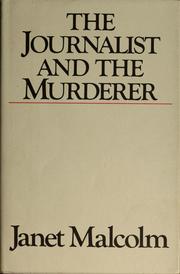
Malcolm's searing philosophical essay on the inherently manipulative relationship between journalist and subject provides the sharpest ethical framework for judging the charges against Kapuściński and for thinking about what journalism owes its subjects.
Discussion
Keep reading
Paths that share books, cover the same subject, or open a related topic.