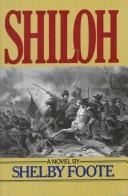
Start with Shiloh. It is a novel, it is about 200 pages, and it does the thing the trilogy does — the battle told from inside six or seven heads, no authorial verdict, the prose carrying the whole load — at a scale you can test in one evening. If the voice works on you here, it will work on you for three thousand pages. If it does not, you have saved yourself a year.
The alternative is to go straight into the history, which is what most people do because the trilogy is why Foote is known. It is a defensible choice and the first volume stands alone perfectly well. But the trilogy is a commitment measured in months, and Shiloh is the cheapest possible way to find out whether you want to make it.
The trilogy
Foote's The Civil War: A Narrative runs to three volumes and roughly 1.2 million words, written over twenty years. Our catalogue holds it in two records:
- The Civil War a Narrative — the combined first and second volumes, Fort Sumter to Perryville and Fredericksburg to Meridian.
- Red River to Appomattox — the third and final volume.
Read them in that order; there is no argument to be had, since the war happened in a sequence.
Honest warnings about the history
Three things are worth knowing before you start, and they are not minor.
There are no footnotes. No bibliography of the usual kind, no source citations, no apparatus at all. Foote considered this a deliberate literary choice and said so; historians have consistently treated it as a serious limitation, since a reader cannot check a claim or trace a scene. Whether that disqualifies the work or simply reclassifies it is genuinely disputed, and both positions are held by serious people.
It is overwhelmingly a military narrative. Battles, generals, movements, decisions. Slavery, emancipation, the political war, the enslaved people whose freedom was the actual stake, and the home front all appear far less than a modern reader expects. Foote's sympathies toward the Confederacy and his handling of Nathan Bedford Forrest have been criticised at length. If you want the war as a whole, this is one half of it and you will want to read alongside something else.
And it is slow by design. Foote wrote in longhand with a dip pen at roughly 500 words a day. The prose is deliberate, the sentences are long, and skimming does not work.
None of that makes it not worth reading. It is one of the great sustained pieces of American narrative prose, and nothing else gives you the war at this granularity.
The fiction
Foote wrote novels before the history and considered himself a novelist first. In our catalogue:
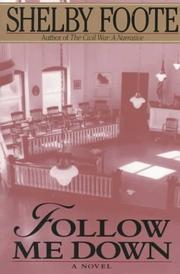
- Follow me down — a murder in Mississippi, told through multiple narrators, and the most technically ambitious of the novels.
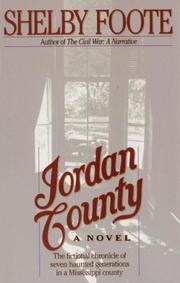
- Jordan County — linked stories moving backwards through a century of one fictional county, which is the Faulkner comparison at its most direct.
- September, September — a 1957 Memphis kidnapping, written much later and the most conventional of them.
Read them after Shiloh and before or during the trilogy. They are short.
The letters
The Correspondence Of Shelby Foote Walker Percy covers a friendship that lasted from adolescence to death, between two Southern writers who took entirely different routes. It is for readers who already care, and it is very good on the practical business of writing something enormous slowly.
Where to stop
A great many readers finish volume one and stop, and that is a legitimate ending — Fort Sumter through Perryville is a complete first act. If you get through the combined first two volumes you will almost certainly finish. Red River to Appomattox contains the best writing in the trilogy, including the Appomattox chapter, so the reward is at the end. More ordered reading when you emerge.
Follow the full ordered path here: Shelby Foote Reading Order: Where to Start.