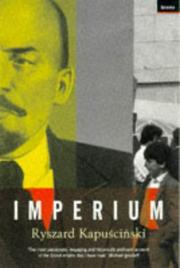
Start with Imperium. It is his account of the Soviet Union — first as a boy in Pinsk in 1939 watching the tanks arrive, then as a reporter travelling the republics as the whole thing came apart between 1989 and 1991. It has the widest range of anything in our catalogue by him, and it shows the method at full stretch: a small scene, a long silence, a sudden move to the historical scale.
An honest note before the sequence. The usual entry points to Kapuściński are The Emperor, on the court of Haile Selassie, and Shah of Shahs, on the fall of the Iranian monarchy — both short, both extraordinary, and neither currently in our catalogue. The Shadow of the Sun and Travels with Herodotus are also missing. If you can get The Emperor, start there instead; it is 160 pages and it is the book that made his reputation outside Poland. Of what is here, Imperium is the right opening.
The sequence
- Imperium — the reportage at its most ambitious.
- The other — four short lectures on encountering people unlike yourself, given late in his life. Under 100 pages, and the closest thing he wrote to a statement of principle. Read it after Imperium and it works as a commentary on it.
- The Shadow of the Sun, if you can find it. Nearly thirty years of Africa reporting, and the book most readers name as his best.
The dispute, and where to put it
Kapuściński's factual accuracy is genuinely contested, and this is not a minor footnote. Kapuscinski non-fiction, Artur Domosławski's biography, documents scenes that appear to be composites, events that cannot be corroborated, and a working method that treated reportage as something closer to literature than to journalism. The book was contested in turn — his widow sought to block publication — and Domosławski is broadly sympathetic rather than prosecutorial. What his defenders and critics mostly agree on is that Kapuściński was writing something other than straight reporting; what they disagree about is whether that is a betrayal or a form.
The reading-order question this creates is real: biography before or after? After. Read at least Imperium and The other first. Read the biography before them and you will spend the reportage auditing it, which is exactly the wrong posture for prose this good and this unreliable.
The context books
Three companions in our catalogue triangulate the same problem from different directions.
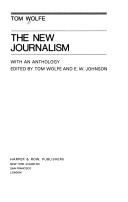
The new journalism, Tom Wolfe's anthology and manifesto, is the American version of the argument — reporters borrowing the techniques of fiction, in the 1960s and 1970s, with Wolfe insisting nothing was invented.
The Art of fact, edited by Kevin Kerrane, is the broader and more scholarly collection, running from Defoe forward, and it is the better book for seeing that this argument is three centuries old.
The journalist and the murderer by Janet Malcolm is the sharpest of the three and the most uncomfortable. Its opening sentence about journalists being morally indefensible is famous; the book that follows is about what a reporter owes a subject. Read it last, after the biography, when you have a case in front of you to test it against.
Honest warnings
Imperium sags in the middle. The long stretch of travel through the Caucasus and Central Asia is repetitive, and the book was assembled from pieces written across decades rather than composed whole; the seams show.
More generally, Kapuściński writes beautifully about places where he was often the only Western reporter present, which is precisely the condition under which nobody can check him. Read him as literature that reports, and the pleasure survives the doubt.
Where to stop
Imperium, The other, and Domosławski's biography make a complete and honest three-book education. Everything else is for readers who want more of the voice. Find your next subject in Discover.
Follow the full ordered path here: Ryszard Kapuscinski Reading Order: Where to Start.