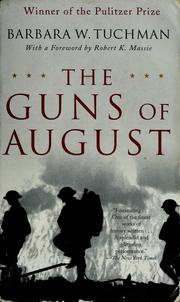
Start with The Guns of August. It won the Pulitzer in 1963, it is the book that made narrative history a commercial category, and it does something few historians attempt: it takes the first month of the First World War — a subject usually handled as diplomacy and staff planning — and writes it as a month in the lives of people making decisions with bad information under enormous pressure. If you have ever been told history is dry, this is the counter-example.
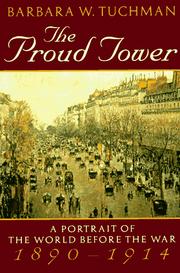
The second choice matters more than the first, because Tuchman's books do not build on each other and reading them in publication order is arbitrary. Read The proud tower next, even though it came out two years later. It covers Europe and America from 1890 to 1914 — anarchists, the Dreyfus affair, the Kaiser's court, the British aristocracy in its last confident decade — and it is effectively the prequel to The Guns of August, explaining the world that walked into the catastrophe.
The short one, and the big one
The Zimmermann Telegram is her earliest major book and the shortest thing on this list. A German telegram proposing an alliance with Mexico, intercepted by British code-breakers, and the manoeuvring that brought it to Woodrow Wilson. It reads like a thriller and takes an evening. Slot it in whenever you want something brisk.
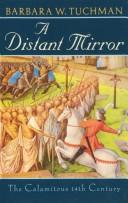
A Distant Mirror is the most ambitious book she wrote: the fourteenth century — plague, the Hundred Years War, schism, chivalry collapsing under its own contradictions — followed through the life of one French nobleman, Enguerrand de Coucy, chosen because his career touched almost everything. It is around seven hundred pages and the payoff is enormous, but be honest with yourself about the commitment. Her thesis, that a calamitous century can illuminate our own, is announced in the title and is more suggestive than demonstrated.
The dense one
Stilwell and the American experience in China is her second Pulitzer and the least-read of her major books. It uses General Joseph Stilwell's career as a lens on the whole American relationship with China from 1911 to 1945, and it is genuinely dense — more institutional and diplomatic detail, fewer of the set-piece scenes that carry her other work. It is also the book where her sympathies are most visible: her account of Stilwell against Chiang Kai-shek has been substantially contested by later historians working from Chinese-language archives. Read it, but read it as an argument.
The one to distrust, and the one for writers
The march of folly is her weakest book and the one most often quoted. The thesis — that governments repeatedly pursue policies against their own evident interest — is illustrated through Troy, the Renaissance papacy, British handling of the American colonies, and Vietnam. The problem is structural: a thesis that selects its own cases cannot be tested by them, and the Vietnam section in particular reads as a book written in the immediate aftermath rather than a settled judgement. Enjoyable, provocative, methodologically shaky.
Practicing history is the collection of essays and lectures on her craft, and it is the one to read if you write anything at all. Her argument that the historian's first duty is to narrative, and that a corroborative detail is worth a paragraph of analysis, is stated here more clearly than anywhere else.
The honest caveat
Tuchman was not an academic historian, held no doctorate, and worked from published sources and archives without the apparatus of a university department. Professional historians have criticised her accordingly, and the most substantive objection concerns The Guns of August: her portrait of railway timetables and rigid war plans dragging Europe into war has been significantly revised by later scholarship on the July crisis, which puts far more weight on deliberate political choices. The book remains the best narrative introduction to August 1914 and should not be your last word on why it happened.
More narrative history paths, including Shelby Foote, are on Discover.
Follow the full ordered path here: Barbara Tuchman Reading Order: Where to Start.