Janet Malcolm Reading Order: Where to Start
Janet Malcolm wrote one subject over and over in different costumes: what happens when one person tries to tell the truth about another. Her books are short, and the order matters less than the pairing — read the two that state her thesis first, then the psychoanalysis book that explains where the thesis came from, then the biography and courtroom books that test it. Nothing here requires anything else, but read in this order the argument compounds.
Start here: the two that define her
IntermediateUnderstand Malcolm's central claim — that journalism is a seduction and a betrayal — and see her prosecute it twice.
▸ Study plan for this stage
Pace: Two weeks. Both books are about 165 pages and each reads in two or three sittings — but read The Journalist and the Murderer slowly, because its argument is made in its sentences rather than in its structure, and skimming it produces a summary rather than a reading. Read In the Freud Archives immedi
- The first sentence of The Journalist and the Murderer — that every journalist not too stupid or too full of himself to notice knows that what he does is morally indefensible — is the frame for everything Malcolm ever wrote, and the rest of her body of work is a set of variations on it
- Her charge is specific: the journalist gains a subject's trust in order to betray it, and the betrayal is structural rather than a lapse of character
- The Journalist and the Murderer builds that case out of a real lawsuit between a convicted murderer and the writer who profiled him, and Malcolm's own position in it is never innocent
- In the Freud Archives performs the same argument rather than stating it: a fight among psychoanalysts over Freud's papers, reported by someone doing precisely what the first book condemns
- Malcolm was sued for libel over In the Freud Archives and the litigation ran for a decade, which makes the ethics of the first book uncomfortably concrete rather than theoretical
- Her prose is the point — short declaratives, an unhurried first person, and a habit of characterising people in a single devastating clause
- She writes non-fiction with the tools of fiction while insisting on the difference, and the tension between those two commitments is where her books live
- Everything of hers is short. A Malcolm book is 160–230 pages, which makes reading her whole catalogue realistic in a way that most bodies of work are not
- State Malcolm's charge against journalism in your own words. What exactly is indefensible, and to whom?
- How does Malcolm position herself in The Journalist and the Murderer — as prosecutor, defendant, or both?
- In the Freud Archives is the argument performed. Where can you catch her doing the thing she has just condemned?
- Malcolm characterises people fast and hard. Find one sentence that decides a person, and consider what it leaves out.
- Does the libel suit she faced strengthen or weaken her argument? Make the case both ways.
- Copy out the first paragraph of The Journalist and the Murderer and keep it. Every later book in this path is testable against it.
- After finishing, find a magazine profile you liked and reread it with Malcolm's charge in mind. This is the exercise the book is designed to produce.
- In In the Freud Archives, note who Malcolm quotes at length and who she summarises. The distribution is an argument.
- Write a two-sentence description of one of her subjects in her manner — decisive, specific, slightly cruel. It is much harder than it looks.
Next up: The thesis is on the table twice; the next book explains where she got the habit of mind that produced it.
The obvious and correct starting point, opening with the most famous first sentence in American non-fiction. Everything else she wrote is a variation on this book.
Read second because it is the same argument performed rather than stated, and because Malcolm was sued over it — which makes the ethics of the first book uncomfortably concrete.
Where the method came from
IntermediateSee the psychoanalytic thinking that underlies her reading of every subject she ever wrote about.
▸ Study plan for this stage
Pace: One week for about 175 pages. This is the shortest stage in the path and the most concentrated. Read it as a single unit rather than in fragments — it is structured around one analyst's account of his own practice and loses coherence when broken up. A careful reader will spend four or five evenings
- Psychoanalysis, the Impossible Profession is Malcolm's first major book and functions as the source code for everything after it
- Transference — the patient's feelings about the analyst standing in for feelings about someone else — is the concept she later transplants wholesale onto the relationship between journalist and subject
- Resistance, and the analyst's principled suspicion of the patient's own account of themselves, is the posture Malcolm takes toward every subject she will ever write about
- The book is built around long conversations with a single New York analyst, which is also the method of her journalism: one articulate informant, closely rendered
- It is genuinely a good introduction to Freudian practice as it existed in mid-century America, and works as that even if you never read another Malcolm book
- The impossibility in the title is professional: analysis is described as a discipline that cannot deliver what it promises and continues anyway
- Read this and the ethics of her journalism stop looking like cynicism and start looking like a theory of mind applied consistently
- It is the least famous of her major books and the one that makes the others make sense
- Define transference from this book, then apply it to the journalist-subject relationship in The Journalist and the Murderer. Where does the analogy hold and where does it break?
- Why is the profession impossible, on the book's own terms?
- Malcolm builds the book around one analyst. What are the costs of that choice, and does she acknowledge them?
- How does an analyst's suspicion of a patient's self-account differ from a journalist's suspicion of a source?
- What does this book explain about her prose style — the flat certainty, the refusal to soften a judgement?
- Write a one-page glossary of the psychoanalytic terms Malcolm uses. She reuses them in every later book without redefining them.
- Reread one chapter of The Journalist and the Murderer immediately after finishing this book. Passages that read as assertion will now read as application.
- Note where Malcolm is sceptical of psychoanalysis itself. She is not a believer, and locating her distance is the key to her tone.
- Summarise the analyst's account of his own work in a paragraph, then ask what he could not have told her. That question is Malcolm's whole method.
Next up: With transference and resistance in hand, her books about biographers and their subjects become legible as case studies rather than as literary criticism.

Her first major book, and the source code for the rest: transference, resistance and the analyst's suspicion of the patient's story are the tools she later turns on journalists and biographers.
Biography as a crime scene
IntermediateFollow Malcolm's argument from journalism into biography and literary criticism, where she is at her most ruthless.
▸ Study plan for this stage
Pace: Four to five weeks for the three, at roughly 225 pages each. Read The Silent Woman first and give it the most time — it is the densest argument in her catalogue. Reading Chekhov is the deliberate change of temperature and can be read quickly. Two Lives is short but morally heavy and should not be ru
- The Silent Woman is ostensibly about the biographers of Sylvia Plath and is actually about the impossibility of biography itself — her best book after The Journalist and the Murderer, and it depends on that book's terms
- Her image of the biographer as a burglar going through a house is the extension of the journalism argument into a longer form, and it is the sentence most people carry away
- Because the Plath estate controlled access, the book is also a case study in how the surviving parties shape a life story — Malcolm interviews the gatekeepers rather than working around them
- Reading Chekhov is a travel book, a critical study and a comedy about her own bad faith as a tourist in Russia — the gentlest thing she wrote and a genuine relief at this point in the path
- It also contains her best straight literary criticism, and it shows that the severity elsewhere is a chosen instrument rather than her only one
- Two Lives takes Gertrude Stein and Alice Toklas and asks the hardest question Malcolm ever asked a subject: how two Jewish women survived Vichy France unmolested
- That book is biography with the sympathy deliberately withheld, and it is the clearest demonstration of what her method costs the people it is applied to
- Across all three, the recurring structure is Malcolm reporting on other people's attempts to tell a true story about someone, which lets her make her argument without exempting herself
- What is the biographer accused of in The Silent Woman, and how is the charge different from the one levelled at journalists?
- The Plath estate controlled the archive. How does Malcolm turn that obstacle into her subject?
- Reading Chekhov is warmer than anything around it. What changes — the subject, the stakes, or Malcolm's position?
- In Two Lives, what is Malcolm implying about Stein and Toklas, and where does she stop short of saying it outright?
- Withholding sympathy is a technique here. What does it buy her, and what does it cost the reader?
- Which of these three would you defend to someone who finds her cruel?
- Find Malcolm's burglar image in The Silent Woman and copy it out beside the opening line of The Journalist and the Murderer. The pair is her complete position.
- List who Malcolm interviews in The Silent Woman and what each one is protecting. The book is a map of interests.
- Read one Chekhov story before or during Reading Chekhov. The book assumes acquaintance and is far richer with it.
- After Two Lives, write the paragraph Malcolm declines to write — the direct accusation. Then consider why she left it to you.
Next up: Having watched her prosecute journalists and biographers, the next stage puts her in a room where somebody else decides whose story is true.
Ostensibly about the biographers of Sylvia Plath, actually about the impossibility of biography itself. Her best book after The Journalist and the Murderer, and it depends on that book's terms.
A travel book, a critical study and a comedy about her own bad faith as a traveller. The gentlest thing she wrote, and a useful change of temperature at this point.
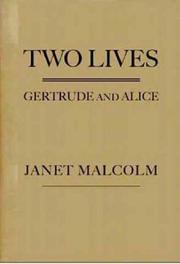
Gertrude Stein and Alice Toklas, and the hardest question Malcolm ever asked a subject: how two Jewish women survived Vichy France. Biography with the sympathy withheld.
The courtroom books
IntermediateWatch Malcolm apply the same suspicion to a legal proceeding, where a jury has to decide whose story is true.
▸ Study plan for this stage
Pace: Two weeks for two books of about 165 pages each. Both are short and both are unusually demanding for their length — the legal detail in The Crime of Sheila McGough is genuinely hard to follow, and rereading a chapter is normal rather than a failure. Iphigenia in Forest Hills reads faster and hits ha
- A trial is the ideal Malcolm setting: two incompatible stories, a required verdict, and no possibility of both sides being heard fairly
- The Crime of Sheila McGough is the least read of her books and the most contrarian — a defence of a convicted lawyer that essentially nobody else believed
- Its argument is that Sheila McGough was convicted for being a bad storyteller rather than a criminal, which is Malcolm's thesis about narrative pushed to its limit case
- It is also the book where readers most often decide she has overreached, and testing that judgement is the reason to read it
- Iphigenia in Forest Hills covers a murder trial in Queens and is the purest late demonstration of her method: compressed, exact, and openly partisan
- In it she admits outright that she has taken a side, which after seven books of dissecting other people's biases is the point rather than a lapse
- Both books are about how a jury is asked to choose between narratives, which is the same problem she has been describing since the first page of The Journalist and the Murderer
- The immigrant community at the centre of Iphigenia is rendered with real attention, and her account of how a closed community's testimony reaches an American court is the book's best reporting
- What is Malcolm's actual claim about Sheila McGough's conviction, and what evidence does she offer that the jury did not have?
- Is The Crime of Sheila McGough persuasive? If not, is the failure hers or the case's?
- Why does Malcolm declare her allegiance in Iphigenia in Forest Hills, and what does the declaration do to your trust in her?
- How does a courtroom differ from a magazine profile as a machine for producing a version of a person?
- After both books, has Malcolm answered her own charge against journalism or merely restated it more honestly?
- Write out the prosecution case in The Crime of Sheila McGough as fairly as you can before reading Malcolm's rebuttal. The book works far better against a real opponent.
- In Iphigenia in Forest Hills, mark the point where she admits her sympathies, then reread the preceding twenty pages to see how visible they already were.
- Compare the two endings. One book cannot close its case and the other refuses to; decide which is the stronger position.
- Note how she describes lawyers as narrators. It is the same vocabulary she used for journalists and biographers, applied to a third profession.
Next up: The argument has now been tested in three professions; the remaining books are the magazine work and the memoir she spent a career refusing to write.
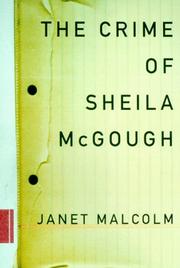
The least read of her books and the most contrarian: a defence of a convicted lawyer nobody else believed. Read it as the limit case of her method.

A murder trial in Queens, and the purest late demonstration of what she does — she openly admits she has taken a side, which after seven books is the point.
The essays
IntermediateRead the collections that show the range of the magazine work, and the memoir she resisted writing for decades.
▸ Study plan for this stage
Pace: Four to five weeks for the three. Forty-One False Starts and Nobody's Looking at You are collections and should be read one piece at a time over several weeks — a collection read straight through flattens the range that is the reason for reading it. The posthumous memoir listed here as Pictures is s
- Forty-One False Starts is her best collection, and the title piece — a profile of the painter David Salle assembled from forty-one abandoned openings — is a formal experiment that justifies the book on its own
- That piece is also her clearest statement of method by demonstration: it shows the choices a profile normally hides, which is exactly what she has spent seven books arguing that profiles conceal
- Nobody's Looking at You collects the late essays and profiles and is lighter, funnier and more sociable than the books — proof that the severity was a choice rather than a limitation
- The magazine work is where her range shows: art criticism, obituary, court reporting, gossip and reviewing, all in the same voice
- The memoir listed here as Pictures — published as Still Pictures — is her posthumous book, written in fragments around old photographs, with an afterword by Ian Frazier
- It is the sharpest irony in the catalogue: a woman who spent a career arguing that autobiography is unreliable, writing hers, and structuring it around the least verbal evidence available
- Its fragmentary form is not a failure of completion; the refusal to build a continuous life story is the position she has held since 1990
- Read in this order the argument compounds — the memoir is only fully readable as the last statement of a career-long case against the memoir
- What does the forty-one-openings structure reveal about profile writing that a finished profile would hide?
- How is the voice in Nobody's Looking at You different from the voice in the books, and what does the difference tell you about her control?
- The memoir organises a life around photographs rather than narrative. What can a photograph do for her that a remembered scene cannot?
- Malcolm argued for decades that autobiography is unreliable. Does the memoir concede the point, evade it, or prove it?
- Having read the whole catalogue, is her charge against journalism a moral position or an aesthetic one?
- Read the title piece of Forty-One False Starts twice — once for the subject, once for the structure. They are almost unrelated readings.
- Pick one essay from Nobody's Looking at You and rewrite its opening in the severe register of her books. The comparison shows how much of her effect is tone.
- In the memoir, note which photographs she describes and which she declines to explain. The withholding is deliberate and characteristic.
- Return to the first sentence of The Journalist and the Murderer and write a paragraph on whether her own last book is defensible by its standard.
- Make a list of the six or seven books here in the order you would now recommend them. It will differ from this path, and the differences are your reading of her.
Next up: You have the whole of Malcolm — one argument, eight times, from every professional angle she could find, ending with herself in the dock.

Her best collection, and the title piece is a formal experiment worth the book on its own — a profile assembled from forty-one abandoned openings.
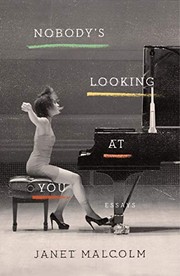
Late essays and profiles, lighter and funnier than the books. A good demonstration that the severity was a choice, not a limitation.
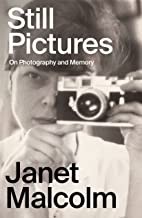
The posthumous memoir, written in fragments around old photographs by a woman who spent a career arguing that autobiography is unreliable. The right last book.
Discussion
Keep reading
Paths that share books, cover the same subject, or open a related topic.