Shelby Foote Reading Order: Where to Start
This curriculum centers on Shelby Foote himself — his monumental Civil War Narrative trilogy read in sequence, bracketed by his fiction to reveal the full range of his literary voice. Starting at an intermediate level, the path moves from his novels (which are shorter and sharpen your ear for his prose style) through the three massive volumes of the trilogy, closing with a reflective stage that contextualizes Foote's place in Southern letters.
Getting Foote's Voice: The Novels
IntermediateAbsorb Foote's prose rhythm, his Southern Gothic sensibility, and his character-driven storytelling before tackling the epic scale of the trilogy.
▸ Study plan for this stage
Pace: 8–10 weeks total: ~2.5 weeks per book at a relaxed but consistent pace. "Shiloh" (~215 pp): ~20 pages/day over 2 weeks. "Follow Me Down" (~245 pp): ~20 pages/day over 2.5 weeks. "Jordan County" (~310 pp): ~20 pages/day over 3 weeks. Reserve the final 3–4 days of each book for review, journaling, and
- Polyphonic narration: In 'Shiloh,' Foote rotates among six Union and Confederate soldiers, each with a distinct idiom — study how voice, diction, and syntax alone characterize a man's origin, rank, and psychology.
- Compression and intensity: 'Shiloh' covers a single two-day battle; notice how tight temporal framing forces every sentence to carry dramatic weight and how Foote uses the micro to illuminate the macro of the Civil War.
- Southern Gothic sensibility: 'Follow Me Down' uses a murder trial frame to spiral into obsession, sin, and redemption — identify the Gothic hallmarks (isolation, moral decay, the grotesque, the weight of the past) that recur across all three books.
- Multiple-perspective unreliability: In 'Follow Me Down,' eight narrators tell the same story with contradictory emphases — track what each narrator withholds, distorts, or overemphasizes, and what that reveals about Foote's view of truth and memory.
- The Mississippi Delta as a living character: Across all three books, and especially in 'Jordan County,' the landscape — its heat, its river, its racial geography — is not backdrop but agent; practice identifying passages where setting drives plot or psychology.
- Cyclical and chronicle structure: 'Jordan County' is a linked story cycle moving backward in time from the 1940s to the early 19th century — understand how Foote uses this reverse chronology to argue that the present is always haunted by an accumulating past.
- Character interiority vs. dramatic restraint: Foote rarely editorializes; he renders consciousness through action, dialogue, and free indirect discourse — mark passages where you feel the most emotion and analyze how Foote achieved it without stating it.
- Thematic continuity across the three books: War, guilt, isolation, race, and the mythology of the South appear in all three — begin building a thematic map that will serve as a foundation for reading the Civil War trilogy.
- In 'Shiloh,' how does Foote use the rotation of six distinct soldier-narrators to create a composite picture of the battle that no single narrator could provide — and which narrator did you find most and least reliable, and why?
- In 'Follow Me Down,' the murder itself is never in dispute, yet the novel generates sustained suspense — what narrative and structural techniques does Foote use to make a known outcome feel uncertain, and how does each of the eight narrators reframe the meaning of the crime?
- How does the Mississippi Delta landscape function differently in 'Shiloh' (a Tennessee battlefield), 'Follow Me Down' (the river and its island), and 'Jordan County' (the Delta town of Bristol across 150 years) — and what does each book's use of place reveal about Foote's sense of Southern identity?
- Trace the theme of isolation — physical, moral, and spiritual — across all three books. How does Foote's treatment of isolated characters (the soldier cut off from his unit, the man on the island, the figures in Jordan County's linked stories) evolve from book to book?
- After reading all three books, how would you describe 'Foote's voice' in concrete, technical terms — sentence length, rhythm, vocabulary level, use of dialect, handling of time? What remains consistent, and what shifts between the novels?
- How does 'Jordan County's' reverse chronology change the emotional experience of reading it compared to the forward-moving narratives of 'Shiloh' and 'Follow Me Down' — and what argument about Southern history does that structure implicitly make?
- Voice transcription drill (after 'Shiloh'): Choose two of the six soldier-narrators and transcribe one paragraph from each by hand. Then write a single paragraph of your own in each voice, inventing a scene not in the novel. Compare your attempts — where did the voice slip, and why?
- Unreliable narrator matrix (after 'Follow Me Down'): Create a simple grid with the eight narrators as rows and five key 'facts' of the story as columns. Mark each cell: does the narrator confirm, contradict, omit, or distort that fact? Write a one-paragraph conclusion about what the completed grid tells you about Foote's epistemology.
- Landscape annotation exercise (ongoing across all three books): Each time you encounter a passage of more than three sentences describing the natural or built environment, mark it and write one sentence in the margin answering: 'What is this landscape doing to a character or to the plot right now?' Compile your annotations at the end of each book.
- Reverse-chronology rewrite (after 'Jordan County'): Take the two stories in 'Jordan County' that feel most thematically linked to you and write a one-page 'bridge' scene — set between their time periods — in Foote's style. Focus on matching his sentence rhythm and his restraint around emotional statement.
- Thematic map (cumulative, completed after all three books): On a single page, draw a web connecting the three books. Nodes should include recurring themes, character types, settings, and structural devices. Draw lines between nodes that appear in more than one book and annotate each line with a one-sentence observation. This map will serve as your reference document for the trilogy.
- Prose rhythm analysis (choose any book): Select one page you found especially powerful. Read it aloud and mark the stressed syllables. Count average sentence length, note where Foote uses fragments or run-ons for effect, and identify any anaphora, asyndeton, or other rhetorical patterns. Write a half-page reflection on how the sound of the prose creates its emotional effect.
Next up: Having internalized Foote's narrative voice, his multi-perspective architecture, his use of landscape, and his thematic preoccupations across three novels, the reader is now equipped to recognize and appreciate how Foote scales all of these same techniques — polyphony, compression, place-as-character, moral ambiguity — to the vast, three-volume canvas of "The Civil War: A Narrative."
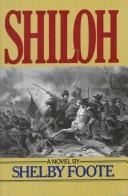
Foote's most celebrated novel uses multiple first-person narrators to reconstruct the 1862 battle — it is the perfect bridge between his fiction and his later historical work, and short enough to read in a sitting or two.
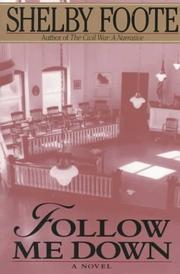
A tightly constructed crime novel told through seven voices; it showcases Foote's Faulknerian command of perspective and Mississippi Delta atmosphere, deepening your feel for his novelistic range.

This linked story cycle traces a fictional Mississippi county backward through time, giving you the full sweep of Foote's invented world and the historical consciousness that underpins the trilogy.
The Civil War Narrative, Vol. I: Fort Sumter to Perryville
IntermediateFollow the war's opening two years — the political crisis, First Bull Run, Shiloh, and the campaigns of 1862 — through Foote's narrative prose, learning his method of weaving biography, tactics, and drama.
▸ Study plan for this stage
Pace: 8–10 weeks for Volume I only (Fort Sumter to Perryville, ~840 pages); aim for ~25–30 pages per day, 5 days a week, leaving 2 days for review, mapping, and note-taking. Reserve the final week for synthesis and reflection before moving to Volume II.
- Foote's narrative method: how he blends biography, tactical description, and dramatic scene-setting into a single flowing prose style without footnotes or academic apparatus
- The political and social fracture of 1860–61: secession, the failure of compromise, and how Foote frames both Union and Confederate leadership as products of their cultures
- First Bull Run (First Manassas) as a structural turning point: Foote uses it to shatter Northern illusions and establish the war's true scale and character
- The emergence of key commanders — Grant, Sherman, Johnston, Beauregard, and McClellan — and Foote's technique of introducing figures through revealing personal anecdote before placing them on the battlefield
- The Western Theater's early primacy: Forts Henry and Donelson, Island No. 10, and Shiloh as the crucible in which Grant's generalship is forged and tested
- The Peninsula Campaign and Second Bull Run: Foote's portrait of McClellan's caution versus Lee's audacity as a study in contrasting command philosophies
- Antietam and its political aftermath: how Foote connects battlefield outcome to Lincoln's Emancipation Proclamation, showing the war's transformation from a conflict over union to one over slavery
- Foote's use of the common soldier's perspective — letters, diaries, and eyewitness accounts — to humanize grand strategy and keep the reader grounded in individual experience
- How does Foote structure his opening chapters to convey the sense of inevitability surrounding secession, and what rhetorical choices signal his sympathy or detachment toward each side?
- What narrative techniques does Foote use at Shiloh to build suspense across two days of fighting, and how does he handle the controversy over Grant's alleged unpreparedness?
- Compare Foote's characterizations of Ulysses Grant and George McClellan in Volume I — what biographical details does he select, and what do those choices reveal about his view of effective generalship?
- How does Foote weave the political story (Lincoln, Davis, Congress) into the military narrative without breaking the dramatic momentum of campaign chapters?
- In what ways does Foote's account of Antietam function as both a tactical history and a moral turning point in the larger narrative arc of the war?
- What is Foote's attitude toward the Confederate cause as expressed in Volume I, and how does he balance that perspective against his evident admiration for figures like Grant and Lincoln?
- Keep a 'Character Ledger': each time Foote introduces a major figure, write a 3–5 sentence profile capturing the biographical detail he leads with, the trait he seems to be foreshadowing, and your own prediction of that figure's arc — revisit and revise after each major battle.
- Parallel-map exercise: for each major campaign (Fort Donelson, Shiloh, the Peninsula, Antietam), sketch a rough hand-drawn map of troop movements using only Foote's prose as your source, then compare it to a published atlas of the Civil War to assess how well his narrative geography holds up.
- Prose imitation journal: select one paragraph of Foote's battle narration that you find especially vivid, analyze its sentence rhythm and point-of-view shifts, then write your own 200-word passage describing a different moment in the same battle using his techniques.
- Dual-perspective reading log: after each major engagement, write two short paragraphs (one Union, one Confederate) summarizing what Foote emphasizes from each side's experience — this trains you to notice whose voices he privileges and when.
- Timeline wall chart: build a running chronological timeline on paper or a whiteboard, plotting military events alongside political events (congressional debates, Davis's cabinet crises, Lincoln's proclamations) to visualize the interplay Foote constructs between the two spheres.
- Critical comparison essay (500–700 words): after finishing Volume I, choose one battle and compare Foote's account to a single primary source (an officer's memoir or a soldier's published letters available online or in a library) — note what Foote includes, omits, or dramatizes differently, and what that reveals about his narrative priorities.
Next up: Completing Volume I establishes fluency in Foote's narrative voice and his East-West structural balance, equipping the reader to track the war's dramatically escalating complexity — longer campaigns, harder political choices, and more psychologically nuanced commanders — that Volume II (Fredericksburg to Meridian) demands.
Volume I establishes Foote's approach: no footnotes, novelistic pacing, equal attention to both sides. Reading his novel Shiloh first means you arrive at the battle's chapter with vivid prior knowledge, making the contrast and depth electrifying.
The Civil War Narrative, Vol. III: Red River to Appomattox
ExpertWitness the war's devastating endgame — the Overland Campaign, Sherman's March, Petersburg, and surrender — and arrive at a complete, hard-won understanding of Foote's twenty-year achievement.
▸ Study plan for this stage
Pace: 10–12 weeks, ~25–30 pages/day — Red River to Appomattox runs roughly 1,100 pages of dense, novelistic prose; a measured pace of 25–30 pages daily (with one lighter day per week for review and reflection) allows the advanced reader to absorb Foote's layered battle narratives, character studies, and t
- The Overland Campaign's grinding attrition — understanding Grant's strategic logic of relentless pressure on Lee, accepting unprecedented casualties to destroy the Army of Northern Virginia's ability to replace losses
- The evolution of total war — Sherman's March to the Sea and through the Carolinas as a deliberate assault on Confederate civilian infrastructure, morale, and the Southern will to fight
- The Petersburg siege as the death knell of Confederate mobility — how trench warfare prefigured World War I and trapped Lee in a static defense that made ultimate defeat inevitable
- Lincoln's political and moral leadership in 1864 — navigating re-election, war weariness, the peace movement, and the Thirteenth Amendment as inseparable from the military narrative
- The collapse of the Confederate home front — desertion, food shortages, Davis's political failures, and the disintegration of Southern society under the weight of sustained war
- Foote's narrative craft at full maturity — his cinematic scene-cutting between theaters, his elegiac tone for a dying Confederacy, and his moral complexity in portraying figures like Grant, Sherman, Lee, and Hood
- The human cost as cumulative theme — how Foote uses individual soldiers' fates across all three volumes to make the war's staggering death toll emotionally legible, not merely statistical
- Appomattox as both ending and beginning — the meaning Foote assigns to surrender, reconciliation, and the unresolved questions of race and Reconstruction that the narrative deliberately leaves open
- How does Foote characterize Grant's generalship during the Overland Campaign — does he present it as brilliant strategic vision, brutal arithmetic, or some morally ambiguous combination of both, and what specific episodes support your reading?
- In what ways does Foote's treatment of Sherman's March challenge or complicate a simple 'hero vs. villain' framing, and how does his prose style itself shape the reader's emotional response to the destruction depicted?
- How does the Petersburg siege function thematically in the volume — what does Foote suggest it reveals about the nature of the war, the character of Lee, and the exhaustion of the Confederate cause?
- Foote spent twenty years writing this trilogy; using evidence from Red River to Appomattox specifically, what argument can you construct about what Foote believed the Civil War ultimately meant for American identity?
- How does Foote handle the near-absence of enslaved and freed Black Americans as active agents in his narrative of the war's final year, and what are the literary and historical implications of those choices?
- Trace the arc of a single Confederate commander — Hood, Johnston, or Beauregard — through this volume: how does Foote use that figure to illuminate the larger story of Confederate institutional failure?
- Maintain a 'Theater Map Journal': each week, sketch a rough map of the active military theaters (Virginia, Georgia/Carolinas, the Trans-Mississippi) and annotate it with the week's key movements — this spatial practice counters Foote's rapid scene-cutting and builds a unified strategic picture
- Write a 500-word 'Foote vs. the Historians' memo after finishing the Overland Campaign chapters: compare Foote's characterization of Grant to one outside source (e.g., a review by James McPherson or Gary Gallagher) and articulate where Foote's literary choices diverge from scholarly consensus
- Conduct a close-reading exercise on any two consecutive battle set-pieces (e.g., the Crater at Petersburg and a Sherman engagement): annotate Foote's sentence-level techniques — point of view shifts, pacing, dialogue, imagery — and write a one-page analysis of how his prose creates narrative tension
- Draft a 'Character Retrospective': choose one figure who appears in all three volumes (Lee, Grant, Sherman, or Davis) and write a two-page essay tracing how Foote's portrayal of that person evolves from Fort Sumter to Appomattox, using specific passages from this volume as your anchor
- Re-read Foote's Appomattox closing pages slowly and write a personal reflection: what does Foote choose to end on, what does he omit, and do you find his conclusion emotionally and historically satisfying — why or why not?
- Create a 'Twenty-Year Achievement' synthesis document: list the five most important structural or stylistic decisions Foote made across the full trilogy (as evidenced in this final volume) and argue, in a short paragraph each, why those decisions succeed or fail as both literature and history
Next up: By completing Red River to Appomattox, the reader has internalized Foote's full narrative vision and is now equipped to engage critically with the historiographical debates surrounding the trilogy — making this the ideal launching point for a stage focused on Civil War scholarship, biography, and critical reassessment that either deepens or challenges what Foote built.

The concluding volume rewards every mile of the journey; Foote's elegiac closing pages on Lincoln's death and the armies' disbanding carry full emotional weight only because you have traveled the entire war alongside him.
Reflection & Context: Foote in Southern Letters
ExpertPlace Foote's life and work within the broader tradition of Southern literature and Civil War historiography, and hear his voice one final time in his own words.
▸ Study plan for this stage
Pace: 6–8 weeks total: Weeks 1–3 on *September, September* (~20–25 pages/day, savoring the prose slowly); Weeks 4–8 on *The Correspondence of Shelby Foote & Walker Percy* (~15–20 pages/day, pausing frequently to journal reactions and cross-reference themes).
- Foote's fiction as a lens on Southern identity, race, and moral ambiguity — *September, September* dramatizes the 1957 Memphis kidnapping to expose the fault lines of a society on the cusp of the Civil Rights era
- The Southern Gothic tradition and Foote's place within it: how he uses regional specificity, flawed characters, and a sense of doom to illuminate universal human tensions
- The relationship between Foote's fiction and his historiography — how the novelist's eye shapes his Civil War narrative voice, and vice versa
- Literary friendship as intellectual crucible: the Foote–Percy correspondence as a decades-long dialogue about craft, faith, Southern identity, and the writer's vocation
- Foote's aesthetic philosophy — his debt to Proust, his insistence on the primacy of storytelling over argument, and his resistance to didacticism in both fiction and history
- Civil War historiography in context: how Foote's narrative approach differs from academic historians, and the debates his work sparked about 'Lost Cause' framing and authorial sympathy
- The role of place — Memphis, the Mississippi Delta, the Deep South — as a living character in Foote's imagination, connecting *September, September* to his broader body of work
- Foote's voice in his own words: how the letters reveal the private man behind the public monuments of the trilogy and the Ken Burns documentary persona
- How does *September, September* use the 1957 kidnapping plot to interrogate race, class, and complicity in the mid-century South, and what does Foote's narrative stance reveal about his own moral position?
- In what ways does the Foote–Percy correspondence illuminate the tensions between Foote's secular, aesthetic humanism and Percy's Catholic existentialism — and how did each man's worldview sharpen the other's writing?
- How does Foote situate himself within — and distinguish himself from — the Southern literary tradition represented by Faulkner, Warren, and his contemporaries, as evidenced in both the novel and the letters?
- What does the correspondence reveal about Foote's working methods, his relationship to his audience, and his self-conception as simultaneously a novelist and a historian?
- How do the themes of *September, September* — guilt, silence, racial violence, and the performance of Southern respectability — connect to the moral and historical arguments implicit in Foote's Civil War trilogy?
- Based on both books, how would you characterize Foote's ultimate legacy: is he best understood as a Southern novelist, a narrative historian, a public intellectual, or something that resists all three categories?
- **Close-reading comparison:** Select one passage from *September, September* that deals with race or moral ambiguity and one letter from the correspondence in which Foote discusses race or the Civil Rights movement. Write a 500-word analysis of how his private and fictional voices converge or diverge.
- **Tradition mapping:** Create a visual 'literary family tree' placing Foote among Southern writers (Faulkner, Welty, Warren, O'Connor, Percy) and Civil War historians (Bruce Catton, Douglas Southall Freeman). Annotate each connection with specific evidence from the two books in this stage.
- **Letter imitation:** Write a 1–2 page letter in Foote's epistolary voice — as revealed in the correspondence — responding to a contemporary debate about Confederate monuments or Civil War memory. Focus on capturing his rhetorical style, not necessarily his views.
- **Thematic timeline:** Chart the evolution of Foote's thinking on a single theme (e.g., Southern identity, the writer's responsibility, or the nature of heroism) as it appears across *September, September* and the arc of the letters. Note how his position shifts or deepens over time.
- **Critical dialogue:** Read one scholarly review or essay critiquing Foote's handling of race — either in his fiction or his Civil War work — then write a rebuttal *and* a concession, drawing only on evidence from the two books in this stage.
- **Synthesis essay:** Write a 750–1,000 word capstone essay answering: 'What does it mean to be a Southern writer in the second half of the twentieth century?' Use *September, September* as your primary text and the correspondence as your critical apparatus.
Next up: By grounding Foote's voice in both his final novel and his most intimate private writing, this stage equips the reader with the full human and intellectual portrait needed to engage critically with scholarly assessments, biographical studies, or comparative curricula on Civil War literature and Southern letters that would naturally follow.
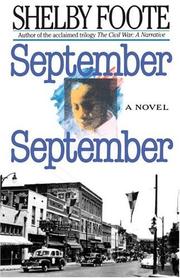
Foote's last novel, set in 1957 Memphis during the Little Rock crisis, shows how his historical imagination extended beyond the Civil War; reading it after the trilogy reveals the through-line of race and memory in all his work.

This fifty-year exchange with his closest friend Walker Percy is the best available record of Foote's literary philosophy, his views on the South, and the long gestation of the trilogy — an essential epilogue to the whole curriculum.
Discussion
Keep reading
Paths that share books, cover the same subject, or open a related topic.