Barbara Tuchman Reading Order: Where to Start
This curriculum guides you through Barbara Tuchman's work from her most accessible and celebrated narrative history to her dense, panoramic masterworks, closing with her own reflections on the historian's craft. Each stage builds the reader's familiarity with her prose style, her method of "history through biography," and her thematic preoccupations — hubris, leadership failure, and the gap between intention and outcome — so that by the final stage her essays feel like a master class you are fully equipped to absorb.
The Entry Point — One Perfect Story
BeginnerExperience Tuchman at her most gripping and focused; learn her narrative method and her gift for making distant events feel immediate and personal.
▸ Study plan for this stage
Pace: 4–5 weeks, ~25–30 pages per day; read in two natural halves — Chapters 1–10 in weeks 1–2 (the political chess-game and mobilization), Chapters 11–22 in weeks 3–4 (the campaigns themselves) — then spend week 5 reviewing notes and completing exercises
- Narrative history as literature: Tuchman treats real events with the pacing, tension, and characterization of a novel — notice how she opens with the funeral of Edward VII as a scene, not a fact
- The 'Guns of August' thesis: rigidity of war plans (especially the Schlieffen Plan) trapped decision-makers into catastrophe, showing how institutional momentum can override human judgment
- Character as historical force: Tuchman profiles individuals — Moltke, Joffre, French, Kluck — to argue that personality, vanity, and fatigue shape grand events as much as strategy does
- Dramatic irony as a rhetorical tool: the reader knows the war will last four years; the generals do not — Tuchman exploits this gap to create dread and pathos throughout
- The 'fog of war' and the limits of intelligence: miscommunication, false reports, and sheer confusion recur as structural themes, not mere anecdotes
- Compression and selection: Tuchman covers August 1914 only — a single month — demonstrating that depth of focus, not breadth of coverage, produces the most vivid history
- The moral dimension: Tuchman never pretends to be purely neutral; her prose carries ethical judgments about hubris, missed opportunities, and the human cost of pride
- Primary-source craftsmanship: pay attention to the bibliography and footnotes — Tuchman builds her narrative from diaries, dispatches, and memoirs, modeling how evidence becomes story
- How does Tuchman use the funeral of Edward VII in the opening chapter to set the book's tone and foreshadow its central argument about European civilization sleepwalking into disaster?
- What is the Schlieffen Plan, and why does Tuchman treat its inflexibility as the book's central dramatic engine rather than simply a military-history footnote?
- Choose one commander Tuchman profiles in depth (e.g., Moltke, Joffre, or Sir John French) — how does she use that individual's personality to illuminate a broader historical failure?
- Identify two specific passages where Tuchman uses dramatic irony. What does the reader know that the characters do not, and how does this shape your emotional response?
- Why does Tuchman confine the book to a single month? What does this narrow time-frame allow her to do that a broader survey of World War I could not?
- How does Tuchman balance sympathy for ordinary soldiers with criticism of the generals who commanded them? Find at least one scene that captures this tension.
- Scene dissection: Pick any three-page passage you found gripping and annotate it line by line — mark where Tuchman inserts a telling detail, shifts perspective, uses irony, or makes an explicit moral judgment. Then write a one-paragraph reflection on how these techniques work together.
- Character sketch comparison: Choose two commanders Tuchman profiles and write a one-page side-by-side comparison of how she portrays their decision-making under pressure. What narrative techniques does she use differently for each, and why might she have made those choices?
- Reverse-outline a chapter: Take one chapter (Chapter 2, 'Let the Right Hand Swing,' works especially well) and reconstruct its outline after reading — identify the opening hook, the evidence blocks, the turning point, and the closing image. This reveals Tuchman's hidden architecture.
- Map the month: Using a blank calendar for August 1914, fill in the key events Tuchman covers as you read. By the end, you will have a visual argument for why the compression of one month is so dramatically powerful — and you will notice what she chose to leave out.
- Primary-source hunt: Select one event from the book and find the primary source Tuchman cites for it in her bibliography (many are available online or in libraries). Read a page or two of the original, then write a short paragraph on what Tuchman kept, what she cut, and what interpretive choices she made.
- Write your own Tuchman-style opening paragraph: Choose any historical event you know well and write a 200-word opening in Tuchman's style — begin with a vivid scene, introduce a named individual, and embed the larger stakes without stating them directly. This exercise makes her method visceral and personal.
Next up: Mastering Tuchman's narrative method and her single-month microscope in The Guns of August gives you the analytical vocabulary — scene-building, character-as-argument, dramatic irony, moral voice — to recognize and interrogate those same tools across her wider and more varied body of work in subsequent stages.
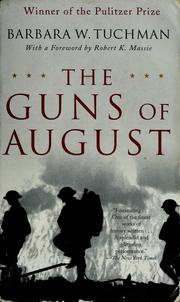
Her Pulitzer Prize-winning masterpiece and the ideal entry point: a single, propulsive month of World War I told with novelistic tension. It establishes every hallmark of her style — vivid character portraits, dramatic pacing, and moral judgment — without requiring prior knowledge of the period.
Broadening the Range — Two More Narrative Histories
BeginnerSee that Tuchman's method works across wildly different eras and subjects, building confidence with her voice and her habit of using a single figure or episode as a lens onto a whole age.
▸ Study plan for this stage
Pace: 10–12 weeks total: ~3 weeks on The Zimmermann Telegram (~30 pages/day, ~190 pages) and ~7–8 weeks on A Distant Mirror (~25–30 pages/day, ~650 pages), with one buffer week for re-reading key passages and reflection.
- The 'lens' technique: Tuchman uses a single telegram/event or a single life (Enguerrand de Coucy VII) to illuminate an entire era rather than surveying it encyclopedically
- Narrative drive in non-fiction: how Tuchman structures chapters like scenes in a novel, with rising tension, vivid characters, and payoff moments — visible in the spy-thriller pacing of The Zimmermann Telegram and the elegiac sweep of A Distant Mirror
- Cross-era versatility of her method: The Zimmermann Telegram covers weeks of 1917 diplomacy while A Distant Mirror spans decades of 14th-century Europe, yet both use the same toolkit of granular detail + big-picture consequence
- The role of catastrophe as a historical lens: the Black Death, the Hundred Years' War, and WWI's entry of the United States are all treated as crises that expose underlying social, political, and human truths
- Character as historical argument: Coucy's biography in A Distant Mirror is not mere biography — it is Tuchman's evidence for what the medieval nobility valued, feared, and destroyed; similarly, the telegram's human handlers reveal the machinery of statecraft
- Primary-source texture: Tuchman quotes dispatches, chronicles, and eyewitness accounts to create immediacy — readers should notice how she signals a source and then dramatizes it
- Calamity and human agency: both books ask how much individuals shape events versus how much they are swept along — a recurring Tuchman philosophical thread
- Scope management: how Tuchman decides what to leave out, keeping a 600-page medieval history readable for a general audience
- How does Tuchman use the Zimmermann Telegram itself — a single decoded document — to tell the larger story of America's entry into World War I, and what would be lost if she had started with a broad diplomatic survey instead?
- In A Distant Mirror, why does Tuchman choose Enguerrand de Coucy VII as her central figure rather than a king or pope, and what does that choice reveal about her historical priorities?
- Both books deal with catastrophic disruption (world war, plague, endless warfare). How does Tuchman's narrative tone shift — or stay consistent — when she is describing mass suffering versus individual decision-making?
- Identify one passage in each book where a primary source (a telegram, a chronicle entry, a contemporary account) is quoted and then dramatized. What technique does Tuchman use to move from document to narrative?
- After reading both books, how would you describe 'the Tuchman method' to someone who has never read her? What are its two or three most recognizable features?
- A Distant Mirror has been criticized for over-relying on Coucy's life as a frame, since records about him are incomplete. Do you find this a weakness in the book, and how does Tuchman handle gaps in the historical record?
- **The Telegram as Lens exercise:** Before starting Chapter 1 of The Zimmermann Telegram, write a one-paragraph prediction of what the book will cover based only on the title. After finishing, write a second paragraph on what the telegram actually 'unlocked' historically. Compare the two to see how a single artifact can carry an entire era.
- **Chapter-mapping for narrative structure:** Choose any three consecutive chapters from A Distant Mirror and outline each one as if it were a short story — identify the opening hook, the central tension, the key characters, and the closing image. This makes Tuchman's scene-building visible and concrete.
- **Source-spotting log:** Keep a running list of every time Tuchman cites a primary source in both books (a dispatch, a chronicle, a letter). Note the source, the quote, and the sentence that follows it. By the end, you will have a clear picture of how she balances evidence and storytelling.
- **Parallel catastrophe comparison:** Write a one-page (300–400 word) comparison of how Tuchman describes the shock of the Black Death in A Distant Mirror versus the shock of the decoded telegram landing on Woodrow Wilson's desk in The Zimmermann Telegram. Focus on sentence rhythm, word choice, and emotional register.
- **'What did I just learn about the age?' journal:** After every 50 pages of A Distant Mirror, pause and write 3–5 bullet points about 14th-century life that surprised you. At the end of the book, review all entries — this trains the habit of reading narrative history for social and cultural content, not just plot.
- **Mini-essay: Defend or challenge the lens:** Write a 500-word essay arguing either FOR or AGAINST Tuchman's single-figure/single-event approach, drawing specific evidence from both The Zimmermann Telegram and A Distant Mirror. This forces synthesis across the two books and prepares you for more critical reading in later stages.
Next up: Mastering how Tuchman's lens technique and narrative architecture function across two very different eras — a 20th-century diplomatic thriller and a sweeping medieval epic — equips the reader to engage critically with her most celebrated and debated work, where the same methods are applied at their most ambitious scale.
Her earliest major success and a shorter, faster read than The Guns of August — a perfect second step that shows her skill at espionage-style narrative and reinforces the WWI context you just absorbed.
A radical change of era — 14th-century France seen through one knight's life — that demonstrates the full reach of her biographical method. Reading it second lets you appreciate how she applies the same toolkit to a completely different civilization.
The Major Histories — Her Deepest Works
IntermediateEngage with Tuchman's most ambitious and intellectually demanding books, where her themes of folly, hubris, and the limits of power are developed at full scale.
▸ Study plan for this stage
Pace: 14–16 weeks total: ~4 weeks on "The Proud Tower" (~30 pages/day), ~4–5 weeks on "Stilwell and the American Experience in China" (~25 pages/day), and ~5–6 weeks on "The March of Folly" (~20 pages/day, allowing extra time for reflection and note-taking given its analytical density).
- Folly as a historical force: Tuchman's definition of folly in 'The March of Folly' — policy pursued against self-interest despite available alternatives and contemporary criticism — and how it retroactively illuminates the social and political failures depicted in 'The Proud Tower'
- Hubris and institutional decay: How the pre-WWI ruling classes in 'The Proud Tower' display a collective blindness to their own obsolescence, mirroring the wooden-headedness Tuchman later theorizes
- The individual vs. the institution: Stilwell as a case study in how a capable, clear-eyed individual is ground down by bureaucratic inertia, political cowardice, and ally dysfunction — a human-scale embodiment of Tuchman's macro-historical arguments
- The limits of power: Across all three books, Tuchman examines how military, political, and imperial power consistently overreaches and self-destructs, from European aristocracies to American foreign policy in Asia to the Trojan War and Vietnam
- Narrative history as argument: Tuchman uses vivid portraiture and scene-setting not merely to entertain but to build cumulative, thesis-driven arguments — readers should track how each chapter in these books functions as evidence
- The role of contingency: Tuchman resists determinism; in all three books, she shows that outcomes were not inevitable — decisions made by specific people at specific moments changed history, for better or worse
- Cross-civilizational folly: 'The March of Folly' spans the Trojans, the Renaissance popes, the British loss of America, and Vietnam, asking readers to identify structural patterns of self-defeating governance across radically different contexts
- American foreign policy and its blind spots: 'Stilwell' and 'The March of Folly' together form a devastating critique of American strategic thinking — its moralism, its ignorance of local conditions, and its inability to learn from failure
- In 'The Proud Tower,' how does Tuchman use the portraits of figures like the Balfour government, the Socialists, and the Hague Peace Conferences to argue that the pre-WWI world was not simply doomed but actively chose its catastrophe?
- What specific qualities make Stilwell a tragic figure in Tuchman's telling, and how does his conflict with Chiang Kai-shek and the U.S. State Department illustrate her broader thesis about the limits of individual competence within flawed institutions?
- In 'The March of Folly,' Tuchman sets out four criteria for an act to qualify as 'folly' — what are they, and can you apply each criterion to at least one example from 'The Proud Tower' or 'Stilwell,' even though Tuchman does not explicitly do so herself?
- How does Tuchman's treatment of the Vietnam section in 'The March of Folly' compare to her portrayal of American policy in China in 'Stilwell'? What recurring failures of statecraft does she identify across both cases?
- Tuchman is sometimes criticized for 'great man' (or 'great woman') history and for over-relying on narrative at the expense of structural analysis. Having read all three books, how would you defend or challenge that critique using specific passages?
- Across 'The Proud Tower,' 'Stilwell,' and 'The March of Folly,' what is Tuchman's implicit theory of leadership? What distinguishes leaders she admires from those she condemns?
- Folly Audit: After finishing 'The March of Folly,' go back to your notes on 'The Proud Tower' and 'Stilwell' and identify 3–5 specific decisions or policies from those books that meet Tuchman's four criteria for folly. Write a one-paragraph 'folly verdict' for each, using her framework as your analytical lens.
- Character Comparison Matrix: Create a two-column table contrasting Stilwell with one political figure from 'The Proud Tower' (e.g., Lord Salisbury or Kaiser Wilhelm II). For each, note: their stated goals, their actual decisions, the institutional constraints they faced, and Tuchman's implied judgment. What does the comparison reveal about her theory of leadership?
- Counter-Narrative Exercise: Choose one episode from any of the three books — the Hague Conferences, the Burma campaign, or the British handling of the American colonies — and write a 400-word alternative history paragraph arguing what a non-foolish decision-maker could realistically have done differently. Ground your alternative in evidence Tuchman herself provides.
- Thesis Mapping: For each of the three books, write a single sentence capturing Tuchman's central argument, then write a second sentence explaining what evidence she marshals to support it. Compare your three thesis statements: what common thread runs through all of them, and where do the arguments diverge?
- Annotated Timeline: Build a single annotated timeline that spans all three books (roughly 1890–1975). Mark at least 15 key events, and for each, add a one-line note on what Tuchman's interpretation of that event reveals about her overarching worldview.
- Critical Review Draft: Write a 600-word mock book review of 'The March of Folly' as if writing for a serious general-interest magazine. Your review must engage with at least one strength and one genuine weakness of Tuchman's method, and it must reference specific examples from 'The Proud Tower' or 'Stilwell' to contextualize your assessment.
Next up: Mastering these three major histories — with their fully developed theses on folly, hubris, and institutional failure — equips the reader to engage Tuchman's earlier and later works with a critical framework already in hand, appreciating how her ideas evolved and where her methods were still being refined.
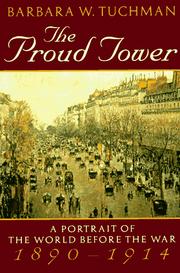
A portrait of the pre-WWI world told through eight distinct social and political movements — best read after The Guns of August because it functions as its essential prequel, deepening everything you already know about how the war became possible.

Her second Pulitzer winner, and her most sustained biographical study. It rewards the reader who already trusts her method, pushing into the complexity of U.S. foreign policy and military culture with greater nuance than her earlier books.
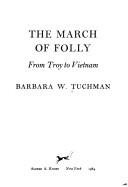
Her most explicitly thesis-driven book — a sweeping argument that governments repeatedly act against their own interests — and the natural culmination of the intermediate stage, synthesizing the patterns you have seen across all her previous histories.
The Craft — Tuchman on Writing History
ExpertUnderstand Tuchman's philosophy of history, her working methods, and her views on narrative, research, and the historian's responsibility — turning you from a reader of her work into a student of her craft.
▸ Study plan for this stage
Pace: 4–5 weeks, ~20–25 pages/day; the book is a collection of essays so read 2–3 essays per sitting, pausing to annotate and reflect before moving on — resist the urge to read straight through
- The 'Everest Principle' — Tuchman's conviction that narrative history must be written with the same discipline and craft as literary fiction, without sacrificing factual rigor
- Research as immersion: Tuchman's method of saturating herself in primary sources, period detail, and physical place before writing a single word
- The historian's responsibility to the general reader: Tuchman's rejection of academic jargon and her belief that history must be accessible, vivid, and humane
- Selection and omission as the historian's core craft skill — what you leave out shapes the argument as much as what you include
- The 'bad news' problem: Tuchman's analysis of why leaders and institutions systematically ignore evidence that contradicts their preferred course (folly)
- Narrative structure in history: the use of scene-setting, character, dramatic tension, and chronology to carry an argument without distorting it
- The tension between objectivity and point of view — Tuchman's frank acknowledgment that the historian's perspective is always present, and how to handle it honestly
- History as a moral enterprise: Tuchman's belief that studying the past carries an implicit obligation to illuminate the present
- In Tuchman's own words, what distinguishes a narrative historian from a mere chronicler, and why does she believe the distinction matters?
- How does Tuchman describe her research process — at what point does she consider herself ready to begin drafting, and what role does physical place-visiting play?
- What is Tuchman's argument against academic historical writing, and what specific stylistic or structural habits does she criticize?
- How does Tuchman reconcile the historian's inevitable subjectivity with the obligation to be accurate and fair to the evidence?
- According to Tuchman, what is the greatest danger a historian faces when the evidence is incomplete or contradictory — and what is the responsible solution?
- Which of Tuchman's essays most directly explains the thematic through-line connecting her major works, and what does it reveal about her overarching historical philosophy?
- Essay autopsy: Choose any one essay from Practicing History and write a one-page reverse outline — map its argument, its evidence, and its rhetorical moves. Then write a paragraph identifying what Tuchman does that a typical academic article would not.
- Imitation draft: Select a small historical event you know reasonably well (even from a previous Tuchman book you've read). Write a 400–600 word narrative passage in Tuchman's style — concrete detail, active verbs, a human protagonist, no passive-voice hedging. Compare it to a passage from Practicing History and annotate the differences.
- Research audit: Pick one factual claim Tuchman makes in any essay and trace it back to its primary or secondary source. Document the chain of evidence. Reflect in writing: does her narrative representation of that fact feel faithful to the source, or has selection shaped it?
- Jargon translation exercise: Find a passage from an academic history journal article on any topic. Rewrite it as Tuchman might — for a general reader, with narrative energy — without losing factual content. Reflect on what was gained and what, if anything, was lost.
- Craft journal: After finishing each major section of Practicing History, write a journal entry (minimum 200 words) answering: 'What one technique or principle from this section could I apply to my own thinking, writing, or research — and how specifically would I apply it?'
- Debate preparation: Tuchman is sometimes criticized for privileging narrative drama over analytical depth. Using only evidence from Practicing History, construct the strongest possible case both for and against this critique — then write a 300-word verdict of your own.
Next up: Internalizing Tuchman's craft principles and historical philosophy equips the reader to return to her major narrative works — or move forward to comparative study of other historian-writers — now reading not just for story and content, but as a conscious analyst of how historical argument is constructed, sustained, and made to matter.
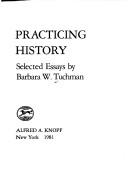
Her collected essays on the art and practice of writing history, saved for last so that every observation she makes about research, narrative, and moral judgment resonates against the full body of work you have already read. This is the master class.
Discussion
Keep reading
Paths that share books, cover the same subject, or open a related topic.