The Best Books to Learn Retail Management, in Order
This curriculum takes a beginner from the fundamental mindset of retail all the way through advanced store operations, buying strategy, merchandising science, and shopper psychology. Each stage builds on the last — first establishing how retail works as a business, then mastering the craft of running a store, and finally thinking strategically about the future of the industry.
Foundations: How Retail Works
BeginnerUnderstand the big picture of retail as a business — how stores make money, how the industry is structured, and the essential vocabulary of merchandising, buying, and operations.

The definitive introductory textbook for retail management, covering every core function — buying, pricing, store operations, and merchandising — in a logical, accessible sequence. Read this first to build the vocabulary and framework everything else depends on.

A practical, jargon-free guide to the buying function — how retailers select, negotiate, and manage product assortments. Reading it second grounds the textbook theory in the real decisions buyers make every day.
The Store Floor: Operations & Merchandising
BeginnerMaster the day-to-day mechanics of running a store — visual merchandising, layout, inventory flow, and the operational rhythms that drive sales.
▸ Study plan for this stage
Pace: 6–7 weeks, ~25–30 pages/day. Week 1–3: "Why We Buy" (approximately 300 pages); Week 4–7: "Visual Merchandising and Display" (approximately 250 pages). Allocate 2–3 days per book for review and integration.
- Consumer behavior and decision-making: How shoppers navigate stores, pause points, and the psychology of purchase triggers based on Underhill's observational research
- The importance of store layout and traffic flow: How spatial design influences dwell time, product discovery, and sales velocity
- Visual merchandising principles: Color, lighting, signage, and display techniques that draw attention and communicate product value
- The relationship between product placement and sales: How shelf positioning, eye-level placement, and adjacencies drive purchasing decisions
- Inventory visibility and accessibility: Balancing stock depth with visual appeal to encourage impulse purchases and reduce friction
- Seasonal and promotional merchandising: Adapting displays and layouts to capitalize on customer demand cycles and marketing campaigns
- The sensory retail environment: How touch, sight, sound, and even smell influence customer behavior and time spent in-store
- Metrics and observation: Using data and direct observation to test, refine, and validate merchandising and operational decisions
- According to Underhill's research, what are the primary 'pause points' in a store, and why do customers hesitate at these locations?
- How does store layout influence the customer journey, and what role does traffic flow play in determining which products get noticed?
- What are the key principles of visual merchandising outlined by Pegler, and how do color, lighting, and signage work together to influence purchasing behavior?
- Why is eye-level placement critical for product sales, and how should retailers approach shelf positioning differently for different product categories?
- How can a retailer balance the need for high inventory visibility with the aesthetic and functional requirements of effective visual merchandising?
- What specific techniques does Pegler recommend for seasonal and promotional displays, and how should these be integrated into the overall store design?
- Conduct a 'store walk' observation exercise: Visit a retail store and map the customer traffic patterns, pause points, and decision-making moments using Underhill's framework. Document which areas attract lingering and which are bypassed.
- Analyze a store layout: Sketch the floor plan of a familiar retail space and identify how layout influences product discovery. Propose one layout change that could improve traffic flow or increase dwell time in underperforming zones.
- Create a visual merchandising plan: Select a product category and design a window display or shelf set using Pegler's principles (color harmony, focal points, lighting, signage). Justify each design choice based on visual hierarchy and consumer psychology.
- Conduct a 'pause point audit': Identify 3–5 locations in a store where customers naturally slow down or stop. Photograph or sketch these areas and analyze what design elements (signage, product arrangement, lighting) trigger the pause.
- Design a seasonal display: Plan a 4-week promotional display for a specific season or holiday using Pegler's techniques. Include sketches, color palettes, lighting specifications, and a rationale for how the display will drive traffic and sales.
- Interview a store manager or visual merchandiser: Ask them how they apply principles from layout and visual design to drive sales, and how they measure the effectiveness of merchandising changes. Compare their practices to concepts from both books.
Next up: This stage grounds you in the operational and sensory mechanics of the store environment, preparing you to move into customer service, staff training, and sales techniques—where you'll learn how to activate these spaces through human interaction and coaching.
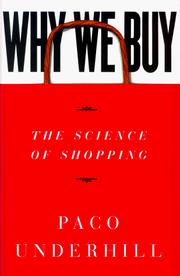
A landmark study of how shoppers actually behave in stores, based on years of in-store observation. It reframes store layout and merchandising around real human behavior, making it essential before studying visual merchandising techniques.
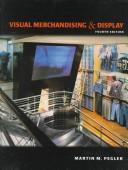
The industry-standard reference for store design, window displays, and product presentation. Read after Underhill so you apply visual techniques with a deep understanding of shopper psychology already in place.
The Psychology of Selling: Influencing the Shopper
IntermediateUnderstand the cognitive and emotional drivers behind purchase decisions, and learn how great retailers design experiences that convert browsers into loyal buyers.
▸ Study plan for this stage
Pace: 8–10 weeks, ~40–50 pages/day. Read "Influence" over 4–5 weeks (approximately 400 pages), then "Predictably Irrational" over 4–5 weeks (approximately 350 pages). Allocate 1 week for integration and application exercises.
- The six principles of influence (reciprocity, commitment and consistency, social proof, authority, liking, scarcity) and how retailers exploit them to drive purchases
- How cognitive biases and heuristics (anchoring, availability, representativeness) lead consumers to make predictably irrational decisions
- The power of pre-suasion: framing and context shape what people notice and how they decide before the actual pitch
- Loss aversion and the endowment effect: people fear losing what they have more than gaining something new, influencing pricing and product positioning
- The role of emotions, defaults, and social norms in overriding rational decision-making in retail environments
- How retailers can ethically design choice architecture to nudge customers toward beneficial decisions while respecting autonomy
- The distinction between conscious persuasion tactics and unconscious psychological triggers that drive shopper behavior
- What are Cialdini's six principles of influence, and how does each one manifest in real retail settings (e.g., limited-time offers, celebrity endorsements, customer testimonials)?
- How do anchoring effects and price framing in 'Predictably Irrational' explain why customers perceive value differently for identical products presented in different contexts?
- What is the endowment effect, and how do retailers leverage it through strategies like free trials, money-back guarantees, or 'try before you buy' programs?
- How does social proof operate in both online and offline retail, and what are ethical boundaries for using it (e.g., fake reviews vs. genuine customer ratings)?
- Explain how loss aversion influences shopper behavior and how retailers can design promotions that emphasize what customers will lose rather than gain.
- What is pre-suasion, and how can a retailer apply it to store layout, product placement, or marketing messaging to influence purchase intent before the customer even sees the product?
- Conduct a retail audit: Visit three different retail environments (online and/or brick-and-mortar) and identify which of Cialdini's six principles are being used. Document specific examples (e.g., 'Limited stock' messaging = scarcity, customer reviews = social proof) and assess their effectiveness.
- Analyze pricing and framing: Find three products with identical or similar functionality priced differently. Using concepts from 'Predictably Irrational,' explain how anchoring, reference prices, and framing affect perceived value. Redesign the product presentation to test a different frame.
- Design a choice architecture experiment: Create two versions of a product page or in-store display—one using default options and one without. Predict how each will influence customer decisions based on loss aversion and choice architecture principles.
- Interview five shoppers: Ask them to recall a recent purchase and identify which psychological triggers influenced their decision (e.g., 'Did social proof matter?' 'Did scarcity pressure you?'). Map their responses to Cialdini's principles and Ariely's biases.
- Ethical persuasion audit: Review a retailer's marketing campaign and evaluate whether it uses influence ethically or manipulatively. Rewrite one manipulative element to achieve the same business goal while respecting customer autonomy.
- Create a pre-suasion strategy: Design a store layout or email campaign that primes customers' thinking before they encounter the main offer. Explain how context, framing, and defaults guide attention and decision-making.
Next up: This stage equips you with the psychological foundations of why shoppers buy; the next stage will focus on translating these insights into operational systems—store design, customer journey mapping, and loyalty programs—that systematically convert understanding into measurable retail performance.
The foundational text on persuasion psychology — reciprocity, scarcity, social proof, and authority. Every retail pricing, promotion, and sales technique is rooted in these principles, so this book must come before more retail-specific strategy.
Explores the hidden, irrational forces that shape consumer choices — anchoring, the power of free, and relativity in pricing. Deepens the shopper psychology lens with rigorous, entertaining research.
Strategy & the Future of Retail
ExpertThink like a retail strategist — understand how great retail brands are built, how omnichannel and data are reshaping the industry, and what separates enduring retailers from those that fail.
▸ Study plan for this stage
Pace: 6–8 weeks, ~40–50 pages/day (approximately 2–3 weeks per book, with time for reflection and exercises between them)
- The DNA of retail superstars: what separates exceptional retailers from mediocre ones (culture, leadership, customer obsession, operational excellence)
- Omnichannel integration as a competitive necessity: seamlessly blending physical stores, e-commerce, mobile, and data to create unified customer experiences
- Data-driven decision making: how leading retailers use analytics, customer insights, and real-time metrics to optimize inventory, pricing, and merchandising
- The decline of traditional retail and the rise of experience-driven retail: why convenience alone is no longer enough; the role of storytelling and emotional connection
- Supply chain and operational agility: how modern retailers respond to disruption, manage complexity, and maintain margins in a volatile market
- Customer lifetime value and loyalty ecosystems: moving beyond transactions to building communities and repeat engagement
- The role of technology and innovation in retail transformation: from AI and personalization to automation and fulfillment networks
- Strategic positioning and differentiation: how retailers define their unique value proposition and defend it against disruption
- What are the core characteristics and behaviors that distinguish retail superstars from average retailers, and how do these manifest in company culture and leadership?
- How are omnichannel strategies reshaping customer expectations, and what are the operational and technological challenges retailers must overcome to execute them successfully?
- What role does data and analytics play in modern retail strategy, and how should retailers prioritize data investments to drive competitive advantage?
- Why are many traditional retailers struggling or failing, and what new rules or business models are emerging to replace outdated approaches?
- How can a retail organization build sustainable competitive advantage in an era of rapid technological change and shifting consumer behavior?
- What is the relationship between customer experience, operational efficiency, and profitability, and how do leading retailers balance these three dimensions?
- Comparative case study: Select two retailers (one from 'Retail Superstars' and one contemporary example). Map their omnichannel capabilities, data infrastructure, and customer experience design. Identify gaps and recommend improvements.
- Data audit: Choose a retail company you know well. Sketch out what customer and operational data they likely collect, how it flows through their organization, and what strategic decisions it should inform. Compare your hypothesis to any public information available.
- Customer journey mapping: Design an ideal omnichannel customer journey for a specific product category (e.g., athletic wear, home furnishings). Identify touchpoints, pain points, and where data and personalization should enhance the experience.
- Strategic positioning exercise: Write a one-page strategic brief for a struggling traditional retailer, identifying their core competitive advantage, the new rules they must adopt, and a 12-month transformation roadmap.
- Culture and leadership audit: Interview or research a retail leader (from the books or a company you admire). Document their philosophy on customer obsession, team empowerment, and innovation. Reflect on how these translate to business outcomes.
- Omnichannel gap analysis: Conduct a mystery shop across a retailer's physical store, website, app, and customer service. Document inconsistencies in pricing, inventory visibility, messaging, and service quality. Propose integration solutions.
Next up: This stage equips you with strategic frameworks and real-world examples of retail excellence and transformation; the next stage will likely deepen your ability to execute these strategies through operational, financial, and tactical disciplines specific to your retail context.

Profiles of independent retailers who outperform giants through differentiation, experience, and community — a strategic case-study companion that shows the principles from earlier stages applied at the highest level.
A strategic framework for winning in modern retail — neurological connectivity, preemptive distribution, and value-chain control. The ideal capstone, synthesizing operations, merchandising, and psychology into a forward-looking competitive strategy.
Discussion
Keep reading
Paths that share books, cover the same subject, or open a related topic.