Become more charismatic: a social skills reading path
This curriculum builds real charisma and social mastery in four progressive stages — starting with the foundational psychology of how people connect, moving through presence and confidence, then into the deeper craft of reading and influencing others, and finally into advanced, research-backed frameworks for lasting social impact. Each stage equips you with the vocabulary and intuitions needed to absorb the next, so nothing feels out of reach.
Foundations — How People Work
BeginnerUnderstand the core psychology behind human connection, likeability, and first impressions — building the mental model everything else rests on.
▸ Study plan for this stage
Pace: 6–8 weeks total, reading ~20–25 pages per day. Week 1–2: "How to Win Friends and Influence People" (~240 pages); Week 3–4: "The Like Switch" (~260 pages); Week 5–6: "Captivate" (~270 pages); Week 7–8: review, journaling, and exercise consolidation across all three books.
- Carnegie's Six Ways to Make People Like You — the foundational rules of genuine interest, remembering names, smiling, and making others feel important
- The Friendship Formula (The Like Switch) — Schafer's four-factor model: Proximity, Frequency, Duration, and Intensity as the levers of likeability
- Friend vs. Foe signals — Schafer's framework for broadcasting non-threatening, approachable body language (eyebrow flash, head tilt, genuine smile)
- The Platinum Rule — going beyond the Golden Rule to treat people the way THEY want to be treated, a thread running through all three books
- Vanessa Van Edwards' 'First Five Minutes' — how snap judgments are formed through cues of warmth and competence before a word is spoken
- Cues, signals, and micro-expressions — Van Edwards' science-backed system for reading and projecting charismatic non-verbal communication
- The principle of avoiding criticism and argument — Carnegie's insight that people are driven by emotion, not logic, and how this shapes every interaction
- Curiosity as a social superpower — Van Edwards' concept of leading with genuine curiosity to unlock deeper, more memorable conversations
- According to Carnegie, why is criticism almost always counterproductive, and what should you do instead to change someone's behavior?
- What are the four variables in Schafer's Friendship Formula, and how can you deliberately adjust each one to accelerate rapport with a new acquaintance?
- What is the difference between a 'friend signal' and a 'foe signal' in The Like Switch, and can you give two concrete examples of each from your own daily life?
- How does Vanessa Van Edwards define 'the first five minutes,' and what specific warmth and competence cues does she recommend prioritizing in that window?
- How do Carnegie's principles of making people feel important connect to Van Edwards' science of warmth cues — what is the underlying psychological mechanism both authors are pointing to?
- What does Van Edwards mean by 'finding someone's primary value,' and how does this relate to Carnegie's advice to talk in terms of the other person's interests?
- The Name Game (Carnegie, Week 1–2): For one full week, make a conscious effort to use every new person's name at least twice in conversation. Log each interaction — note what changed in the other person's engagement when you did it versus when you forgot.
- Foe-to-Friend Signal Audit (Schafer, Week 3–4): Record a 2-minute video of yourself having a casual conversation or simply standing in a room. Watch it back and identify every foe signal (crossed arms, avoiding eye contact, no eyebrow flash) and replace each one with its friend-signal equivalent. Re-record and compare.
- The Proximity Experiment (Schafer, Week 3–4): Choose one recurring social setting (office, gym, coffee shop). Deliberately increase your proximity and frequency of appearance near one unfamiliar person over two weeks — without forcing conversation — and journal how the relationship naturally evolves.
- First-Five-Minutes Scorecard (Van Edwards, Week 5–6): Before your next three social events or meetings, write down two warmth cues and two competence cues you intend to project. Immediately after each event, score yourself 1–5 on each cue and note what felt natural vs. forced.
- The Curiosity Question Challenge (Van Edwards, Week 5–6): Replace small talk openers ('How are you?' / 'What do you do?') with one of Van Edwards' 'sparking questions' in every new conversation for two weeks. Keep a running list of which questions generated the most energy and why.
- Cross-Book Synthesis Journal (Week 7–8): Write a 1-page personal 'People Operating Manual' that synthesizes one principle from each of the three books into a single coherent framework you will actually use. Share it with a friend or accountability partner and discuss.
Next up: Mastering these foundational mental models — why people connect, how likeability is built, and what first impressions are made of — gives you the psychological 'why' that makes the more advanced communication and influence techniques in the next stage immediately intuitive rather than mechanical.

The canonical starting point for social skills: teaches the timeless principles of genuine interest, warmth, and making others feel valued — the bedrock of all charisma.

A former FBI behavioral agent distills exactly what signals make people instantly like and trust you — friend signals, eyebrow flashes, and proximity cues — giving you a practical, science-backed toolkit right away.

Translates behavioral science into concrete, beginner-friendly social strategies for first impressions, conversation, and group dynamics — a perfect bridge from theory into everyday practice.
Presence & Confidence — Owning the Room
BeginnerDevelop genuine inner confidence, commanding presence, and the ability to project warmth and authority so others are naturally drawn to you.
▸ Study plan for this stage
Pace: 4–5 weeks total: Week 1–2 — "The Charisma Myth" (~25–30 pages/day, including reflection time); Week 3–4 — "Presence" (~20–25 pages/day, journaling alongside); Week 5 — integration week: revisit highlights, complete remaining exercises, and synthesize insights from both books.
- Charisma as a learnable skill, not an innate trait — Cabane's core thesis that charisma is a set of behaviors and mindsets anyone can develop
- The Charisma Trinity: Presence, Power, and Warmth — the three pillars Cabane identifies as the foundation of all charismatic behavior
- Mental states drive physical signals — both authors emphasize that internal beliefs and feelings directly shape body language, voice, and how others perceive you
- Presence as full, moment-to-moment attention — Cabane's 'being present' practice and Cuddy's concept of psychological presence as the antidote to self-monitoring and anxiety
- The body-mind feedback loop — Cuddy's research showing that adopting expansive, open postures (power posing) can shift internal hormonal states and reduce feelings of powerlessness
- 'Fake it till you become it' vs. authenticity — Cuddy's reframe that embodying a role gradually makes it genuinely yours, complementing Cabane's visualization and reframing techniques
- Overcoming internal obstacles: self-doubt, impostor syndrome, and the inner critic — both books provide concrete cognitive tools (reframing, self-compassion, visualization) to neutralize these barriers
- Projecting warmth and authority simultaneously — Cabane's guidance on calibrating Power and Warmth signals so you are seen as both competent and approachable, not one at the expense of the other
- According to Cabane, what are the three components of the Charisma Trinity, and why is each one necessary — what happens when one is missing?
- What does Cabane mean when she says charisma begins in the mind, and what specific mental techniques does she offer to shift your internal state before a high-stakes interaction?
- How does Cuddy define 'presence,' and how does her definition differ from or complement the way Cabane uses the same word?
- What is the science behind Cuddy's body-mind feedback loop, and how can you practically apply it before a job interview, presentation, or difficult conversation?
- Both authors address impostor syndrome and self-doubt. Compare their approaches — what tools does each author give you to move through those feelings in the moment?
- How would you combine Cabane's Warmth + Power calibration framework with Cuddy's presence practices to prepare for a situation where you need to be both authoritative and likable?
- **Daily Presence Drill (Cabane):** During one conversation per day, commit to 100% presence — phone away, eye contact maintained, focus only on the speaker. Afterward, write two sentences on what you noticed about the other person that you might have missed otherwise.
- **Power Pose Pre-Game (Cuddy):** For two minutes before any stressful event (meeting, call, presentation), adopt an expansive posture in private — stand tall, arms wide or hands on hips. Log how your confidence level feels before vs. after on a 1–10 scale for two weeks.
- **Charisma Trinity Self-Audit (Cabane):** Record a 3-minute video of yourself telling a story. Watch it back and rate yourself 1–5 on Presence, Power, and Warmth separately. Identify your weakest pillar and focus one week of practice on it.
- **Reframing the Inner Critic (Cabane):** Write down your three most common self-critical thoughts before social situations. For each, apply Cabane's three-step reframe: (1) destigmatize the feeling, (2) neutralize the thought, (3) reframe with a positive alternative. Keep this card accessible.
- **'Best Self' Visualization (Cuddy + Cabane):** Spend five minutes each morning recalling a specific moment when you felt fully confident and at your best. Relive it sensorially — what you saw, heard, and felt. Use this as your mental anchor before challenging interactions.
- **Warmth-Authority Calibration Role-Play:** Pick a real upcoming interaction where you need both authority and likability (e.g., leading a meeting, asking for a raise). Script two versions — one leaning too cold/dominant, one too warm/passive — then write and rehearse the balanced version using Cabane's Power + Warmth cues (slow speech, open gestures, genuine eye contact, deliberate pauses).
Next up: By internalizing genuine confidence and commanding presence from the inside out, the reader has built the essential foundation — a stable, grounded self — from which all outward social skills like conversation, influence, and deep connection can now be authentically expressed in the next stage.

Demolishes the idea that charisma is innate and teaches its three pillars — presence, power, and warmth — as learnable skills, making it the definitive manual for building charisma deliberately.

Grounded in social psychology research, this book shows how body language and mindset shape both how others perceive you and how you feel inside — deepening the presence work started in the previous book.
Reading People & Deep Connection
IntermediateLearn to accurately read emotions, body language, and personality — and use that understanding to create genuine, memorable connections with anyone.
▸ Study plan for this stage
Pace: 10–12 weeks total, roughly 20–25 pages/day: ~3 weeks for "What Every BODY Is Saying" (288 pp), ~4 weeks for "Emotional Intelligence" (352 pp), and ~3–4 weeks for "Never Eat Alone" (320 pp). Set aside one "integration day" per week with no new reading — use it for journaling, exercises, and reflectio
- Nonverbal baseline & deviation — Navarro's method of establishing a person's normal behavior so that departures (stress, deception, comfort) become visible and meaningful
- The limbic brain's honesty — Navarro's core argument that the body's oldest brain region produces involuntary, reliable signals (freeze/flight/fight) that override conscious control
- Pacifiers & comfort/discomfort clusters — recognizing self-soothing gestures (neck-touching, leg-bouncing, ventral denial) as real-time stress indicators
- The five domains of Emotional Intelligence — Goleman's framework of self-awareness, self-regulation, motivation, empathy, and social skill as learnable competencies, not fixed traits
- Empathy as a cognitive & emotional skill — Goleman's distinction between feeling with someone and accurately reading what they feel, and why both are required for deep connection
- The amygdala hijack — Goleman's explanation of how emotional flooding short-circuits rational response, and practical strategies to interrupt it
- Generosity-first networking — Ferrazzi's philosophy that relationships are built by giving value before extracting it, replacing transactional thinking with a 'connector' mindset
- Vulnerability & follow-through as trust accelerators — Ferrazzi's argument that sharing genuine personal stakes and keeping small promises compounds relational trust faster than any technique
- After reading Navarro, can you watch a 5-minute silent video of a conversation and identify at least three nonverbal comfort/discomfort signals, name the body region each comes from, and explain what each likely communicates?
- How does Goleman define emotional intelligence, and why does he argue it predicts life outcomes more reliably than IQ alone? Can you give a concrete example from your own life that illustrates one of his five domains?
- What is an 'amygdala hijack' according to Goleman, and what physiological and behavioral steps can you take — before, during, and after — to prevent it from derailing a high-stakes conversation?
- Ferrazzi argues that 'never eating alone' is a philosophy, not a scheduling trick — what does he mean, and how does his concept of 'connecting the dots' between people in your network create compounding social value?
- How do the three books form a coherent progression? Specifically, how does reading bodies (Navarro) feed into regulating emotions (Goleman), which in turn enables the generous relationship-building Ferrazzi describes?
- What is the difference between performing interest in someone and genuinely reading them? Draw on all three authors to construct a practical answer.
- Navarro Silent Observation Lab — Once a week, sit in a public space (café, airport, park) for 20 minutes. Pick one person or pair and log: baseline posture, any deviation you notice, the body region involved, and your hypothesis about their emotional state. Review your log at the end of the week for patterns in your own observation accuracy.
- Navarro Body-Scan Check-In — Before every significant conversation this week, do a 10-second scan of the other person's feet, torso, arms, and face (in that order, per Navarro's hierarchy). Afterward, write two sentences: what you noticed and whether it changed how you responded.
- Goleman Emotion Journal — Each evening for two weeks, write down one moment when you felt a strong emotion. Identify: (1) the trigger, (2) the physical sensation, (3) the story you told yourself, and (4) how you responded vs. how you wish you had responded. This builds the self-awareness layer Goleman identifies as the foundation of EQ.
- Amygdala Hijack Rehearsal — Identify a recurring situation that reliably triggers you (a specific person, topic, or environment). Write a 'pre-mortem': what does the hijack look like? Then script and rehearse — out loud — three grounding phrases or physical resets (slow exhale, feet on floor, name the emotion) you will use in the moment.
- Ferrazzi Generosity Audit — Map your 15 closest contacts in a simple grid: Name | What they need right now | One thing I can give or connect this week. Execute at least three of those actions before finishing the book. Track whether and how the relationship shifts.
- Cross-Book Synthesis Conversation — After finishing all three books, invite a friend or study partner to a 60-minute 'connection practice' dinner. One person speaks about something genuinely important to them for 5 minutes; the other practices Navarro-style observation, Goleman-style empathic listening (no advice, only reflection), and closes with a Ferrazzi-style offer of help. Swap roles. Debrie
Next up: Mastering how to read people and build genuine rapport creates the perceptual and relational foundation needed for the next stage, where you will learn to actively influence, persuade, and lead — skills that only work ethically and effectively when you already understand the person in front of you.

A masterclass in nonverbal communication from a former FBI agent — teaches you to decode posture, gestures, and micro-expressions so you can truly understand what people feel, not just what they say.

Introduces the science of emotional awareness and empathy — the internal engine of deep connection — giving you the psychological depth to move beyond surface-level charm.

Shows how to build a rich, authentic network by leading with generosity and genuine curiosity — translating emotional intelligence into real-world relationship-building habits.
Advanced Influence & Lasting Impact
ExpertMaster the deeper psychology of persuasion, storytelling, and social dynamics so you can move and inspire people — not just impress them.
▸ Study plan for this stage
Pace: 8–10 weeks total: ~3 weeks for "Influence" (~25–30 pages/day, including annotation time), then ~5–6 weeks for "The Art of Seduction" (~20–25 pages/day — it is denser and rewards slower, more reflective reading). Reserve the final week for review, journaling, and exercise integration across both book
- Cialdini's 6 Principles of Influence — Reciprocity, Commitment & Consistency, Social Proof, Authority, Liking, and Scarcity — and how each exploits deep psychological shortcuts (click-whirr responses)
- The distinction between ethical persuasion and manipulation, and how awareness of influence principles acts as a defense against them
- Fixed-action patterns and automatic compliance: why humans respond predictably to certain triggers regardless of context
- Greene's 24 Seduction types and the idea that seduction is a long game of attention, desire, and identity — not a single moment of charm
- The 9 Seducer archetypes (Siren, Rake, Ideal Lover, Dandy, Natural, Coquette, Charmer, Charismatic, Star) and how each projects a distinct psychological fantasy onto others
- The concept of 'Anti-Seduction' from Greene — the behaviors, neediness, and predictability that repel people and kill influence before it starts
- Narrative and mystery as influence tools: how withholding information, creating suspense, and framing yourself as a story creates irresistible pull
- The integration of both authors' frameworks: Cialdini's triggers work in the moment; Greene's seduction arc works over time — together they form a complete model of sustained social influence
- Can you name and define all six of Cialdini's principles of influence, and give a real-world example of each from your own life or observations?
- What is a 'click-whirr' response according to Cialdini, and why does he argue that these automatic reactions are both necessary and dangerous in modern society?
- According to Greene, what separates a Charmer from a Charismatic, and why does he treat seduction as fundamentally about making the other person feel something about themselves rather than about you?
- What are the most common Anti-Seducer behaviors Greene identifies, and which of them do you recognize in your own social patterns?
- How do Cialdini's principle of Commitment & Consistency and Greene's concept of the 'long game' of seduction reinforce each other when building lasting influence over time?
- If you were to identify your dominant seducer archetype from Greene's framework, which would it be and why — and how could you consciously develop a secondary archetype to fill your blind spots?
- Influence Audit Journal: For one full week, log every persuasion attempt you encounter — ads, conversations, negotiations, social media — and label which of Cialdini's 6 principles is being used. Note whether it worked on you and why.
- Reciprocity Experiment: Deliberately offer a small, unexpected, and personalized favor to three different people in your life. Observe and journal the behavioral shift in each relationship over the following two weeks — does Cialdini's reciprocity principle play out as predicted?
- Archetype Self-Assessment: After finishing Greene's seducer archetypes, write a 1-page honest profile of yourself: which archetype you naturally embody, which you most lack, and one concrete behavior you will adopt from a complementary archetype over the next 30 days.
- Anti-Seducer Elimination: List your top 3 Anti-Seducer tendencies from Greene's framework (e.g., talking too much about yourself, being too available, displaying neediness). Design one specific behavioral rule to counteract each, and practice them in your next 10 social interactions.
- Storytelling with Cialdini Triggers: Write and deliver (aloud, to a real person) a 2-minute personal story that naturally embeds at least three of Cialdini's principles — e.g., social proof through a shared experience, authority through a credible reference, scarcity through a time-sensitive insight. Record yourself and review.
- The Slow Burn Challenge: Choose one important relationship (professional or personal) and apply Greene's principle of the long game for 30 days — create intrigue, maintain some mystery, give space, and let desire build rather than pushing for immediate impact. Journal weekly on what shifts.
Next up: Mastering Cialdini's psychological triggers and Greene's architecture of sustained desire gives you the internal toolkit for influence — the next stage will externalize and stress-test these skills by focusing on high-stakes communication, leadership presence, and real-world application in groups and public arenas.
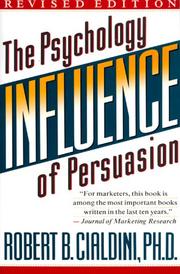
The gold-standard text on the psychology of persuasion — understanding these six principles makes you both a more effective communicator and far more aware of the social forces shaping every interaction.

A sophisticated, historically rich study of how the most compelling people in history created fascination and desire — best absorbed last, when you have the ethical grounding and self-awareness to use it wisely.
Discussion
Keep reading
Paths that share books, cover the same subject, or open a related topic.