Behavioral economics: why we really decide
This curriculum takes a beginner from the vivid, story-driven discoveries of human irrationality all the way to the academic foundations, policy applications, and serious critiques that define the field today. Each stage builds on the last: first you absorb the intuitions and landmark findings, then you meet the science and its architects, and finally you wrestle with how the field has been applied, challenged, and internalized at the personal level.
Foundations: The Irrational Mind
BeginnerGrasp the core idea that human decision-making is systematically biased and predictably irrational, through compelling stories and accessible experiments — no prior economics needed.
▸ Study plan for this stage
Pace: 6–8 weeks total: Weeks 1–4 for "Predictably Irrational" (~25–30 pages/day, reading one or two chapters per sitting to reflect on each bias before moving on); Weeks 5–8 for "The Undoing Project" (~20–25 pages/day, slower pace to absorb the biographical narrative alongside the psychological science).
- Predictable irrationality: human biases are not random but systematic and repeatable, making them foreseeable and studyable
- Anchoring & arbitrary coherence: the first number or reference point we encounter disproportionately shapes all subsequent judgments and valuations (Ariely's MIT auction experiments)
- The power of FREE: zero-cost options trigger an irrational emotional surge that distorts rational cost-benefit analysis, often making 'free' worse deals feel superior
- The cost of social vs. market norms: mixing monetary and social exchange frameworks (e.g., paying a friend for a favor) collapses trust and goodwill in ways that are hard to reverse
- Loss aversion & prospect theory (Kahneman & Tversky): losses loom psychologically larger than equivalent gains — the foundation of Kahneman and Tversky's value function, explored through Lewis's narrative
- The availability heuristic & representativeness: people judge probability by how easily an example comes to mind or how closely something resembles a prototype, leading to systematic forecasting errors
- Cognitive illusions as a scientific tool: just as optical illusions reveal the mechanics of vision, decision-making 'illusions' (framing effects, the conjunction fallacy) reveal the mechanics of judgment — the core insight of Kahneman and Tversky's collaboration
- The two-system mind (System 1 vs. System 2): fast, intuitive, emotional thinking versus slow, deliberate, analytical thinking — the conceptual architecture underlying both books
- According to Ariely, why is irrationality 'predictable' rather than random, and why does that distinction matter for understanding human behavior?
- Describe an anchoring effect using a specific experiment from 'Predictably Irrational.' How does an arbitrary first number come to feel like a reasonable reference point?
- How does the 'cost of zero' (the FREE! effect) cause people to make objectively worse decisions, and what real-world situations does Ariely use to illustrate this?
- What was the central intellectual disagreement or creative tension between Daniel Kahneman and Amos Tversky as portrayed in 'The Undoing Project,' and how did their differences strengthen their research?
- Explain loss aversion in your own words. Using examples from 'The Undoing Project,' why do losses feel roughly twice as powerful as equivalent gains?
- How do framing effects demonstrate that our preferences are not stable or internally consistent — and what does this imply about the classical economic assumption of the 'rational agent'?
- The anchoring journal: Before any significant purchase or negotiation this week, write down the first number you encounter (a price tag, a friend's estimate). After deciding, record whether that anchor pulled your final choice. Do this for 10 decisions and look for the pattern.
- Run the FREE! experiment: Offer two options to at least five friends — a $0.01 high-quality chocolate vs. a free lower-quality one (or design a digital equivalent). Record choices and ask participants to explain their reasoning. Compare results to Ariely's findings.
- Social vs. market norms audit: List five relationships in your life (family, colleagues, friends, services). For each, identify which norm governs it. Then imagine introducing the opposite norm — write a short paragraph on what would change and why, drawing on Ariely's framework.
- Cognitive illusion self-test: Look up the original Kahneman & Tversky problems discussed in 'The Undoing Project' (the Linda problem, the Asian disease problem, the cab problem). Solve each before reading the answer, then write one paragraph explaining exactly where your intuition went wrong.
- Bias field notes: Keep a week-long log of one real-world news story, advertisement, or personal decision per day. Label each with at least one bias or heuristic from either book (anchoring, availability, loss aversion, framing, etc.) and write two sentences justifying your label.
- Teach-back summary: After finishing both books, write a one-page 'letter to a skeptic' — someone who believes people are basically rational — using three specific experiments or stories (at least one from each book) to argue that irrationality is systematic, not accidental.
Next up: Completing this stage gives you an intuitive, story-driven feel for the major cognitive biases and the researchers who discovered them, creating the perfect appetite for the next stage, which will formalize these intuitions into the rigorous theoretical frameworks — such as prospect theory, heuristics-and-biases research, and nudge theory — that behavioral economists use to design policy and inter
The perfect entry point: Ariely uses clever experiments to show, chapter by chapter, how our choices are warped by anchoring, relativity, and emotion. It gives the field its central vocabulary in the most readable way possible.
Lewis tells the human story of Kahneman and Tversky's friendship and intellectual partnership, making the origins of behavioral economics feel like a thriller. Reading it second gives the science a face and a history before you dive into the primary sources.
The Science: Heuristics, Biases, and Two Systems
BeginnerUnderstand the rigorous psychological framework behind behavioral economics — System 1 vs. System 2 thinking, the full catalogue of cognitive biases, and how Nobel-winning research actually works.
▸ Study plan for this stage
Pace: 8–10 weeks total. Weeks 1–6: "Thinking, Fast and Slow" (~25–30 pages/day, 5 days/week — the book is dense; allow extra time for Part II on heuristics and biases). Weeks 7–10: "Misbehaving" (~20–25 pages/day, 5 days/week — more narrative-driven, but pause to map each anecdote back to Kahneman's frame
- System 1 vs. System 2 thinking: automatic/intuitive vs. slow/deliberate cognition (Kahneman, Parts I–II)
- The law of small numbers and statistical intuitions — why humans misread randomness and sample size (Kahneman, Ch. 10–11)
- Heuristics: Availability, Representativeness, and Anchoring as mental shortcuts with predictable error patterns (Kahneman, Part II)
- Prospect Theory: losses loom larger than gains; the S-shaped value function replacing expected utility (Kahneman, Part III)
- The planning fallacy, overconfidence, and the 'inside view' vs. 'outside view' distinction (Kahneman, Part III)
- Econs vs. Humans: Thaler's critique of the rational-agent model and why 'misbehaving' is the norm, not the exception (Misbehaving, Part I)
- Mental accounting: how people categorize money into non-fungible buckets, violating fungibility (Misbehaving, Part II)
- The endowment effect and status quo bias: ownership inflates perceived value, rooted in loss aversion (Kahneman Ch. 27 + Misbehaving Ch. 6–7)
- Can you explain, in plain language, why System 1 is both indispensable and the source of most cognitive biases — using at least two examples from Kahneman?
- How does Prospect Theory differ from classical Expected Utility Theory, and what real-world choice anomalies does it explain that EU theory cannot?
- What is the endowment effect, what experimental evidence does Thaler cite to demonstrate it, and how does it connect to Kahneman's concept of loss aversion?
- Describe mental accounting: give two examples from 'Misbehaving' where treating money as non-fungible leads to economically irrational decisions.
- What does Thaler mean by 'Econs' vs. 'Humans,' and how does this distinction reframe the debate between classical and behavioral economics?
- How do anchoring effects work, and why are they dangerous in high-stakes decisions like salary negotiation or legal sentencing (as discussed in Thinking, Fast and Slow)?
- Bias diary (ongoing, both books): Each day, record one real decision you made or observed that maps to a named bias from Kahneman. Label the bias, identify whether System 1 or 2 was driving it, and note what a 'corrected' decision would look like.
- Prospect Theory value curve sketch: After reading Kahneman's Part III, draw the S-shaped value function from memory, label the reference point, loss-aversion slope, and diminishing sensitivity zones. Then find one personal financial decision from the past month and plot it on the curve.
- Anchoring experiment: Before an upcoming negotiation or purchase, write down a deliberately extreme anchor. Afterward, journal whether it shifted the outcome — compare your experience to Kahneman's Linda/Tom W. examples.
- Mental accounting audit (Misbehaving exercise): List every 'mental account' you currently hold (vacation fund, 'fun money,' work bonus, etc.). For each, ask: am I treating this money differently than other money of equal value? What bias is driving that?
- Replication check — design a mini-study: Choose one bias (e.g., availability heuristic or sunk cost fallacy). Design a simple 5-question survey you could give to friends that would replicate the core finding. This mirrors how Kahneman and Thaler built their empirical base.
- Concept-mapping session: After finishing both books, create a single visual map connecting Kahneman's System 1/2 framework to every major concept in Thaler's 'Misbehaving' (endowment effect, mental accounting, self-control problems, etc.). Draw arrows showing which biases are downstream of which cognitive mechanisms.
Next up: By internalizing the psychological machinery — heuristics, biases, and dual-process thinking — from Kahneman and Thaler's empirical work, the reader now has the diagnostic vocabulary needed to move from "why people misbehave" to "how we can design environments and policies that account for it," which is the focus of the next stage on applied nudge theory and choice architecture.

The canonical primary source: Kahneman synthesizes a lifetime of research into a unified theory of the two systems that drive judgment. After Lewis's narrative warm-up, readers are ready to engage with the depth and nuance here.
Thaler, Kahneman's closest collaborator and a Nobel laureate himself, tells the story of behavioral economics from the inside — covering mental accounting, self-control, and fairness. It bridges pure psychology and economics in a way that sets up the policy stage perfectly.
Application: Nudges, Policy, and Business
IntermediateSee how behavioral insights have been translated into real-world interventions — government policy, choice architecture, public health, and corporate strategy — and begin to evaluate their effectiveness.
▸ Study plan for this stage
Pace: 5–6 weeks total: Weeks 1–3 cover "Nudge" (~25–30 pages/day, including re-reading key chapters on choice architecture and EAST framework applications); Weeks 4–5 cover "The Choice Factory" (~20–25 pages/day, one bias chapter per session); Week 6 is a synthesis and review week with no new reading — re
- Choice Architecture: The idea that the way options are presented — defaults, ordering, framing — systematically shapes decisions without restricting freedom of choice (Nudge).
- Libertarian Paternalism: The philosophy that it is legitimate to design choice environments that steer people toward better outcomes while preserving their freedom to opt out (Nudge).
- Default Effects & Opt-Out vs. Opt-In: How setting a pre-selected option (e.g., organ donation, pension enrollment) dramatically changes participation rates — one of the most powerful and policy-relevant nudges (Nudge).
- EAST Framework: Effective nudges make desired behaviors Easy, Attractive, Social, and Timely — a practical government-tested toolkit for intervention design (Nudge).
- The Sludge Concept: Friction and administrative burden that discourages beneficial behavior; the dark side of choice architecture that policymakers and ethicists must guard against (Nudge).
- Biases as Predictable Levers: The 25 consumer biases catalogued in The Choice Factory (e.g., social proof, distinctiveness, the pratfall effect) are not random — they are reliable enough to be engineered into marketing and product strategy (The Choice Factory).
- Context Dependency of Behavior: Both books converge on the insight that behavior is not fixed — it is exquisitely sensitive to the immediate environment, making context the primary design variable (Nudge + The Choice Factory).
- Evaluating Effectiveness & Ethics: Real-world nudges must be assessed on measurable outcomes, equity implications, and transparency — not just behavioral change rates (Nudge).
- How does 'libertarian paternalism' differ from traditional regulation or outright bans, and what are the strongest objections to it as a policy philosophy? (Nudge)
- Walk through a real policy example from Nudge (e.g., Save More Tomorrow, cafeteria design, or energy bills) and explain which specific cognitive biases or heuristics it exploits and why it works.
- What is 'sludge,' how does it relate to choice architecture, and can you give an original example of sludge you have personally encountered?
- Using the EAST framework from Nudge, redesign one real public-health intervention (e.g., vaccine uptake, tax compliance, or healthy eating) and justify each design decision.
- From The Choice Factory, select any three biases and explain how a brand or policymaker could ethically apply each one — and how each could be misused.
- Both Thaler and Shotton argue that context shapes behavior more than character. What evidence do they each offer, and do you find their cases convincing? Where do the two authors' approaches diverge?
- Default Audit: Identify five 'default' settings in your own life (phone settings, workplace processes, subscription services, pension enrollment). For each, ask: who designed this default, who benefits, and what would change if the default were reversed? Write a one-paragraph analysis of the most consequential one.
- Nudge Design Sprint: Pick a real behavior-change challenge in your workplace, university, or community (e.g., recycling rates, meeting punctuality, healthy lunch choices). Using the EAST framework from Nudge, draft a one-page intervention proposal with a specific, measurable target outcome and a plan to evaluate success.
- Bias Spotting Journal (The Choice Factory): Over one week, keep a daily log of at least two real-world examples — ads, product pages, menus, political messaging — where you spot one of Shotton's 25 biases in action. Note the bias, the context, and whether the application seems ethical.
- Comparative Case Study: Research one government nudge unit (e.g., the UK Behavioural Insights Team, the US Social and Behavioral Sciences Team, or Singapore's SNAP). Write a 400-word summary of one intervention they ran: what bias it targeted, how it was designed, what the measured outcome was, and what Thaler would say about it.
- Sludge Hunt: Map out the full process a person must go through to claim a benefit, cancel a subscription, or access a public service of your choice. Identify every point of unnecessary friction (sludge). Propose three specific friction-reduction changes and estimate their likely behavioral impact.
- Debate Prep — Ethics of Nudging: Write a 200-word argument FOR and a 200-word argument AGAINST the use of nudges in public policy, drawing specifically on examples and arguments from Nudge. Then write a two-sentence verdict stating your own position and why.
Next up: By seeing how behavioral insights move from theory into designed interventions — and by critically evaluating their limits and ethical tensions — the reader is primed to engage with deeper questions about the psychological mechanisms and cognitive science that make these nudges work, setting up a rigorous exploration of the underlying behavioral and decision-making research at the next stage.
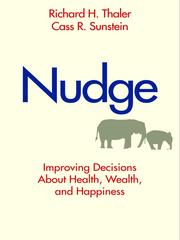
The book that launched a global policy movement: Thaler and Sunstein introduce 'libertarian paternalism' and show how small design changes in choice environments can dramatically improve outcomes. Essential reading for understanding behavioral economics in practice.

Shotton applies 25 behavioral biases directly to marketing and business decisions, making this the ideal bridge between academic theory and commercial application — grounding abstract concepts in everyday professional contexts.
Critique and Controversy: Limits of the Field
IntermediateCritically evaluate behavioral economics — understand the replication crisis, the limits of nudging, ethical concerns about manipulation, and the strongest counterarguments from traditional economics.
▸ Study plan for this stage
Pace: 3–4 weeks, ~25–30 pages/day — read in three phases: (1) Chapters 1–6 on the nature of intelligence traps and cognitive bias (Days 1–8), (2) Chapters 7–12 on expert failure, motivated reasoning, and institutional dysfunction (Days 9–18), (3) Chapters 13–end on evidence-based wisdom, epistemic humilit
- The Intelligence Trap: how high cognitive ability and expertise can amplify rather than reduce systematic errors and biases
- Dysrationalia: the disconnect between raw intelligence and rational decision-making, challenging the assumption that smarter people are better reasoners
- Motivated reasoning and earned dogmatism: how expertise and status entrench overconfidence and resistance to disconfirming evidence
- The replication crisis in psychology and behavioral science: why many landmark 'nudge-relevant' findings have failed to reproduce reliably
- Limits of nudging: why behavioral interventions that work in lab settings often produce weak, short-lived, or context-dependent effects in the real world
- Ethical concerns about manipulation: the thin line between 'nudging for good' and exploiting cognitive vulnerabilities without informed consent
- Counterarguments from traditional economics: the rationality defense, market discipline, and the argument that apparent biases are often adaptive heuristics
- Epistemic humility and evidence-based wisdom as correctives: what rigorous, self-critical behavioral science should look like
- According to Robson, why does high intelligence or deep expertise not protect — and may even worsen — susceptibility to cognitive traps, and what does this imply about the behavioral economists who design nudges?
- What is dysrationalia, and how does it undermine the foundational assumption in behavioral economics that identifying a bias is sufficient to correct it?
- How does the replication crisis specifically threaten the evidence base that policymakers rely on when implementing nudge-based interventions?
- What are the strongest ethical objections to nudging, and how would a defender of libertarian paternalism respond to the charge of manipulation?
- What is the most compelling traditional-economics counterargument to behavioral economics (e.g., market discipline, ecological rationality), and where does Robson's analysis support or complicate it?
- What practices or institutional structures does Robson suggest can guard against the intelligence trap — and are these remedies realistic for behavioral-policy settings?
- Bias audit on a real nudge: Choose one well-known nudge (e.g., organ-donation opt-out defaults, cafeteria food placement). Research its original study, then search for replication attempts or meta-analyses. Write a one-page verdict on whether the evidence still holds up.
- Steel-man debate: Write two 300-word arguments — one defending behavioral economics against its critics, one attacking it from a traditional-economics or ethics standpoint — drawing explicitly on concepts from Robson. Then write a 150-word synthesis.
- Expert-failure case study: Using Robson's framework of earned dogmatism and motivated reasoning, analyze a real-world policy failure (e.g., a nudge unit intervention that backfired). Identify which specific traps were at play.
- Replication crisis deep-dive: Read one freely available replication paper (e.g., from the Open Science Collaboration's 2015 Science paper) and map its findings onto Robson's critique. Note which of his predicted failure modes appear in the failed replication.
- Ethical stress-test: Draft a one-page ethics checklist for a hypothetical nudge campaign (e.g., encouraging tax compliance or vaccine uptake). Use Robson's insights on manipulation and epistemic humility to identify at least five ethical red flags and corresponding safeguards.
- Reflective journal — personal intelligence traps: After each of the three reading phases, write a short journal entry identifying one domain in your own life or work where you may be exhibiting the intelligence trap. Revisit all three entries at the end and look for patterns.
Next up: By internalizing the limits, failure modes, and ethical fault lines of behavioral economics through Robson's lens, the reader is now equipped to move forward with a calibrated, critical eye — ready to explore what a more rigorous, transparent, and ethically grounded next generation of behavioral science and policy might look like.

Robson examines why even smart, educated people fall prey to systematic errors, adding a layer of epistemic humility and pushing the reader to question whether awareness of biases is itself enough to overcome them.
Advanced Synthesis: Behavior, Self-Knowledge, and Society
ExpertIntegrate everything into a sophisticated, personal understanding of behavioral economics — how it reshapes self-knowledge, long-run decision-making, and the future of economic theory itself.
▸ Study plan for this stage
Pace: 8–10 weeks total: ~4–5 weeks per book at roughly 20–25 pages/day. Read "Noise" first (approx. 400 pages), then "Good Economics for Hard Times" (approx. 450 pages). Reserve the final week for cross-book synthesis, reflection, and completing exercises. Weekend sessions should be used for deeper review
- Noise vs. Bias: Kahneman's critical distinction between systematic error (bias) and random variability (noise) in human judgment, and why reducing noise is often overlooked as a policy lever
- The Occasion Noise, Level Noise, and Pattern Noise taxonomy: understanding the three components of noise and how each corrupts decisions differently in high-stakes domains like medicine, law, and finance
- Decision Hygiene: Kahneman's prescriptive framework — structured protocols, blind evaluation, and aggregated judgment — as a behavioral intervention to reduce noise without eliminating human judgment
- The Judgment Audit: the methodology of measuring noise within organizations and institutions, and why leaders systematically underestimate its prevalence
- Behavioral economics meets development economics: Banerjee and Duflo's use of RCTs and behavioral insights to understand poverty traps, policy failures, and the limits of 'rational agent' models in real-world economies
- The role of dignity, identity, and social norms in economic decision-making: how Banerjee challenges purely incentive-based models by showing that people's sense of self shapes their economic choices
- Trade, immigration, and inequality through a behavioral lens: how cognitive biases (loss aversion, in-group favoritism, status quo bias) distort both public opinion and policymaker responses to globalization
- The future of economic theory: both books converge on a post-neoclassical vision where institutions, psychology, and context are first-class variables — not footnotes — in economic models
- According to Kahneman in 'Noise,' why is noise a distinct and equally serious problem from bias, and what does this imply about how we should evaluate and reform judgment-based institutions?
- What is a 'decision hygiene' protocol, and how does it differ from traditional debiasing techniques described in earlier behavioral economics literature?
- How do Banerjee and Duflo use experimental evidence to challenge the assumption that poor individuals make irrational decisions, and what does this reveal about the limits of standard behavioral economics framing?
- In what ways do Banerjee's findings on trade and immigration policy illustrate how noise and bias — as defined by Kahneman — operate at the societal and political level?
- How do both books collectively reframe the relationship between individual psychology and institutional design — what responsibilities do institutions bear for the quality of human decisions?
- What is the synthesized vision of 'good' economic policy that emerges from reading both books together, and where do the two author teams agree or productively disagree?
- Conduct a personal 'noise audit': choose a recurring judgment you make (e.g., evaluating ideas, estimating time, rating quality of work) and record 5–10 independent assessments over two weeks. Calculate your own variability and reflect on what drives it, using Kahneman's noise taxonomy as your analytical lens.
- After finishing 'Noise,' write a 1–2 page 'Decision Hygiene Protocol' for a real domain in your life or work (hiring, medical decisions, financial choices). Specify how you would structure the process to reduce occasion, level, and pattern noise.
- While reading 'Good Economics for Hard Times,' select one major policy debate Banerjee addresses (e.g., immigration, cash transfers, trade) and map the behavioral biases AND noise sources that distort both public opinion and expert judgment on that issue — drawing explicitly on Kahneman's framework.
- Write a 1,000-word integrative essay answering: 'If Kahneman's noise framework and Banerjee's development findings are both correct, what does a behaviorally-informed economic institution look like?' Use specific examples from both books.
- Create a two-column 'Agreement vs. Tension' table comparing the implicit models of human rationality in 'Noise' and 'Good Economics for Hard Times.' Identify at least three points of genuine intellectual tension and write a paragraph resolving each.
- Design a hypothetical policy intervention for a real social problem (e.g., vaccine uptake, school dropout, financial savings) that incorporates: (a) a noise-reduction mechanism from Kahneman, and (b) a dignity/identity-preserving design principle from Banerjee. Present it as a one-page policy brief.
Next up: By synthesizing Kahneman's institutional critique of noisy judgment with Banerjee's ground-level evidence on how real economies and real people behave, the reader is now equipped to engage critically with primary research literature, evaluate behavioral policy proposals with nuance, and contribute original thinking — the foundation for any advanced independent study, research, or applied work in b
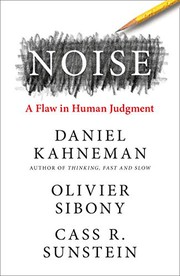
Kahneman's follow-up to Thinking, Fast and Slow introduces 'noise' — random variability in judgment — as a distinct and underappreciated problem alongside bias. It represents the frontier of the field and rewards readers who have the full prior context.

Nobel laureates Banerjee and Duflo show how behavioral and experimental economics inform the biggest policy debates of our era — inequality, immigration, climate — giving the curriculum a sweeping, socially conscious finale.
Discussion
Keep reading
Paths that share books, cover the same subject, or open a related topic.