The Best Books for Aspiring Doctors and Med School
This curriculum takes an aspiring doctor from wide-eyed curiosity all the way through the gritty realities of medical training, building knowledge in a deliberate arc: first understand what medicine really is and whether it's right for you, then master the admissions game, then absorb the foundational science, and finally confront the lived experience of doctoring so you enter with clear eyes. Each stage assumes the vocabulary and mindset built in the one before it.
Is Medicine Right for Me?
BeginnerDevelop an honest, grounded understanding of what a life in medicine actually looks like before committing to the path — its rewards, its costs, and its culture.
▸ Study plan for this stage
Pace: 8–10 weeks, ~40–50 pages/day, with 2–3 days of reflection between books
- The existential weight of medical practice: confronting mortality, meaning-making, and the gap between idealism and reality
- Medicine as a cultural encounter: how doctors' frameworks clash with patients' beliefs, values, and worldviews
- The personal cost of becoming a doctor: time, emotional labor, identity transformation, and the risk of burnout
- Humility in medicine: recognizing the limits of medical knowledge and the dangers of assuming one's perspective is universal
- The doctor-patient relationship as a site of profound vulnerability and miscommunication
- How systemic and cultural factors shape medical outcomes as much as clinical expertise does
- The tension between curing and caring: what medicine can and cannot do
- What does Kalanithi's journey reveal about the gap between why people enter medicine and what they actually experience once they're inside it?
- How do the Lee family's and the medical team's different frameworks for understanding Lia's illness lead to tragic miscommunication, and what could have been done differently?
- What does 'humility' mean in medical practice, and why is it essential? How do both books illustrate the consequences of its absence?
- How do Kalanithi and Fadiman each portray the emotional and existential demands of medicine that go beyond clinical knowledge?
- What are the 'costs' of a medical career that Kalanithi implicitly describes, and are they costs you're willing to pay?
- How does understanding cultural difference change the way you think about what it means to be a good doctor?
- Read *When Breath Becomes Air* in 3–4 sittings and write a 1-page reflection after each major section (diagnosis, treatment, recurrence, the final months) capturing your emotional response and what surprised you most
- Create a two-column chart: one side lists Kalanithi's reasons for becoming a doctor, the other lists what he actually encountered. Identify the gaps and note which ones resonate with your own assumptions
- Read *The Spirit Catches You and You Fall Down* in 2–3 sittings, pausing after key scenes (the initial seizure, the first hospital visit, the cultural explanations) to write down what each side (Lee family vs. medical team) believes and why
- Interview a practicing physician (or watch a recorded interview) about a time they felt their medical training was insufficient or when they had to reconsider their approach. Compare their experience to Kalanithi's and Fadiman's accounts
- Write a dialogue between Kalanithi (as a doctor) and one of Lia's physicians discussing what they each learned about the limits of medicine and the importance of understanding a patient's world
- Reflect in writing: Which aspects of a medical career—as portrayed in these two books—appeal to you, and which concern or repel you? Be brutally honest
Next up: This stage establishes that medicine is not a monolithic calling but a complex, morally fraught, and deeply personal path—preparing you to explore in the next stage the specific skills, knowledge, and resilience required to navigate it successfully.
A neurosurgeon's memoir written as he faces terminal cancer; it asks the deepest question of why one enters medicine and what it means to care for human life. Reading this first sets a profound emotional and philosophical baseline.

Explores the collision of Western medicine with a Hmong family's beliefs, revealing how culture, ethics, and systemic issues shape medical care. It builds critical thinking about medicine's limits early in the journey.
Getting In — The Admissions Game
BeginnerUnderstand the medical school admissions process end-to-end: GPA, MCAT, applications, interviews, and how to present yourself as a competitive candidate.
▸ Study plan for this stage
Pace: 4–5 weeks, ~25–30 pages/day (approximately 150–170 pages total across both books)
- The medical school interview is a two-way evaluation: schools assess your fit, but you also assess theirs—preparation requires researching both sides
- MSAR is the authoritative source for school-specific requirements: GPA thresholds, MCAT score ranges, prerequisite courses, and application timelines vary significantly by institution
- Storytelling and authenticity are central to interview success—your narrative must connect your motivations, experiences, and values coherently without sounding rehearsed
- The admissions process has multiple gatekeepers: GPA and MCAT scores filter candidates before interviews, so meeting minimums is non-negotiable but insufficient
- Interview formats vary (traditional, MMI, panel, group) and require different preparation strategies; understanding the specific format for each school is essential
- Your application materials (personal statement, activities, letters of recommendation) must align with and reinforce the story you tell in the interview
- Common interview pitfalls—defensive answers, lack of self-awareness, inability to articulate why medicine—can derail otherwise qualified candidates
- Post-interview strategy matters: thank-you letters, demonstrated interest, and managing multiple acceptances are part of the final phase of admissions
- What are the key components of a strong medical school interview narrative, and how do you avoid sounding rehearsed or inauthentic?
- How do you use MSAR data to identify schools where your GPA and MCAT scores are competitive, and what other factors should influence your school list?
- What are the major interview formats (traditional, MMI, panel, group), and how does preparation differ for each?
- How should your interview responses connect to your application materials (personal statement, activities, letters of recommendation)?
- What are the most common interview mistakes, and how do you prepare to avoid them?
- What is your strategy for post-interview engagement and managing multiple acceptances?
- Read through Gray's interview framework and identify 3–5 core stories from your own background (challenges overcome, formative clinical experiences, reasons for medicine); write a 1-page narrative for each that you can adapt to different interview questions
- Using MSAR, create a detailed school list of 15–20 institutions: categorize them by reach/target/safety based on your GPA and MCAT scores, and note 2–3 unique reasons you're interested in each
- Record yourself answering 5 classic interview questions (Why medicine? Tell me about a failure. Why our school?) and review the recordings for clarity, authenticity, and alignment with your narrative
- Conduct mock interviews with a peer, mentor, or advisor using Gray's guidance; practice both traditional and MMI-style questions, and get feedback on your answers
- For 3 schools on your list, research their mission, curriculum, location, and culture; write a 2–3 sentence 'Why this school?' statement for each that goes beyond generic talking points
- Create a post-interview action plan template: thank-you letter outline, timeline for demonstrated interest activities, and a decision matrix for comparing acceptances
Next up: This stage equips you with the knowledge and skills to navigate the admissions process strategically and present yourself authentically; the next stage will focus on building the academic and clinical foundation (GPA, MCAT preparation, clinical experience) that makes you a competitive candidate in the first place.

Written by a physician and admissions expert, this is a practical, step-by-step guide to the interview process — the single highest-stakes moment in admissions. Start here to understand what schools are actually evaluating.

The official AAMC data resource listing every accredited U.S. MD program's stats, prerequisites, and deadlines. Read alongside the interview guide to turn strategy into a concrete school list.
The Science Beneath Medicine
IntermediateBuild the core biomedical vocabulary and conceptual framework — anatomy, physiology, pathology — that underpins every clinical decision a doctor makes.
▸ Study plan for this stage
Pace: 8–10 weeks, ~40–50 pages/day (mix of narrative and reference material). Start with "The Body" (2–3 weeks), move to "How Doctors Think" (2–3 weeks), then use "First Aid for the USMLE Step 1" as a reference companion throughout and for targeted review (3–4 weeks).
- Major organ systems (cardiovascular, respiratory, nervous, endocrine, immune, gastrointestinal) and how they function as integrated units
- How normal physiology breaks down into disease states—the pathological mechanisms underlying common conditions
- Clinical reasoning frameworks: pattern recognition, differential diagnosis, and cognitive biases that affect medical decision-making
- The relationship between anatomy, physiology, and pathology in real diagnostic and treatment scenarios
- Essential biomedical vocabulary and nomenclature (from cellular to systemic level) used in clinical practice
- How doctors synthesize information from history, physical exam, and investigations to form working diagnoses
- The importance of understanding mechanism-of-action: why treatments work at the molecular and physiological level
- Explain how a disruption in one organ system (e.g., the heart) can cascade to affect another (e.g., the lungs or kidneys). Use a specific example from 'The Body.'
- Describe the cognitive errors and biases that Groopman identifies in 'How Doctors Think' and give an example of how each could lead to diagnostic error.
- For a common condition (e.g., hypertension, diabetes, or pneumonia), trace the pathway from normal physiology to pathology, and explain why a specific treatment works.
- What is the difference between a sign and a symptom, and why does this distinction matter in clinical reasoning?
- Using 'First Aid' as reference, create a one-page summary of a disease including: epidemiology, pathophysiology, clinical presentation, diagnosis, and treatment.
- How would you explain to a patient (in plain language) why their symptoms are occurring, based on the underlying anatomy and physiology you've learned?
- Create a systems map: For each major organ system covered in 'The Body,' draw a diagram showing key structures, normal function, and one example of how it fails (pathology). Annotate with vocabulary from 'First Aid.'
- Cognitive bias journal: As you read 'How Doctors Think,' identify one bias per chapter and write a short case scenario showing how that bias could lead to misdiagnosis. Then write the corrected reasoning.
- Vocabulary flashcards: Extract 100–150 key terms from 'First Aid' (e.g., pathophysiology terms, drug classes, diagnostic criteria) and quiz yourself weekly. Focus on understanding mechanism, not just definition.
- Case study analysis: Select 3–5 common conditions from 'First Aid.' For each, write a brief patient case, then work through the diagnostic reasoning process as Groopman describes it, identifying where cognitive errors could occur.
- Teach-back exercise: Explain a complex physiological concept from 'The Body' (e.g., how the immune system works, or how the heart pumps blood) to a non-medical friend. Refine your explanation until it's clear and accurate.
- Clinical correlation notebook: For each major system, write one-page summaries linking normal anatomy/physiology ('The Body') → pathology ('First Aid') → diagnostic reasoning ('How Doctors Think').
Next up: This stage equips you with the biomedical foundation and clinical reasoning toolkit needed to engage with the next stage—whether that's deeper pharmacology, clinical skills, or case-based learning—because you now understand not just *what* happens in disease, but *why* doctors make the decisions they do.

A brilliantly readable tour of human anatomy and physiology for the non-specialist. It builds the biological intuition and vocabulary you'll need before tackling denser medical texts, without overwhelming a beginner.
Bridges lay science and clinical reasoning by showing how physicians actually diagnose — the cognitive shortcuts, biases, and errors involved. It's the perfect transition from 'knowing biology' to 'thinking like a doctor.'
The canonical medical-student review bible for the Step 1 licensing exam. Reading it as an advanced pre-med gives you a true map of the first two years of medical school science and shows exactly what mastery looks like.
Inside Medical School & Residency
IntermediateExperience medical school and residency vicariously through honest, insider accounts so you can anticipate the culture, the grind, and the emotional demands before you live them.
▸ Study plan for this stage
Pace: 6–8 weeks, ~40–50 pages/day (alternating between both books to maintain narrative momentum and emotional engagement)
- The emotional and psychological toll of medical practice: how physicians cope with uncertainty, failure, and patient mortality
- The hierarchical structure and power dynamics within medical training and hospital systems
- The tension between idealism and pragmatism in medicine: balancing perfectionism with resource constraints and real-world limitations
- The isolation and moral weight of clinical decision-making, especially in high-stakes neurosurgery and global health contexts
- The long-term commitment required in medicine: how residency and career demands reshape identity and relationships
- The role of mentorship, institutional culture, and personal values in shaping a physician's approach to patient care
- Global health disparities and the ethical complexities of practicing medicine across different healthcare systems
- What does Marsh reveal about the emotional aftermath of surgical complications and mistakes, and how does he suggest physicians should process these experiences?
- How does Kidder portray Paul Farmer's approach to medicine as fundamentally different from conventional medical practice, and what are the costs and rewards of his model?
- What role does institutional hierarchy play in both neurosurgery (Marsh) and global health work (Farmer), and how does it affect decision-making and patient outcomes?
- How do both authors illustrate the gap between medical training's ideals and the messy realities of clinical practice?
- What personal sacrifices do Marsh and Farmer describe, and how do they justify or rationalize these sacrifices in their medical careers?
- How do Marsh and Farmer each confront the limits of medicine—cases they cannot fix, patients they cannot save—and what does this reveal about resilience in medicine?
- After finishing each book, write a 2–3 page reflection comparing Marsh's neurosurgical practice with Farmer's global health approach: What are the similarities in their moral struggles? Where do they diverge?
- Identify 3–4 specific moments in each book where the author faces a failure or ethical dilemma. For each, write down: (a) what the decision was, (b) what internal conflict it reveals, (c) what you would have done differently and why.
- Create a 'day-in-the-life' comparison: Based on Marsh's accounts, outline what a typical day looks like for a neurosurgeon; then do the same for Farmer's work. What are the emotional and physical demands unique to each?
- Interview a physician (doctor, resident, or medical student if possible) using questions derived from the books: Ask about a time they made a difficult clinical decision, how they process failure, and what keeps them in medicine. Compare their answers to Marsh's and Farmer's perspectives.
- Write a letter to your future self as a medical student/resident, drawing on warnings, insights, and encouragement from both authors. What do you need to remember about the emotional realities ahead?
- Create a visual map of the institutional and personal barriers Marsh and Farmer each encounter. How are they similar? How do they navigate them differently?
Next up: This stage has prepared you to recognize the human, emotional, and systemic realities of medical practice; the next stage will equip you with the practical, tactical knowledge needed to navigate medical school applications, admissions, and early career decisions with clear eyes and resilience.
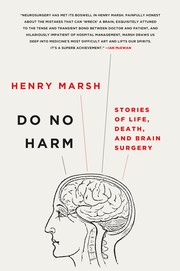
A veteran British neurosurgeon's unflinching diary of operating on the brain — the triumphs, the catastrophic mistakes, and the moral weight of surgical decisions. It deepens the emotional preparation begun in Stage 1.
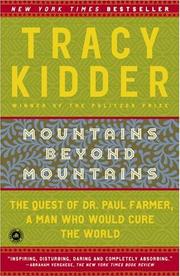
Profiles physician Paul Farmer, who built a global health movement from nothing. It expands the reader's vision of what a medical career can accomplish beyond the clinic and rounds out the curriculum with inspiration and scope.
Discussion
Keep reading
Paths that share books, cover the same subject, or open a related topic.