A family business runs two systems at once — the family and the enterprise — and they operate on different logics. Love and loyalty govern one; performance and capital govern the other. Most succession failures trace to confusing the two. That's why this subject rewards a reading order that first names the dynamics, then builds governance to contain them, then plans the actual handoff.
This path moves from understanding the unique pressures of family firms, to the structures that keep them healthy, to the emotional and practical work of passing the business on. It ends where the real difficulty lives: preparing people, not just paperwork.
Understand the two systems
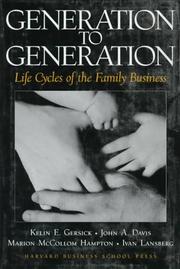
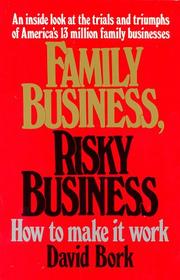
Start with Generation to generation by Kelin Gersick, the foundational three-circle model of family, ownership, and business — the map everyone in the field uses. Then Family business, risky business by David Bork surfaces the emotional landmines that make these firms uniquely fragile. Together they explain why family enterprises need more than ordinary management.
Build the governance
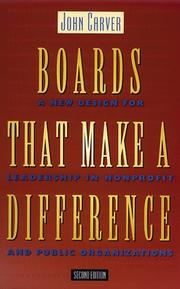
Structure is what keeps the two systems from colliding. Boards that make a difference by John Carver offers a governance model that works even when directors are also relatives. Family Business Governance by Craig Aronoff is the practical playbook for boards, councils, and policies. And The Family Constitution by Joachim Schwass shows how families write down shared rules before conflict forces the issue.
Plan the handoff
Now the transition itself. Succeeding Generations by Ivan Lansberg is the definitive treatment of succession planning — the patterns, timelines, and choices founders face. Passing the torch by Mike Cohn adds a practical framework for the handoff, and The Family Edge by Otis Baskin argues that done right, family ownership is a competitive advantage rather than a liability.
Prepare the people
The hardest part is human. Strangers in Paradise by James Grubman explores the psychology of wealth passing across generations and why heirs so often struggle with it. Preparing heirs by Roy Williams closes the path with the sobering research finding that most wealth transfers fail for reasons of trust and communication — not taxes or law.
Read in this order, succession stops being a legal event and becomes a decade-long process you can lead. Follow the full path to keep it in sequence.
Follow the full reading path →
Ready to learn something deeply?
Build a reading path — free