The Best Books to Start an Import and Export Business
This curriculum takes a complete beginner from the fundamental concepts of international trade all the way through advanced sourcing, logistics, customs compliance, and profit-driven strategy. Each stage builds on the last — starting with the "why and how" of global trade, moving into operational mechanics, then mastering the professional tools that separate hobbyists from serious importers and exporters.
Foundations of Global Trade
BeginnerUnderstand how international trade works, the key players involved, and the basic business model of importing and exporting for profit.
▸ Study plan for this stage
Pace: 4–5 weeks, ~40–50 pages/day (approximately 280–350 pages total across both books)
- The fundamental mechanics of importing and exporting: how goods move across borders, payment flows, and profit margins
- Key players in international trade: suppliers, distributors, customs brokers, freight forwarders, and end customers
- Essential documentation and compliance: tariffs, duties, import/export licenses, and regulatory requirements
- Market research and product selection: identifying profitable import/export opportunities and assessing demand
- Logistics and supply chain basics: shipping methods, incoterms, and cost structures
- Pricing strategy and profitability: calculating landed costs, markups, and competitive positioning
- Starting a lean import/export business: minimal capital requirements, business structure, and initial steps
- What are the key differences between importing and exporting, and what profit opportunities exist in each?
- Who are the main intermediaries and service providers in international trade, and what role does each play?
- What are the primary regulatory and documentation requirements you must satisfy to legally import or export goods?
- How do you calculate the true cost of an imported product, including tariffs, shipping, and handling?
- What process would you follow to identify and validate a profitable import/export product opportunity?
- What are the main shipping methods (air, sea, land) and when should each be used based on cost and speed?
- Create a detailed cost breakdown for a hypothetical imported product, including supplier cost, tariffs, freight, insurance, and markup to arrive at a retail price
- Research and document the import/export regulations and tariff classifications for a specific product category of interest
- Interview or email a local customs broker, freight forwarder, or import/export business owner to understand real-world logistics and compliance challenges
- Develop a simple one-page business model canvas for a potential import/export venture, identifying suppliers, customers, and revenue streams
- Compare shipping costs and delivery times for the same product using air freight, sea freight, and land transport to understand trade-offs
- Identify three potential import or export products by analyzing local market gaps, supplier availability, and profit margins using online research
Next up: This foundational stage equips you with the vocabulary, mechanics, and business fundamentals of global trade, preparing you to dive deeper into specialized topics such as market entry strategies, negotiation tactics, financing options, and scaling operations in the next stage.

The ideal starting point — it demystifies the entire import/export process in plain language, covering trade basics, finding suppliers, and getting paid, giving beginners a complete mental map before diving deeper.
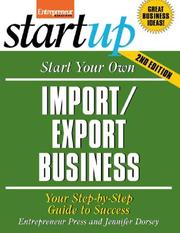
Builds directly on the Dummies foundation by walking through the practical steps of actually launching a trade business, including market research, pricing, and setting up operations.
Sourcing & Finding Products to Trade
BeginnerLearn how to identify profitable products, find reliable overseas suppliers, and negotiate deals that protect your margins.
▸ Study plan for this stage
Pace: 4–5 weeks, ~40–50 pages/day with note-taking and supplier research breaks
- Product selection criteria: identifying market demand, competition levels, and profit margins using dropshipping-specific tools and research methods
- Supplier vetting and due diligence: evaluating reliability, quality standards, communication, and fulfillment capabilities of overseas manufacturers and wholesalers
- Negotiation fundamentals: securing favorable pricing, minimum order quantities (MOQs), payment terms, and lead times while protecting your margins
- Dropshipping business model mechanics: understanding how product sourcing differs from traditional wholesale and inventory management
- Risk assessment in sourcing: identifying red flags, quality control concerns, and supplier reliability issues before committing capital
- Margin calculation and pricing strategy: determining cost structures, shipping expenses, and competitive pricing to ensure profitability
- Supplier relationship building: establishing communication protocols and long-term partnerships that support sustainable business growth
- What are the key metrics and tools Mark Hayes recommends for identifying profitable products in dropshipping, and how do you evaluate market demand versus competition?
- How do you conduct due diligence on an overseas supplier to assess their reliability, quality standards, and ability to fulfill orders consistently?
- What are the critical elements to negotiate with suppliers (pricing, MOQs, payment terms, lead times), and how do you protect your profit margins during negotiations?
- What are the main differences between dropshipping sourcing and traditional wholesale sourcing, and how do these differences affect your supplier selection strategy?
- What red flags should you watch for when evaluating a potential supplier, and how do you mitigate quality and reliability risks?
- How do you calculate true product costs (including shipping, tariffs, and platform fees) and set competitive prices that maintain healthy margins?
- Complete a product research worksheet for 3–5 potential products using the tools and criteria outlined in Hayes' book; document demand indicators, competition analysis, and estimated margins
- Identify and contact 5 suppliers for a single product category; document their responses, pricing, MOQs, lead times, and communication quality to compare
- Create a supplier evaluation scorecard based on Hayes' vetting criteria; use it to assess 2–3 real suppliers and rank them by reliability and fit
- Conduct a mock negotiation email exchange with a supplier (or use a supplier's actual terms as a starting point); practice negotiating price, MOQ, and payment terms while documenting your reasoning
- Build a detailed cost and margin calculation spreadsheet for one product: include supplier cost, shipping, platform fees, tariffs, and competitor pricing to determine your final price and profit margin
- Research and document 3 case studies of supplier failures or quality issues from online forums, reviews, or business communities; identify the warning signs that could have been caught earlier
Next up: This stage equips you with the ability to identify viable products and secure reliable suppliers at sustainable margins—the foundation necessary to move into the next stage, where you'll learn to set up your sales channels, optimize product listings, and execute your first transactions with confidence.

Introduces product sourcing and supplier relationships in a low-risk context, building the vocabulary and intuition for evaluating suppliers and margins before committing to larger import orders.
Logistics, Shipping & Customs
IntermediateMaster the mechanics of moving goods across borders — freight, Incoterms, customs clearance, documentation, and avoiding costly compliance mistakes.
▸ Study plan for this stage
Pace: 8–10 weeks, ~40–50 pages/day (mix of dense reference material and practical guides)
- Export documentation requirements (commercial invoices, packing lists, certificates of origin, bills of lading) and how to prepare them correctly
- Incoterms® 2020 rules: the 11 terms, their risk/cost allocation between buyer and seller, and when to use each in different trade scenarios
- Freight options (air, sea, road, rail) and how to select the right mode based on product type, urgency, cost, and destination
- Customs clearance procedures, tariff classification (HS codes), duty calculation, and common compliance pitfalls that delay shipments
- Supply chain visibility and logistics network design: warehousing, distribution centers, inventory management, and last-mile delivery
- Compliance frameworks: export controls, restricted goods, country-of-origin rules, and regulatory documentation to avoid penalties
- Cost optimization in logistics: total landed cost calculation, freight negotiation, consolidation strategies, and performance metrics
- What are the 11 Incoterms® 2020 rules, and which party bears the cost and risk of loss at each stage under FOB, CIF, and DDP terms?
- What documents must accompany an export shipment, and what information does each one contain (e.g., commercial invoice vs. packing list vs. bill of lading)?
- How do you determine the correct HS code for a product, and why does tariff classification matter for customs clearance and duty assessment?
- What are the key differences between air freight, ocean freight, and less-than-truckload (LTL) shipping, and when would you choose each?
- What are the most common customs compliance mistakes that cause shipment delays or penalties, and how do you prevent them?
- How do you calculate total landed cost, and what factors (freight, duties, insurance, handling) must you include?
- Prepare a complete export documentation package for a hypothetical shipment (e.g., electronics to Germany): draft a commercial invoice, packing list, certificate of origin, and bill of lading with realistic data
- Analyze three real-world trade scenarios and select the appropriate Incoterm for each (e.g., small high-value item to Japan, bulk commodity to Mexico, perishable goods to UK), justifying your choice based on cost, risk, and buyer/seller preferences
- Classify 5–10 products using HS codes (use online tariff databases or examples from the books), then calculate estimated duties and taxes for shipments to two different countries
- Compare freight quotes for the same shipment via air, ocean, and ground; calculate total landed cost for each mode and recommend the best option with reasoning
- Create a customs clearance checklist for a specific product category (e.g., textiles, machinery, food); identify restricted items, required certifications, and documentation needed to avoid delays
- Design a simplified logistics network for a fictional export company: choose warehouse locations, freight modes, and distribution partners; estimate costs and lead times
Next up: This stage equips you with the operational and regulatory foundation to execute cross-border transactions; the next stage will build on this by teaching you how to structure contracts, manage supplier relationships, and mitigate financial and political risks in international trade.

The official U.S. government export handbook, covering export licensing, documentation, freight, and trade finance — an essential operational reference that bridges beginner knowledge to real-world execution.

The definitive rulebook for international shipping terms used in every trade contract — understanding Incoterms is non-negotiable for negotiating supplier and freight agreements correctly.

Provides a thorough grounding in supply chain and logistics management, covering freight modes, warehousing, and distribution networks that underpin every import/export operation at scale.
International Trade Finance & Strategy
IntermediateUnderstand how to finance trade deals, manage currency risk, use letters of credit, and build a strategy for sustainable international profit.
▸ Study plan for this stage
Pace: 4–5 weeks, ~40–50 pages/day (approximately 200–250 pages total across both books)
- Trade finance instruments (letters of credit, bills of lading, documentary collections) and their role in mitigating payment risk
- Currency risk management techniques: forward contracts, hedging strategies, and exchange rate exposure in international transactions
- Working capital management for exporters and importers, including pre-shipment and post-shipment financing
- Documentary requirements and compliance in international trade (commercial invoices, certificates of origin, insurance documents)
- Export-import pricing strategies, cost structures, and profitability analysis across borders
- Government support programs and incentives for exporters (export credit agencies, subsidies, trade agreements)
- Supply chain financing and the role of banks and financial intermediaries in facilitating trade flows
- Strategic planning for sustainable international profit: market selection, risk assessment, and long-term competitive positioning
- What is a letter of credit, how does it protect both buyer and seller, and what are the key differences between irrevocable and revocable letters of credit?
- How can an exporter or importer use forward contracts and other hedging instruments to manage currency risk?
- What are the main sources of pre-shipment and post-shipment financing available to exporters, and when should each be used?
- What documents are required in a typical international trade transaction, and what role does each play in ensuring compliance and payment?
- How do export-import pricing strategies differ from domestic pricing, and what factors must be included in cost calculations for international deals?
- What government support mechanisms and trade finance programs are available to support exporters, and how can businesses access them?
- How should a business assess and mitigate risks when entering a new international market, and what role does financial strategy play in long-term profitability?
- Analyze a sample letter of credit: identify all key terms, conditions, and potential discrepancies; explain how each party (exporter, importer, banks) is protected
- Create a currency hedging plan for a hypothetical export transaction: specify the transaction amount, timeline, and exchange rate risk; recommend and justify a hedging instrument (forward contract, option, or money market hedge)
- Prepare a complete export financing proposal: identify pre-shipment and post-shipment financing needs for a fictional product, calculate working capital requirements, and recommend appropriate financing sources
- Draft a documentary checklist for an international trade deal: list all required documents (commercial invoice, bill of lading, certificate of origin, insurance certificate, etc.), explain the purpose of each, and identify common compliance pitfalls
- Conduct a pricing analysis for an export product: calculate landed costs, factor in tariffs and freight, apply markup, and compare pricing strategies (cost-plus vs. market-based) across different target markets
- Research and summarize government export support programs: identify at least three programs available in a specific country (e.g., export credit guarantees, working capital loans, trade missions), and outline eligibility and application processes
Next up: This stage equips you with the financial tools and strategic frameworks to execute profitable international trade deals; the next stage will build on this foundation by exploring advanced topics such as supply chain optimization, market entry strategies, and managing complex multi-country operations.

Explains letters of credit, export credit insurance, and financing tools step by step — critical knowledge for protecting cash flow and closing deals with overseas buyers and sellers.

A comprehensive academic-yet-practical text that ties together trade law, finance, logistics, and strategy, making it the ideal capstone for the intermediate trader ready to think systematically.
Advanced Strategy & Scaling
ExpertThink and operate like a seasoned international trader — identifying market opportunities globally, managing risk, and scaling a profitable import/export enterprise.
▸ Study plan for this stage
Pace: 8–10 weeks, ~40–50 pages/day (mix of dense business strategy and narrative history)
- Scaling strategies: moving from startup to enterprise-level operations, managing growth without losing operational control
- Global market opportunity identification: using Friedman's flattening frameworks to spot emerging markets and competitive advantages
- Risk management at scale: currency fluctuations, geopolitical factors, supply chain resilience, and hedging strategies
- Operational infrastructure: building robust systems for inventory, logistics, compliance, and financial management across borders
- Competitive positioning: leveraging technology and outsourcing to compete globally while maintaining margins
- Strategic partnerships and networks: cultivating supplier relationships, distributors, and strategic alliances in a flattened world
- Financial modeling for growth: pricing strategy, working capital management, and profitability metrics for scaled operations
- Adapting to global disruption: anticipating and responding to technological, political, and economic shifts that reshape trade
- What are the key operational and financial milestones you must achieve to scale from a small import/export operation to a mid-market enterprise, and what risks emerge at each stage?
- How does Friedman's concept of a 'flattened world' create new market opportunities for import/export businesses, and which industries or regions are most vulnerable to disruption?
- What risk management strategies should a scaled import/export business employ to protect against currency volatility, supply chain disruption, and geopolitical instability?
- How can technology and outsourcing be leveraged to improve margins and competitiveness while scaling, and what are the trade-offs?
- What financial metrics and KPIs should guide decision-making in a scaled import/export enterprise, and how do they differ from a startup?
- How do you identify and cultivate strategic partnerships and supplier relationships that enable sustainable growth in a globally competitive market?
- Build a 3-year financial model for scaling your import/export operation: project revenue, COGS, operating expenses, and cash flow under different growth scenarios (conservative, base, aggressive). Identify the working capital requirements and financing needs at each stage.
- Conduct a market opportunity analysis using Friedman's flattening framework: select 2–3 emerging markets or product categories, assess competitive dynamics, regulatory barriers, and logistics costs, then rank them by attractiveness and risk.
- Design a risk management strategy for a scaled operation: map currency exposure, supply chain vulnerabilities, and geopolitical risks for your target markets. Propose specific hedging, diversification, and contingency measures.
- Create a supplier and distributor scorecard: identify 3–5 potential partners in your target markets, evaluate them on reliability, cost, quality, and strategic fit, and outline a relationship management plan.
- Develop an operational playbook for scaling: document processes for inventory management, order fulfillment, compliance, and customer service that can be standardized and replicated as you expand to new markets.
- Analyze a real-world import/export case study (e.g., a company that scaled successfully or failed): identify the strategic decisions, operational challenges, and external factors that shaped their trajectory, and extract lessons for your own business.
Next up: This stage equips you with the strategic frameworks, operational discipline, and global perspective needed to transition from managing a single trade route to orchestrating a complex, resilient, and profitable international enterprise—preparing you for the next level of specialization, whether in niche markets, supply chain innovation, or international business leadership.

A long-standing canonical guide by a veteran trader that covers advanced sourcing, agent networks, pricing strategy, and scaling — the go-to book for moving from operator to entrepreneur.

Provides the macro strategic lens on globalization and competitive dynamics that every serious international trader needs — helps you spot where opportunities are emerging and why supply chains shift.
Discussion
Keep reading
Paths that share books, cover the same subject, or open a related topic.