Rastafari: the best books to read, in order
Rastafari began in 1930s Jamaica among the poorest people in a British colony, took the crowning of Haile Selassie as the fulfilment of prophecy, and within fifty years had become a worldwide cultural presence carried largely by reggae. The literature falls into two kinds and this path names which is which: academic sociology and history on one side, and on the other the movement's own sources and books written from close inside it. It moves from the standard scholarly accounts, back to the Garveyite and Ethiopianist roots, into the houses and practices, and out to the global spread — where the honest problem is that most people meet Rastafari through music and merchandise rather than through anything it teaches.
The standard scholarly accounts
BeginnerGet the history and the beliefs from academic sources first: the 1930 crowning of Ras Tafari Makonnen as Haile Selassie, the early preachers, Pinnacle and its destruction, the 1960 University report, and the movement's shift from an outcast sect to a recognised part of Jamaican life. All three books here are scholarship.
▸ Study plan for this stage
Pace: Four weeks for 786 pages, and two of these three books are catalogued under the single word Rastafari, so name the author every time you order or cite one. Leonard Barrett's The Rastafarians is 280 pages, the classic study, and the narrative everything later responds to — read it first over about te
- The 1930 coronation of Ras Tafari Makonnen as Haile Selassie, and the reading of it as prophetic fulfilment
- The early preachers — Howell, Hinds, Dunkley, Hibbert — and the movement's plural origins rather than a single founder
- Pinnacle, the Howell commune, and its repeated destruction by the colonial state
- The 1960 University College of the West Indies report and its role in shifting official attitudes
- Babylon as a category covering colonial power, the state, the police and the economic order
- Chevannes's Revivalist-continuity thesis, which is the main scholarly disagreement in the field
- The movement's passage from criminalised outcast sect to a recognised part of Jamaican national culture
- How do Barrett, Edmonds and Chevannes each account for the movement's emergence, and where exactly do they part company?
- What is Chevannes's evidence for Revivalist continuity, and what would count against it?
- What did the 1960 report recommend, and what did the government actually do?
- Which parts of Barrett's account read as of their moment, and does that damage the book or only date it?
- What does Babylon name, and how does its reference shift between the 1930s and the 1970s?
- Build a chronology from 1930 to 1980 marking the coronation, Pinnacle, the Coral Gardens events, the 1960 report and Selassie's 1966 visit to Jamaica. Every later stage assumes it.
- Write each author's one-sentence answer to the question 'where did Rastafari come from', then mark which claims are compatible and which are not.
- In Chevannes, find two practices he traces to Revivalism and check how Barrett and Edmonds describe the same practices.
- List the internal divisions the three books identify. Note that they do not produce the same list — you will test it in stage three.
Next up: The scholarly accounts all point backwards to Garvey and to Ethiopianism, which is where the next stage goes and largely in primary sources.
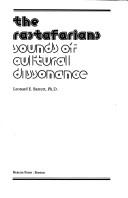
The classic study by a Jamaican-born scholar of religion and the book that introduced Rastafari to an academic readership. Dated in places and still the standard first account; start here for the narrative everything else responds to.
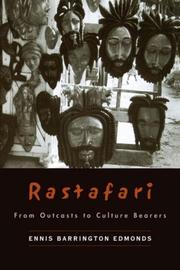
The best modern short survey, focused on the process by which a despised sect became a source of Jamaican national identity. Read second; it updates Barrett and is more careful about the movement's internal variety. Catalogued under the bare title Rastafari.
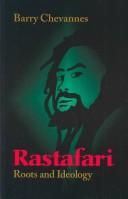
The major ethnographic and historical study, built on Chevannes's own fieldwork and his argument that Rastafari grew out of an older Jamaican Revivalist religious culture rather than appearing from nowhere. The most scholarly book in this stage and also catalogued as simply Rastafari, so check the subtitle when buying.
Where it came from
IntermediateTrace the roots: Marcus Garvey's Pan-Africanism and the prophecy attributed to him about a king crowned in Africa, the Ethiopianist strand in Black Atlantic Christianity, and the Black Power politics that ran alongside Rastafari in 1960s Jamaica. The first two books are primary and near-primary sources.
▸ Study plan for this stage
Pace: Three to four weeks for 786 pages. Philosophy and Opinions of Marcus Garvey is 412 pages, compiled by Amy Jacques Garvey, and is Garvey in his own words — a primary source, and it should be read before any account of what Rastafari made of him; a fortnight, taken speech by speech rather than continu
- Garvey's Pan-Africanism, the UNIA, and the programme of racial self-determination and repatriation
- The prophecy attributed to Garvey about a king to be crowned in Africa, and the question of whether he said it
- Ethiopianism in Black Atlantic Christianity, and the biblical passages it turned on
- Garvey's own dismissive view of the deification of Haile Selassie, which the movement had to work around
- Leonard Howell, Pinnacle, and the colonial state's response to an independent Black commune
- Rodney's grounding: the intellectual going to the people rather than the reverse, and what he thought that required
- The 1968 Rodney affair and the meeting of Black Power politics with Rastafari in Jamaica
- What did Garvey actually advocate, and which parts of the programme did Rastafari take up and which did it drop?
- Garvey did not endorse the deification of Haile Selassie. How do the scholarly accounts from stage one handle that?
- Which biblical texts carry the Ethiopianist reading, and how are they used?
- Lee's book is sympathetic and journalistic. Where does that show, and where does it recover something scholarship had missed?
- What does Rodney mean by grounding, and what does it demand of the person doing it?
- Read three of Garvey's speeches and write which specific ideas reappear in the movement, and in what altered form.
- Take the attributed prophecy and trace what each of the four books on your shelf so far says about its provenance. Do not settle it; record the state of the evidence.
- Read Rodney's lectures in one sitting and write what he thought a university-trained historian owed to the people he was speaking to.
- Set Lee's portrait of Howell beside Chevannes's account of the same period from stage one, and write what each source can and cannot establish.
Next up: With the roots in place, the next stage goes inside the movement's own practices and its internal divisions.
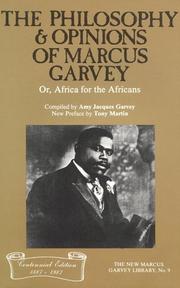
Garvey in his own words, compiled by Amy Jacques Garvey — the Pan-Africanist programme that Rastafari inherited and reinterpreted. Primary source, and worth reading before any account of what Rastas made of him; the catalogue record carries a cluttered author field from a reprint edition.

A journalistic biography of Leonard Howell, the founder figure who established the Pinnacle commune and was repeatedly jailed and finally committed. Not academic history and openly sympathetic, but it recovers a person the movement itself partly forgot.
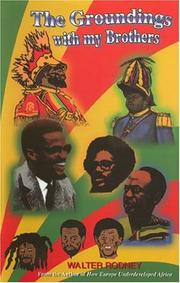
The Guyanese historian's 1968 lectures and talks, delivered in Kingston to Rastafari and other working-class Jamaicans and banned by the government. Primary source for the meeting of Black Power and Rastafari, and the origin of the word grounding as it is used about reasoning sessions.
Inside the movement
IntermediateUnderstand the practices and the internal divisions — reasoning sessions, Nyabinghi drumming and grounations, ital food, dreadlocks, and the difference between the Nyabinghi, Twelve Tribes and Bobo Shanti houses — and read a source recorded largely in Rastafari's own voice.
▸ Study plan for this stage
Pace: Four weeks for 749 pages. Joseph Owens's Dread the Rastafarians of Jamaica is 282 pages, built from years of reasoning sessions and quoting Rastafari at length so the theology arrives in the movement's own words rather than paraphrased; it was written by a Catholic priest and is sympathetic througho
- Reasoning as a collective practice of interpretation, and grounation as its larger gathering form
- Nyabinghi drumming — the three-drum ensemble and its ritual function
- Ital food, livity, and the dietary and bodily discipline as an ethics rather than a rule list
- Dreadlocks as vow and as sign, and the difference between the two
- Iyaric or Dread Talk: I-and-I, overstanding, and the deliberate remaking of English as an act of resistance
- The three principal houses — Nyabinghi, Twelve Tribes of Israel, Bobo Shanti — and how they differ on organisation, doctrine and repatriation
- The position of women in the movement, which is where Chanting down Babylon's contributors disagree most sharply
- The difference between a sympathetic outsider recording speech and an insider writing analysis
- What actually happens in a reasoning, and why is the form itself doctrinally significant?
- How do the three houses differ, and on which question is the difference most consequential?
- What does I-and-I do grammatically, and what does the grammatical move assert?
- Owens is a Catholic priest recording a theology he does not share. Where does that position help the book and where does it limit it?
- What do the women contributors to Chanting down Babylon argue, and how do the male-authored accounts from stage one handle the same material?
- Compile a glossary of Dread Talk from Owens, with the ordinary English word and what the substitution asserts in each case.
- Draw up a three-column comparison of the Nyabinghi, Twelve Tribes and Bobo Shanti houses on organisation, doctrine and attitude to repatriation, using Chanting down Babylon.
- Take a passage of quoted reasoning in Owens and write out the argument being made in it as a sequence of steps.
- Return to the list of internal divisions you drew up in stage one and correct it against this stage's evidence.
Next up: The practices understood on their own terms, the last stage follows the movement out into politics, music and the world market.
Built from years of reasoning sessions and quoting Rastafari at length, so the theology arrives in the movement's own words rather than paraphrased. Written by a Catholic priest and sympathetic throughout, which is the frame to keep in mind while reading it.
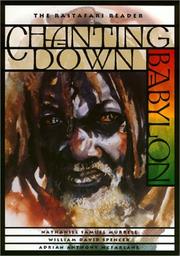
The essential scholarly reader: essays on the theology, the language, the role of women, the houses, and the relationship with Christianity, by Caribbean and North American academics including several Rastafari. The single best book for the internal diversity the survey accounts flatten.
Politics, reggae and the world
BeginnerFollow the movement out of Jamaica: as an anti-colonial politics, as the content of the music that carried it globally, and as an aesthetic that has been extensively commercialised. This stage should leave you able to say what Rastafari teaches independently of what reggae has made famous.
▸ Study plan for this stage
Pace: Five weeks for 1,198 pages. Horace Campbell's Rasta and resistance is 256 pages and is the explicitly political reading, running from Marcus Garvey to Walter Rodney and treating Rastafari as a movement of resistance across the Caribbean, Britain and Africa; it is an argument rather than a survey, so
- Rastafari as anti-colonial politics rather than only as religion, which is Campbell's central move
- The movement's diaspora in Britain, the wider Caribbean and West Africa
- Reggae as the vehicle that carried the movement to a global audience, and what travelled with it and what did not
- Marley as a religious figure in Jamaica and a countercultural one abroad — Toynbee's central distinction
- Commodification: dreadlocks, colours and imagery detached from the livity that produced them
- The state's shift from suppression to appropriation, and the tourism economy that drove it
- The gap this stage exists to close: what Rastafari teaches, stated independently of what reggae made famous
- Campbell reads the movement as resistance. What does that framing capture that the ethnographies miss, and what does it flatten?
- What in Marley's music is doctrinally specific, and what is general enough to travel without the doctrine?
- Where do White and Toynbee describe the same events differently, and what accounts for the difference in genre?
- How did the Jamaican state's posture change, and what does the last book identify as the mechanism?
- Can you now state what Rastafari teaches without reference to any song? Do it in 300 words.
- What is lost when an aesthetic is sold separately from the religion it came from, and who decides that it has been lost?
- Take three Marley songs and identify the specific doctrine or scripture behind each, using the material from stages two and three rather than the liner notes.
- Write Campbell's argument as a chain from Garvey to Rodney, and mark each link as well evidenced, arguable, or asserted.
- Compare a chapter of White with the corresponding chapter of Toynbee and write what the academic study adds and what the biography supplies that it cannot.
- Collect five examples of Rasta imagery in commercial use and analyse each with the last book's framework.
- Write a 600-word answer to the question the path opened with — how a movement of the poorest people in a colony became a global culture — citing at least one book from every stage.
Next up: This is the end of the path: you can now separate what Rastafari teaches from what has been sold on its behalf, which is the one thing the popular literature never does.
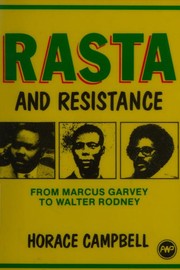
The explicitly political reading, running from Marcus Garvey to Walter Rodney and treating Rastafari as a movement of resistance across the Caribbean, Britain and Africa. Read after the ethnographies; it is an argument rather than a survey, and the fullest published subtitle names the Garvey-to-Rodney span.
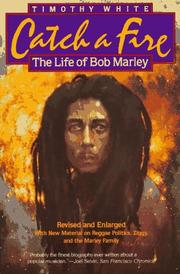
The standard Bob Marley biography, and unusually good on the Jamaican religious and political world Marley came from rather than only on the records. The book that explains how Rastafari reached most of its global audience.
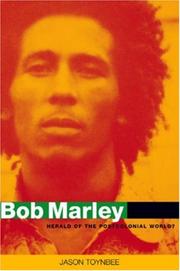
An academic study of Marley as a cultural and political figure rather than a rock biography, including what was lost and changed in translating Rastafari for a world market. Read directly after White as the analytical counterweight; catalogued under the bare title Bob Marley.

A study of how the Jamaican state moved from suppressing Rastafari to using reggae and Rasta imagery in tourism marketing. The sharpest account of the commercialisation problem and the right book to end on.