Best Portuguese Literature to Read, in Order
This curriculum traces the arc of Portuguese literature from its Renaissance pinnacle through Modernism's radical fragmentation and into Nobel-crowned contemporary prose, ending with the wider Lusophone world. Because the learner starts at an intermediate level, the path opens with accessible lyric and epic poetry before tackling Pessoa's demanding heteronymic universe, then moves into Saramago's dense, comma-laden novels, and finally broadens to Lusophone Africa and Brazil. Each stage builds the cultural, linguistic, and formal intuitions required for the next.
The Epic Foundation: Camões and the Renaissance
IntermediateUnderstand the mythological, historical, and lyric foundations of Portuguese literary identity through Camões's epic and sonnets, which echo throughout all later Portuguese writing.
▸ Study plan for this stage
Pace: 6–8 weeks, ~40–50 pages/day (sonnets: 2 weeks; Os Lusíadas: 4–6 weeks)
- Petrarchan sonnet form and Camões's adaptation of the tradition: volta, volta, and the interplay of love, loss, and time
- The mythological and classical allusions in Camões's work as the foundation of Portuguese literary identity
- Os Lusíadas as a national epic: the Vasco da Gama voyage as both historical event and metaphorical journey of Portuguese destiny
- The tension between Renaissance humanism and medieval chivalric values in Camões's treatment of heroism and love
- Lyric subjectivity in the sonnets versus epic objectivity in Os Lusíadas: two modes of Portuguese self-expression
- The role of fate (destino) and divine providence in shaping Portuguese history and individual suffering
- Camões's use of classical mythology (Tethys, Venus, Bacchus, etc.) to elevate Portuguese achievement to universal significance
- How does Camões use the Petrarchan volta in his sonnets to explore the paradoxes of love and time, and what makes his approach distinctly Portuguese?
- What is the relationship between the historical voyage of Vasco da Gama and the mythological/allegorical dimensions of Os Lusíadas?
- How do classical allusions and mythology function in both the sonnets and the epic to establish Portuguese literary identity?
- What is the tension between individual lyric suffering (in the sonnets) and collective national heroism (in Os Lusíadas), and how does Camões reconcile them?
- How does Camões's treatment of fate and divine providence differ from medieval epic tradition, and what does this reveal about Renaissance thought?
- Which moments in Os Lusíadas most directly echo the emotional and thematic concerns of the sonnets, and why might Camões have structured his work this way?
- Read 15–20 sonnets closely, annotating the volta in each and identifying the specific emotional or philosophical turn it marks; compare three sonnets on similar themes (love, absence, time) to trace Camões's variations on Petrarchan convention
- Create a visual map of the major mythological figures in Os Lusíadas (Venus, Bacchus, Tethys, etc.) and track how each appears across multiple cantos; write a one-page analysis of how one mythological figure functions as a symbol of Portuguese destiny
- Select one sonnet and one passage from Os Lusíadas that address the same theme (e.g., loss, heroism, the passage of time); write a comparative essay (3–4 pages) on how form and genre shape Camões's treatment of the theme
- Trace the Vasco da Gama voyage through Os Lusíadas by creating a chronological outline of major events (departure, storms, encounters, arrival in India); then identify which cantos or passages most emphasize the mythological/allegorical layer versus the historical layer
- Write three original sonnets in Petrarchan form (or close approximation) on a theme of your choice, consciously imitating Camões's use of classical allusion and the volta; reflect on how the form constrains and enables meaning-making
- Identify and analyze 5–6 instances where Camões explicitly addresses fate, destiny, or divine will in Os Lusíadas; write a short essay (2–3 pages) on how his treatment of fate differs from medieval epic and reflects Renaissance philosophy
Next up: This stage establishes Camões as the foundational voice of Portuguese literature—his mythological vocabulary, formal innovations, and exploration of individual suffering within national destiny become the template against which all subsequent Portuguese writers define themselves, whether through imitation or rebellion.
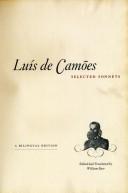
Camões's sonnets introduce his central themes — love, fate, saudade, and the tension between the ideal and the real — in a compact, accessible form before tackling the epic.
Portugal's national epic, recounting Vasco da Gama's voyage to India, is the indispensable cornerstone of the entire tradition; every later writer from Pessoa to Saramago responds to or subverts it.
The 19th-Century Bridge: Realism and Saudade
IntermediateGrasp the social realism and melancholic worldview that shaped modern Portuguese prose and poetry, providing the cultural backdrop Pessoa and Saramago both inherited and rebelled against.
▸ Study plan for this stage
Pace: 4–5 weeks, ~15–20 pages/day (with pauses for reflection and re-reading key poems). "Mensagem" is a dense, symbolic work; slower pacing allows for deeper engagement with Pessoa's layered meanings.
- Saudade as a philosophical and emotional framework: how Pessoa uses this distinctly Portuguese melancholy to explore national identity and longing
- Heteronymy and the fragmented self: understanding how Pessoa's multiple poetic voices embody different worldviews and historical perspectives
- Symbolism and mysticism: decoding Pessoa's use of occult, Templar, and Sebastianist imagery to critique and reimagine Portuguese history
- The tension between realism and idealism: how Pessoa balances concrete historical moments with transcendent, spiritual aspirations
- Portugal's imperial past and cultural anxiety: reading 'Mensagem' as a response to Portugal's decline and search for renewed meaning
- Modernist fragmentation as a literary response to social crisis: how formal innovation mirrors the psychological and cultural disintegration Pessoa observes
- What is saudade, and how does Pessoa use it as a lens to examine Portuguese national identity in 'Mensagem'?
- How does Pessoa's use of heteronymy (multiple poetic voices) function within 'Mensagem', and what different perspectives on Portuguese history does each voice offer?
- Trace the symbolic journey in 'Mensagem': what is the relationship between Portugal's past (exploration, empire) and its spiritual or cultural future as Pessoa imagines it?
- How does Pessoa blend realism (historical facts, social observation) with mysticism and symbolism in 'Mensagem'? What is the effect of this blend?
- What critique of Portuguese society—its decline, its values, its direction—is embedded in 'Mensagem'? How does Pessoa's melancholic worldview shape this critique?
- How does 'Mensagem' exemplify modernist literary techniques, and why might these formal innovations be necessary to express the book's themes?
- Read and annotate 3–4 key poems from 'Mensagem' (e.g., 'Padrão,' 'O Infante,' 'Mostrengo'), marking symbols, recurring images, and shifts in tone; write a one-page analysis of how saudade operates in each.
- Create a visual map or timeline of Portuguese history as Pessoa presents it in 'Mensagem'—from exploration and empire to decline—and note which poems correspond to each historical moment.
- Select one heteronym or voice within 'Mensagem' (if identifiable) and write a short comparative essay on how that voice differs from another in its view of Portugal's destiny.
- Write a reflective journal entry from the perspective of a Portuguese reader in the early 20th century encountering 'Mensagem': what anxieties, hopes, or confusions might this book stir?
- Identify 5–6 symbols or images in 'Mensagem' (e.g., the sea, the Templar cross, the Infante) and trace how each recurs and shifts meaning across the collection.
- Translate or closely paraphrase one complete poem from 'Mensagem' into modern English prose, then reflect on what is gained and lost in moving from Pessoa's symbolic, fragmented verse to linear language.
Next up: By internalizing Pessoa's modernist fragmentation, symbolic critique of Portuguese society, and melancholic worldview in 'Mensagem', you will be equipped to recognize how later Portuguese writers—particularly Saramago and other post-Pessoa authors—either inherit, challenge, or radically reimagine the cultural anxieties and formal innovations Pessoa established.

Pessoa's only Portuguese-language book published in his lifetime reworks Camões's imperial mythology into a mystical, Sebastianist meditation, making it the perfect hinge between the 19th century and his heteronymic universe.
Pessoa and the Heteronyms: Modernist Fragmentation
IntermediateNavigate Pessoa's radical invention of multiple literary personalities and understand how he shattered the unified lyric 'I', making him the pivot of all 20th-century Portuguese literature.
▸ Study plan for this stage
Pace: 4–5 weeks, ~25–30 pages/day, with 2–3 days per week dedicated to close reading and note-taking on individual heteronyms
- The heteronyms as distinct literary personalities with separate biographies, aesthetics, and philosophical positions—not mere masks or pseudonyms
- Pessoa's radical fragmentation of the unified lyric 'I' and rejection of Romantic authenticity
- The relationship between Pessoa himself (the 'orthonym') and his heteronyms (Caeiro, Campos, Reis) as a poetic system
- How heteronymic poetry functions as a modernist response to crisis of identity and meaning in the 20th century
- The technical and stylistic differences across heteronyms—from Caeiro's neo-Pagan sensationalism to Campos's futurist dynamism to Reis's classical restraint
- Pessoa's use of fragmentation as a philosophical and aesthetic principle, not a psychological disorder
- What distinguishes Pessoa's heteronyms from simple pseudonyms or masks? How does each heteronym possess a coherent worldview and poetic method?
- How does Pessoa's fragmentation of the lyric 'I' challenge Romantic and 19th-century assumptions about authorial unity and authenticity?
- What are the core aesthetic and philosophical differences between Alberto Caeiro, Álvaro de Campos, and Ricardo Reis? How do their poems embody these differences?
- How does 'Fernando Pessoa & Co' present the heteronymic system as a unified poetic project rather than scattered fragments?
- Why is Pessoa considered the pivot of 20th-century Portuguese literature? What makes his heteronymic method revolutionary for modernism?
- How does Pessoa's fragmentation relate to broader modernist concerns about identity, consciousness, and representation?
- Create a comparative chart mapping the biographical 'profiles' of Caeiro, Campos, and Reis (birth year, education, temperament, philosophical outlook) as presented in the text, then write a 500-word analysis of how these profiles shape their distinct poetic voices
- Select one poem from each heteronym and perform a close stylistic analysis: examine diction, syntax, imagery, and form to show how each heteronym's technique reflects his worldview
- Write three short poems (8–12 lines each) in the voice of each heteronym responding to the same subject (e.g., a city street, a moment of doubt, nature)—then reflect on how your stylistic choices shifted between voices
- Trace one recurring theme (e.g., sensation, time, knowledge, death) across poems by different heteronyms; write a 600-word essay on how each heteronym's philosophy produces a different treatment of that theme
- Create an annotated timeline or genealogy of the heteronyms as presented in 'Fernando Pessoa & Co'—showing when each 'emerged,' what influenced their development, and how they relate to one another
- Read two poems by the same heteronym aloud in succession, then write a reflective note on how the voice becomes recognizable—what makes it distinctly Caeiro, Campos, or Reis?
Next up: This stage establishes Pessoa's heteronymic method as the foundational modernist innovation that will enable you to understand how fragmentation, multiplicity, and the dissolution of authorial presence became central to all subsequent 20th-century Portuguese literature and beyond.
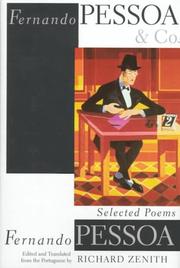
This bilingual anthology, edited and translated by Richard Zenith, presents the major heteronyms — Álvaro de Campos, Ricardo Reis, Alberto Caeiro, and Pessoa himself — side by side, giving a structured overview before the deeper dive.
Saramago: The Novel as Parable
ExpertMaster Saramago's distinctive narrative style — long sentences, dissolved dialogue, allegorical plots — and understand how he uses the novel form to interrogate history, power, and human nature.
▸ Study plan for this stage
Pace: 8–10 weeks, ~40–50 pages/day, with 1–2 weeks per novel for deep engagement and reflection
- Saramago's signature long sentences and dissolved dialogue: how fragmented syntax mirrors fractured consciousness and historical rupture
- The novel as parable: how Saramago embeds moral and political allegory within historical and contemporary narratives
- Interrogation of power structures: the role of institutional authority (church, state, science) in controlling bodies and minds across Baltasar and Blimunda, The Gospel According to Jesus Christ, and Blindness
- Rewriting history and myth: how Saramago reimagines historical events (the Inquisition, the Lisbon earthquake, the Nativity) to expose hidden truths and challenge canonical narratives
- The human body as site of resistance and vulnerability: physical sensation, desire, and collective suffering as means of understanding human nature
- Magical realism and the suspension of disbelief: how Saramago blends the impossible (levitation, sudden blindness) with the mundane to create philosophical inquiry
- Narrative voice and omniscience: the intrusive, ironic narrator who comments on characters and events, collapsing distance between reader and story
- How does Saramago's use of long, unpunctuated sentences and dissolved dialogue create a sense of temporal and psychological disorientation? What effect does this have on your reading experience and understanding of character interiority?
- In Baltasar and Blimunda, how does the levitation of the Passarola function as both a literal event and an allegory for human aspiration, faith, and the limits of knowledge?
- How does The Gospel According to Jesus Christ rewrite the nativity and life of Christ, and what political or theological critique is Saramago advancing through this reimagining?
- What is the significance of sudden, inexplicable blindness in Blindness as a parable? What does the loss of sight reveal about human nature, social order, and moral responsibility?
- Across all three novels, how does Saramago use institutional power (the Church, the state, medical authority) as a mechanism of control, and how do his characters resist or succumb to it?
- How does Saramago's narrative voice—intrusive, ironic, and omniscient—position the reader in relation to the story? What is the effect of the narrator's commentary on your interpretation of events?
- Close-read a 2–3 page passage from each novel that exemplifies Saramago's long-sentence style. Annotate where dialogue dissolves into narrative, where punctuation is absent or minimal, and how this affects pacing and meaning. Write a 500-word analysis of how syntax mirrors theme.
- Create a comparative chart mapping the institutional powers at work in each novel (Church in Baltasar and Blimunda and The Gospel; medical/state authority in Blindness). For each, identify how characters are controlled, what resistance emerges, and what Saramago seems to be critiquing.
- Write a 3–4 page essay on one of the following: (a) the Passarola as allegory in Baltasar and Blimunda; (b) the reimagined nativity in The Gospel According to Jesus Christ; (c) blindness as parable in Blindness. Ground your argument in specific textual evidence.
- Rewrite a key scene from one of the novels in a conventional narrative style with standard dialogue, punctuation, and shorter sentences. Then reflect: what is lost in clarity? What is gained in emotional immediacy in Saramago's original version?
- Track the role of the body (desire, sensation, suffering, vulnerability) across all three novels. Create a thematic map showing how physical experience becomes a vehicle for philosophical inquiry about human nature and social order.
- Analyze the narrative voice in each novel: identify moments where the narrator intrudes, comments ironically, or breaks the fourth wall. Write a 400-word reflection on how this narrative strategy shapes your relationship to the story and its moral questions.
Next up: This stage equips you to recognize Saramago's mature philosophical and formal innovations, preparing you to explore how other Portuguese and Iberian writers engage with similar questions of history, power, and narrative form, or to deepen your understanding of how Saramago's later works extend and refine these techniques.
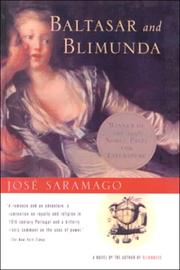
An ideal entry into Saramago because its 18th-century historical setting and love story make the style approachable, while already showcasing his hallmark long-sentence prose and anti-clerical irony.

Saramago's most provocative and lyrically ambitious novel; having read Baltasar and Blimunda prepares the reader for his mature style and his sustained engagement with myth and power.

His most internationally celebrated allegory, and a culmination of his parabolic method; best read after the earlier novels so its stripped-down brutality lands with full force.
Contemporary Lusophone Fiction: Beyond Portugal
ExpertExpand the literary map to the wider Portuguese-speaking world — Lusophone Africa and Brazil — encountering how writers from Mozambique, Angola, and Brazil transform the shared language into distinct literary traditions.
▸ Study plan for this stage
Pace: 6–7 weeks, ~40–50 pages/day (accounting for dense prose and footnotes in both texts)
- Decolonial aesthetics: how Pepetela uses metafiction and fragmented narrative to reclaim Angola's voice during and after the independence war
- The unreliable narrator as political tool: Bras Cubas's cynical retrospection as critique of Brazilian patriarchy, slavery, and false progress
- Linguistic sovereignty: how both authors deploy Portuguese differently—Pepetela's incorporation of Kimbundu and oral traditions versus Machado's sophisticated wordplay and digressions
- Temporal disruption: non-linear storytelling in Mayombe and Bras Cubas's death-before-birth structure as rejection of linear colonial narratives
- Gender and power dynamics: women's marginalization in both texts as symptom of broader social violence (colonial/patriarchal)
- The picaresque and the philosophical: how both novels blend adventure/social observation with existential questioning about meaning and legacy
- Intertextuality and literary tradition: how both texts dialogue with European literature while asserting independence from it
- How does Pepetela's use of multiple narrative voices and fragmented structure in Mayombe reflect the fragmentation of Angolan society during the liberation war?
- What is the significance of Bras Cubas narrating from beyond death, and how does this frame his critique of Brazilian society and his own complicity in it?
- Compare the treatment of language in both novels: how do Pepetela and Machado each use Portuguese to assert literary independence?
- How do both Mayombe and The Posthumous Memoirs of Bras Cubas challenge linear narrative and progress narratives, and what political or philosophical purposes does this serve?
- What role do women play in each novel, and how does their treatment illuminate the power structures each author is critiquing?
- How do both authors use humor, irony, and digression as formal strategies, and what effects do these create for the reader?
- Create a character map for Mayombe identifying each guerrilla fighter's ideological position and narrative function; annotate how Pepetela uses them to explore different responses to colonialism
- Track Bras Cubas's digressions in Part One—list 5–6 major tangents and analyze what philosophical or social critique each one contains
- Write a comparative essay (1,500–2,000 words) on narrative unreliability in both texts: how does each author's narrative strategy shape your trust in and judgment of the narrator?
- Identify 3–4 moments in Mayombe where Kimbundu words or oral storytelling traditions appear; research their significance and write brief reflections on how they 'Africanize' the Portuguese text
- Create a timeline of Bras Cubas's life as he narrates it, then reorder it chronologically; reflect on how Machado's scrambling of time affects your understanding of causality and responsibility
- Conduct a close reading of a 2–3 page passage from each novel (one from Mayombe, one from Bras Cubas) focusing on sentence structure, rhythm, and tone; write an analysis of how form mirrors content
Next up: This stage establishes how Lusophone writers across Africa and Brazil have claimed Portuguese as a vehicle for radically different literary visions, setting up the next stage to explore how contemporary Lusophone literature continues to interrogate identity, language, and power in the 21st century.
Angola's landmark novel of the independence struggle is a foundational text of Lusophone African literature, showing how the Portuguese language was reclaimed and reinvented outside Europe.
Brazil's greatest 19th-century novelist, Machado de Assis anticipates modernism with radical narrative irony; closing the curriculum here reveals how the Lusophone world produced multiple, independent literary geniuses.
Discussion
Keep reading
Paths that share books, cover the same subject, or open a related topic.