The Best Books on the History of Portugal
This curriculum takes the reader from a broad, accessible overview of Portuguese history all the way through its defining eras — the Reconquista, the Age of Discoveries, the Salazar dictatorship, and the birth of modern Portugal. Each stage builds the chronological knowledge and analytical vocabulary needed to go deeper in the next, moving from narrative history to specialist scholarship.
Foundations: The Big Picture
BeginnerGain a confident chronological spine of Portuguese history from the earliest times to the present, so that every later book has a clear context to slot into.
▸ Study plan for this stage
Pace: 4–5 weeks, ~40–50 pages/day. Disney's comprehensive history (~500 pages) requires 2–2.5 weeks; Saraiva's more interpretive account (~400 pages) requires 1.5–2 weeks. Build in 3–4 days for review and synthesis.
- The Reconquista and the formation of the Portuguese kingdom (1139–1297): how Portugal emerged as a distinct Christian state on the Iberian Peninsula
- Maritime expansion and the Age of Discovery (1400s–1600s): Portugal's early dominance in global exploration, trade, and empire-building under the Avis dynasty
- The Spanish union and loss of independence (1580–1640): the 60-year period when Portugal lost autonomy, and the Restoration War that reclaimed it
- The rise and decline of the Portuguese Empire: how Portugal built a global maritime empire and the long process of its contraction
- Domestic political instability and modernization struggles (1700s–1900s): the tension between monarchy, republicanism, and authoritarianism that shaped modern Portugal
- The Estado Novo dictatorship and decolonization (1932–1974): Salazar's authoritarian regime and the colonial wars that led to the 1974 Carnation Revolution
- The transition to democracy and European integration (1974–present): Portugal's path to democracy, EU membership, and contemporary identity
- What were the key stages in Portugal's emergence as an independent kingdom, and how did the Reconquista shape Portuguese identity?
- How did Portugal become a global maritime power in the 15th–16th centuries, and what were the main regions of its empire?
- What happened during the 60-year Spanish union (1580–1640), and how did the Restoration War restore Portuguese independence?
- How did Portugal's political system evolve from monarchy through republicanism to dictatorship, and what were the causes of instability?
- What role did the colonial empire play in Portuguese politics during the 20th century, and why did decolonization lead to revolution?
- How did the 1974 Carnation Revolution transform Portugal, and what was Portugal's path to democracy and EU membership?
- Create a detailed timeline on a large sheet of paper or digital document, marking major events from 1139 to the present. Include at least 20 key dates (e.g., Battle of Aljubarrota, Treaty of Tordesillas, 1580 Spanish union, 1640 Restoration, 1910 Republic, 1932 Estado Novo, 1974 Carnation Revolution). Refer back to this throughout your reading.
- Map Portugal's empire at three key moments: 1500 (early expansion), 1600 (peak extent), and 1974 (before decolonization). Use historical atlas references from the books to identify major territories in Africa, Asia, and the Americas. Write 2–3 sentences explaining what changed between each period.
- Read Disney's chapters on the Age of Discovery and Saraiva's treatment of the same period side-by-side. Write a 500-word comparison noting how each author emphasizes different aspects (e.g., economic vs. cultural impact, heroic vs. critical perspectives).
- Create a chart of Portugal's major political systems (monarchy, Spanish union, monarchy restored, republic, dictatorship, democracy) with dates, key figures, and one major achievement or failure for each. Use this to see patterns in Portuguese governance.
- Select one region of the Portuguese Empire (e.g., Brazil, Angola, Goa, Macau) and trace its history from conquest through independence using both books. Write a 400-word summary of that region's significance to Portuguese history.
- After finishing both books, write a 1-page 'chronological spine' summary—a paragraph for each major era (Medieval, Discovery Age, Spanish Union, Restoration, Enlightenment/Pombal, Liberal Wars, Republic, Estado Novo, Democracy)—that you can reference when reading later books.
Next up: With a solid chronological framework and understanding of Portugal's major turning points—from medieval kingdom through empire to modern democracy—you'll be ready to dive deeper into specific themes, regions, or periods in the next stage, knowing exactly where each topic fits in the larger narrative.

The most comprehensive single-author survey in English, covering Portugal from pre-Roman times to the late empire. Reading this first gives the reader a reliable chronological skeleton on which all later, deeper books will hang.
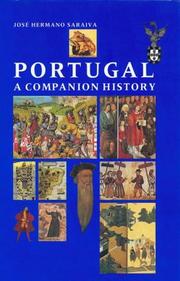
A concise, elegantly written narrative by one of Portugal's most beloved popular historians. It complements Disney by offering an insider Portuguese perspective and vivid cultural texture before diving into specialist topics.
The Reconquista: Faith, War, and the Making of a Kingdom
BeginnerUnderstand how Portugal emerged as an independent Christian kingdom through centuries of warfare with the Moors, and how that crusading identity shaped its later imperial ambitions.
▸ Study plan for this stage
Pace: 4–5 weeks, ~25–30 pages/day. Start with Menocal's narrative-driven account (2 weeks), then move to Lomax's more analytical treatment (2–3 weeks). Build in review days for synthesis.
- Al-Andalus as a multiconfessional society: how Muslims, Christians, and Jews coexisted and competed in medieval Iberia before the Reconquista intensified
- The gradual Christian advance from north to south: the political fragmentation of the Iberian peninsula and the role of Christian kingdoms (Castile, Aragon, Portugal) in territorial expansion
- Portugal's emergence as a distinct kingdom: how the county of Portugal separated from Galicia and Castile, and the significance of the 1297 Treaty of Alcañices in securing borders
- The crusading ideology: how religious warfare became framed as holy struggle, influencing Portuguese identity and later imperial justifications
- Key military and political figures: the roles of individuals like Afonso Henriques (first king of Portugal) and the military orders (Templars, Knights Hospitaller) in conquest
- The transformation of conquered territories: settlement patterns, administrative structures, and the Christianization of formerly Muslim lands
- The connection between Reconquista success and imperial ambitions: how military victory and crusading fervor created the conditions for Portuguese overseas expansion
- What was the nature of Christian-Muslim-Jewish coexistence in Al-Andalus before the Reconquista, and how did it change as the Reconquista progressed?
- How did Portugal emerge as an independent kingdom distinct from Castile and Galicia, and what role did military conquest play in that independence?
- What was the crusading ideology and how did religious framing of the Reconquista shape Portuguese national identity?
- How did the military orders (Templars, Hospitallers, etc.) contribute to the success of the Reconquista in the Iberian peninsula and specifically in Portugal?
- What were the major phases and turning points of the Reconquista, and how did they differ across the Christian kingdoms?
- How did the territorial, administrative, and religious reorganization of conquered lands during the Reconquista lay the groundwork for later Portuguese imperial expansion?
- Create a timeline of major Reconquista events (1000–1297) marking key battles, treaties, and the emergence of Portugal as a kingdom. Annotate with the sources from Menocal and Lomax.
- Map the territorial progression of Christian kingdoms across Iberia from 1000 to 1297, using Lomax's detailed accounts. Highlight Portugal's borders and compare them to Castile and Aragon.
- Write a 500-word character study of Afonso Henriques (or another key figure from the books) explaining his role in Portuguese independence and how he embodied the crusading ideology.
- Analyze a primary source excerpt (if provided in either book) describing a Reconquista battle or treaty. Identify the religious and political language used and explain how it reflects the crusading worldview.
- Create a comparison chart of Christian-Muslim coexistence in early Al-Andalus (per Menocal) versus the later Reconquista period (per Lomax), noting how relations deteriorated and why.
- Write a short essay (750–1000 words) connecting the Reconquista's military success to Portuguese imperial ideology, using specific examples from both books to show how crusading fervor translated into overseas ambitions.
Next up: This stage establishes Portugal's identity as a crusading Christian kingdom forged through centuries of warfare and religious struggle, providing the ideological and political foundation necessary to understand how and why Portugal became Europe's first global maritime empire in the 15th–16th centuries.
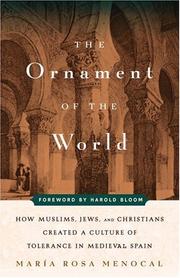
Before Portugal existed, Iberia was Al-Andalus. This celebrated book paints the multicultural Muslim, Jewish, and Christian world that the Reconquista dismantled, giving essential background for understanding what was at stake.

A focused, readable scholarly account of the Christian reconquest across Iberia. Reading it after Menocal lets the reader see the military and political process that forged Portugal's borders and crusading ethos.
The Age of Discoveries: Empire on the Seas
IntermediateDeeply understand how a small kingdom on Europe's edge built the first global maritime empire, and what that meant for Portugal, Africa, Asia, and the Americas.
▸ Study plan for this stage
Pace: 8–10 weeks, ~40–50 pages/day (accounting for dense historical analysis and epic poetry)
- The technological and navigational innovations (caravel design, astrolabe, cartography) that enabled Portuguese maritime expansion
- Portugal's strategic position and early advantages: Prince Henry the Navigator's vision, monopoly on African trade routes, and the spice trade imperative
- The human cost and mechanics of empire-building: conquest strategies, disease, slavery, and cultural encounters across Africa, Asia, and the Atlantic
- The interconnected global systems created by Portuguese expansion: trade networks linking Europe, Africa, Asia, and the Americas
- The tension between commercial ambition and religious mission in Portuguese colonization
- How the Age of Discoveries transformed Portugal itself: wealth, power, cultural identity, and the seeds of imperial decline
- The literary and mythological dimensions of Portuguese expansion as captured in The Lusiads: heroism, fate, and national identity
- The long-term consequences of Portuguese empire for colonized peoples and the emergence of a globalized world
- What specific technological and organizational advantages allowed Portugal, a small kingdom, to dominate maritime trade and establish the first global empire?
- How did Prince Henry the Navigator's vision shape Portuguese expansion, and what were his primary goals beyond mere commerce?
- Describe the major routes and conquests of Portuguese expansion: Africa, the Indian Ocean, Brazil, and beyond. What was the strategic logic behind each?
- How did Portuguese conquistadors and traders interact with and impact indigenous populations in Africa, Asia, and the Americas? What were the mechanisms of control?
- What role did the spice trade play in driving Portuguese expansion, and how did it reshape global commerce?
- How does Camões' The Lusiads portray Portuguese expansion, and what does this epic reveal about how the Portuguese understood their own imperial mission?
- What were the internal consequences of empire for Portuguese society, economy, and culture during this period?
- How did the Portuguese empire differ from later European empires, and what were the seeds of its eventual decline?
- Create a detailed timeline of Portuguese discoveries and conquests (1415–1600) using Boxer and Crowley, marking key dates, routes, and figures. Annotate with the strategic purpose of each expansion.
- Map the major Portuguese trade routes and settlements across Africa, Asia, and the Atlantic using information from Boxer. Identify chokepoints, rival powers, and the flow of goods.
- Write a 1,500–2,000 word comparative analysis: How do Boxer's scholarly account and Crowley's narrative history differ in their interpretation of Portuguese motivations and methods? Which is more convincing and why?
- Select three key figures (e.g., Henry the Navigator, Vasco da Gama, Afonso de Albuquerque) and write character sketches based on Boxer and Crowley, explaining their role in empire-building.
- Read and annotate 3–4 key cantos from The Lusiads (especially Canto I and passages describing voyages). Write a 1,000-word reflection on how Camões mythologizes Portuguese expansion and what this reveals about national identity.
- Debate exercise: Argue both sides—was Portuguese expansion primarily driven by commercial greed or religious zeal? Use specific evidence from all three texts.
- Create a visual infographic or poster showing the interconnected global systems created by Portuguese trade (goods, peoples, diseases, ideas flowing between regions).
- Write a short fictional diary entry (300–500 words) from the perspective of a Portuguese sailor, merchant, or colonized person, grounding it in specific historical details from the texts.
Next up: This stage establishes how Portugal built the first global maritime empire and the mechanisms of early modern colonization; the next stage will likely examine how this empire was sustained, challenged, and eventually declined, or how other European powers responded to and replicated Portuguese models.
The canonical English-language masterwork on Portuguese expansion by the field's greatest historian. It covers the full arc of the empire — motivations, trade networks, colonies, and decline — and is the essential reference for this era.
A gripping narrative history of the early decades of Portuguese expansion in the Indian Ocean. Read after Boxer, it brings the human drama and military detail to life, reinforcing the structural analysis with vivid storytelling.
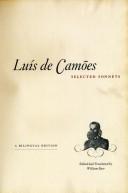
Portugal's national epic poem, written by a soldier who sailed to India himself. Reading it here — after the history — reveals how the Portuguese understood and mythologized their own discoveries, and is indispensable for cultural depth.
Salazar and the Estado Novo
IntermediateUnderstand the origins, ideology, and long shadow of António de Oliveira Salazar's authoritarian regime (1932–1968) and how it shaped twentieth-century Portugal.
▸ Study plan for this stage
Pace: 4–5 weeks, ~40–50 pages/day
- Salazar's early political career and rise to power (1928–1932): his appointment as Finance Minister and consolidation of authority
- The ideological foundations of the Estado Novo: corporatism, nationalism, Catholicism, and anti-communism
- The role of the secret police (PIDE) and censorship in maintaining authoritarian control
- Portugal's colonial empire and its centrality to Salazar's vision of national greatness and economic policy
- Salazar's foreign policy: neutrality during WWII, NATO membership, and Cold War positioning
- The economic model of the Estado Novo: state intervention, protectionism, and the consequences for development
- Salazar's personality, decision-making style, and his cultivation of a quasi-religious public image
- The regime's long-term institutional legacy and its influence on Portuguese society beyond 1968
- How did Salazar's background and early career as Finance Minister position him to establish authoritarian rule, and what were the key steps in his consolidation of power between 1928 and 1932?
- What were the core ideological pillars of the Estado Novo, and how did corporatism, Catholicism, and nationalism reinforce each other in Salazar's political vision?
- What role did the PIDE secret police and state censorship play in sustaining the regime, and how did these institutions shape Portuguese civil society?
- How did Salazar's colonial ideology and the Portuguese empire factor into his economic and foreign policy decisions?
- What was Salazar's strategy during World War II, and how did his post-war foreign policy choices (NATO, Cold War alignment) reflect his broader political objectives?
- How did the Estado Novo's economic model—characterized by state intervention and protectionism—affect Portugal's development relative to other European nations, and what were its long-term consequences?
- Create a detailed timeline of Salazar's political rise (1928–1932), marking key appointments, legislative acts, and turning points; annotate each with the ideological or strategic purpose it served
- Construct a concept map linking the three pillars of Estado Novo ideology (corporatism, Catholicism, nationalism) and show how each reinforced the others and justified authoritarian control
- Write a 2–3 page comparative analysis of Salazar's foreign policy during WWII versus the Cold War period, explaining how his strategic choices reflected his core political values
- Analyze a primary source document (speech, decree, or policy statement from the Salazar era, referenced in the book) and identify the ideological language, assumptions, and justifications embedded in it
- Debate or write a reflection: To what extent was the Estado Novo's longevity (1932–1968) due to Salazar's personal leadership versus structural institutional factors? Use evidence from the biography
- Create a visual profile or infographic showing the key institutions of the Estado Novo (PIDE, censorship apparatus, corporatist structures, colonial administration) and how they interconnected to sustain the regime
Next up: This stage establishes the ideological, institutional, and personal foundations of the Estado Novo under Salazar, preparing you to examine how these structures began to fracture and ultimately led to the regime's collapse in 1974, and how Portuguese society negotiated the transition to democracy.
The definitive scholarly biography of Salazar in English, exhaustively researched and balanced. It is the single best book on the man and his regime, and should be read first in this stage to establish the facts.
Modern Portugal: Revolution, Democracy, and Europe
ExpertUnderstand the Carnation Revolution of 1974, Portugal's turbulent transition to democracy, its integration into Europe, and its place in the contemporary world.
▸ Study plan for this stage
Pace: 4–5 weeks, ~40–50 pages/day (approximately 280–350 pages total)
- The Carnation Revolution of 1974: causes, events, and immediate outcomes that ended 48 years of authoritarian rule
- Portugal's transition from authoritarianism to democracy: institutional reforms, constitutional development, and political consolidation (1974–1986)
- The role of the military in Portuguese politics and the gradual shift from military to civilian governance
- Portugal's European integration: accession to the European Community (1986), adoption of the euro, and alignment with European institutions
- Economic modernization and structural transformation during the democratic period and European integration
- Regional disparities and social tensions during democratization and the challenge of building consensus across diverse political factions
- Portugal's geopolitical repositioning from an isolated authoritarian state to a European democracy and NATO member
- What were the primary causes of the Carnation Revolution, and how did the revolution's outcome differ from what many participants initially expected?
- How did Portugal's transition to democracy differ from other Southern European transitions (Spain, Greece) in terms of institutional design and political challenges?
- What role did European integration play in consolidating Portuguese democracy, and what were the economic and social consequences of EU membership?
- How did Portugal's military influence in politics evolve from 1974 to the late 1980s, and what factors enabled the shift to civilian democratic rule?
- What were the major economic and social transformations Portugal underwent during the 1980s and 1990s, and how did these relate to European integration?
- How has Portugal's international position and self-perception changed from the end of the dictatorship to its contemporary role in Europe?
- Create a detailed timeline of key events from 1974–1986, marking the Carnation Revolution, constitutional moments, and major political transitions; annotate with the institutional changes each event produced
- Construct a comparative table analyzing Portugal's democratic transition against Spain's and Greece's, using Pinto's analysis to identify similarities and unique Portuguese challenges
- Write a 1,500–2,000 word analytical essay on how European integration served as both a catalyst and constraint on Portuguese democratization, using specific examples from the text
- Map Portugal's economic indicators (GDP growth, sectoral shifts, unemployment) during 1974–1995 and connect these trends to the political and institutional changes Pinto describes
- Prepare a debate outline addressing the question: 'Did the Carnation Revolution achieve its revolutionary goals, or did it result in a conservative transition?' Use Pinto's evidence to support both positions
- Create an annotated reading journal for each major chapter, identifying Pinto's main arguments, supporting evidence, and connections to broader themes of democratization and Europeanization
Next up: This stage establishes the institutional, political, and economic foundations of modern Portugal, preparing readers to examine how these democratic and European structures have shaped contemporary Portuguese society, culture, and responses to recent crises like the 2008 financial collapse and migration debates.
A rigorous political-science overview of Portugal from the Carnation Revolution through EU membership and into the twenty-first century. It synthesizes the entire modern period and is the ideal capstone, tying together all the threads of the curriculum.
Discussion
Keep reading
Paths that share books, cover the same subject, or open a related topic.