Best Czech Literature to Read, in Order
This curriculum moves through Czech literature in four carefully sequenced stages, beginning with the darkly comic and absurdist voices of the early 20th century, then deepening into the existential and philosophical novels of the communist and post-war era, and finally arriving at the dissident and underground writers who risked everything to keep Czech literary culture alive. Because the learner starts at an intermediate level, the path opens with the most internationally accessible works and gradually demands more historical and cultural context from the reader.
The Comic & the Absurd: Hašek and Čapek
IntermediateGrasp the Czech literary temperament — irony, black humor, and humanist skepticism — through two giants who defined the interwar period and whose sensibility echoes through every later writer on this list.
▸ Study plan for this stage
Pace: 4–5 weeks, ~40–50 pages/day (novel is ~280 pages; allows time for re-reading key passages and reflection)
- Absurdist satire as political allegory: how Čapek uses the newts as a mirror for human folly, fascism, and the failure of reason
- The unreliable narrator and fragmented narrative structure: how the novel's form (reports, articles, dialogues) undermines certainty and truth
- Black humor and grotesque comedy: the darkly comic tone that makes catastrophe both ridiculous and terrifying
- Humanist skepticism: Čapek's distrust of ideology, progress, and human nature itself—the refusal of easy answers
- The newts as the 'other': how the novel explores colonialism, exploitation, and dehumanization through the lens of a non-human species
- Irony as a survival tool: how characters (and the author) use irony to cope with an increasingly absurd world
- The collision of rational systems with irrational reality: bureaucracy, science, and capitalism failing to control chaos
- How does Čapek use the newts as a vehicle for satirizing human society, and what specific human follies do they expose?
- What is the effect of the novel's fragmented narrative structure (reports, newspaper clippings, dialogues)? How does it reinforce the novel's themes about the unreliability of knowledge?
- Identify three moments of black humor in the novel. What makes them funny, and what makes them disturbing?
- How does the concept of 'progress' function in the novel? Is it presented as genuine advancement or as a dangerous illusion?
- What is Čapek's critique of nationalism, militarism, and ideological thinking as demonstrated through the nations' competition over the newts?
- How does the ending of the novel embody the author's humanist skepticism? What does it suggest about humanity's future?
- Create a timeline of the newts' 'rise' in the novel, marking key moments where human attitudes toward them shift. Annotate each shift with the ideological or economic reason behind it.
- Select three passages that exemplify Čapek's use of irony. For each, write a paragraph explaining what is being ironized and why the irony matters thematically.
- Write a 2–3 page analytical response: 'How is *War with the Newts* a political allegory for interwar Europe?' Ground your argument in specific scenes and characters.
- Rewrite one scene from the novel in a straightforward, earnest tone (removing all irony and dark humor). Then reflect: what is lost? What does this exercise reveal about Čapek's stylistic choices?
- Map the novel's narrative structure: identify all the different 'voices' or formats (Captain van Toch's account, newspaper reports, scientific papers, etc.). Create a visual diagram showing how they interact and what effect the fragmentation creates.
- Debate exercise (solo or with a partner): 'Are the newts responsible for their own fate, or are they victims of human exploitation?' Use textual evidence to argue both sides, then reflect on what Čapek seems to suggest.
Next up: By internalizing Čapek's techniques of absurdist satire, ironic narrative unreliability, and humanist skepticism, you'll be prepared to recognize how these same sensibilities—refined and radicalized—appear in later Czech writers who build on, resist, or transform his vision of the absurd.
The foundational Czech novel: its anti-heroic, bumbling protagonist and savage satire of bureaucracy and war establish the ironic, subversive tone that runs through all Czech literature. Read this first to understand what every later Czech writer is either continuing or reacting against.
Čapek's satirical masterpiece, blending science fiction with political allegory, shows the full range of his genius and directly anticipates the totalitarian themes that will dominate the rest of the curriculum.
Kafka in Context
IntermediateRead Kafka not as an isolated genius but as a Prague German-Jewish writer whose nightmarish bureaucratic worlds are deeply rooted in the Austro-Hungarian city he never left, and understand why he became the spiritual ancestor of all Czech dissident writing.
▸ Study plan for this stage
Pace: 6–7 weeks, ~40–50 pages/day (including re-reading key passages and reflection time)
- Kafka's Prague German-Jewish identity and its influence on his alienation and outsider perspective in his writing
- Bureaucratic absurdity and the Kafkaesque: how Austro-Hungarian institutional logic creates nightmarish, incomprehensible worlds in The Trial and The Metamorphosis
- Transformation and bodily horror as metaphors for social exclusion, loss of identity, and powerlessness in The Metamorphosis
- The Trial as a portrait of totalizing systems: how law, authority, and institutions become labyrinthine and unknowable
- Prague as a character: the city's multilingual, multicultural, and politically fractured context as the invisible backdrop to Kafka's narratives
- Kafka's influence on Czech dissident literature: how his depiction of oppressive systems became a template for writers resisting Communist control
- Narrative technique: Kafka's use of first-person and third-person perspective to create psychological claustrophobia and reader disorientation
- The grotesque and the mundane: how Kafka treats extraordinary events (metamorphosis, arrest) with bureaucratic matter-of-factness
- How does Gregor Samsa's transformation in The Metamorphosis function as a metaphor for social exclusion and loss of identity, and what does it reveal about Kafka's view of the individual's place in society?
- What role does the Austro-Hungarian bureaucratic system play in The Trial, and how does Kafka's depiction of law and authority reflect his Prague context?
- How does Kafka's identity as a Prague German-Jewish writer inform the themes of alienation, powerlessness, and outsider status in both texts?
- What is the Kafkaesque, and how do The Metamorphosis and The Trial exemplify this literary mode?
- Why did Kafka's work become so influential for Czech dissident writers, and what parallels exist between his depiction of oppressive systems and the experience of living under totalitarianism?
- How does Kafka use narrative perspective and psychological realism to create a sense of claustrophobia and disorientation in the reader?
- Read The Metamorphosis in one sitting (or two consecutive sittings), then write a 500-word reflection on your immediate emotional response to Gregor's transformation and the family's reaction—what disturbed or surprised you most?
- Create a visual map or diagram of the power dynamics in The Trial: who holds authority, how is it exercised, and where are the gaps or contradictions? Annotate with specific scenes from the text.
- Write a short scene (300–400 words) imagining a conversation between Gregor Samsa and K. (the protagonist of The Trial) about their respective plights—what would they recognize in each other's experiences?
- Research the Prague German-Jewish community of Kafka's era (1880s–1920s) using external sources, then write a 600-word essay on how Kafka's marginality as a German speaker in a Czech city, and as a Jew in a Christian empire, shapes the alienation in his work.
- Track the motif of the door, threshold, or boundary in both texts—create an annotated list of key passages where Kafka uses spatial imagery to represent psychological or social barriers.
- Read one story from The Metamorphosis and Other Stories (e.g., 'The Hunger Artist' or 'In the Penal Colony') and write a comparative analysis (400 words) of how it extends or complicates the themes of The Metamorphosis and The Trial.
Next up: This stage establishes Kafka as a historically situated writer whose nightmarish visions of bureaucracy and alienation became the foundational language for understanding oppressive systems, preparing you to explore how later Czech writers—from the Communist era onward—inherited and adapted his techniques to document their own experiences of totalitarianism and resistance.
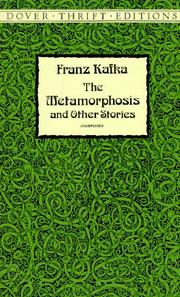
The ideal entry point into Kafka: short, perfectly constructed, and immediately legible as a story about alienation, family, and the absurdity of modern existence — themes the previous stage primed you to recognize in a Czech key.
Kafka's most politically resonant novel, depicting an individual crushed by an opaque, all-powerful system — a parable that Czech readers under communism experienced as literal reality, making it indispensable for understanding the dissident writers ahead.
The Golden Sixties and Their Aftermath: Kundera and Hrabal
IntermediateEngage with the two towering figures of post-war Czech prose — one philosophical and ironic, one lyrical and earthy — both shaped by the 1968 Prague Spring and its brutal suppression, which transformed Czech literature forever.
▸ Study plan for this stage
Pace: 8–10 weeks, ~40–50 pages/day. Weeks 1–2: Closely Watched Trains (120 pp); Weeks 3–4: I Served the King of England (240 pp); Weeks 5–7: The Joke (310 pp); Weeks 8–10: The Unbearable Lightness of Being (320 pp). Allow 1 week for review and synthesis.
- Hrabal's lyrical realism and digressive narrative style: how fragmented, associative storytelling captures the texture of ordinary lives under totalitarianism
- The role of humor, irony, and absurdity in both authors as survival mechanisms and philosophical tools in response to political oppression
- Kundera's philosophical irony and the tension between lightness and weight: how ideas about meaning, choice, and eternal recurrence shape narrative structure
- The Prague Spring (1968) as historical rupture: how both authors' works before and after reflect changing attitudes toward freedom, betrayal, and artistic responsibility
- The body, appetite, and sensuality in Hrabal versus abstract ideas and consciousness in Kundera: two contrasting approaches to what it means to be human
- Metafiction and self-aware narration: how both authors comment on storytelling itself and the relationship between life and literature
- Complicity, compromise, and moral ambiguity: characters who navigate totalitarian systems without clear heroes or villains
- The personal versus the political: how intimate, domestic, or seemingly trivial moments carry political weight in post-1968 Czech literature
- How does Hrabal's digressive, associative narrative style in Closely Watched Trains and I Served the King of England differ from conventional plot-driven storytelling, and what does this style achieve thematically?
- Compare the treatment of humor and irony in Hrabal versus Kundera: how does each author use these tools to respond to political repression and existential uncertainty?
- What is the significance of the Prague Spring and its suppression in shaping the worldview and narrative choices of both authors, particularly in The Joke and The Unbearable Lightness of Being?
- How do Kundera's philosophical concepts—particularly lightness, weight, and eternal recurrence—structure the narrative and character development in The Unbearable Lightness of Being?
- Analyze the role of the body, desire, and sensuality in Hrabal's works versus the role of consciousness and ideas in Kundera's works: what do these differences reveal about each author's vision?
- How do the protagonists in these four novels navigate moral compromise and complicity within oppressive systems, and what does their behavior suggest about the authors' views on individual agency?
- Create a timeline mapping key historical events (Prague Spring, Soviet invasion, 1970s normalization) alongside the publication dates and settings of each novel; annotate how each book reflects or responds to its historical moment.
- Write a comparative character sketch of one protagonist from Hrabal (e.g., Miloš from Closely Watched Trains or the waiter from I Served the King of England) and one from Kundera (e.g., Ludvík from The Joke or Tomáš from The Unbearable Lightness of Being), focusing on how each responds to moral pressure.
- Select a digressive passage from Hrabal and a philosophical passage from Kundera; rewrite each in the other author's style, then reflect on what is gained and lost in the translation.
- Trace the motif of appetite, food, or bodily pleasure through Hrabal's two novels; then trace the motif of lightness/weight through Kundera's two novels. Create a visual map or chart showing how these motifs evolve.
- Write a short essay (1,500–2,000 words) arguing whether The Joke or The Unbearable Lightness of Being is more directly a response to the Prague Spring and its aftermath; use specific textual evidence.
- Conduct a close reading of the opening pages of each novel (first 2–3 pages); analyze how each author establishes tone, narrative voice, and the reader's relationship to the protagonist within the first few paragraphs.
Next up: By mastering the philosophical irony of Kundera and the lyrical realism of Hrabal—the two poles of post-1968 Czech literature—you are prepared to explore how subsequent Czech and Central European writers either inherited, rejected, or synthesized these approaches in response to continued political and cultural transformation.
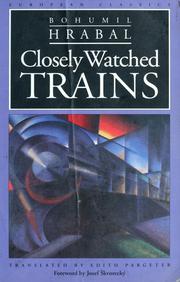
Hrabal's slim, luminous novella — set during the Nazi occupation — is the perfect introduction to his style: tragicomic, sensory, and deeply human. Its accessible length and warmth ease you into his world before tackling his more demanding work.
Hrabal's most celebrated novel, a picaresque romp through 20th-century Czech history told by an unreliable, cheerfully amoral narrator — a masterclass in his 'pábení' (palavering) style and a rich portrait of a nation's tragicomic fate.

Kundera's debut novel, written before his exile, is his most directly Czech and politically raw work — a devastating portrait of how ideology destroys personal life. Reading it before his later, more philosophical novels grounds you in the historical reality that fuels his ideas.
![Nesnesitelná lehkost bytí = The Unbearable Lightness of Being = Sonzai no taerarenai karusa [Japanese Edition]](https://covers.openlibrary.org/b/isbn/9784087603514-M.jpg)
Kundera's internationally celebrated masterpiece weaves philosophy, eroticism, and the 1968 Soviet invasion into a meditation on fate, freedom, and memory — the culmination of everything the curriculum has built toward, and one of the great European novels of the 20th century.
The Underground: Dissident and Samizdat Voices
ExpertEncounter the writers who worked in secret, circulated manuscripts in hand-typed carbon copies, and faced imprisonment — understanding Czech literature not just as art but as an act of moral and political resistance.
▸ Study plan for this stage
Pace: 8–10 weeks, ~25–30 pages/day, with 1–2 days per week for reflection and note-taking. Allocate 2–3 weeks per book to allow for re-reading key passages and absorbing the dense political and philosophical layers.
- Samizdat as literary practice: how hand-typed, underground circulation became an act of defiance and shaped the form and content of these works
- Absurdism and the grotesque as political tools: how Havel's plays use theatrical language to expose the logic of totalitarianism without direct statement
- The intellectual under totalitarianism: the tension between personal survival, artistic integrity, and moral responsibility across all three authors
- Memory, nostalgia, and historical trauma: how Hrabal and Škvorecký preserve and interrogate the past through fragmented, digressive narrative
- Language as resistance: the subversive use of irony, silence, and linguistic play to evade censorship while encoding political meaning
- The role of the artist-witness: how these writers document lived experience under communism and claim moral authority through suffering and exile
- Complicity and compromise: the ethical dilemmas of survival in a repressive system, explored through characters who must navigate collaboration and resistance
- How do Havel's plays in *The Garden Party and Other Plays* use absurdist theatrical techniques to critique totalitarian logic, and what is the effect of avoiding explicit political statement?
- What is the relationship between the form of *Too Loud a Solitude* (its fragmented, digressive structure) and its content about censorship, memory, and the preservation of banned books?
- How does Škvorecký in *The Engineer of Human Souls* use the frame narrative and the protagonist's dual life (in communist Czechoslovakia and later in exile) to explore the psychological cost of political repression?
- What role does samizdat circulation play in shaping the style, tone, and intended audience of these three works, and how would they differ if published openly?
- How do these three authors represent the figure of the intellectual or artist under totalitarianism, and where do their visions of resistance and survival differ?
- What strategies of language—irony, silence, digression, linguistic play—do these writers employ to encode political meaning while evading censorship?
- Read *The Garden Party* (the title play) twice: first for plot, then annotating every moment where language becomes absurd, circular, or self-defeating. Write a 500-word analysis of how Havel's dialogue mirrors the logic of totalitarian bureaucracy.
- Create a timeline of Havel's other plays in the collection (*The Memorandum*, *Audience*, *Protest*) and note how the political context of their composition (dates of samizdat circulation) relates to their themes. How does the urgency of the moment shape the work?
- Track the narrator's digressions in *Too Loud a Solitude*: list 5–7 major tangents and identify what historical or personal memory each one preserves. Write a short reflection on why Hrabal's fragmented form is essential to his project of preservation.
- Conduct a close reading of a 2–3 page passage from *Too Loud a Solitude* where the narrator discusses banned books or censorship. Annotate the tone shifts and explain how Hrabal uses irony and tenderness to resist despair.
- In *The Engineer of Human Souls*, map the protagonist's internal contradictions: list moments where he acts as a collaborator, a resister, and a survivor. Write a 600-word essay on whether Škvorecký presents a moral judgment or an empathetic understanding of these compromises.
- Compare how all three authors represent silence or the unsayable: find one passage from each work where what is *not* said is as important as what is. Discuss how samizdat circulation may have trained readers to read between the lines.
- Research the historical contexts of samizdat publication for each work (dates, methods, risks) and write a 400-word reflection on how knowing this context changes your reading of the text's tone and intended effect.
Next up: Having internalized how Czech writers transformed repression into literary innovation—using absurdism, fragmentation, and linguistic subterfuge as forms of resistance—you are prepared to explore how these dissident voices shaped post-1989 Czech literature and how exile, return, and the reckoning with the past continue to define contemporary Czech writing.

Havel's absurdist debut play — a razor-sharp satire of communist doublespeak and bureaucratic conformity — is the essential entry point into his dramatic work and establishes the political and theatrical context for understanding his role as dissident playwright and future president.

Written in secret and circulated in samizdat, this short, lyrical novel about a man who compacts books for a living is Hrabal's most personal and profound work — a love letter to literature itself and a meditation on survival under a regime that destroys culture.
Škvorecký's sprawling, jazz-inflected masterpiece, written in Canadian exile, weaves together the Nazi occupation, the communist takeover, and the immigrant experience — a fitting capstone that brings the full sweep of 20th-century Czech history into a single, exuberant, deeply humane novel.
Discussion
Keep reading
Paths that share books, cover the same subject, or open a related topic.